
Aside from supporting customers after checkout, AI-powered shopping assistants now play a direct role in driving revenue. According to recent reports, 44.6%[0]head of US online shoppers have already used generative AI tools specifically for product recommendations, and 40%[0] of US consumers use an agentic shopping assistant regularly. New research from Contentsquare also shows that 30%[0] of shoppers would even be willing to let an AI agent complete a purchase on their behalf.
This guide helps ecommerce teams and Shopify merchants compare the best AI shopping assistants on the web. Learn how these tools differ to decide which one aligns with your ecommerce goals
| Tool | Free plan? | Best for |
|---|---|---|
| Tidio (Lyro shopping assistant) | ✅ | Shopify-first onsite help |
| Amazon Rufus | N/A | Discovery, deals, cart actions |
| Walmart Sparky (AI shopping assistant) | N/A | Product finding plus review summarization |
| Perplexity Shopping | ✅ | Research-first shopping discovery with citations and comparisons |
| Alby (by Bluecore) | ✅* | Shopify product-page Q&A plus guided recommendations |
| Salesforce Agentforce | ✅ | Enterprise retailers already on Salesforce who want agentic workflows tied to CRM and service data |
| SAP CX AI shopping assistant | ❌ | SAP Commerce Cloud storefronts that want a shopping agent connected to SAP CX stack |
Tidio (Lyro shopping assistant)

Ratings: 4.7/5 ⭐️ (1,800+ ratings on G2)
Tidio is a customer service tool designed for ecommerce brands that want to guide customers through product discovery and buying decisions directly inside chat. Powered by Lyro, Tidio’s conversational AI shopping assistant, it can recommend products based on what shoppers ask and what they’re currently viewing. Lyro uses Shopify product data as a retrieval source, enabling context-aware responses that feel natural and relevant during the shopping journey: instant, reliable, and trustworthy.
In addition, Lyro can help customers find specific products, choose between variants, compare similar items, and discover complementary or alternative products. It can also recommend items based on price range or seasonality, as long as the information exists in the product descriptions. Because the product catalog syncs automatically with Shopify, recommendations stay up to date without manual maintenance.
It’s also possible to enable Lyro product recommendations for WooCommerce or connect your product database via the open API.
Main features:
- AI-powered product recommendations based on Shopify product data
- Support for product search, comparisons, variants, complementary, and alternative
- Context-aware responses that use the visitor’s current product page URL
- Multilingual understanding of product information
- Multichannel availability across live chat, Instagram, Facebook Messenger, WhatsApp, and email
Pricing:
- 7-day free trial available
- Free version available
- Starter ($24.17/mo)
- Growth (starts at $49.17/mo)
- Plus (starts at $749/mo)
- Premium (starts at $2999/mo)
Guide shoppers to the right products with Lyro AI shopping assistant
Read more: Here’s all you should know about Lyro’s product recommendations for Shopify. Also, learn how to build a product recommendation chatbot with ease.
Amazon Rufus
Ratings: N/A
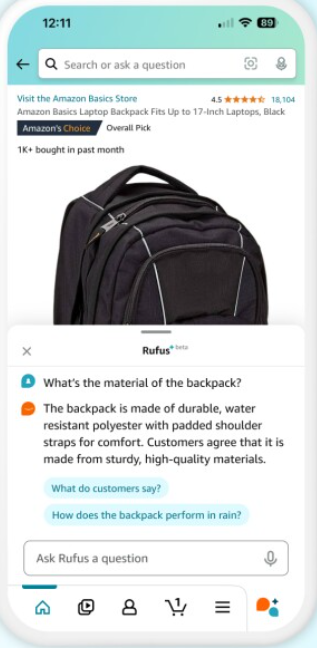
Amazon Rufus is an AI-powered shopping assistant integrated directly into the Amazon Shopping app and desktop experience. It uses generative AI and conversational capabilities to help customers find products, compare options, and make informed purchase decisions without leaving the Amazon ecosystem. Rufus is trained on Amazon’s entire product catalog, customer reviews, and community content from across the web to deliver context-aware recommendations.
What’s great about this AI shopping tool is that it can understand natural language queries and support a range of shopping needs. This includes anything from broad product research to specific product comparisons and personalized suggestions based on user intent and search context.
Rufus appears as a conversational interface in the Amazon app and on desktop, where customers can type or speak questions directly.
Main features:
- Conversational product discovery, allowing shoppers to ask additional questions and get tailored category suggestions
- Product comparisons that explain differences between types of products
- Personalized recommendations based on conversational context and past browsing activity.
- Integration with Amazon’s search results, enabling customers to refine browsing
- Context-aware answers to product-specific questions
Pricing:
Amazon Rufus is free to use as part of the Amazon Shopping app and desktop shopping experience. It’s included for all Amazon customers logged into their accounts. Rufus isn’t a product available to businesses for their websites.
Read more: Find out all about AI virtual ecommerce assistants.
Walmart AI shopping assistant (Sparky)
Ratings: N/A
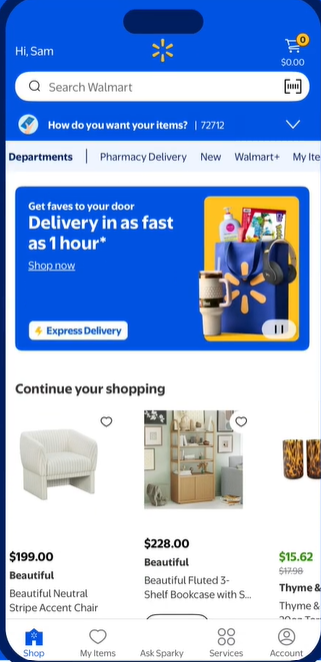
Walmart’s AI shopping assistant, Sparky, is a generative AI-powered companion built into the Walmart app to help customers discover products and make better purchasing decisions across different categories. Sparky lets users interact conversationally and get tailored recommendations directly inside the Walmart shopping experience.
Sparky appears in the Walmart mobile app as an Ask Sparky button, typically represented by a smiling icon at the bottom of the screen. Shoppers can tap it to ask questions like finding products for specific needs, such as “best birthday gifts for kids”, or “skincare products for dry skin” and receive recommendations and answers that help them shop with confidence. It also summarizes customer reviews to make it easier to understand product strengths and weaknesses before purchase.
Main features:
- Conversational shopping assistance through the “Ask Sparky” interface in the Walmart app
- Product discovery support, helping shoppers find items that fit specific needs
- Review summarization to highlight key product insights
- Context-aware responses and recommendations across categories
- Future-focused design with plans for multimodal input (text, images, video, audio)
Pricing:
Sparky is free to use for Walmart customers as part of the Walmart Shopping app.
Read more: Find out the top Shopify chatbot apps.
Perplexity Shopping
Ratings: N/A
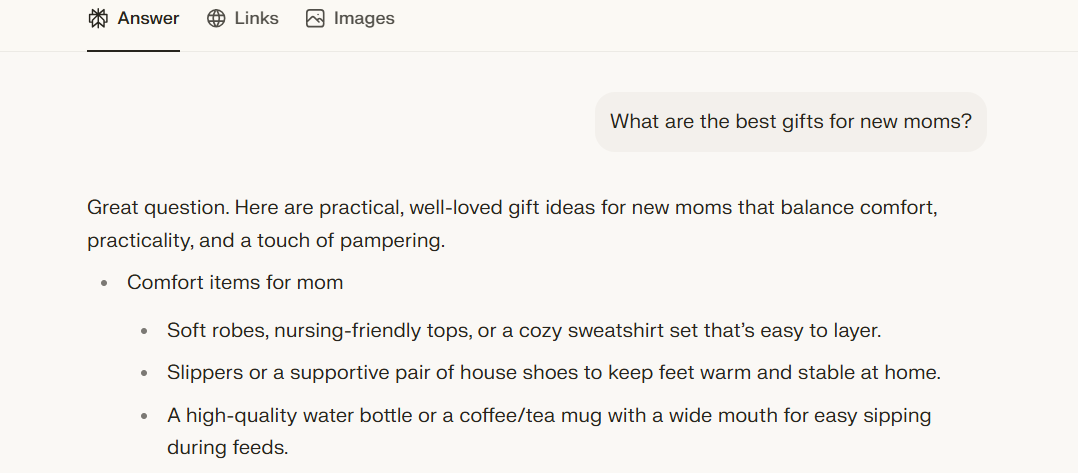
Perplexity Shopping is an AI-powered shopping experience built into Perplexity’s conversational search platform. It’s designed to help people discover, compare, and buy products through natural language queries by combining search, product recommendations, and purchasing into a single flow. It allows consumers to move toward purchase directly within the Perplexity interface instead of browsing multiple websites.
A core strength of Perplexity Shopping is product discovery. Users can type detailed questions such as what kind of product they’re looking for, ask for comparisons, or explore alternatives based on specific needs. Perplexity also supports visual search through its Snap to Shop feature, which allows users to upload a photo and receive relevant product suggestions based on the image.
Main features:
- Conversational product discovery using natural language queries
- Product recommendations based on user intent and research context
- Side-by-side price comparisons across multiple retailers
- Snap to Shop visual search for finding products using images
- Unbiased results without sponsored product placements
Pricing:
- Free plan available
- Perplexity pro ($20 /mo)
- Enterprise pro ($40 /mo)
- Enterprise max ($325/mo/seat)
Read more: Check out the best AI tools for ecommerce available.
Alby
Ratings: N/A
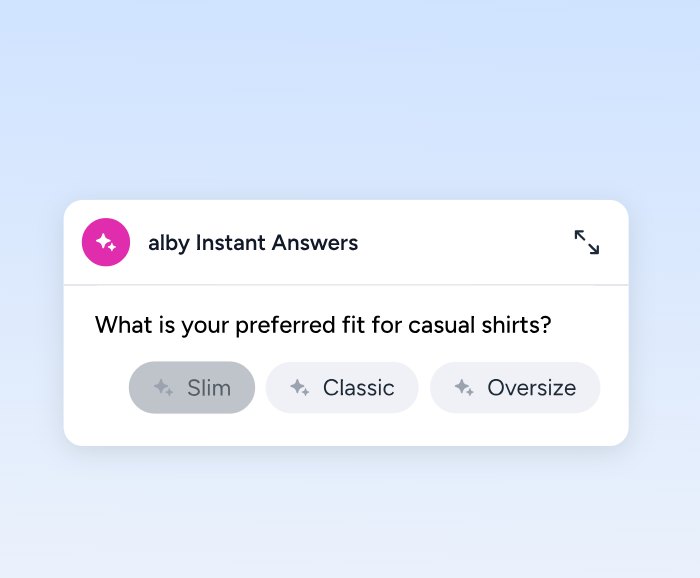
Alby is an AI tool for shopping developed by Bluecore and designed specifically for ecommerce product pages. Instead of acting as a separate chat experience, Alby works in the background to anticipate shopper questions and surface helpful answers directly where buying decisions happen. This approach helps reduce friction during browsing and gives shoppers the information they need without interrupting their flow.
Alby can automatically handle common product-related questions, similar to a traditional chatbot, which is especially useful for stores with large catalogs or high traffic. By answering questions in an instant, it helps shoppers move forward with confidence instead of leaving the page to search elsewhere or contact support.
In addition to answering questions, Alby provides personalized product suggestions based on browsing behavior. It can recommend similar or complementary products in a way that feels contextual, supporting a higher average order value while keeping the experience shopper-friendly.
Main features:
- On-page AI shopping assistant embedded directly into product pages
- Automatic answers to frequently asked product questions
- Personalized product suggestions based on browsing behavior
- Support for similar and complementary product recommendations
- Simple setup designed for Shopify ecommerce stores
Pricing:
Alby is available as a Shopify app. The app is free to install, with pricing and usage details provided after installation or through direct contact with the vendor.
SAP CX AI shopping assistant
Ratings: N/A
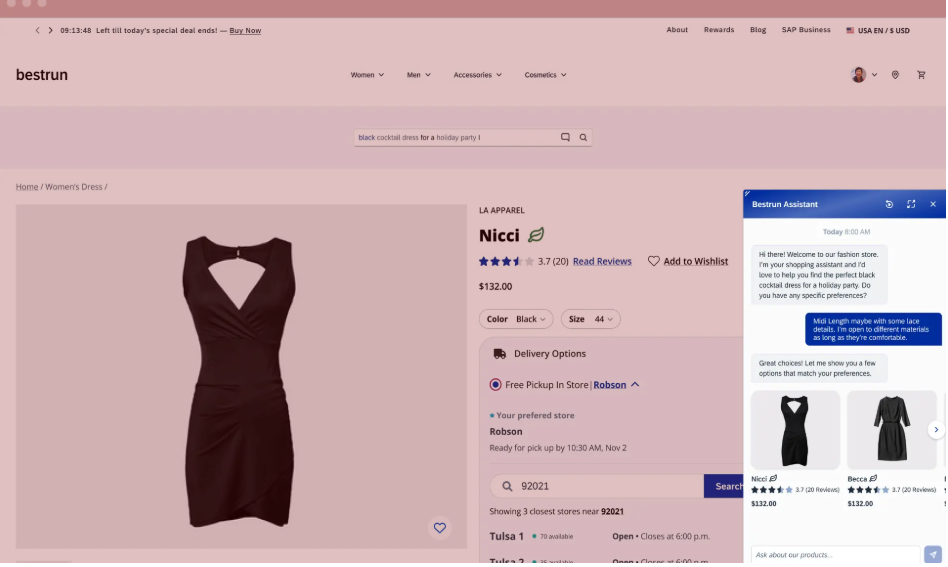
SAP CX AI Toolkit includes an online AI shopping assistant designed to support ecommerce experiences through natural language interactions. The shopping assistant allows customers to ask questions about products, including details, availability, pricing, and compatibility. Customers then receive context-aware responses that help them move through the buying process more efficiently.
The assistant is built for businesses using SAP’s commerce ecosystem and integrates with SAP Commerce Cloud and related CX products. As such, it supports conversational product discovery and personalized recommendations based on available product and customer data. This helps deliver more relevant shopping experiences across digital channels.
Beyond the shopping assistant itself, the SAP CX AI Toolkit provides a broader set of AI capabilities that support ecommerce operations. These include AI-powered tools for catalog management and content creation, and sales assistance features that generate insights and summaries.
Main features:
- AI shopping assistant for conversational product discovery
- Natural language queries for product details, availability, pricing, and compatibility
- Context-aware responses and personalized product recommendations
- Integration with SAP Commerce Cloud and SAP CX products
- AI-powered tools for catalog management and content creation
Pricing:
Pricing is based on SAP contracts and usage, with details provided through SAP sales.
Salesforce Agentforce
Ratings: 4.3/5⭐️ (840+ reviews)
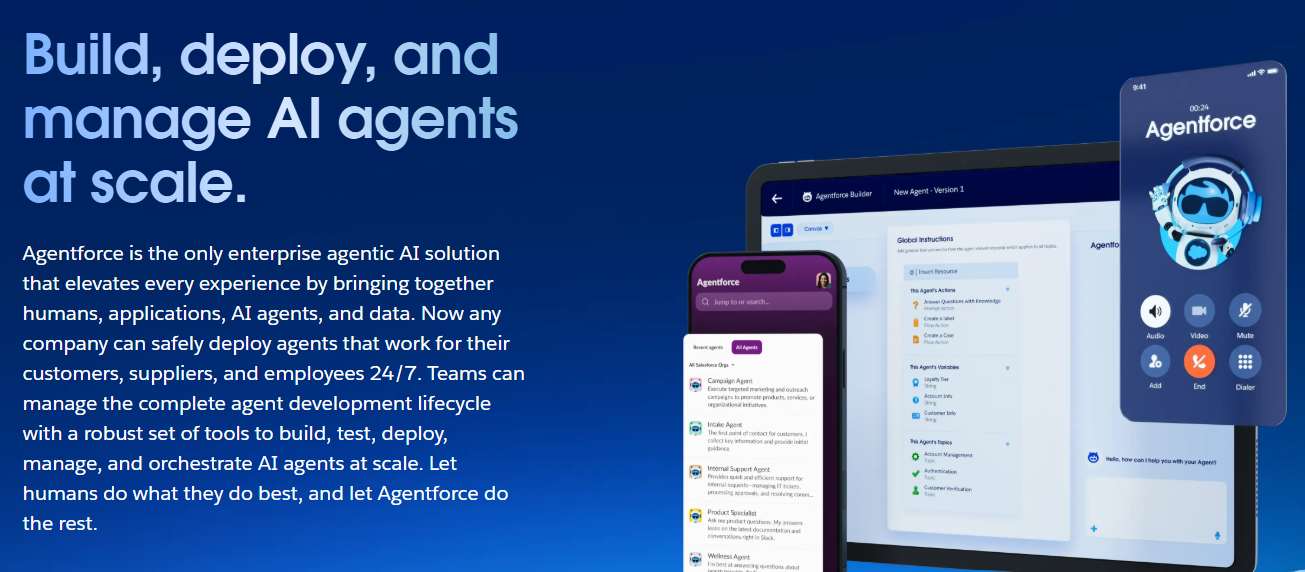
Salesforce Agentforce is a conversational AI platform designed to help businesses build and deploy AI agents that automate tasks and support customer interactions across digital channels. While it’s not positioned as a dedicated ecommerce shopping assistant, Agentforce can be used in retail environments to support shopping and service-related workflows when connected to Salesforce Commerce Cloud, Service Cloud, and Data Cloud.
Agentforce enables AI agents that understand context and take actions using real-time Salesforce data. This capability is powered by Salesforce’s agent reasoning architecture, which allows agents to retrieve information, follow workflows, and execute predefined actions. In a retail or ecommerce setup, this can support tasks such as responding to customer questions and handling order-related inquiries, as well as assisting with structured customer journeys.
Main features:
- AI platform for building and managing autonomous agents
- Agent Builder and Prompt Builder for configuring agent behavior
- Context-aware reasoning and action execution using Salesforce data
- Deployment across digital channels connected to Salesforce
- Integration with Salesforce workflows and automation tools
Pricing:
- Salesforce Foundations (Free)
- Flex Credits ($500/mo)
- Conversations ($2/conversation)
Read more: Here’s a comprehensive software comparison between Zendesk vs. Salesforce.
How to choose the right AI shopping assistant
The right AI shopping assistant depends on how and where your customers discover products. What also matters is how recommendations are generated, and how easily the tool fits into your existing setup.
Keeping these factors in mind helps narrow down options without overcomplicating the decision:
- Consider where your customers shop and ask questions: choose an assistant that operates in the same places your customers already browse and make decisions, whether that’s your website, messaging channels, or marketplaces.
- Evaluate how product data is used for recommendations: it’s important to look at how the assistant accesses your product catalog and context. Direct integrations usually lead to more accurate and relevant recommendations.
- Assess setup effort and long-term scalability: balance ease of setup with future needs. Some tools launch quickly, while others are built to scale with larger catalogs and more complex workflows.
AI shopping assistants: key takeaway
As conversational discovery replaces traditional search, these tools help reduce friction in the shopping journey and influence key outcomes like conversion rates and average order value. The most effective assistants use real product data and context to guide shoppers in a way that feels helpful and relevant instead of making them feel intrusive or scripted.
For ecommerce teams looking for a practical and Shopify-friendly approach, Tidio’s Lyro shopping assistant stands out as a flexible option. By combining real-time product recommendations with conversational support across multiple channels, Lyro helps stores guide shoppers from questions to purchases in no time. It uses Shopify product data to deliver context-aware recommendations, keeps information up to date automatically, and fits naturally into existing customer communication workflows. This makes Lyro a strong choice for teams that want to improve product discovery and buying confidence.
Turn product questions into purchases with Lyro’s shopping assistant
FAQ
Tidio is a customer communication platform for ecommerce and online businesses. It combines live chat, automated messaging, and AI-powered tools in one place to help teams manage conversations, support customers, and engage shoppers across multiple channels.
Lyro is Tidio’s AI agent that handles customer conversations automatically. It uses company knowledge and connected data sources to answer questions, resolve common issues, and support shoppers without human intervention, while still allowing handoff to agents when needed.
Yes. Lyro includes shopping assistance features for ecommerce stores, such as product recommendations, product comparisons, variant suggestions, and complementary product discovery. When connected to Shopify, Lyro uses store product data to provide context-aware recommendations and help shoppers make buying decisions directly in chat.