Key takeaways:
- An Instagram chatbot pays off on the repetitive work: instant replies overnight, the same FAQ answered endlessly, and a clean handoff when a conversation needs a person.
- Match the bot to the job. Rule-based flows handle predictable paths like order status and lead capture; AI like Lyro handles the open-ended questions that stall a scripted bot.
- Stay inside Meta’s rules. Automate through the official API on a Business or Creator account and respect the 24-hour window.
- Pick the tool by channel, budget, and the AI you need: ManyChat for cheap channel spread, Chatfuel for built-in AI, Tidio for natural-language AI with a free tier.
Your Instagram DMs are full of the same questions. Where’s my order? Do you ship to Canada? Is this back in stock? You answer them at 11 pm, miss a few overnight, and lose the sale to whoever replied first.
An Instagram chatbot fixes that. It replies the moment a message lands, day or night, and passes the conversation to you when it needs a human.
Instagram passed 3 billion monthly users in September 2025, and Meta named DMs as one of the app’s main growth drivers[1]. With that much conversation in the inbox, speed wins: nearly three-quarters of consumers expect a brand to reply on social within 24 hours[2].
This guide covers what an Instagram chatbot does in 2026, how AI changed them, what Meta’s rules let you automate, and how to build one in about ten minutes—no code.
Use live chat to support your customers in real-time
What is an Instagram chatbot?
An Instagram chatbot is software that automatically replies to messages inside Instagram, answering DMs, story replies, and comments without a person typing each response. It works 24/7, holds many one-to-one conversations at once, and handles repetitive tasks: order tracking, FAQs, lead capture, and product recommendations.
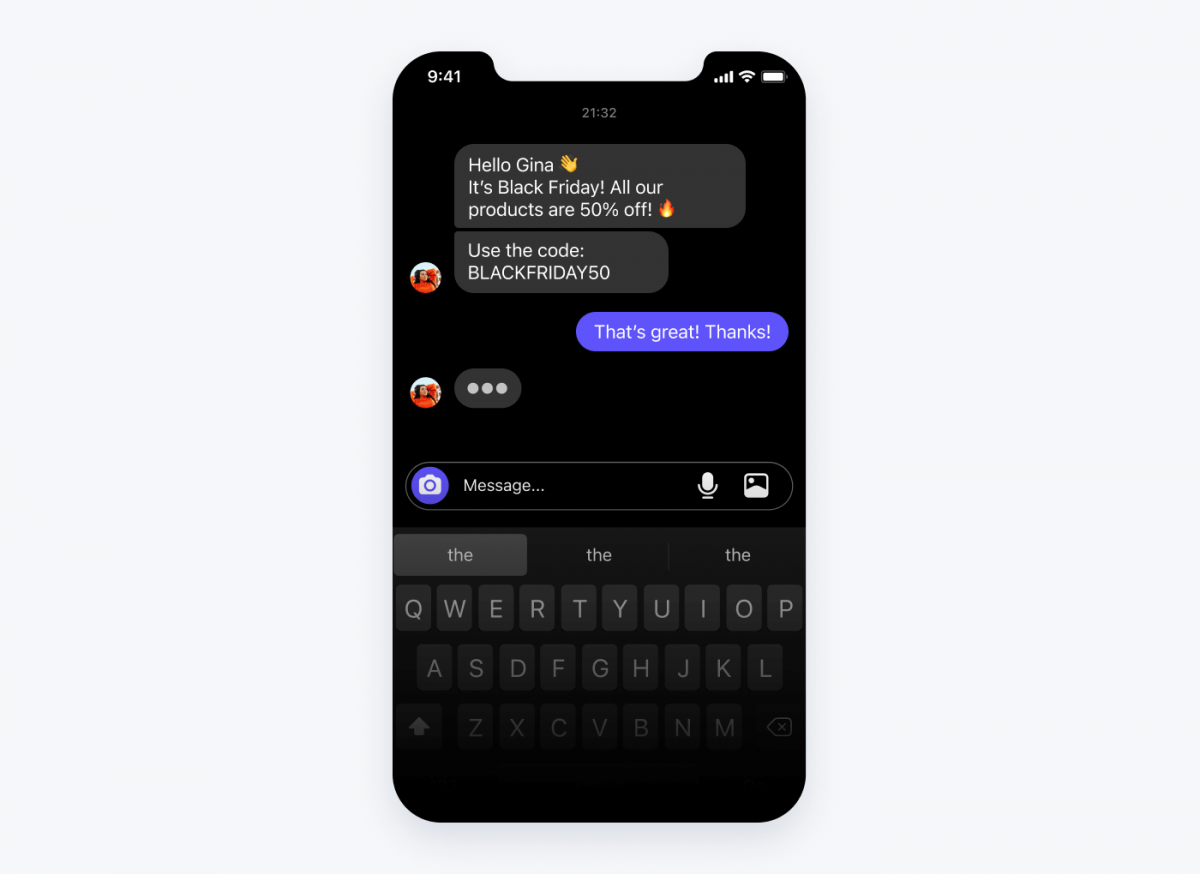
Most businesses put a chatbot to work on a handful of jobs:
- Answering questions about shipping, returns, and order status
- Replying to story reactions and comment triggers
- Collecting leads and email addresses
- Sending discount codes and product recommendations
- Taking simple orders inside the DM thread
That last point matters. Instagram is a sales channel now: 29% of users now buy directly on Instagram, one of the highest rates of any social platform[3], and a chatbot catches that intent before it cools.
How do Instagram bots work?
Rule-based Instagram bots run on conversation flows built from three pieces: triggers (when the bot starts), actions (what it does), and conditions (the logic that decides which action fires). It’s if this, then that—no code, just blocks in order.
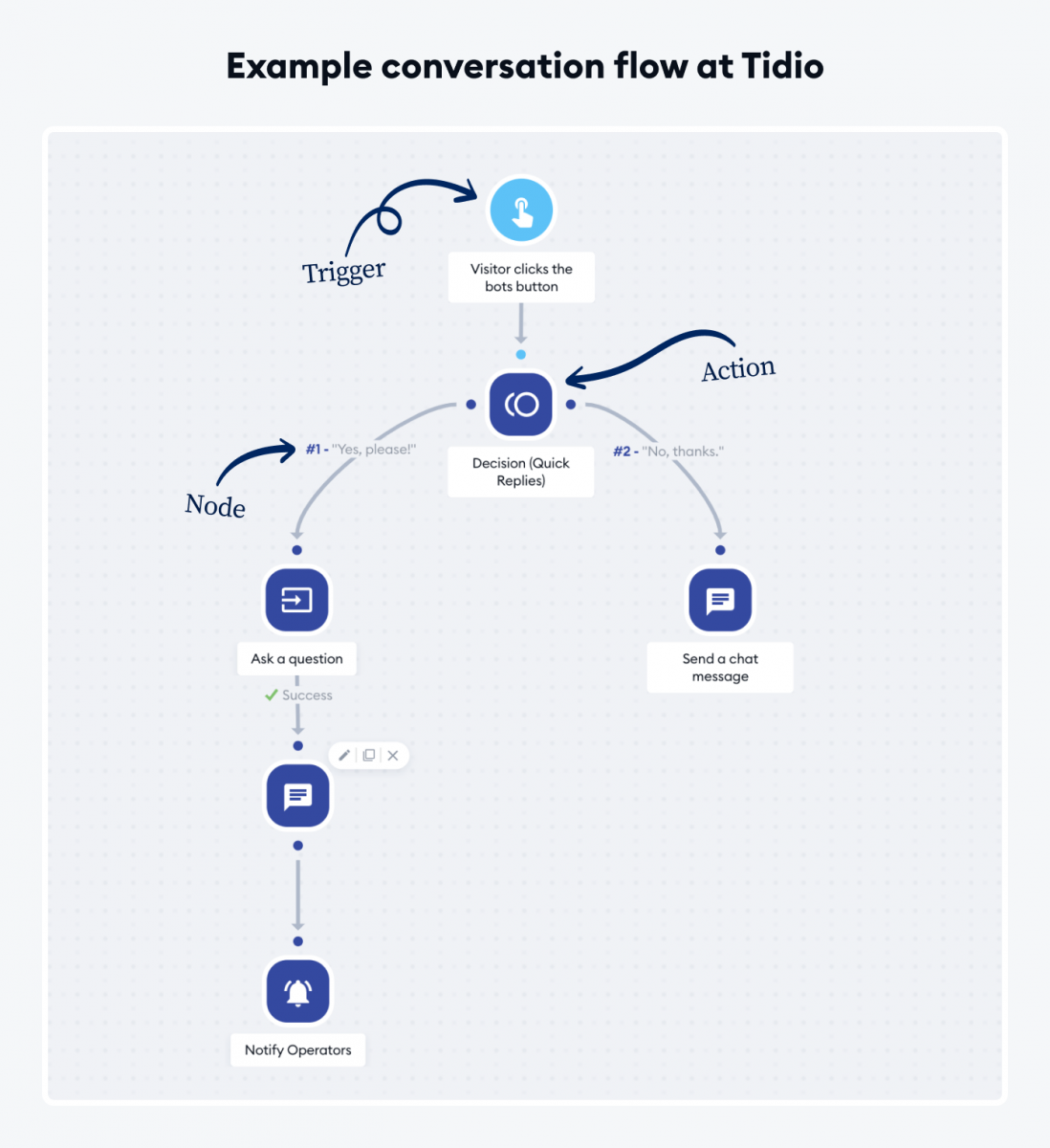
Say a customer DMs a shipping question. You set a flow triggered by words like “shipping” or “tracking,” and the bot replies with your policy and a tracking link. Change the answer by editing the trigger or the action. That’s the whole model for traditional bots.
The catch: rule-based flows only handle what you scripted. Phrase a question in a way the bot doesn’t recognize, and it stalls. That’s the gap AI closes.
Instagram AI chatbots: how they’re different in 2026
An Instagram AI chatbot reads the whole message and answers in your brand’s voice, instead of firing a canned reply when it spots a keyword. It holds context across a few turns and resolves questions you never scripted, pulling answers from your help docs or product data rather than a flowchart built for every phrasing.
The difference shows up the moment a customer goes off-script.
- Rule-based bots follow a flow you build by hand. A trigger like “returns” leads to one fixed response. Fast, predictable, easy to audit. But a customer who asks “can I send this back?” can miss the trigger and hit a dead end.
- AI chatbots read intent. “Can I send this back?”, “what’s your return window?”, and “this didn’t fit” all resolve to the same answer. You manage the knowledge base; the model handles the phrasing.
Most teams run both: AI for open questions, rule-based flows for structured paths like order status and lead capture.
A word on Meta’s own option. Instagram now has native AI features, and Meta AI can show up in chats. That’s handy for casual replies, but it doesn’t know your catalog, your policies, or when to hand a conversation to a person. A dedicated tool connects to your Instagram Business account, answers from your own content, and routes to a live agent when it hits its limit—where conversations actually close.
Tidio’s AI agent, Lyro, works this way. You point it at your FAQ page, help center, or a PDF, and it answers in natural language across Instagram DMs, Messenger, WhatsApp, and your website. It resolves up to 70% of routine questions on its own and hands off to a human, full conversation intact, when it can’t answer or senses frustration.
One honest caveat: Lyro is a paid add-on on Tidio’s base plans, so price it in rather than assuming AI is free. (More on cost below.)
Instagram DM automation: what Meta’s rules allow
Instagram DM automation runs through Meta’s official Messaging API. You need an Instagram Business or Creator account, and the key limit is the 24-hour standard messaging window: once a customer messages you, you have 24 hours to reply freely, including promotional content. Every new message resets the clock.
After 24 hours of silence, the window closes. You can send only specific, approved non-promotional message types.
There’s one main exception on Instagram: the Human Agent tag, which extends the window to seven days for support conversations that take longer to resolve. Read this part carefully. Meta allows that tag for real human agents only and bans applying it to automated or bot messages. Misuse can cost you API access.
A few more limits:
- The API only lets you message people who messaged you first. No cold outreach.
- Automation tools typically pace automated sending at roughly 200 DMs per hour.
- Never use a tool that asks for your Instagram password—that’s outside the official API and risks your account.
- A reputable chatbot platform connects through the official API and enforces these rules for you.
How to make an Instagram chatbot (with Tidio)
Building an Instagram chatbot takes minutes, not engineering. You connect a third-party tool to your Instagram Business account, then start from a template or build a flow yourself. Here’s the process in Tidio:
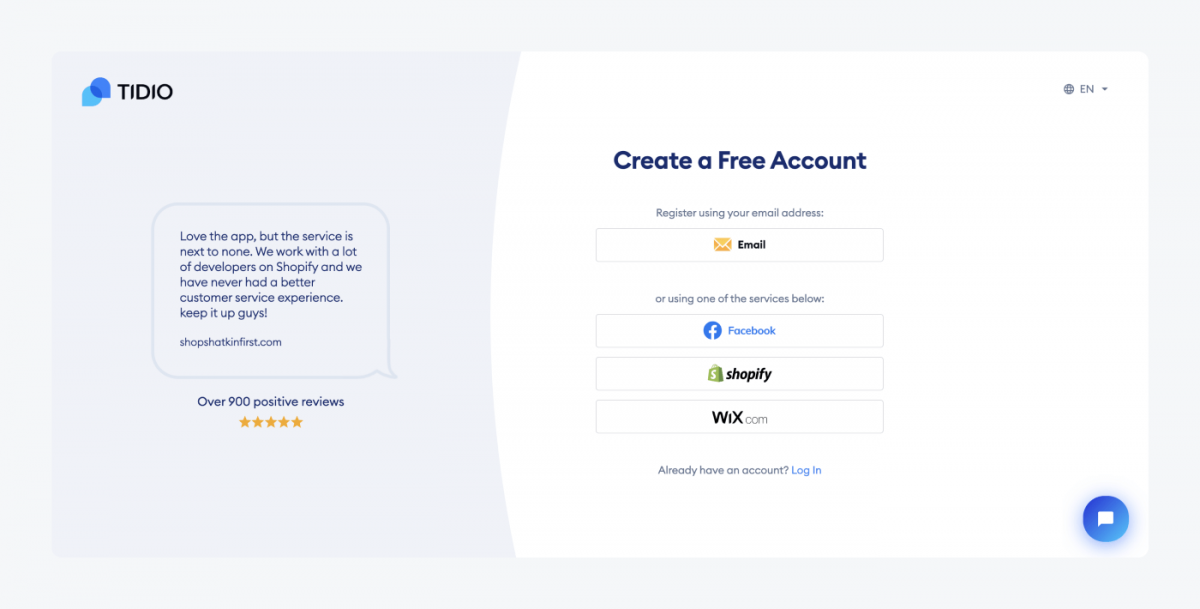
1. Create a free account. Sign up with email, Shopify, Wix, or a Facebook page. Skip the live-chat widget setup if you only came for chatbots. See how to get started with chatbots at Tidio.
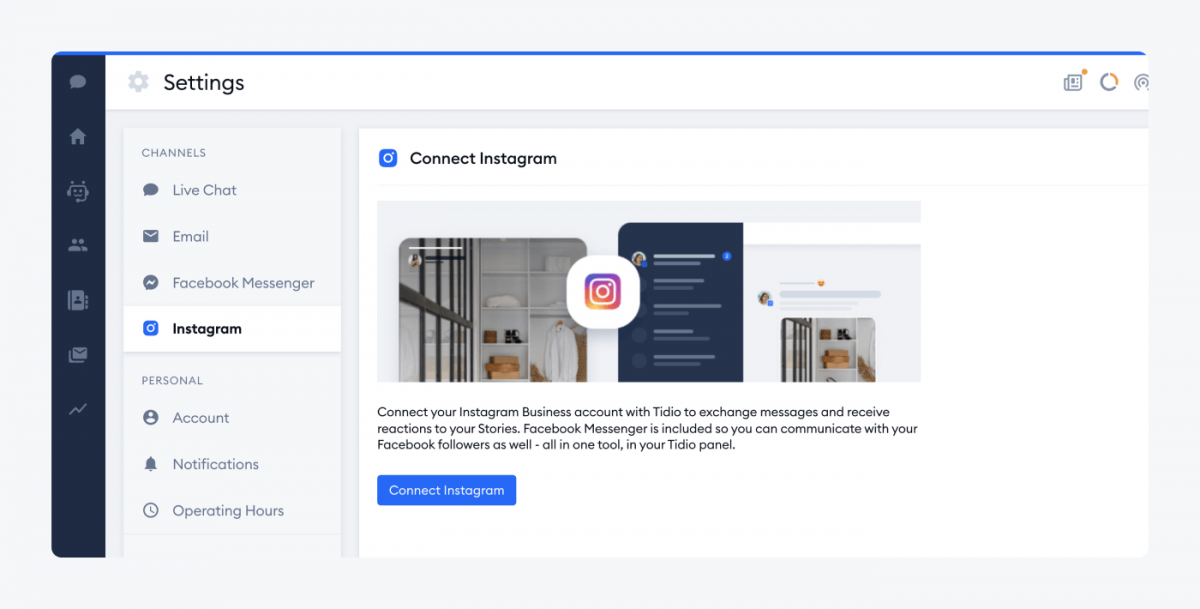
2. Connect your Instagram account. Open Settings → Channels → Instagram. No API keys or code. You authorize through a standard login and pick permissions.
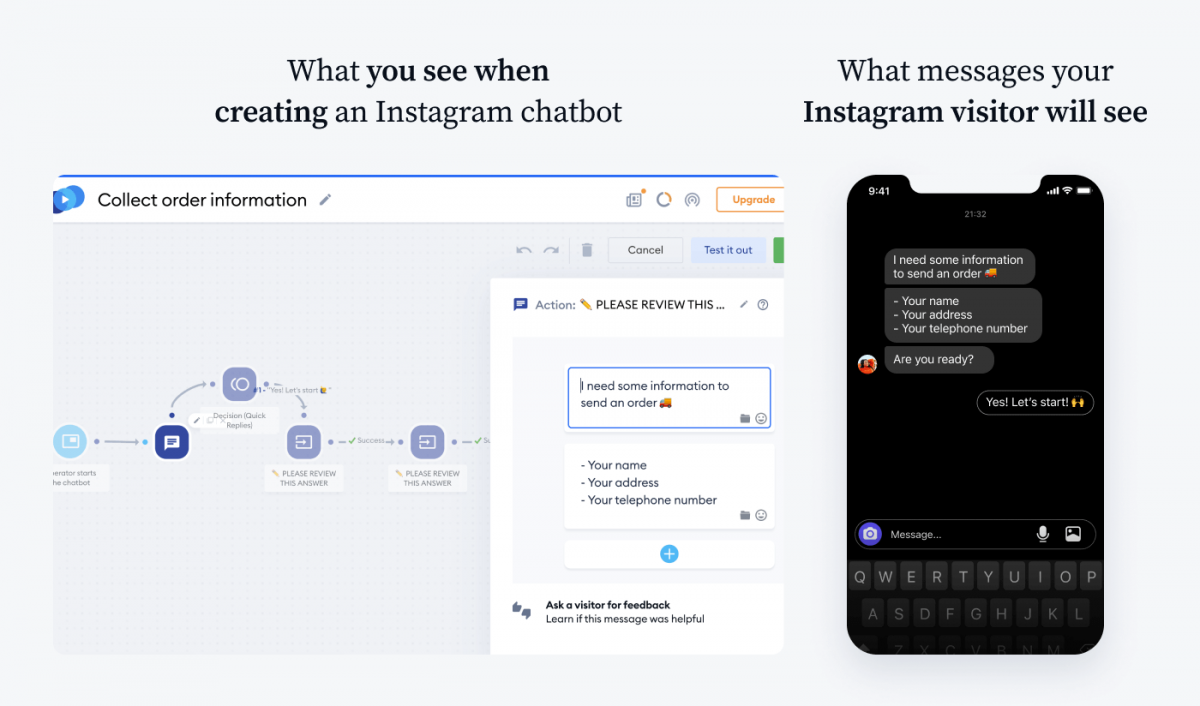
3. Pick a template or start from scratch. In the Chatbots panel, choose a ready-made Instagram template or click Add from scratch to build your own flow in the drag-and-drop editor.
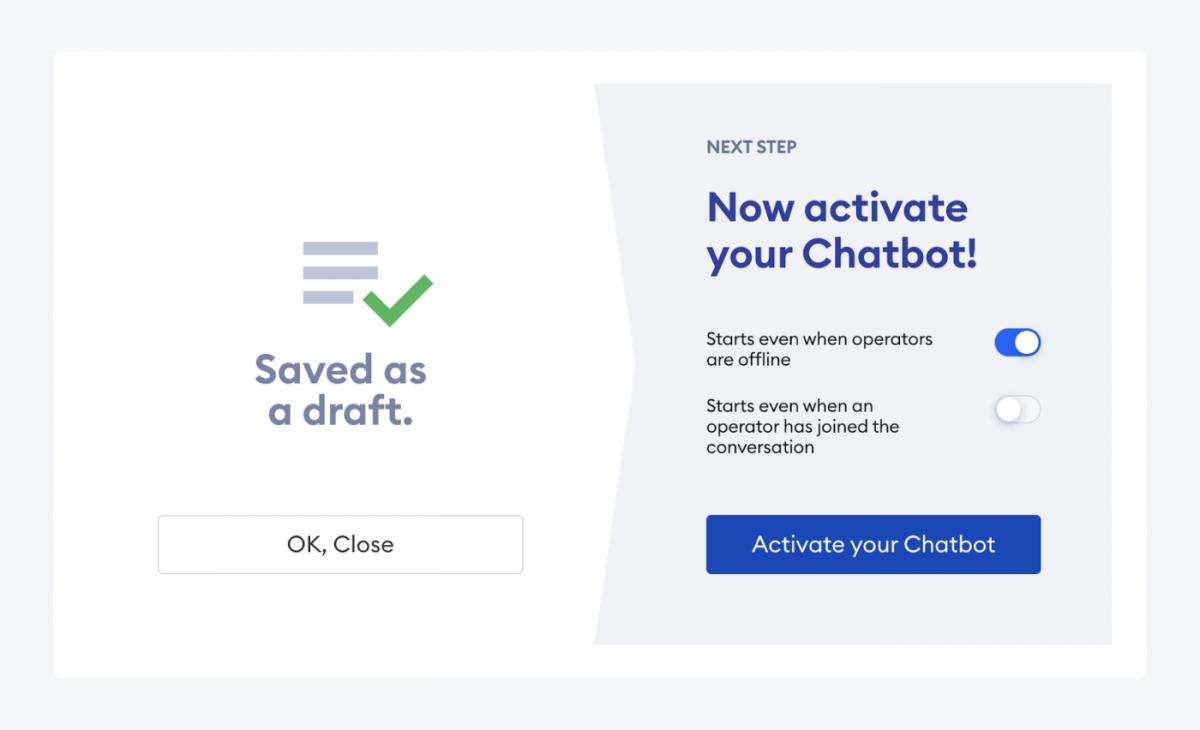
4. Activate it. One click and the bot goes live. Save it as a draft if you want to keep refining first.
New to flow building? Start with our guide to the best chatbot builders before you commit to a platform.
Boost customer satisfaction with a professional AI agent
Top Instagram chatbot tools compared
The right Instagram chatbot depends on how much you’ll lean on AI versus rule-based flows, which channels you sell on, and your budget. Tidio, ManyChat, and Chatfuel cover most of the market. All three changed pricing in 2026, so verify current rates before you buy.
| Tool | AI type | Free plan | Channels | Starting price |
|---|---|---|---|---|
| Tidio | Lyro—LLM-based, trained on your content | Yes (Lyro AI capped, then paid add-on) | Website, email, Instagram, Messenger, WhatsApp | Free; paid from ~$29/mo, Lyro add-on from ~$39/mo |
| ManyChat | Add-on, mostly keyword/single-step | Yes, but capped at 25 active contacts since March 2026 | Instagram, Messenger, WhatsApp, TikTok, SMS, email, Telegram | Free; paid from ~$15/mo, AI add-on ~$29/mo |
| Chatfuel | Built-in GPT-based AI agent | No (7-day trial) | Instagram, Messenger, WhatsApp, TikTok, web | From ~$69/mo |
Short version: ManyChat has the widest channel spread and the cheapest paid entry, but its built-in AI is shallow and the free plan is now too small to run a business on. Chatfuel ships a real AI agent out of the box but dropped its free plan and starts steep. Tidio’s Lyro gives you natural-language AI plus a usable free tier, with AI sitting in a separate add-on. For a closer look at one option, see our full Chatfuel review.
Instagram chatbot message examples you can copy
The Instagram chatbot messages that work each map to one job: greet a follower, answer a repeat question, recommend a product, or hand off to a person. Here are eight to paste in and edit. Keep them short, specific, and in your own voice—that’s what stops them sounding automated.
Welcome / new DM
| Hey! Thanks for the message 👋 I can help with orders, sizing, and returns. What are you after today? |
Comment-to-DM
| Saw your comment on our post—here’s the link you asked for: [link]. Want me to save your size while it’s in stock? |
Shipping
| We ship in 1–2 business days, and delivery takes another 3–5. Drop your order number and I’ll pull up the tracking. |
Returns
| Happy to help. You’ve got 30 days to return anything unworn. Send me your order number and I’ll start it now. |
Product recommendation
| Tell me what you’re shopping for and your budget, and I’ll send two or three options. Casual or dressy? |
Order status
| What’s your order number? I’ll check where it is right now. |
Out-of-hours handoff
| Our team’s offline until 9am. I’ve logged your question, and a human replies first thing. Anything else meanwhile? |
Lead capture
| Want 10% off your first order? Drop your email and I’ll send the code straight here. |
Keep these from feeling robotic:
- Use contractions and one emoji, max. “I’ll” reads warmer than “I will.”
- Ask one question per message so the reply is easy.
- Match your brand voice—playful or plain, pick one and hold it.
- Always offer an exit to a person (“type agent anytime”).
Want more? Browse our chatbot message templates.
FAQ
Yes. Instagram has no native flow builder, but third-party tools like Tidio, ManyChat, and Chatfuel connect through Meta’s official Messaging API to automate DMs, story replies, and comment responses on a Business or Creator account.
Sign up for a chatbot platform, connect your Instagram Business or Creator account through a standard login, then build a flow in a drag-and-drop editor or pick a ready-made template. With a tool like Tidio, the whole setup takes about ten minutes and needs no code.
A rule-based bot matches keywords and follows a fixed flow you script in advance. An AI chatbot uses large language models to understand intent, answer unscripted questions, and pull replies from your own content—better for open-ended conversations like product advice.
It depends on your needs. ManyChat covers the most channels at the lowest price, Chatfuel ships a built-in AI agent, and Tidio’s Lyro offers natural-language AI with a free tier. Match the tool to your channels, your budget, and how much you need real AI versus simple flows.
Yes, when you use the official API and follow Meta’s rules: a Business or Creator account, the 24-hour messaging window, and the Human Agent tag for real people only. Tools that ask for your password operate outside the API and put your account at risk.