
Key takeaways
- Best for small teams and online stores: Tidio. Lyro, live chat and email tickets share one inbox. Starter with Lyro is $33/month billed annually; up to 10 seats are included on self-serve plans, and Lyro and human replies share one conversation quota.
- Closest like-for-like enterprise swap: Decagon. It's an enterprise AI agent with a demo-led sale like Sierra's, priced per conversation or per resolution.
- Published per-outcome pricing: Intercom Fin. $0.99 per outcome, and it works on top of Zendesk, Salesforce or Freshdesk as well as Intercom.
- Already on Zendesk or Salesforce? Start with Zendesk AI agents or Agentforce before you buy a separate platform.
Tidio is the Sierra alternative for small and mid-sized customer service teams and online stores that want an AI agent live this week, without a sales cycle. Starter with Lyro is $33/month billed annually, includes up to 10 seats on self-serve plans, and gives Lyro and human replies one shared conversation quota of 50 a month. Sierra publishes no pricing and offers no free trial; every purchase starts with a demo. Enterprises that need the same scale and a sales-led setup should look at Decagon, and Intercom Fin publishes its price per outcome.
The tables below compare each Sierra alternative's pricing model and what 1,000 AI agent conversations a month cost.
Tidio is our product; here's how we compared. For fairness, each AI agent was costed at that same volume from its pricing page or documented billing model, Tidio's entry lists its limits next to its strengths, and where an enterprise platform is the better buy, we say it. How we chose.
Sierra alternatives at a glance
| Tool | Best for | Pricing model | Starting price | Free plan / trial | G2 rating |
|---|---|---|---|---|---|
| Tidio | Small and mid-sized teams and online stores | Per conversation; Lyro and human replies share one quota | Starter with Lyro, $33/mo billed annually for 50 conversations, up to 10 seats | Free plan · 7-day trial | 4.6 (2,169)[1] |
| Decagon | An enterprise swap for Sierra | Per conversation or per resolution | Custom, demo only | No | 4.4 (161)[2] |
| Intercom Fin | A published per-outcome rate on any help desk | Per outcome | $0.99 per outcome; $49/mo minimum on another help desk | 14-day trial | 4.5 (3,930)[3] |
| Zendesk AI agents | Teams already on Zendesk | Per agent seat with included resolutions, then per resolution | Suite Team $55/agent/mo billed annually, 5 resolutions per agent included | 14-day trial | 4.3 (7,091)[4] |
| Salesforce Agentforce | Service teams whose cases live in Salesforce | Credits, per conversation or per user | $2 per conversation, or $500 per 100,000 Flex Credits | Free tier for Enterprise Edition orgs | 4.3 (1,695)[5] |
| Ada | High volumes of repeat questions | Per conversation; per resolution for some enterprises | Custom, demo only | No | 4.6 (174)[6] |
| Freshdesk Freddy AI Agent | Mid-sized teams on a per-agent help desk | Per agent seat plus AI sessions | Growth $19/agent/mo billed annually; 500 sessions included once, then $49 per 100 | 14-day trial | 4.4 (3,795)[7] |
| Gorgias AI Agent | Shopify stores with a large ticket queue | Help desk tier plus per AI interaction | $40/mo on Starter (help desk + AI Agent), billed monthly | 7-day trial | 4.6 (582)[8] |
| Lorikeet | Regulated support in fintech, health and insurance | Platform fee plus per resolution | $2,100/mo billed annually, plus $0.99 per chat or email resolution | 30-day trial | 4.4 (7)[9] |
| Kore.ai | Large contact centers mixing voice and digital | Per session, annual contract | Custom, demo only | No | 4.6 (509)[10] |
| Cognigy (NiCE) | Voice-heavy contact centers on NiCE, Genesys or Amazon Connect | Custom | Custom, demo only | No | 4.6 (13)[11] |
For comparison, Sierra holds a 4.5 on G2 from 135 reviews.[12] Confirm prices with each vendor before you commit.
Why teams look for a Sierra alternative
Sierra AI has earned its place on enterprise customer service shortlists: launched in 2024 by Bret Taylor and Clay Bavor, it reports over $400 million in annual revenue. Its agents handle voice, chat, email and WhatsApp in 59 languages, and Sierra's team builds and tunes each one with the customer.
The reasons to look elsewhere come from how Sierra sells, not from what its agent can do:
- There are no public prices. No pricing page and no free trial.
- You pay per outcome, so the definition matters. Sierra describes its model as "only pay for the value delivered", with no charge "in most cases" for a conversation the agent doesn't resolve. Your contract has to define what counts as an outcome, and the bill grows as the agent improves.
- It's built for large deployments. Sierra promises deployment "in weeks", with its no-code Agent Studio and an Agent SDK for code. A team of 5 to 20 people usually wants an agent it can launch and adjust alone.
How we chose these alternatives
Every tool on the list had to meet three criteria:
- It does Sierra's core job. An AI customer service agent that answers customers on its own, takes actions in other systems and hands the conversation to people.
- Its pricing model is public. Published prices, a free plan or trial, or, for demo-only platforms like Sierra, a documented billing model you can compare.
- A Sierra customer has a clear reason to switch to it. A visible price, self-serve setup, an AI agent inside the help desk you already run, or deeper voice coverage.
We reviewed each tool on its vendor pricing pages and product documentation, and took ratings from G2.
The 11 best Sierra alternatives in 2026
1. Tidio
Best for: small and mid-sized teams and online stores that want an AI agent live in days, without a sales cycle.
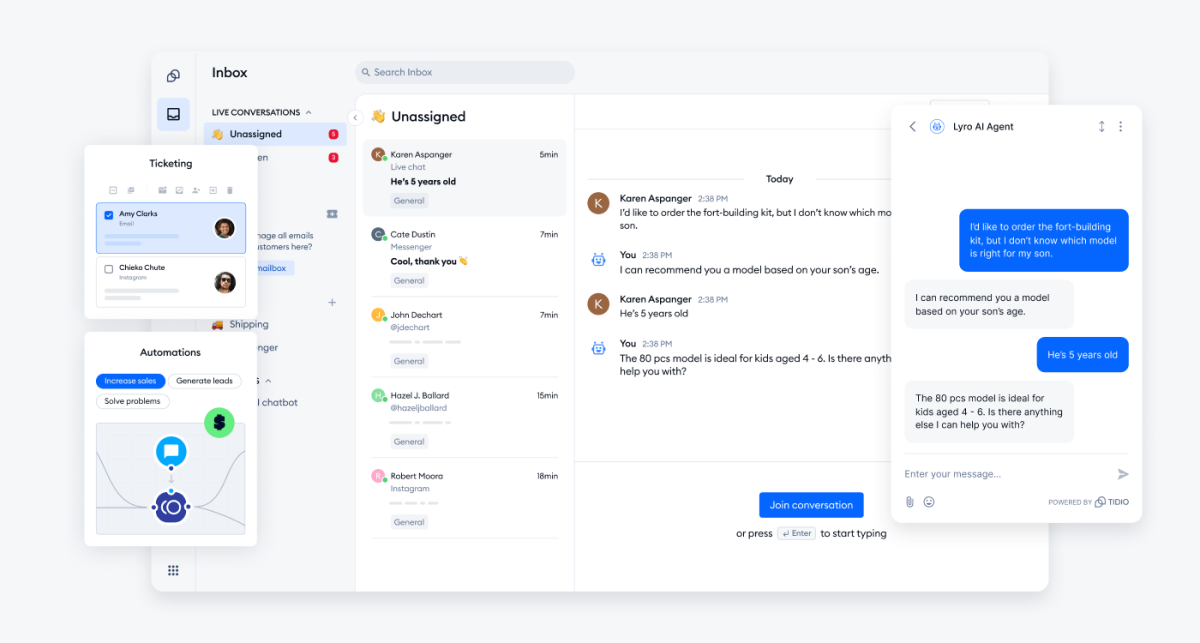
Tidio is a customer service platform with live chat, email tickets and an AI agent called Lyro in one inbox. Sierra builds an agent for you. With Tidio, you build one yourself: Lyro scans your help content and website, answers in 51 languages on live chat, email, Messenger, Instagram and WhatsApp (the WhatsApp integration is on every plan; message templates need Growth or higher), and hands the conversation to your team when it should.
Lyro goes beyond FAQs. Smart Actions and MCP tools let it check an order or take a step in another system, and Guidance sets the rules it follows. You can test its answers in the playground first; those tests don't count toward your quota. For Shopify stores, agents can preview a shopper's cart next to the chat, and Growth adds order history and order edits in the inbox.
Pros
- Self-serve: sign up, connect your content and switch Lyro on, with a free plan and a 7-day trial.
- One plan covers the AI agent, live chat and tickets, priced by conversations, with up to 10 seats included on self-serve plans.
- Built-in Shopify features for online stores.
Cons
- Lyro and human replies share one conversation quota, so a busy season means keeping an eye on usage.
- Plus and Premium come with a quote from the sales team, which suits larger rollouts that need custom limits.
Pricing:
- Free: 50 human conversations/month, 100 Flows visitors/month + 50 one-time Lyro AI conversations.
- Starter: Human only: from $24/month for 100 conversations. With Lyro AI: from $33/month for 50 conversations shared by AI and your team.
- Growth: from $41/month for 200 human conversations or $63/month for 100 AI + human conversations; scalable to 1,000/month.
- Plus: from $300/month + usage. Premium: custom pricing.
- Optional add-ons: Flows, Inbox AI, Help Center, Voice, and branding removal.
- 7-day free trial: Growth features with Lyro AI and 100 AI + human conversations, no card required; moves to Free unless you choose a paid plan.
Starting prices shown with annual billing.
See Tidio pricing for every tier.
Rating: G2 4.6/5 (2,169 reviews)
What a G2 reviewer says: "I also love their AI chatbot (Lyro AI agent) that we integrated to provide first responses to customers when we’re not available." (5-star review of Lyro AI Agent)
Versus Sierra: you gain public prices, a free plan, and an agent your own team can launch and edit without a project. You give up Sierra's fully managed build, its voice agent in 59 languages and its depth for very large, complex deployments.
Try Tidio free
2. Decagon
Best for: enterprises that want a like-for-like Sierra replacement with a different contract model.
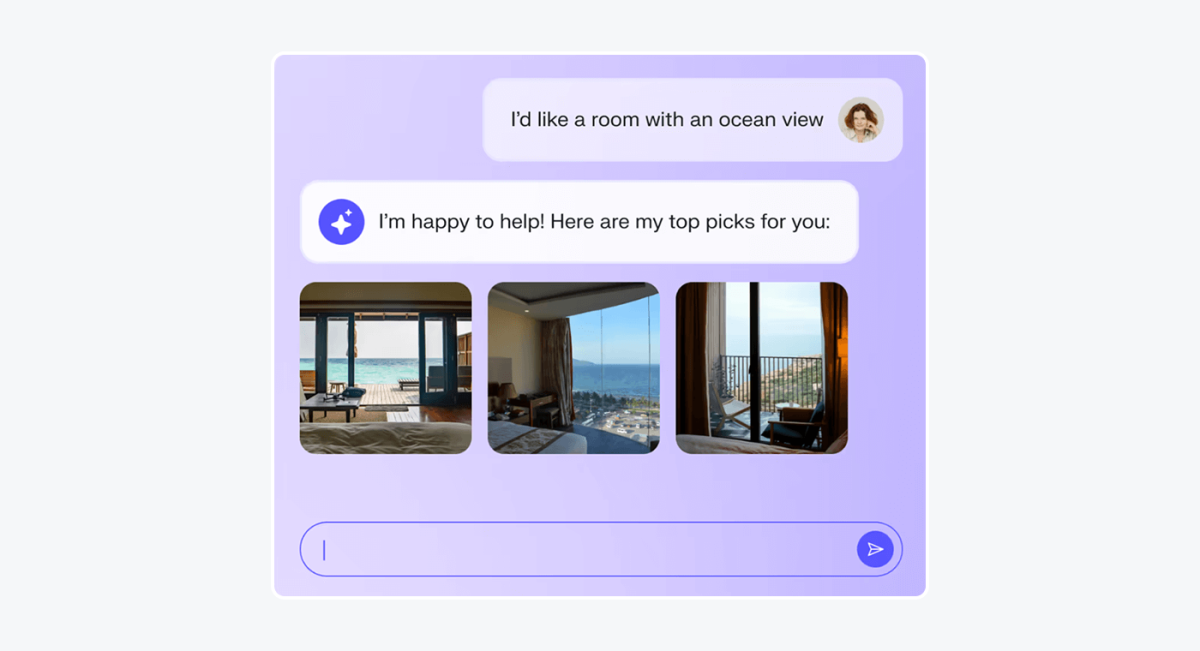
Decagon sells to the same enterprise buyers as Sierra, through demos. Per its Sierra comparison page, its agent covers chat, voice, email, SMS and WhatsApp in over 70 languages. Workflows are written in plain English as Agent Operating Procedures (AOPs), with tools for A/B experiments and always-on QA.
Pros
- Two pricing models: per conversation or per resolution, with no charge for escalations on the per-resolution model.
- Says most enterprises go live "in weeks rather than months".
Cons
- No public prices or trial: Decagon's site offers a demo request instead of a pricing page.
- G2 users report about two months to implement on average.
Pricing: custom. Per Decagon's Sierra comparison page, most enterprises choose per-conversation pricing for predictable costs.
Rating: G2 4.4/5 (161 reviews)[2]
Versus Sierra: a similar enterprise purchase, with the option of per-conversation pricing instead of negotiating what counts as a resolution.
3. Intercom Fin
Best for: teams that want a published per-outcome price on the help desk they already run.
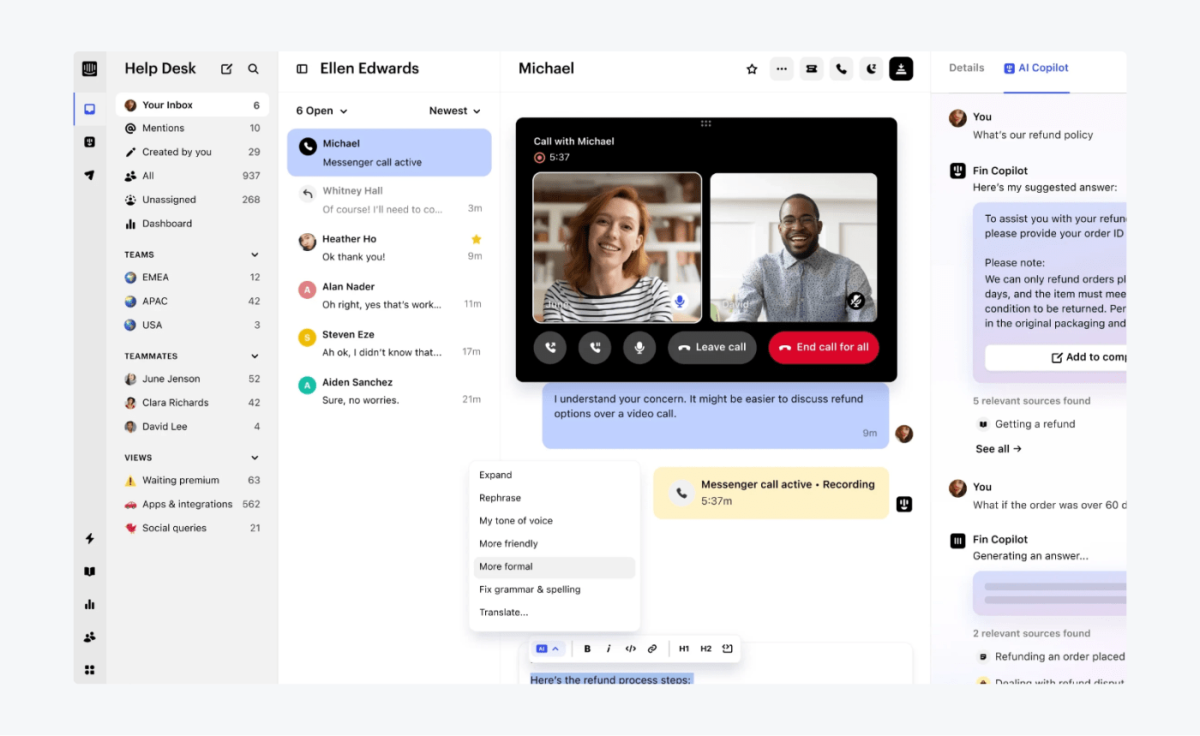
Fin is Intercom's AI agent: Sierra's per-outcome model, with a public rate card on Intercom's pricing page. It runs in Intercom's help desk or on top of Zendesk, Salesforce, Freshdesk and others, answers on chat, email, social, Slack and voice, and acts in your systems through Procedures and data connectors.
Pros
- $0.99 per outcome, charged at most once per conversation, with spending limits and alerts.
- 14-day trial with no card; Intercom says you can go live in hours.
Cons
- Intercom's own help desk adds seat fees: from $29 a seat a month billed annually on Essential, $85 on Advanced and $132 on Expert.
- Fin Voice costs $1.99 per outcome and goes through sales.
Pricing: $0.99 per outcome. On another help desk, there's a $49 monthly minimum that includes 50 outcomes.
Rating: G2 4.5/5 (3,930 reviews, combined Intercom and Fin listing)[3]
Versus Sierra: you can model the price before talking to anyone, but you give up the fully managed build.
4. Zendesk AI agents
Best for: teams already on Zendesk that want AI agents without another vendor.
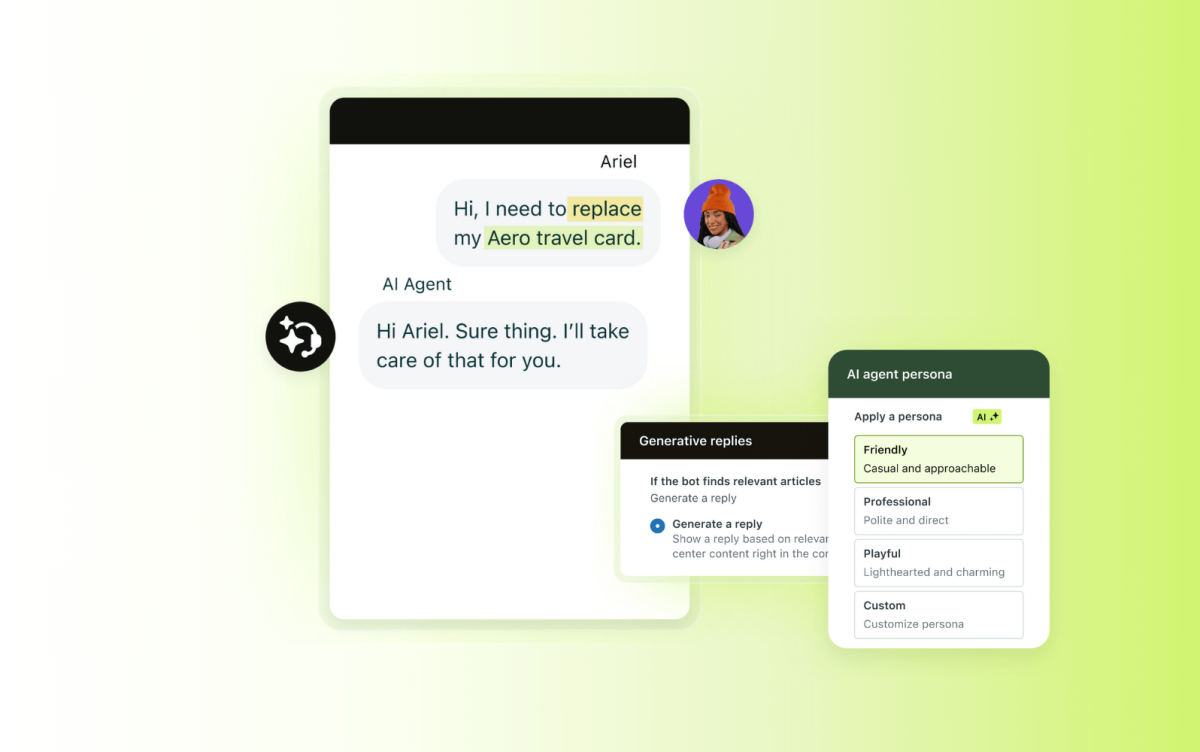
Zendesk's AI agents are part of every Suite and Support plan. They work on messaging, email, voice and social channels and take actions through APIs, MCP and connected tools. In 2026, Zendesk completed its acquisition of Forethought, another AI agent vendor often compared with Sierra.
Pros
- No new vendor to evaluate if your tickets already live in Zendesk.
- Pricing is public: seats plus a set number of resolutions, then a fixed rate per resolution.
Cons
- Seat prices add up for large teams, and resolutions beyond the included 5 or 10 per agent are billed separately.
- AI agents for voice need Zendesk's voice product.
Pricing: per Zendesk's pricing page, Suite Team $55 and Suite Professional $115 per agent a month billed annually. They include 5 and 10 automated resolutions per agent a month. Extra resolutions cost $1.50 committed or $2.00 pay-as-you-go.
Rating: G2 4.3/5 (7,091 reviews, Zendesk for Customer Service)[4]
Versus Sierra: the agent already knows your tickets and help center, but it stays tied to Zendesk.
5. Salesforce Agentforce
Best for: service teams whose customer records and cases already live in Salesforce.
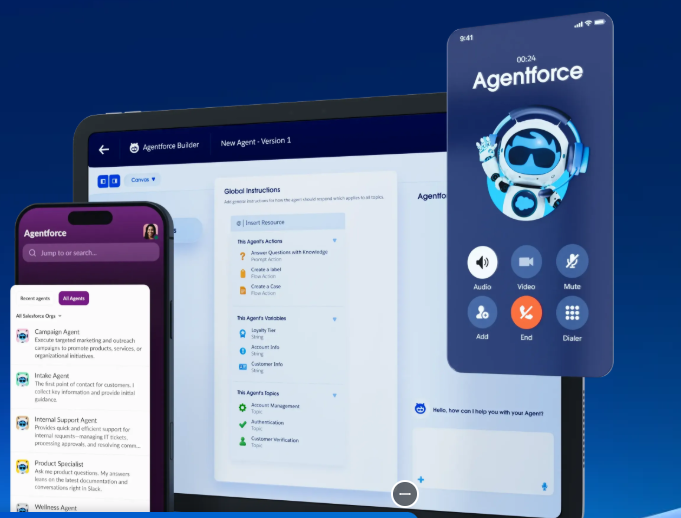
Agentforce is Salesforce's AI agent platform, built into Service Cloud. Agents use your existing Flows, Apex and APIs as actions and run on web chat, WhatsApp, Messenger and voice, with the Einstein Trust Layer handling data retention and toxicity checks.
Pros
- One system for the customer record, the case and the agent.
- Several pricing options, including a flat $2 per conversation.
Cons
- Needs a Salesforce org; the free Salesforce Foundations tier is a $0 add-on for Enterprise Edition and above.
- Pricing has many parts (credits, conversations, per-user add-ons, editions), so modeling the bill takes time.
Pricing: Flex Credits at $500 per 100,000 credits (a standard action uses 20), $2 per conversation, or per-user add-ons from $125 a user a month.
Rating: G2 4.3/5 (1,695 reviews)[5]
Versus Sierra: the agent lives inside your CRM, which only helps if Salesforce is already your system of record.
6. Ada
Best for: enterprises with large volumes of the same repeat questions across many channels.
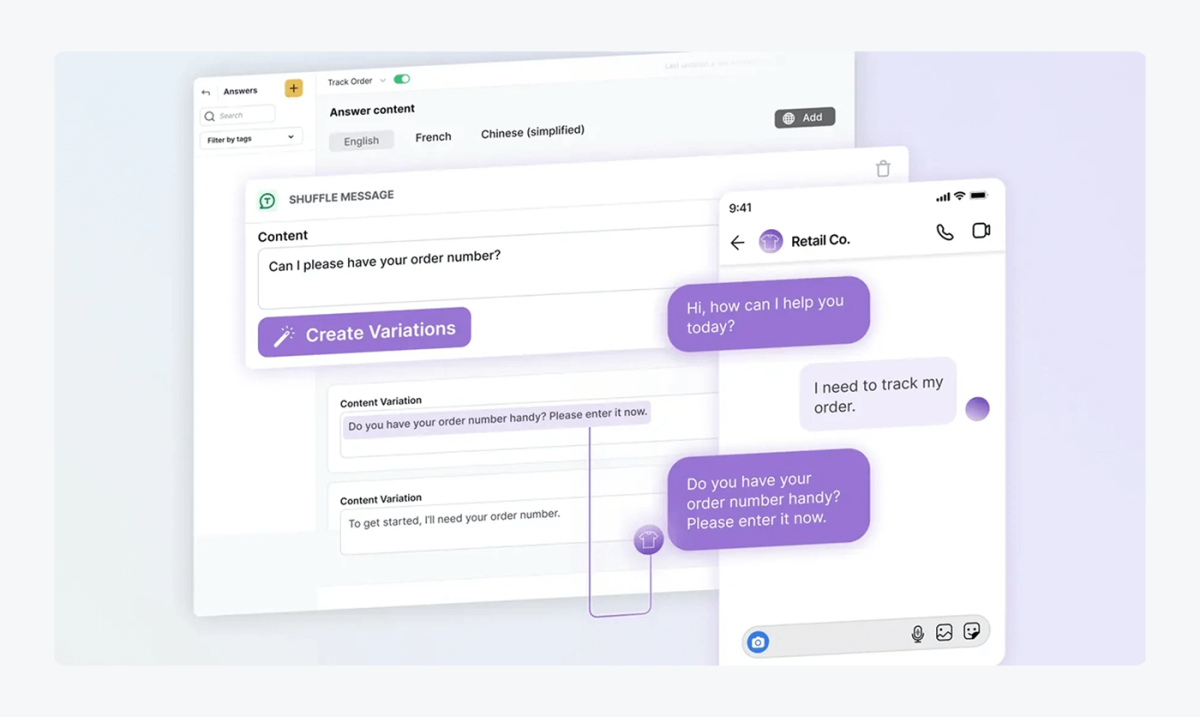
Ada is a standalone enterprise AI agent platform. Per Ada's platform page, its agent covers voice, web chat, Messenger, WhatsApp, SMS, Instagram, in-app and email, and Playbooks turn standard operating procedures into agent workflows.
Pros
- Eight channels, voice and email included.
- Per-conversation pricing by default, with a resolution-based option for some enterprises.
Cons
- No public prices or trial: Ada's pricing page is a demo request form.
- No published setup time.
Pricing: custom. You pay for each conversation the agent has with customers; resolution-based pricing is offered to some enterprises.
Rating: G2 4.6/5 (174 reviews)[6]
Versus Sierra: per-conversation pricing by default, through a similar demo-led purchase.
7. Freshdesk Freddy AI Agent
Best for: mid-sized teams that want a per-agent help desk with an AI agent at a published price.
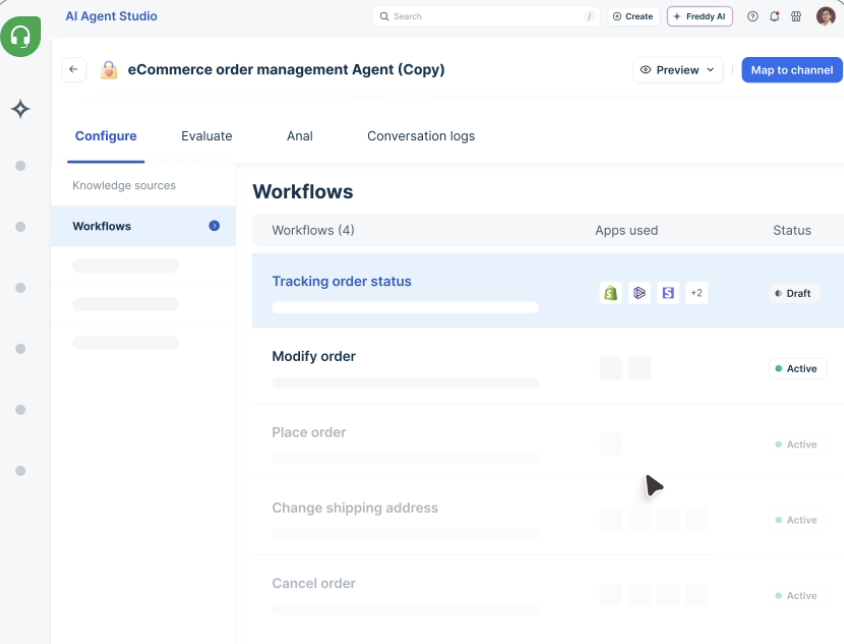
Freddy AI Agent is the AI agent inside Freshdesk. It answers on email, web chat, WhatsApp and social channels in 60+ languages, and Freshworks says it launches "in minutes". It can process refunds and update orders, with prebuilt workflows for Shopify, Stripe, PayPal and FedEx.
Pros
- Low entry seat price, and AI agent sessions at a published rate.
- 14-day trial with no card.
Cons
- The 500 included AI sessions are a one-time allowance per account, not a monthly one.
- Per-agent pricing grows with every hire.
Pricing: per agent a month, billed annually: Growth $19, Pro $55, Enterprise $89. Each extra 100 AI Agent sessions cost $49.
Rating: G2 4.4/5 (3,795 reviews, Freshdesk)[7]
Versus Sierra: a full help desk with a self-serve AI agent at a known price, with less depth for complex multi-system journeys.
8. Gorgias AI Agent
Best for: Shopify stores with a large ticket queue that want AI to handle order questions.
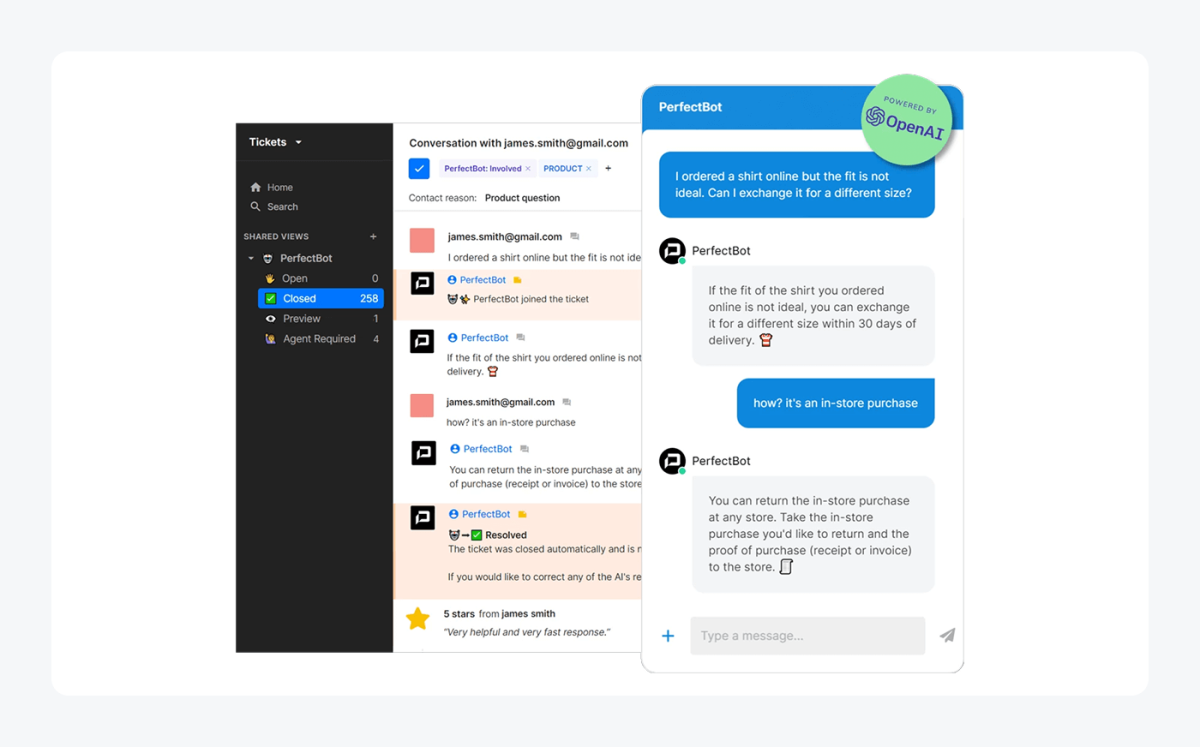
Gorgias is a help desk built for e-commerce. Its AI Agent answers and acts on order questions with Shopify data, and Gorgias says you can be "live on your store in under an hour." Plans are priced by ticket volume, not by seat.
Pros
- Built around e-commerce workflows from the start.
- 7-day trial with no payment details.
Cons
- Each AI interaction also counts as a help desk ticket against your plan.
- Costs climb quickly with volume: Pro is $300 a month billed annually for 2,000 tickets, before AI.
Pricing: Starter is $10 a month for the help desk plus $30 for AI Agent, billed monthly. Basic costs $50 a month billed annually, or $60 monthly, for 300 tickets. AI Agent costs $0.90 per interaction billed annually or $1.00 monthly.
Rating: G2 4.6/5 (582 reviews)[8]
Versus Sierra: e-commerce AI a store team can switch on in an afternoon, with little reach outside retail.
9. Lorikeet
Best for: regulated support teams in fintech, health and insurance that want published prices.
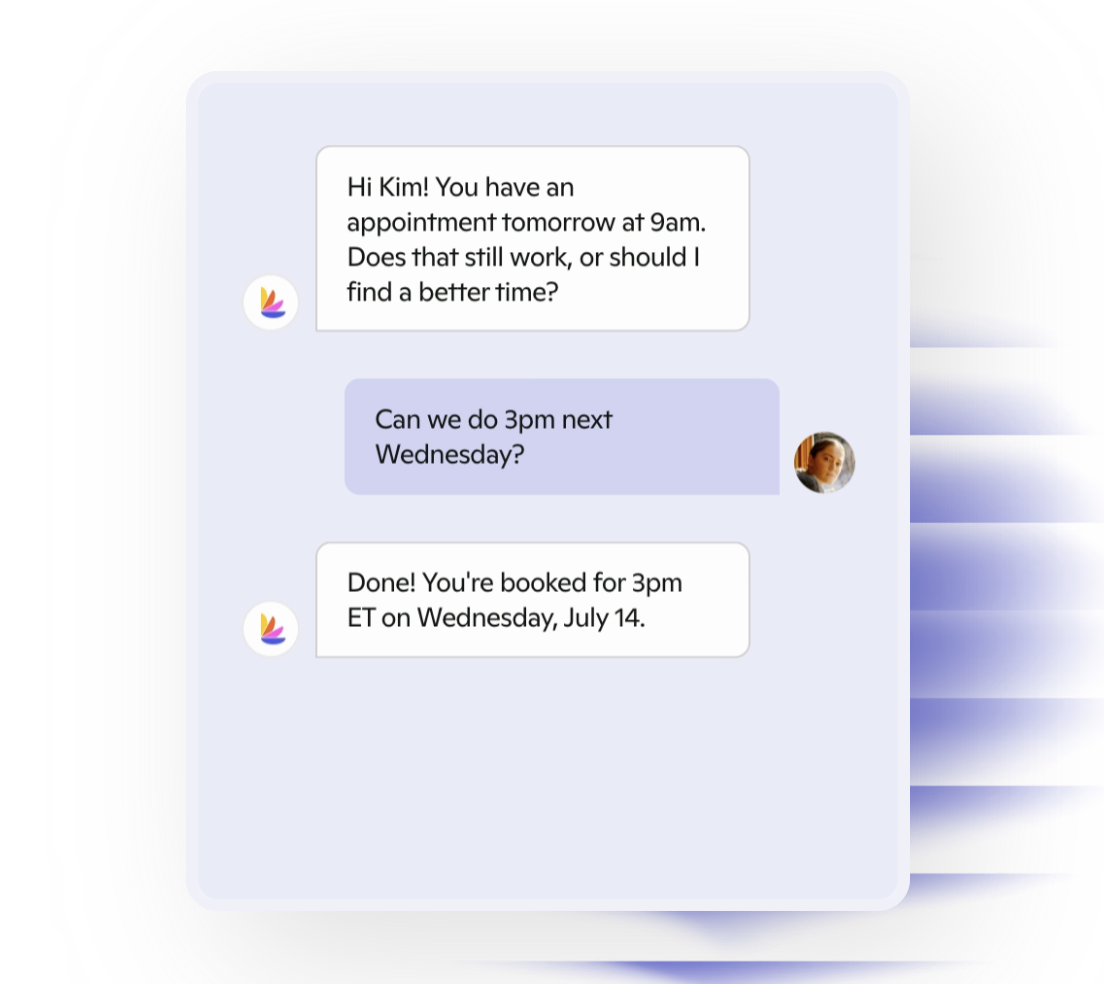
Lorikeet is an AI agent for regulated industries. One agent covers chat, email, voice and SMS and plugs into your help desk (Zendesk, Intercom, Salesforce and others) without a migration. Unusually for this tier, its prices are public, and escalations aren't charged.
Pros
- Public pricing, including per-resolution rates by channel.
- 30-day trial on every plan.
Cons
- The platform fee is high for a small team: the entry plan starts at $2,100 a month billed annually.
- Built for complex, regulated support, more than a simple FAQ queue needs.
Pricing: Start $2,100 and Scale $5,100 a month billed annually, plus $0.99 and $0.90 per chat, email or SMS resolution ($1.50 and $1.20 on voice). Signature is custom.
Rating: G2 4.4/5 (7 reviews, a small sample so far)[9]
Versus Sierra: public prices and a trial, built for regulated support rather than consumer brands.
10. Kore.ai
Best for: large contact centers that want voice and digital AI agents on one enterprise platform.
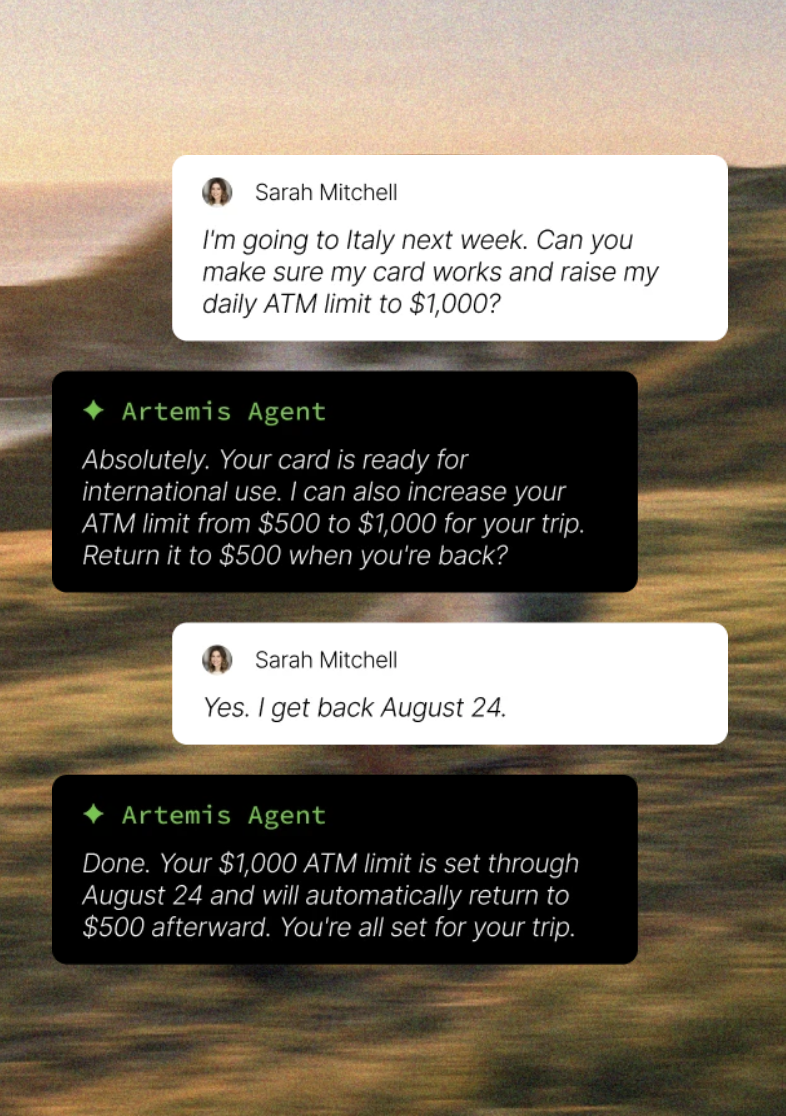
Kore.ai's AI for Service bundles voice and digital AI agents, agent assist, quality management and an AI-native contact center, with more than 100 prebuilt use cases and a proof-of-concept program.
Pros
- Covers the AI agent and the human contact center in one platform.
- Kore.ai says customers can go live in weeks.
Cons
- No public prices or trial.
- A large platform to adopt if you only need an AI agent on chat and email.
Pricing: custom. Kore.ai's AWS Marketplace listing bills per session on a 12-month contract.
Rating: G2 4.6/5 (509 reviews)[10]
Versus Sierra: a contact center suite around the agent, without Sierra's done-for-you model.
11. Cognigy
Best for: voice-heavy contact centers that run NiCE, Genesys or Amazon Connect.
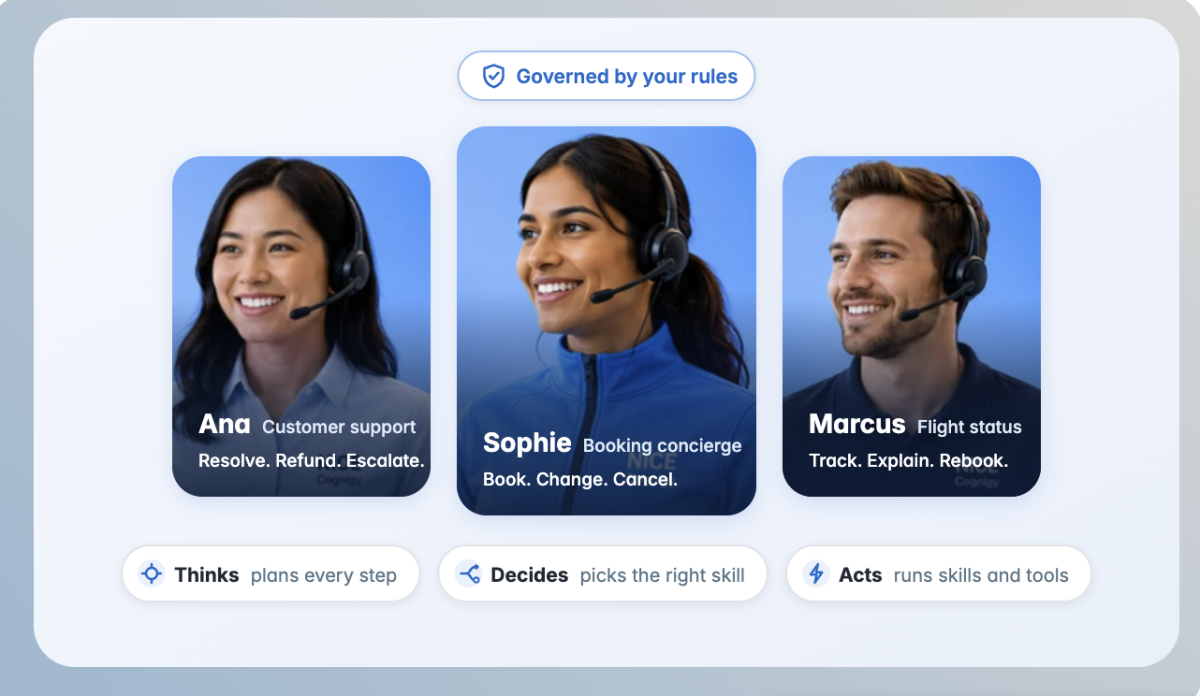
Cognigy builds AI agents for contact centers and has been part of NiCE since 2025. Its agents work on voice, chat and messaging in more than 100 languages, on their own or inside NiCE CXone, and connect to Avaya, Amazon Connect and Genesys.
Pros
- Built for teams whose support still runs mostly on the phone.
- Backed by NiCE's contact center suite.
Cons
- No public prices or trial.
- Email support isn't a focus on its main pages.
Pricing: custom, through sales.
Rating: G2 4.6/5 (13 reviews)[11]
Versus Sierra: ready-made connections to NiCE, Genesys, Avaya and Amazon Connect, with less focus on digital-first brands.
AI agent pricing: what 1,000 conversations a month cost
AI agent pricing uses different billing units, so every row prices one scenario: the cheapest published plan that puts a customer-facing AI agent on 1,000 conversations a month, billed annually where offered, with 5 help desk seats where the plan charges per seat. Every conversation is assumed resolved by the AI (the worst case for per-outcome pricing). Each cell names the plan and the volume it assumes.
| Tool | What you pay for | Monthly cost |
|---|---|---|
| Tidio | Growth with Lyro AI at 1,000 conversations (Lyro and human replies share the quota), up to 10 seats, billed annually | $583 |
| Freshdesk Freddy AI Agent | Growth for 5 agents ($95) + 1,000 AI sessions at $49 per 100 ($490), after the one-time 500 | $585 |
| Intercom Fin | 1,000 outcomes at $0.99, on your existing help desk | $990 |
| Gorgias AI Agent | Pro help desk ($300, 2,000 tickets) + 1,000 AI interactions at $0.90, billed annually | $1,200 |
| Zendesk AI agents | Suite Team for 5 agents ($275, 25 resolutions included) + 975 resolutions at $1.50 committed | $1,738 |
| Salesforce Agentforce | 1,000 conversations at $2, on top of your Salesforce licenses | $2,000 |
| Lorikeet | Start plan ($2,100, billed annually) + 1,000 chat or email resolutions at $0.99 | $3,090 |
| Sierra, Decagon, Ada, Kore.ai, Cognigy | Custom contract | Quote only |
Worked example: the AI resolves 600 of the 1,000 and hands 400 to your team. Outcome-priced tools drop, since hand-offs aren't billed: Fin falls to $594 (600 × $0.99), Zendesk to $1,138 ($275 + 575 × $1.50) and Lorikeet to $2,694. Agentforce stays at $2,000, because it bills every conversation. Tidio stays at $583: a conversation Lyro hands over counts once, and WhatsApp, email and chat draw on the same quota, so adding WhatsApp doesn't change the total.
Tidio vs Sierra
Sierra builds a custom AI customer service agent with you for a large deployment. Tidio gives a small or mid-sized team an AI agent, live chat and tickets they can set up themselves.
| Tidio | Sierra | |
|---|---|---|
| Built for | Small and mid-sized teams, online stores | Large enterprises and consumer brands |
| How you buy | Self-serve signup, free plan, 7-day trial | Demo and contract |
| Price model | Per conversation; Lyro and human replies share one quota | Per outcome, no public rates |
| Entry price | Free plan; Starter with Lyro from $33/mo billed annually, up to 10 seats | Custom |
| Setup | Your team switches Lyro on and edits it | Built with Sierra's team, "deploy in weeks" |
| Channels | Live chat, email, Messenger, Instagram, WhatsApp; Voice add-on (US, Canada, Australia, UK) | Voice, chat, email, WhatsApp |
| Languages | 51 | 59 |
| Actions | Smart Actions, MCP tools; Native Shopify actions for your team on Growth | Custom actions in back-office systems |
| Human inbox | Included: live chat and tickets in the same plan | Works with your existing help desk |
| Fully managed custom build | Not its focus | Core offering |
Compare Tidio plans
When Sierra is still the right choice
Sierra is a strong fit if you handle very large volumes, often by voice in many languages, want its team to design and tune the agent, and run journeys that cross billing, subscriptions and identity checks. If that's you, compare Sierra with Decagon and Ada on contract terms.
How to switch from Sierra
- Check your contract. Note the renewal date, the notice period and how outcomes are billed until then.
- Export what the agent knows. Collect the knowledge sources, policies and the conversation logs you're allowed to keep.
- List the actions in use. Rebuild only the system calls (orders, billing, accounts) customers actually use.
- Test before launch. Replay real past conversations, including multi-step ones, and mark each answer right or wrong.
- Run both in parallel. Route one channel to the new agent for a week or two and compare resolution and hand-off rates.
- Move voice last. Phone flows usually take the most tuning.
Choose by your reason for leaving Sierra
Whichever tool you shortlist, run your hardest questions (refunds, account changes) through a trial or pilot before you sign.
- You need a price you can show management. Tidio (Starter with Lyro from $33/month billed annually) and Intercom Fin ($0.99 per outcome) let you model the bill before talking to sales. Lorikeet publishes prices for regulated teams.
- Outcome billing is hard to forecast. Decagon and Ada bill per conversation on enterprise contracts. On Tidio, Lyro and human replies share one conversation quota, so the plan price is the bill.
- Your own team wants to launch and edit the agent. Tidio, Freshdesk Freddy AI Agent and Fin are self-serve with a trial; Gorgias AI Agent is the Shopify-first option for stores with a large ticket queue.
- Your tickets or cases live in another system. Zendesk AI agents and Agentforce keep the agent next to your records.
- Most of your support is on the phone. Kore.ai and Cognigy are built around the contact center.
Bottom line
Sierra is a capable enterprise AI agent, and a large brand that wants a managed, custom build may not need to leave. If what's pushing you out is the demo-only sale, the outcome-based bill or the wait for a build, pick the alternative that fixes that one problem, and test it on your own past conversations before you commit.
Try Tidio free
Related guides
- Best AI agents for customer service
- Best agentic customer service software
- Agentic AI companies
- Intercom alternatives
- Zendesk alternatives
- Lyro vs Ada
Frequently asked questions
For small teams and online stores, Tidio: Starter with Lyro costs $33/month billed annually, with up to 10 seats included on self-serve plans. For enterprises, Decagon and Ada are the closest swaps. If you already run a help desk, start with its own AI agent.
Sierra doesn't publish prices. It bills on outcomes: you pay when the agent resolves a conversation, and in most cases an unresolved conversation isn't charged. The rate is set in a contract after a demo, and there's no free trial.
Bring your monthly conversation volume, the share of repeat questions and each tool's cost at that volume, as in the pricing table above. Add a pilot: test on real past conversations and count how many the agent resolves correctly. Public pricing and a trial let you show results before anyone signs.
Lyro and human replies share one monthly quota, and a conversation counts once, however many messages it has. On monthly billing, the plan moves to the next tier at 95% of the quota by default, with a warning at 80%; you can switch this off in billing settings. On annual billing it doesn't upgrade automatically, so watch usage in busy months.
Both sell enterprise AI agents through demos and custom contracts, and both cover chat, voice and email. Sierra bills on outcomes and builds the agent with you. Decagon offers per-conversation or per-resolution pricing and has customers write workflows in plain English as Agent Operating Procedures.
Use live chat to support your customers in real-time