Key takeaways
- The core difference: Gorgias is an e-commerce help desk priced by ticket volume; Zendesk is a general support suite priced by agent.
- Choose Gorgias if you run a Shopify or other online store, want order data and refunds inside the ticket, and prefer a bill that follows ticket volume, not headcount.
- Choose Zendesk if you run a larger or non-e-commerce team, need skills-based routing, SLAs and a sandbox, or want voice and 1,800+ marketplace apps.
- The bills cross over: with 2,000 tickets a month, Gorgias costs $300 and five Zendesk Suite Team seats cost $275, but ten seats cost $550.
- Consider a third option if you’re a small e-commerce team that wants chat, tickets and AI without a fee per agent or per ticket: see Tidio.
Gorgias and Zendesk charge for support in different units, and that choice decides most of the comparison. Gorgias is built around Shopify stores and prices by tickets a month, never by agent. Zendesk is a general-purpose support platform that prices by agent and adds AI, voice and channels on top. This guide sets them side by side on cost, ticketing, channels, AI and scale. The figures come from each vendor’s public pricing page and its G2 reviews, checked in October 2026. Tidio gets one section near the end, for small online stores. It doesn’t fit enterprise queues with strict SLAs.
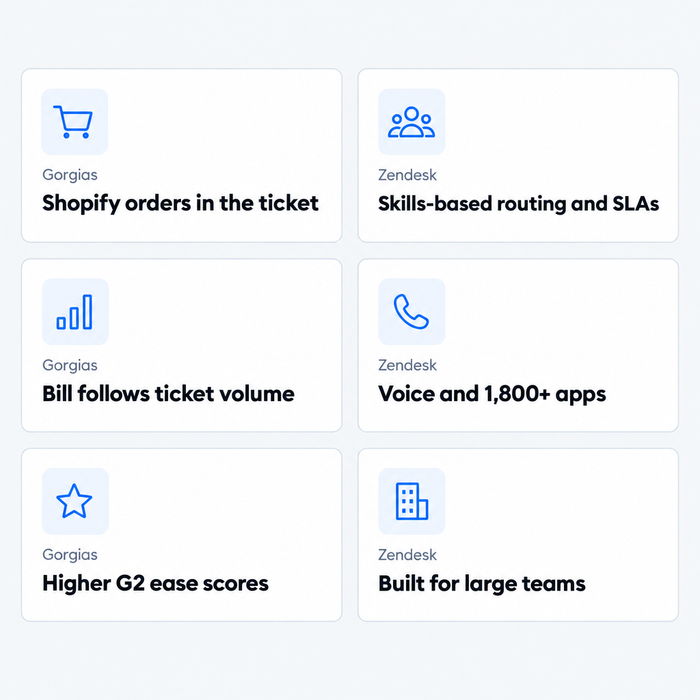
Gorgias vs. Zendesk at a glance
| Gorgias | Zendesk | |
|---|---|---|
| Best for | Shopify and other online stores | Mid-market and large teams, any industry |
| Pricing model | Tickets a month, not per agent | Per agent, plus AI and add-on fees |
| Entry price | $10 a month (Starter, monthly billing only); $50 on Basic, annual | $19 per agent annual, $25 monthly (Support Team) |
| Live chat | Included on every plan | Suite Team, $55 annual |
| E-commerce depth | Shopify, WooCommerce, BigCommerce and Magento integrations | 1,800+ marketplace apps |
| AI agent billing | $0.85 to $1.00 per automated interaction | $1.50 to $2.00 per automated resolution |
| Voice | Add-on from $25 a month, annual (Basic and up) | Add-on with per-minute fees |
| SLAs and skills-based routing | SLA on Advanced only; routing not listed | Suite Professional and above |
| Free plan | Free trial, no card | None found; 14-day trial |
| G2 rating | 4.6/5 | 4.3/5 |
How we compared them
We read both vendors’ pricing pages and plan grids in October 2026, in the US view and in dollars, and matched plans by what they include, not by name. We haven’t trialed either product. Everything here comes from public documentation and G2 reviews, and we say so where a detail was missing. Every price carries its billing basis. Zendesk’s Enterprise plan is sales-only, and we don’t estimate it.
Zendesk vs Gorgias pricing
The two bills measure different things, so a fair comparison needs a scenario. Gorgias plans are built on a monthly ticket allowance. Zendesk plans are built on the number of agents. Here are both price lists:
| Plan | Annual | Monthly | What it includes |
|---|---|---|---|
| Gorgias Starter | Not offered | $10 | 50 tickets, 3 seats, $0.40 per extra ticket |
| Gorgias Basic | $50 | $60 | 300 tickets, 500 seats, $40 per extra 100 |
| Gorgias Pro | $300 | $360 | 2,000 tickets, 500 seats, $36 per extra 100 |
| Gorgias Advanced | $750 | $900 | 5,000 tickets, 500 seats, $36 per extra 100 |
| Zendesk Support Team | $19 per agent | $25 per agent | Email and ticketing, routing, macros, automations |
| Zendesk Suite Team | $55 per agent | $69 per agent | Messaging and live chat, AI agents, knowledge base |
| Zendesk Suite Professional | $115 per agent | $149 per agent | Skills-based routing, SLAs, more admin controls |
| Zendesk Suite Enterprise | Talk to sales | Talk to sales | Sandbox, custom roles, approval workflows |
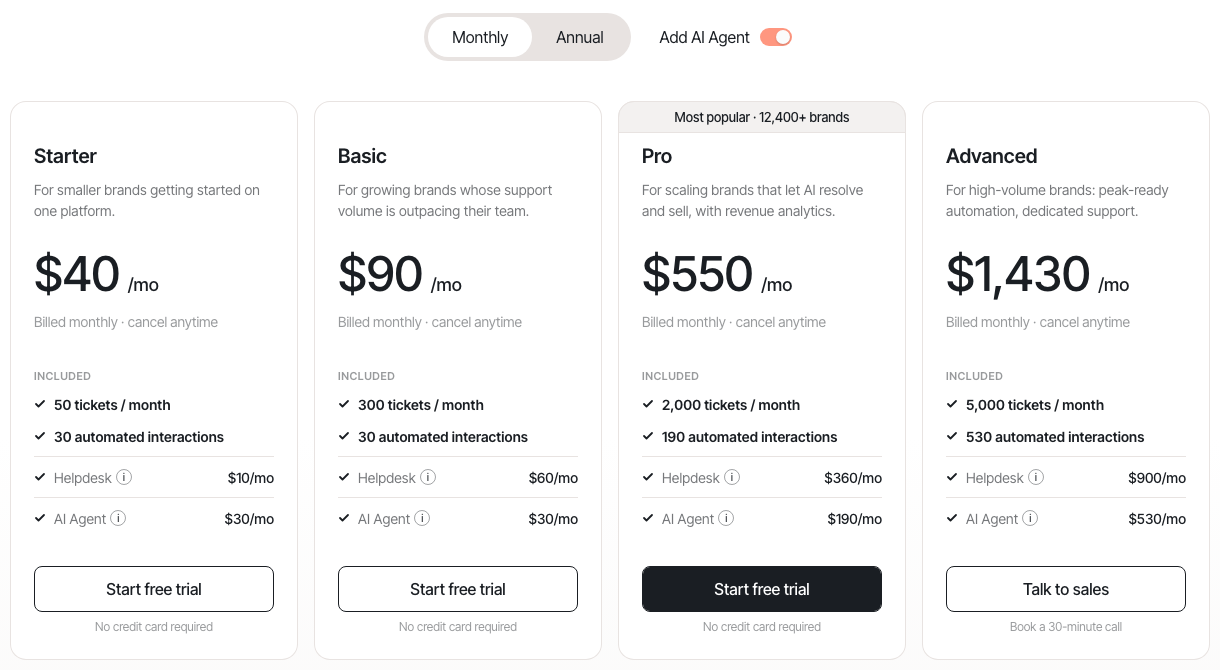
Gorgias’s pricing page opens in the monthly view with AI Agent already added, so the headline prices ($40, $90, $550 and $1,430) include AI. The table above shows the helpdesk fee alone. Match plans by what you need. Email, chat and social inboxes cost $50 to $750 a month on Gorgias, by volume. They cost $55 per agent on Zendesk Suite Team, and $19 per agent if you only need email. Here is what that means for five teams (annual billing, per month, no AI):
| Team and volume | Gorgias | Zendesk Support Team | Zendesk Suite Team |
|---|---|---|---|
| 2 agents, 300 tickets a month | $50 (Basic) | $38 | $110 |
| 3 agents, 5,000 tickets a month | $750 (Advanced) | $57 | $165 |
| 5 agents, 2,000 tickets a month | $300 (Pro) | $95 | $275 |
| 10 agents, 2,000 tickets a month | $300 (Pro) | $190 | $550 |
| 20 agents, 5,000 tickets a month | $750 (Advanced) | $380 | $1,100 |
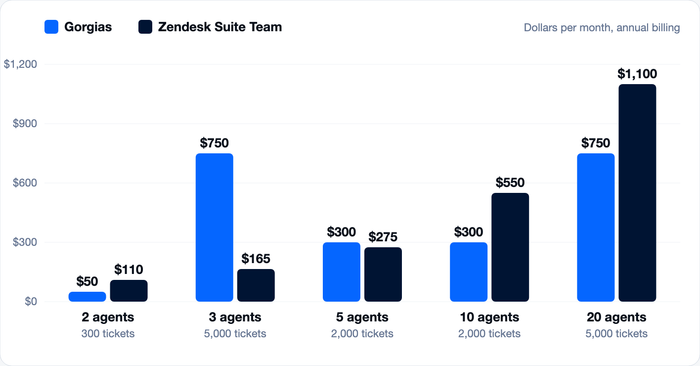
Gorgias is cheaper when a team is large and its ticket volume is moderate, because it never charges per agent. Zendesk is cheaper when a small team handles many tickets, which is what a high-volume store with two agents looks like. The crossover sits near 5 agents at 2,000 tickets, where $300 and $275 are about even.
Two details change the bill. On Gorgias, Starter is monthly only, and a busy month that passes the allowance bills every extra ticket. On Zendesk, the seat price is only part of the bill, because AI resolutions and add-ons come on top (see the AI and scale sections below).
Winner: Tie. Gorgias costs less for large teams with moderate volume, and Zendesk costs less for small teams with high volume. Count your tickets and your seats before you pick.
Gorgias has the edge in e-commerce ticketing
Both tools turn email, chat and social messages into tickets, assign them and apply rules. The difference is what sits next to the ticket.
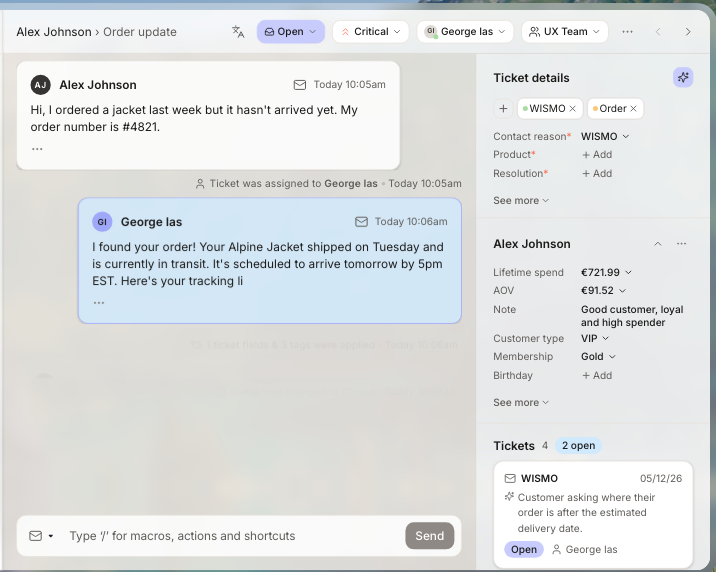
Gorgias is built for online stores. Its pricing page lists integrations with Shopify and Shopify Plus on every plan, WooCommerce, BigCommerce from Basic and Magento from Pro, 150+ apps in total, and AI Agent actions such as cancel, discount and apply from Basic. In G2 reviews, Shopify is the integration reviewers mention most for Gorgias.
Zendesk’s entry plan, Support Team, is an email help desk with ticket routing, pre-written responses, automations and prebuilt analytics. Skills-based routing and SLAs wait until Suite Professional, at $115 per agent. Gorgias lists SLA support on Advanced only, and no skills-based routing, so a team with contractual response times should check which plan covers it. Gorgias says Zendesk needs custom development for native Shopify actions; we couldn’t confirm that from Zendesk’s own pages, so treat it as Gorgias’s claim.
On G2, Gorgias scores 9.0 against Zendesk’s 8.8 for ticket creation and 8.9 against 8.5 for workflow.[1] For a store, those scores reflect the point: ticketing sits next to the order. For a general support desk, Zendesk’s routing and SLA controls decide it.
Winner: Gorgias for online stores, because order context and store actions live in the ticket. Zendesk wins the same round for teams that need SLAs and skills-based routing.
Zendesk covers more channels and apps
Zendesk puts channels in one product. Suite Team ($55) adds messaging and live chat, and the Suite plans also cover social and business channels such as Facebook, Instagram, X, WhatsApp, Slack, WeChat and LINE. Some of these carry additional fees, and voice is an add-on with per-minute fees. Its marketplace lists 1,800+ apps, partners and integrations.
Gorgias handles email, chat, social and a help center on every plan. Voice from $25 a month and SMS from $17 a month, both on annual billing, are add-ons priced by ticket volume. Voice and SMS add-ons start from the Basic plan.
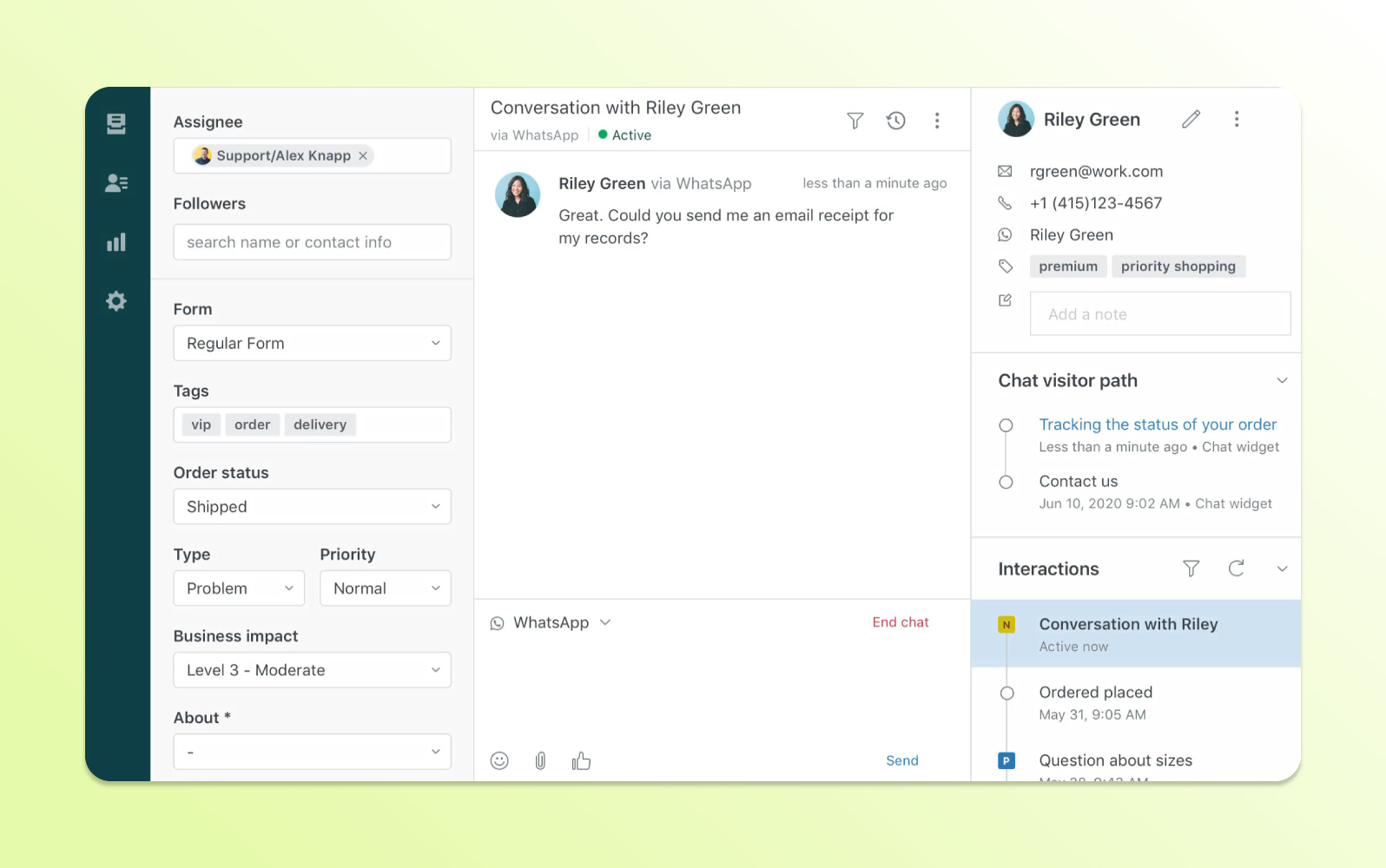
If your customers write from many channels or you run a call queue, Zendesk’s breadth matters. If most of your conversations are email and chat about orders, Gorgias already covers them in the base price.
Winner: Zendesk, because of channel range and the marketplace. Gorgias covers the channels most stores use.
Gorgias AI is cheaper per unit, Zendesk AI is easier to forecast
Both tools bill their AI agents on outcomes, in different units.
Gorgias charges per automated interaction: $1.00 on Starter, $0.90 on Basic and Pro, and $0.85 on Advanced. An interaction counts when AI Agent resolves the request with no human reply within 72 hours. Gorgias’s billing docs say each automated interaction also counts as a billable ticket (checked in September 2026), so a busy AI month uses up your ticket allowance as well. Each plan includes a small allowance: 30 interactions on Starter and Basic, 190 on Pro and 530 on Advanced.
Zendesk charges per automated resolution. Each plan includes 5 per agent a month (10 on Suite Professional), then $1.50 per resolution on a committed volume or $2.00 pay-as-you-go. A resolution counts only when the AI agent solved the request with no escalation to a human. Copilot, Zendesk’s assistant for human agents, is a separate $50 per agent add-on.
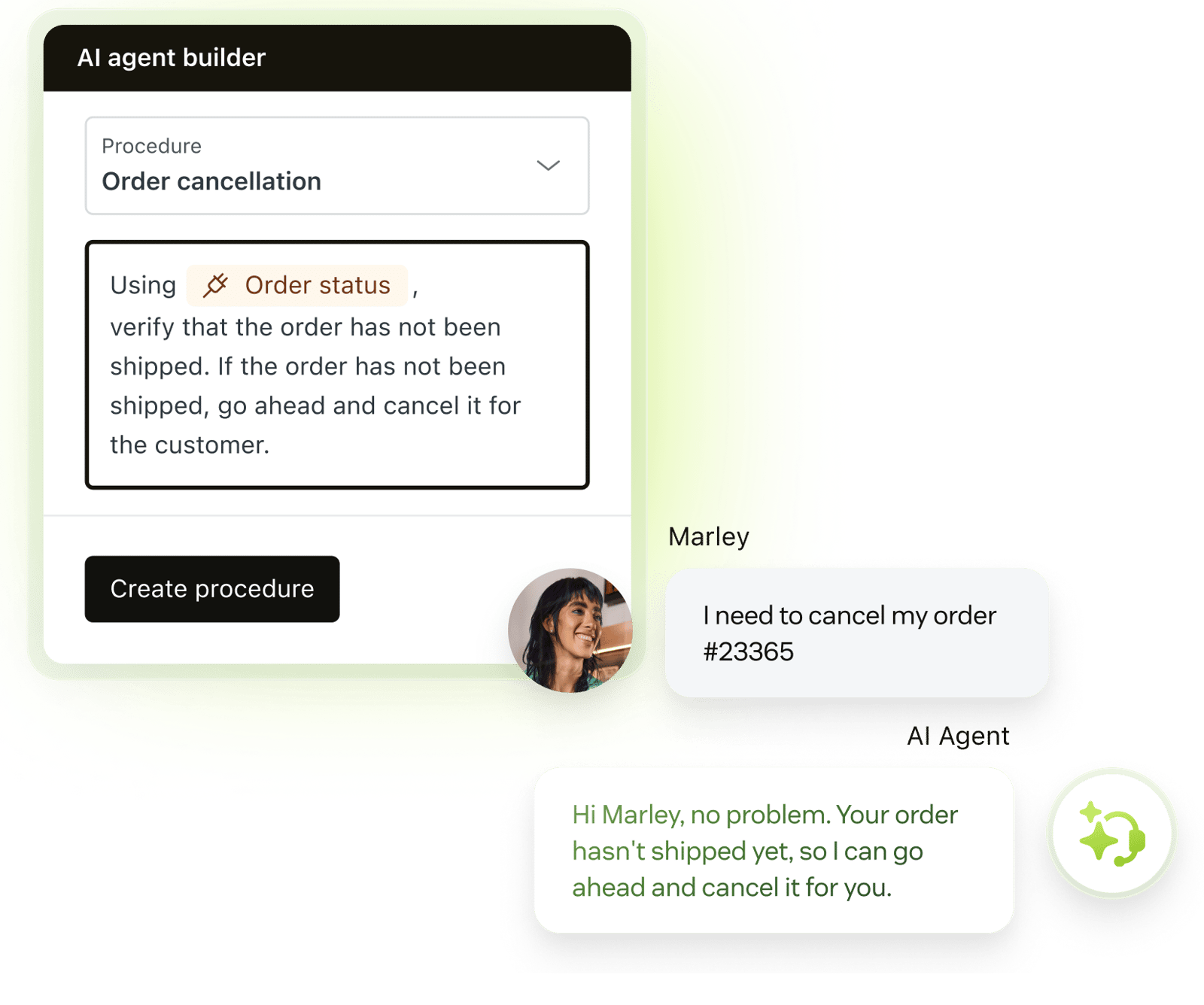
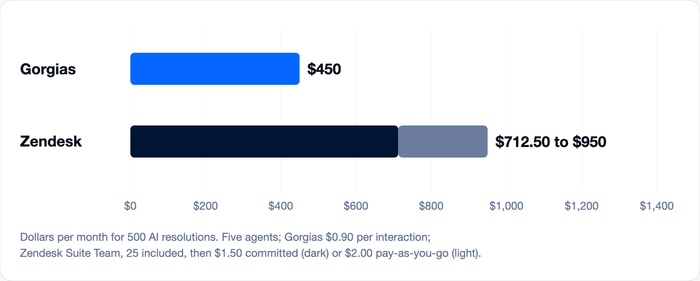
Take a five-agent team whose AI agent resolves 500 requests a month. On Gorgias, that is 500 × $0.90 = $450. On Zendesk, the 25 included resolutions leave 475 billable, which is $712.50 at the committed rate or $950 pay-as-you-go. Gorgias is cheaper per unit, but the bill grows with every resolution, and so does your ticket count. Zendesk adds a per-seat Copilot fee on top if you want it.
Both bills rise when the AI works well, since you pay for each solved conversation. Estimate the share of conversations you expect the AI to resolve, and price that volume.
Winner: Gorgias on price per unit. Zendesk’s allowance per seat helps small teams with few AI resolutions.
Zendesk scales further
Zendesk is built for larger and more complex support operations. Suite Professional adds skills-based routing, IVR phone trees and a wider admin toolkit, including light agents, who read tickets and add private comments without taking a paid seat. Suite Enterprise adds a sandbox, custom agent roles and approval workflows, through sales. Add-ons stack on top: Copilot at $50 and a workforce engagement bundle at $50, each per agent a month on annual billing.
Gorgias scales by ticket tier. Basic, Pro and Advanced all allow 500 seats, and Advanced adds an SLA and a dedicated customer success manager, and beyond 5,000 conversations a month Gorgias offers a custom plan with SAML SSO, unlimited Help Centers and a dedicated solutions architect. Support tiers run from Community to Dedicated.
The cost of Zendesk’s breadth is a bill with several meters: seats, AI resolutions, Copilot and the add-ons you choose. Price your busiest month. The cost of Gorgias’s focus is that it is a store help desk first, so a team outside e-commerce uses fewer of its features.
Winner: Zendesk, because its routing, admin controls and enterprise options go further. A small store may never use them.
What reviewers say
On G2, Gorgias scores 4.6/5 and Zendesk for Customer Service 4.3/5. The sub-scores from G2’s side-by-side page show where the gap sits:
| G2 score (out of 10) | Gorgias | Zendesk |
|---|---|---|
| Ease of use | 9.1 | 8.5 |
| Ease of setup | 8.8 | 8.0 |
| Ease of admin | 9.2 | 8.2 |
| Quality of support | 9.1 | 8.4 |
| Meets requirements | 8.9 | 8.6 |
Gorgias’s reviewers skew toward small businesses, while Zendesk’s include more mid-market and enterprise teams. That gap matters when you read the scores, because Zendesk’s reviewers manage bigger, more complex setups. G2’s summary of Zendesk reviews notes a learning curve and missing features, and for Gorgias it notes that ticket-based pricing can become expensive.[1]
Winner: Gorgias on ease of setup, admin and support. The two are close on meeting requirements.
Tidio: a third option for small teams
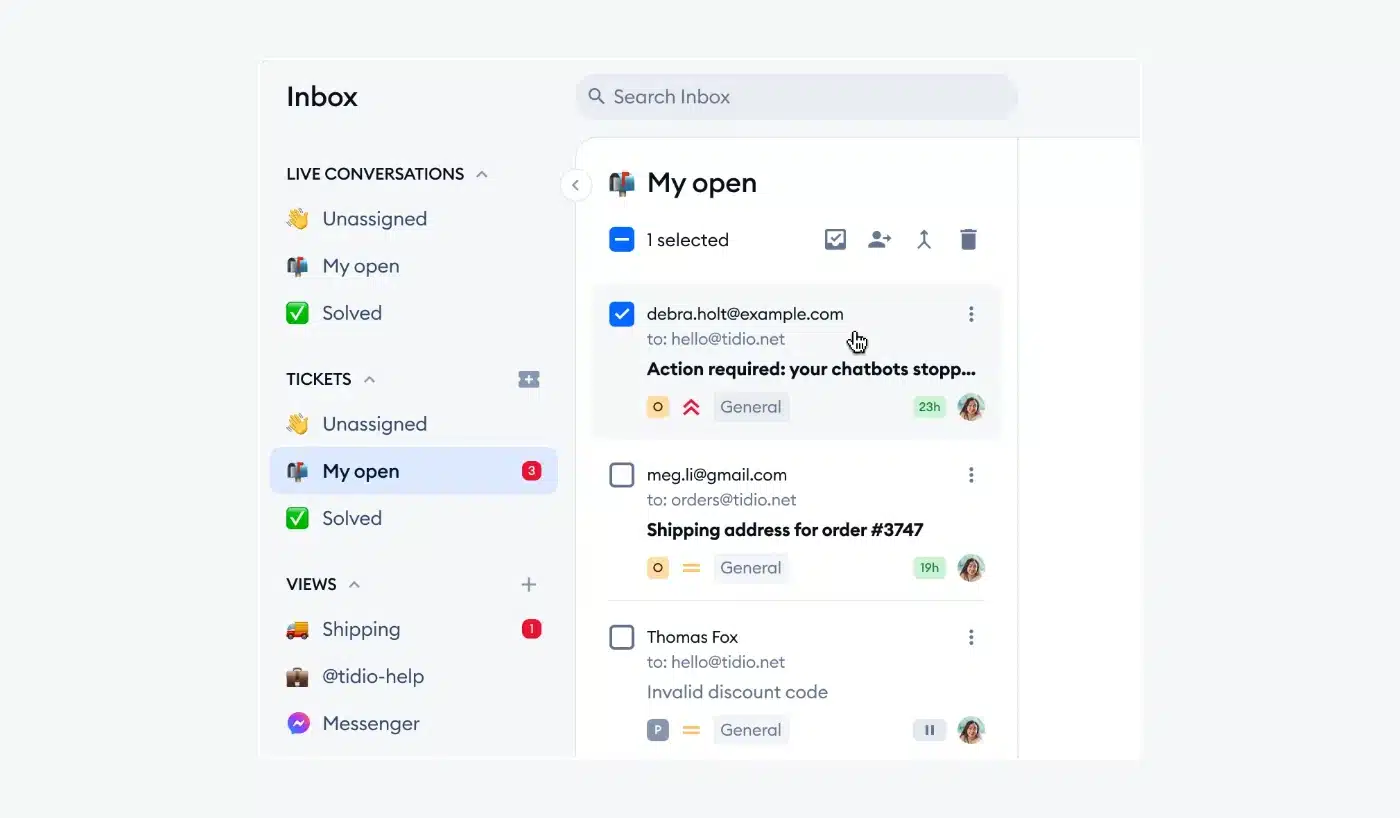
Tidio sits outside this comparison. It starts from live chat and adds a ticket inbox, so it suits a small or mid-sized store, not a 100-agent team with strict SLAs. A shop that wants chat, email tickets and an AI agent in one inbox, with no fee per agent or per ticket, is the fit. On Shopify, the agent sees the shopper’s cart and order history in the conversation (per tidio.com). Its AI agent, Lyro, can resolve up to 75% of support requests.
| Tidio | Gorgias | Zendesk | |
|---|---|---|---|
| Best for | Small e-commerce and SMB teams | Shopify and other online stores | Mid-market and large teams |
| Pricing model | Plan price by billable conversations, up to 10 seats | Tickets a month | Per agent |
| Entry plan | Free (50 billable conversations); Starter $24.17 annual, $29 monthly | $10 monthly (Starter); $50 annual (Basic) | $19 annual, $25 monthly |
| Live chat | Included | Included | Suite Team |
| AI agent | Lyro, from $32.50 annual ($39 monthly) for 50 conversations | $0.85 to $1.00 per automated interaction | $1.50 to $2.00 per resolution |
| Large agent teams | Up to 10 seats on self-serve plans; custom on Plus and Premium | 500 seats on Basic and above | Enterprise through sales |
| SLAs and skills-based routing | Not its focus | SLA on Advanced only; routing not listed | Suite Professional and above |
| G2 rating | 4.6/5 | 4.6/5 | 4.3/5 |
Of the three, Tidio is the least suited to large teams that need SLA controls and skills-based routing. Those teams should stay with Zendesk or Gorgias. Compare Tidio with Gorgias or Tidio with Zendesk for the product-level view.
Try Tidio free
Which should you choose?
Match the tool to your bottleneck:
- You run a Shopify store and want orders, refunds and tracking inside the ticket. Choose Gorgias.
- You have a large team and moderate ticket volume. Choose Gorgias, since its bill doesn’t grow with seats.
- You have a small team and thousands of tickets a month. Choose Zendesk, and price Support Team or Suite Team per seat.
- You need SLAs, skills-based routing or a sandbox. Choose Zendesk Suite Professional or Enterprise.
- You support customers by phone, WhatsApp and social as well as email. Choose Zendesk.
- You want the lowest AI price per resolution. Choose Gorgias, and watch the ticket allowance.
- You run a small online store and want chat, tickets and AI in one inbox. Choose Tidio.
Moving between the two? Export your tickets, contacts and help center articles first, list every rule, macro and automation, and run both tools in parallel for a week before you cancel.
Bottom line
Gorgias wins for online stores: order context in the ticket, a bill that doesn’t depend on headcount, higher G2 ease scores and a lower AI price per unit. Zendesk wins on routing, SLAs, channels and scale. For most Shopify brands, Gorgias is the closer fit; for larger teams or non-e-commerce support, Zendesk’s breadth can justify the extra meters. Small online stores that want chat, tickets and AI without a fee per agent or per ticket should also look at Tidio.
See how Tidio compares
Related guides
- Gorgias alternatives
- Gorgias review
- Zendesk alternatives
- Zendesk review
- Gorgias vs Freshdesk
- Freshdesk vs Zendesk
- Zendesk vs Intercom
- E-commerce help desk software
Frequently asked questions
For most online stores, yes. Gorgias is built around Shopify, WooCommerce, BigCommerce and Magento, with order data and store actions inside the ticket, and G2 reviewers rate its ease of use 9.1 against 8.5 for Zendesk. Zendesk fits stores that also need SLAs, voice or a large team.
It depends on your team and volume. Five Zendesk Suite Team seats cost $275 a month on annual billing, against $300 for Gorgias Pro at 2,000 tickets. With two agents and 5,000 tickets, Zendesk costs far less; with ten agents and 2,000 tickets, Gorgias does (October 2026).
Gorgias charges by tickets a month, from $10 to $900 for the helpdesk, and never by agent. Zendesk charges $19 to $115 per agent a month on annual billing, with AI resolutions and add-ons on top.
Gorgias AI Agent is built for store tasks such as order tracking and returns, at $0.85 to $1.00 per automated interaction. Zendesk’s AI agents bill $1.50 to $2.00 per resolution and sit inside a broader suite. Both bill only for outcomes.
Neither pricing page lists a free plan as of October 2026. Gorgias offers a free trial with no card, and Zendesk offers a 14-day trial that defaults to Suite Professional.
Yes. Export tickets, contacts and help center articles from the old tool, check which import tools the new one offers, and rebuild rules and macros by hand. Plan a week of parallel running before you cancel.
Tidio fits small e-commerce teams, Freshdesk fits budget-led teams, and Intercom fits an AI-first chat desk. See Gorgias alternatives and Zendesk alternatives.
Use live chat to support your customers in real-time