
Key takeaways
- The biggest wins come from narrow, high-volume jobs such as order status, product questions, bookings and billing.
- Every company here keeps a human handoff. The failures that made the news were AI answers nobody checked.
- Results are company-reported. Read “resolution rate” as the share of chats closed without a person. It says nothing about customer satisfaction.
- Small teams get results in the same range as large companies: Axioma, Borrowell and Burker report AI resolution rates of 89%, 83% and about 80%.
- The AI is only as good as its sources. HairMax committed to adding 100 help articles a month, and Axioma trained its agent on 370.
Burker, a watch brand with about 20 employees, now handles 10,000 customer chats a month with an AI agent and cut its outsourced email traffic by about half. Bank of America’s assistant has passed 3.2 billion client interactions. Klarna’s did the work of 700 agents in its first month, and then Klarna said customers should always have the option to reach a human. AI customer service works for small companies and large ones, and the ones that get the most from it plan for the moments it shouldn’t handle alone.
Below are 15 companies that use AI-generated customer support today. Each entry covers what the AI does and the result the company reported, with what’s worth copying and, where there is one, the catch.
Try Lyro, Tidio's AI agent, on your own help content for free
Companies using AI for customer service at a glance
| # | Company | Industry | What the AI does | Result (company-reported) | AI behind it |
|---|---|---|---|---|---|
| 1 | Burker | E-commerce (watches, jewelry) | Answers order and product questions in the customer’s language | About 80% resolution rate, 10,000 chats a month | Tidio Lyro |
| 2 | HairMax | E-commerce (health devices) | Answers device and treatment questions, escalates to experts | 73% resolution rate, 7,800 hours saved a year | Tidio Lyro |
| 3 | Your KAYA | E-commerce (personal care) | Answers tickets in Polish and English, recommends products | 75% of 2,500+ monthly tickets | Tidio Lyro |
| 4 | Curate Health | Online pharmacy | Looks up order status in real time | 41% to 70% resolution on day one | Tidio Lyro Actions |
| 5 | Suitor | Suit rental | Answers FAQs, day and night | Up to 85% of queries automated | Tidio Lyro |
| 6 | Borrowell | Fintech | Answers help center questions before they become Zendesk tickets | 83% resolution rate | Tidio Lyro |
| 7 | Secureframe | SaaS (compliance) | Answers technical questions for logged-in customers | 59% resolution rate, up from 2% to 3% | Tidio Lyro |
| 8 | Klarna | Fintech | Answers refund, return and payment chats in 35+ languages | Two-thirds of chats in month one (2024) | OpenAI |
| 9 | Bank of America | Banking | Erica answers account questions; EricaAssist briefs call-center reps | 3.2 billion interactions since 2018 | Built in-house |
| 10 | Bella Santé | Med spa | Answers service questions and suggests treatments | 75% of chats automated | Tidio Lyro |
| 11 | Axioma | Car repair | Answers repair and insurance questions, guides quotes | 89% resolution rate | Tidio Lyro |
| 12 | NRVTA | Education | Answers student questions about training programs | 94% resolution rate | Tidio Lyro |
| 13 | Winnipeg Blue Bombers | Sports | Answers game-day and ticket questions | 70% of fan chats handled automatically | Tidio Lyro + Flows |
| 14 | Air India | Airline | AI.g answers booking, refund and baggage questions | 97% of queries resolved without a human | Microsoft Azure OpenAI |
| 15 | Octopus Energy | Energy | Arlo writes and sends routine customer emails | 76% CSAT vs 72% for comparable human replies | Kraken (built at Octopus, now independent) |
What AI customer service looks like in practice
AI customer service means software that understands a customer’s question in plain language and answers it, or helps a human agent answer it, without a script for every case. In the examples below it takes these forms:
- An AI agent that talks to customers, like Tidio’s Lyro, Klarna’s assistant or Air India’s AI.g. It answers from the company’s help content and, in the better setups, takes actions such as looking up an order.
- An assistant for human agents, like Bank of America’s EricaAssist or Octopus Energy’s email drafts. The customer still talks to a person, who gets answers and summaries faster. Tidio’s guide to AI agent assist covers this side.
- A mix of the two, with the AI handling the first line and handing the rest to a person with the conversation attached.
For the basics of how these systems work, see Tidio’s guide to AI in customer service.
15 companies using AI chatbots for customer service
E-commerce and retail
Online stores get the same few questions all day: where’s my order, which product is right for me, can I return it. These five Tidio customers range from a global watch brand to a five-person rental shop. For more store-side ideas, see AI in e-commerce.
1. Burker: 10,000 AI conversations a month for a global watch brand
Burker is a direct-to-consumer watch and jewelry brand, founded in London and headquartered in Amsterdam, that sells worldwide through its Shopify store with about 20 employees. In peak months such as Black Friday and Valentine’s Day, support volume jumped from 3,000 to 5,000 messages a month to as many as 17,000, most of them “where’s my order” and “which watch is right for me”. The team had switched its website chat off because it couldn’t keep up. Burker then put Lyro on the website as the first line of support. Lyro answers in the customer’s language and passes anything it can’t resolve to the outsourced team’s email ticketing system.
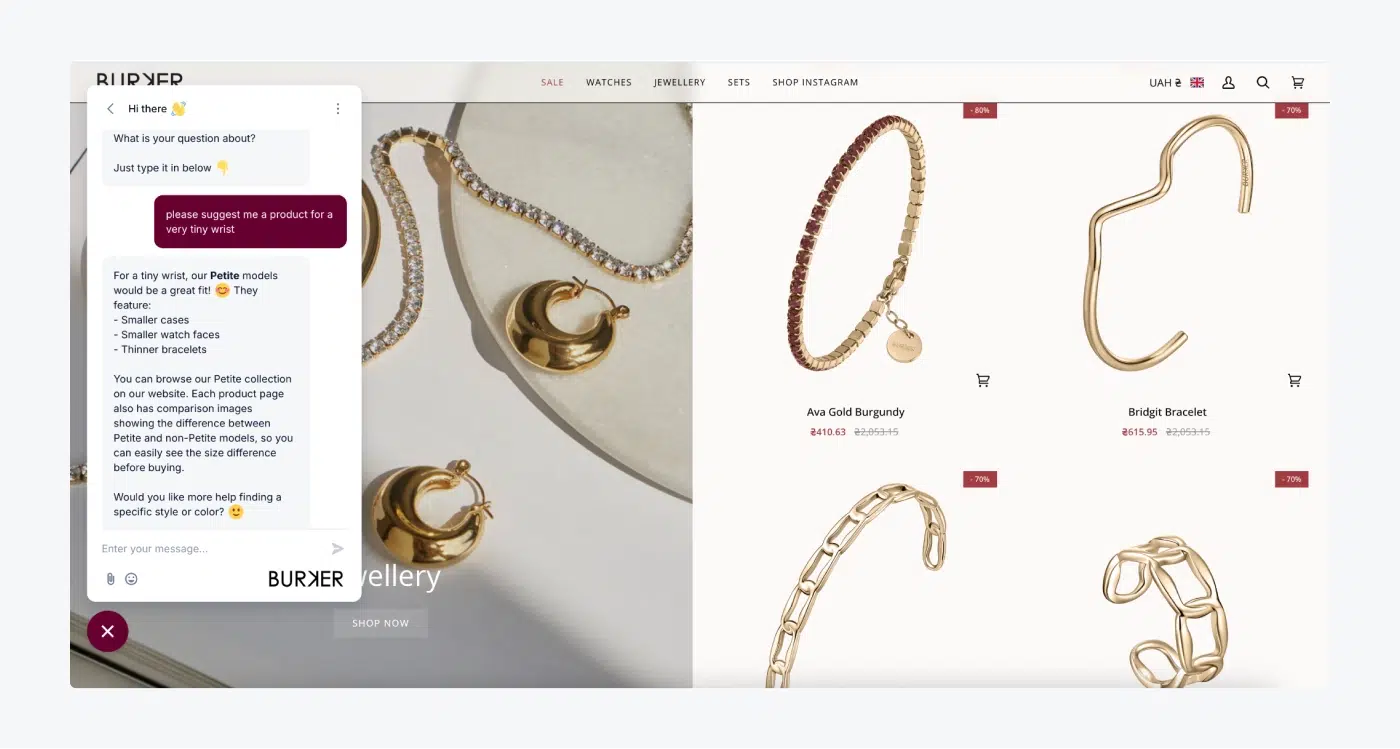
Result: a 75% resolution rate in the first month and about 80% in the second, 10,000 Lyro conversations that month, and outsourced email traffic down about 50%.
What works: language support. It was the deciding factor when Burker compared tools, because the brand answers every customer in their own language. “We needed a smarter way to meet them in the moment: automatically, in their language,” says Daria Nifontova, Head of Customer Service.
2. HairMax: 7,800 support hours saved a year
HairMax, founded in 2000 and based in Boca Raton, Florida, sells at-home laser hair growth devices worldwide with 34 employees. Its customers use medical-grade devices at home, so they ask detailed questions about troubleshooting, treatment and expected results. HairMax trained Lyro on its help content, committed to adding 100 new help articles a month, and worked with Tidio’s team to teach Lyro when a question needs one of its human experts.
Result: within a year, Lyro resolved 73% of inquiries without a person, up from 60%, and the team saves 7,800 support hours a year.
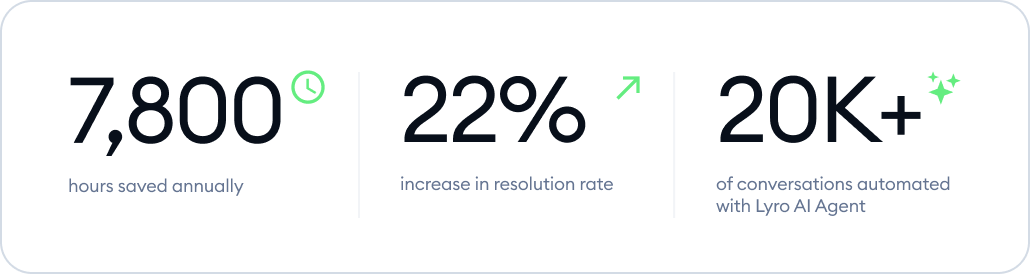
What works: escalation rules. For products that affect people’s health, HairMax decided up front which questions the AI answers and which go to a specialist.
3. Your KAYA: 75% of tickets handled after switching tools
Your KAYA, founded in 2017, is a Polish e-commerce brand selling eco-friendly personal care products in Poland and other European markets. Its team handled thousands of conversations a month across email, website chat and social channels, and much of their time went to repetitive questions. Your KAYA moved from Gorgias to Tidio in under 14 days and trained Lyro on more than 300 help articles. Lyro answers in Polish or English depending on the visitor, and its Shopping Assistant recommends products from the full catalog.
Result: 75% of tickets handled by Lyro, out of more than 2,500 a month.
What works: “By implementing Lyro AI, we automated responses to simple, frequently asked questions. This improved response times and freed up our consultants to dedicate their expertise to cases that require a more personalized approach,” says Marta ≈ªuchowska, Customer Care Coordinator.
4. Curate Health: real-time order lookups for an online pharmacy
Curate Health is a regulated UK online pharmacy. Its 12 agents received more than 3,000 emails in two days, mostly “where’s my order”. Its orders use custom tags that a standard integration couldn’t read, so the team used Lyro Actions to connect the AI agent to its Shopify-based order system through an API.
Result: the AI resolution rate rose from 41% to 70% on the first day, with the order-status action run more than 180 times that day. Over 30 days, the overall resolution rate was 53%.
What works: giving the AI access to live data. An AI agent that can only quote the FAQ can’t answer “where’s my order”.
5. Suitor: up to 85% of queries automated for a five-person team
Suitor is an Australian suit and tuxedo rental company with five employees. The founders were spending hours answering questions that were already on the website, and many orders arrive after 8 pm. They trained Tidio’s Lyro on their site content and let it answer FAQs and sort incoming requests, with live agents taking the rest.
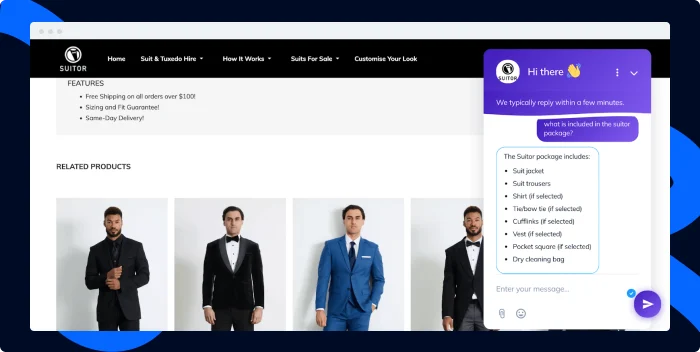
Result: up to 85% of customer service queries resolved with automation, and average response time down from about 3 minutes to 6 seconds.
What works: “Lyro gives customers 24-hour support. Even if it doesn’t always fully answer the question, it gives them enough information to go through the website,” says co-founder and CEO Daniel Reid.
Finance and software
Banks, fintechs and software companies get the same account and product questions over and over, and the answers have to be exact. Two Tidio customers sit next to Klarna and Bank of America. More on this in Tidio’s guide to AI for fintech.
6. Borrowell: an AI agent in front of Zendesk
Borrowell is a Canadian fintech that helps more than 3 million members check their credit. Its nine agents were handling more than 11,000 tickets a month. Instead of replacing Zendesk, Borrowell put Tidio’s Lyro AI agent in front of it. Lyro learns from the Zendesk help center, and anything it can’t resolve becomes a Zendesk ticket with the full transcript attached. It also handles French for users in Quebec.
Result: 83% resolution rate and 87% answer rate.
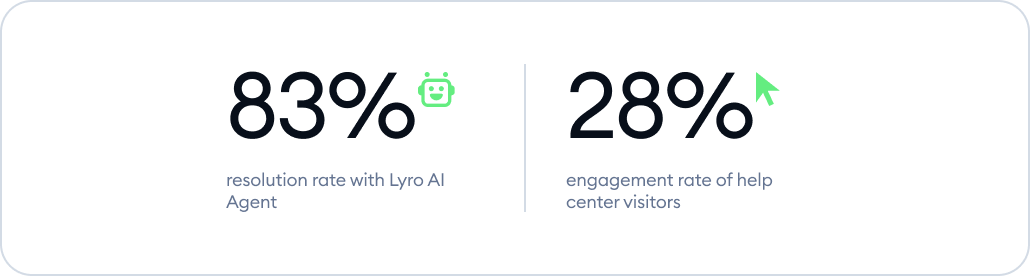
What works: the team kept its tools and workflows. The AI sits in front of the help desk, so agents only see what it couldn’t answer, with context.
7. Secureframe: replacing a chatbot that answered almost nothing
Secureframe is a security and compliance automation platform with more than 200 employees. Its customers ask technical questions about compliance rules, scoping and integrations, and live chat carries 35% to 40% of daily support activity. Its previous AI chatbot succeeded in only 2% to 3% of conversations. In March 2025 Secureframe switched to Lyro, placed the chat behind the customer login, and connected it to its CRM so complex questions become support tickets.
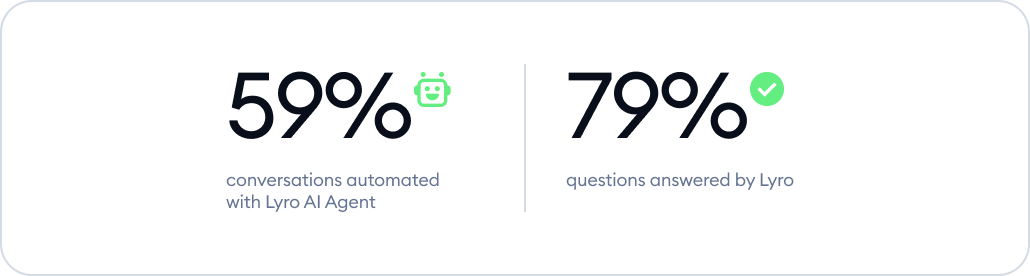
Result: a 59% resolution rate and a 79% answer rate, up from 2% to 3% with the old bot. Secureframe counts a conversation as resolved when Lyro answered and the visitor didn’t ask for a person.
What works: a target set in advance. Secureframe aimed for a 50% to 60% resolution rate before it chose a vendor, then measured against it.
8. Klarna: an AI assistant that took over most chats
Klarna’s OpenAI-powered assistant went live in early 2024, and Klarna announced its first-month results in February 2024. It handles refunds, returns, payment questions, cancellations and disputes inside the Klarna app, around the clock and in more than 35 languages.
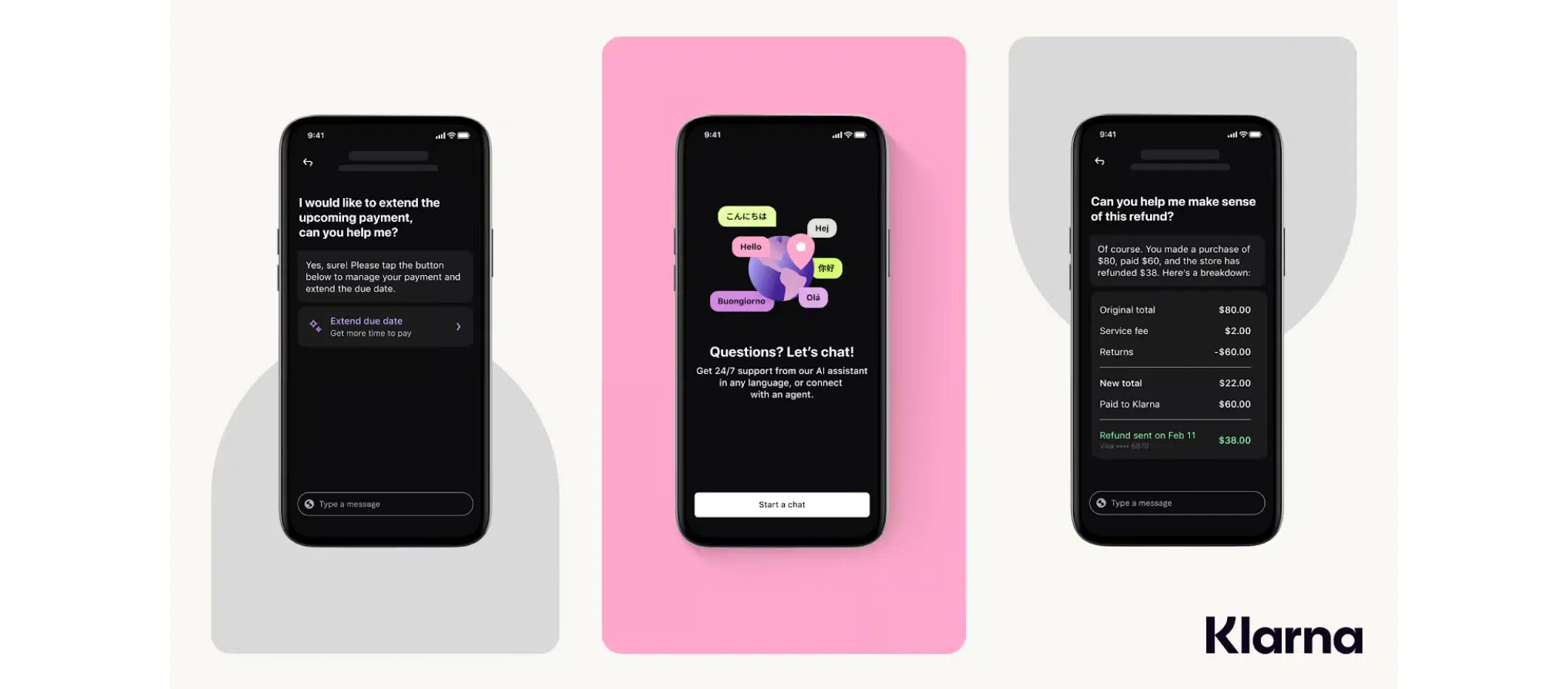
Result: in its first month the assistant had 2.3 million conversations, two-thirds of Klarna’s customer service chats, doing “the equivalent work of 700 full-time agents”[1]. Customers resolved their errands in under 2 minutes instead of 11, and repeat inquiries dropped 25% (Klarna, February 2024). By November 2025, the CEO said the assistant did the work of 853 agents and had saved $60 million[2]
The catch: in May 2025 CEO Sebastian Siemiatkowski told Bloomberg that cost had been “a too predominant evaluation factor” and the result was “lower quality”. Klarna started recruiting human agents again and now wants customers to always have the option to speak with a person[3].
What works: the volume numbers are real, and so is the correction. Plan the human route on day one instead of adding it after quality slips.
9. Bank of America: Erica for customers, EricaAssist for agents
Erica, launched in 2018, answers balance and spending questions, sends alerts and can schedule an appointment with the bank’s staff. It answers from a library of more than 700 responses, which suits a bank[4]. In 2026 Bank of America added generative AI to EricaAssist, a tool for its own call-center staff that summarizes why a client is calling and suggests next steps.
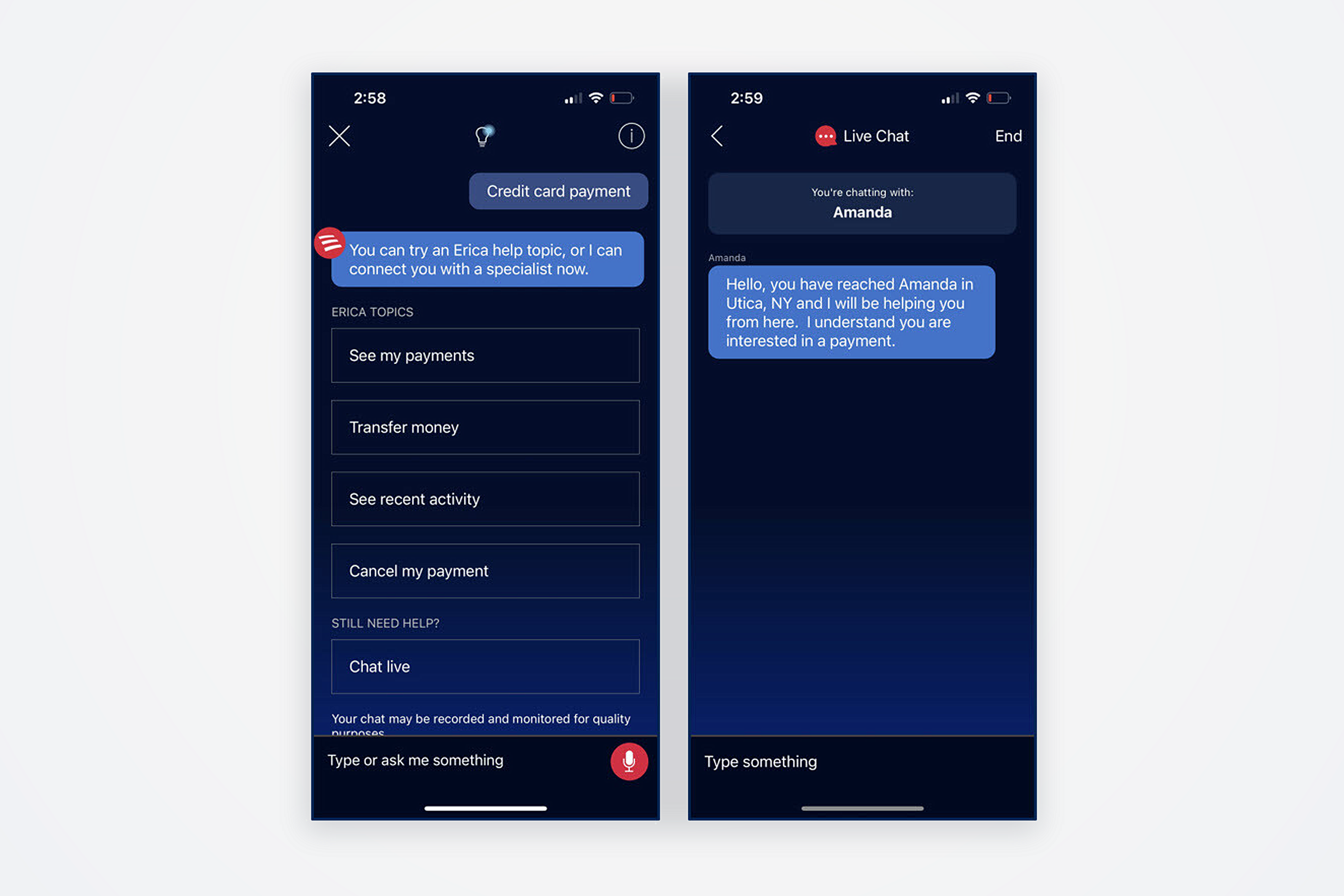
Result: 20.6 million users interacted with Erica nearly 700 million times last year, and total interactions have passed 3.2 billion[5]. EricaAssist is used by more than 18,000 reps and cuts average call time by nearly one minute.
What works: the bank uses AI on both sides of the conversation, and it keeps the customer-facing side controlled. Tidio’s article on banking chatbots covers how other banks do the same.
Services, education and sports
Service businesses sell appointments, repairs, courses and tickets, so their AI answers the questions that come before a booking and hands the buyer to a person.
10. Bella Santé: an AI agent on top of a call center
Bella Santé has run spa and med spa services in the Greater Boston area since 1996. Its call center struggled at peak times, and many guests only had a quick question. Rather than replace the call center, Bella Santé added live chat and Lyro on top of it, trained on hundreds of questions from its FAQ pages. Lyro also recommends treatments and packages based on the page a visitor is viewing.
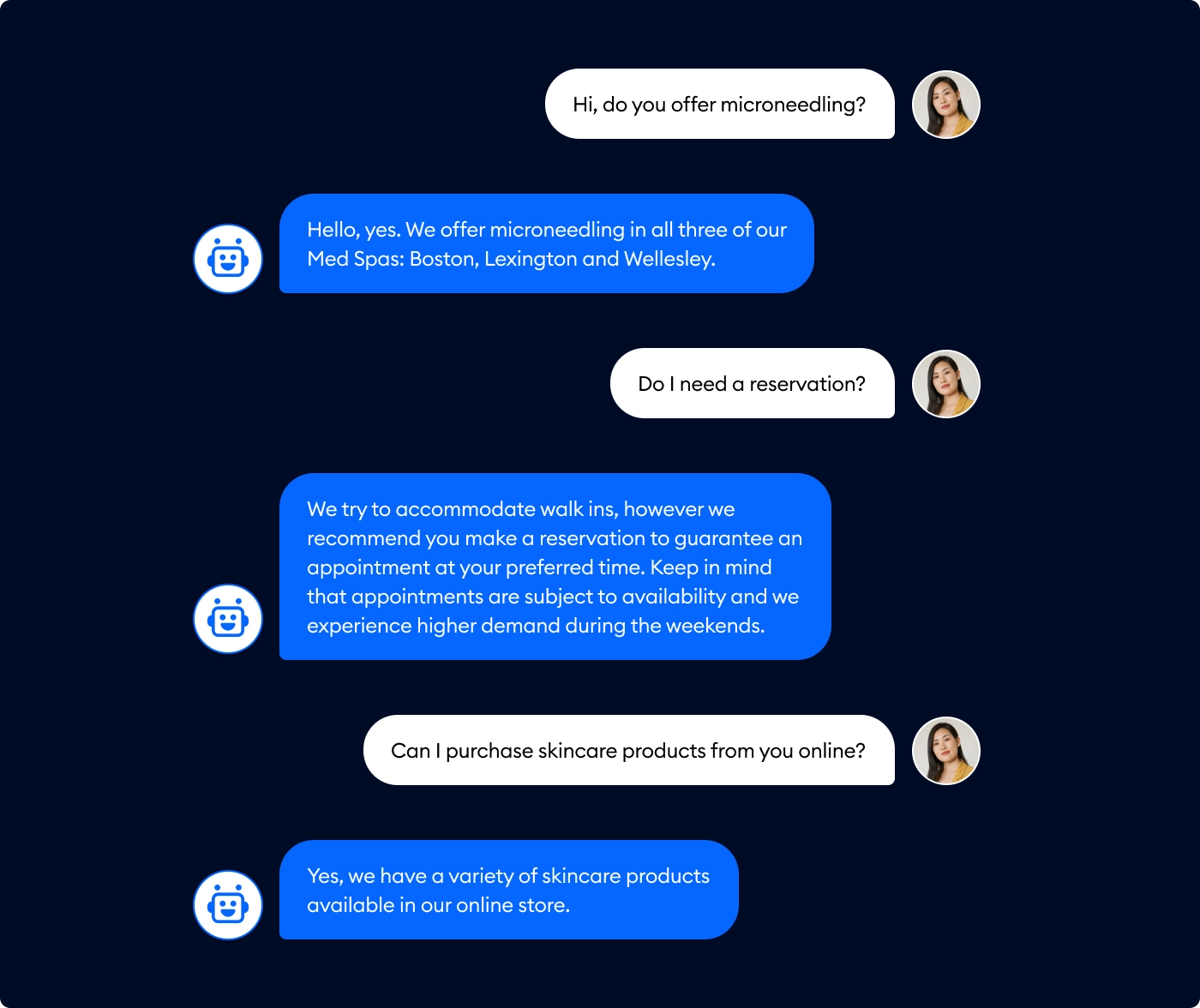
Result: about 75% of live chat questions handled automatically, $66,000 in Lyro-assisted sales and 450+ leads.
What works: “Guests today don’t always want to call and speak to someone when they just have a simple question,” says Jackelyn Dacanay, Marketing Director.
11. Axioma: repair and insurance questions for a car repair company
Axioma is a London-based mobile car body repair company, founded in 2018, that connects customers with local repairers and automates insurance claims. Its customers ask detailed questions about repair types, pricing and insurance cover, often outside business hours. Axioma loaded 370 specialized articles into Lyro’s knowledge base and built sales-oriented chat paths that guide visitors through the repair assessment.
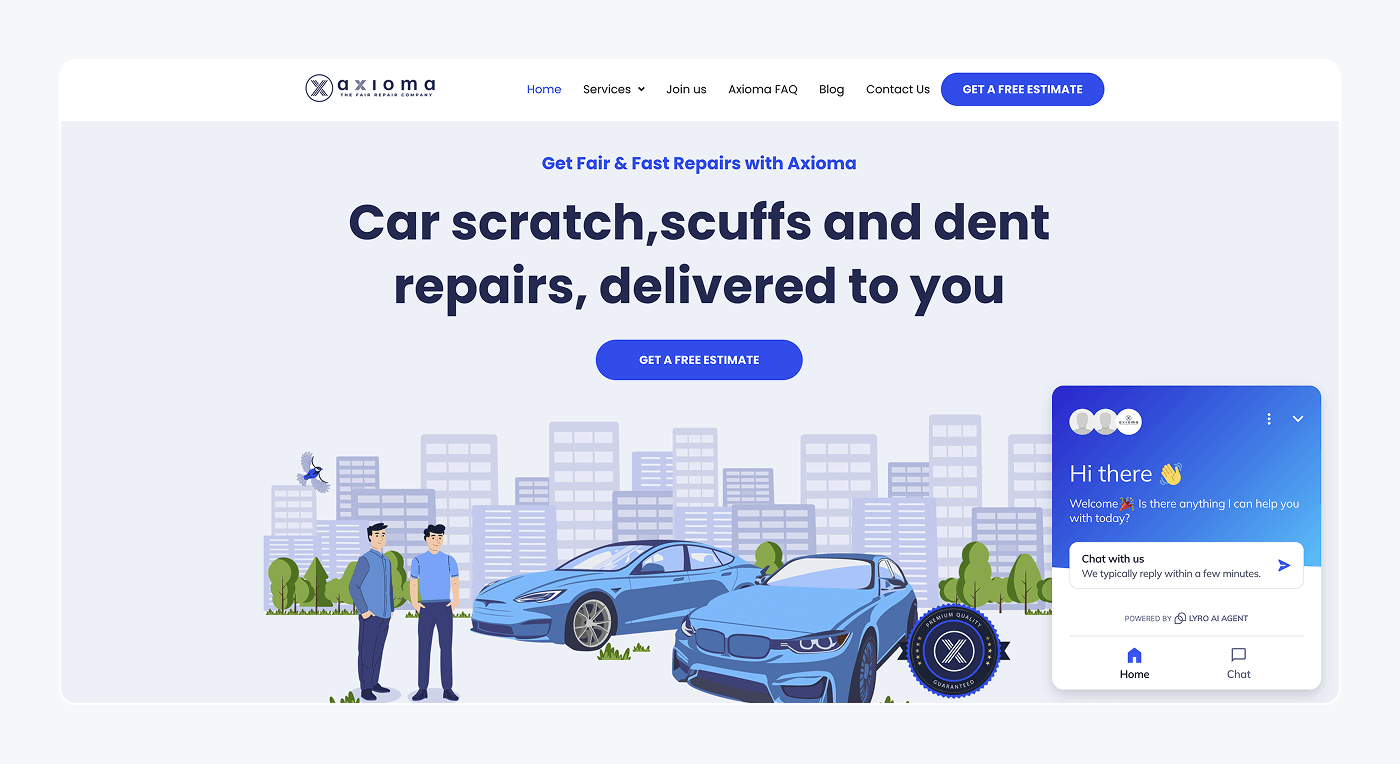
Result: an 89% AI resolution rate and 21% engagement with its sales bots.
What works: support and sales in one chat. The same AI that answers insurance questions also guides potential customers through the repair assessment.
12. NRVTA: student questions for a technical training school
The National RV Training Academy (NRVTA) in Athens, Texas, trains RV service technicians and inspectors. It needed to handle student questions without tying up the advisors who guide enrollment. NRVTA fed Lyro its website content so the AI answers prospective and current students on live chat, and advisors take the conversations that need personal guidance.
Result: across more than 750 conversations in 30 days, Lyro resolved 94% without human help and answered 96% of questions, with a CSAT of 3.83 out of 5.
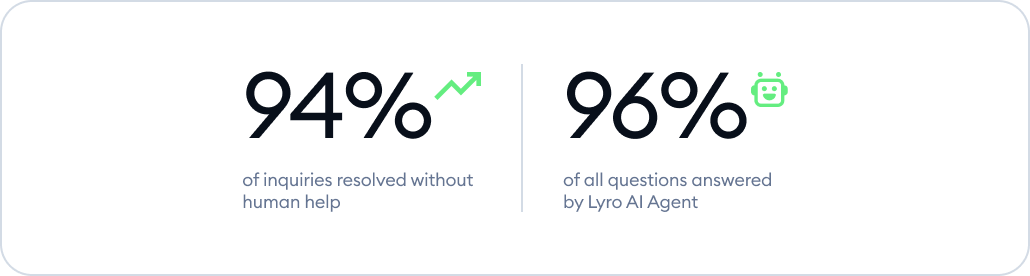
What works: reporting satisfaction next to automation. A resolution rate on its own doesn’t say whether students were happy with the answers; the CSAT score does.
13. Winnipeg Blue Bombers: game-day questions for a football club
The Winnipeg Blue Bombers are a Canadian Football League team whose Ticketing and Fan Services team handles everything from membership renewals to parking questions. Most chats were simple game-day questions, such as parking, drink prices and gate entry, and each one needed a rep. The club put Lyro on its website first, then added Flows for season ticket inquiries, renewals and Bomber For Life memberships.
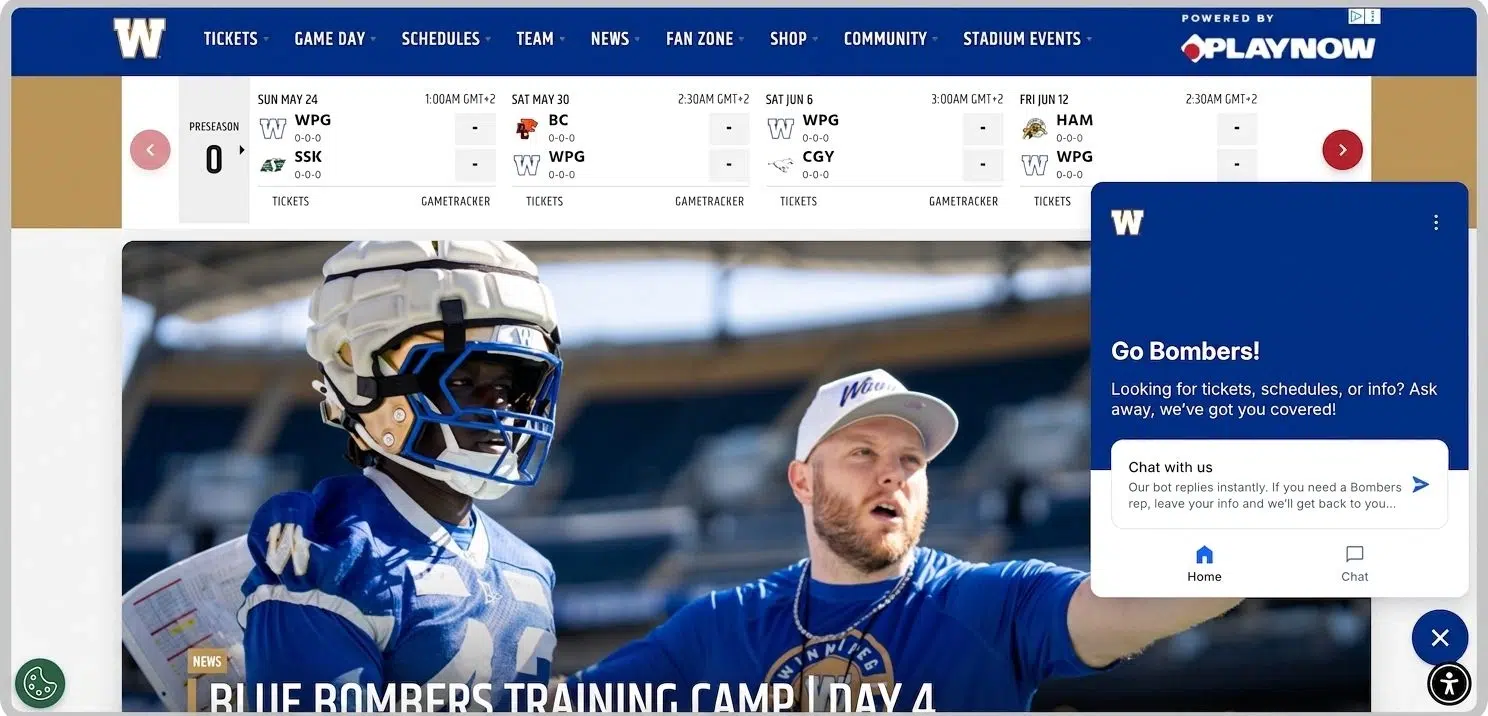
Result: Lyro and Flows handle 70% of fan chat inquiries without a person, and the 30% that reach a rep are mostly ticket purchases and memberships. In 30 days of the off-season, fans had 1,409 interactions through Tidio
What works: “Now, our team can spend more time making outbound calls for those who have expressed interest, welcoming our fans who are new season ticket members, answering sales-related questions, and so much more,” says Cody Mitchell, Email Marketing & CRM Manager.
Travel and energy at scale
Two large companies show the same patterns at a much bigger scale, including the limits they put on the AI.
14. Air India: AI.g for 40,000 queries a day
Air India’s virtual agent AI.g runs on Microsoft Azure OpenAI and answers questions on more than 1,300 topics, from booking changes and refunds to baggage, check-in and lounge access. When it can’t finish a request, it hands off to the contact center.
Result: AI.g handles about 40,000 queries a day and has resolved more than 13 million conversations with a 97% success rate, so only 3% go to a person[6]. Microsoft’s 2024 story on the project says Air India kept call volumes level while passenger traffic doubled.
What works: starting with a defined list of topics. Air India’s first version in 2023 answered about 80% of questions across a fixed list of 1,300 topics; within that same scope the rate has since reached 97%. Tidio’s travel chatbot guide shows the same approach for smaller travel businesses.
15. Octopus Energy: AI-written emails, clearly labeled
Octopus Energy has used AI to draft replies to customer emails for years through Kraken, the technology platform it built and has since spun out as a separate company. In 2026 it trialed Arlo, an assistant that answers routine emails on its own: tariff renewals, payment dates and account details.
Result: in the three-month trial, Arlo handled about 8,000 emails a week, 4% of the UK total, and scored 76% customer satisfaction against 72% for comparable replies from human advisors (Octopus Energy, July 2026).
What works: the limits. Arlo never handles vulnerable customers, sensitive cases or complex complaints. Every AI-written email is labeled, and customers can ask for a person at any stage. “Too many chatbots have been built to keep customers away from people. We wanted to build one that does the opposite,” said Ashley Firth, Octopus’s Deputy CTO.
What the companies that get AI right have in common
- They start with narrow, repeated questions. Order status and billing questions come up all day and have clear right answers.
- The AI answers only from their own content, with limits. HairMax sends health questions it shouldn’t answer to its experts, Octopus excludes vulnerable customers, and Erica answers from a curated library of responses.
- There’s always a way to reach a person. Borrowell turns unresolved chats into tickets with the transcript, and Octopus lets customers ask for a human at any stage. Klarna brought humans back when quality slipped.
- The AI connects to real systems. Curate Health lets the AI check orders through Lyro Actions, and Air India’s agent draws on its reservation system. Answering from a static FAQ caps what AI can resolve.
- They measure honestly. Burker reports its first month (75%) and its second (about 80%) separately, Secureframe defines what counts as resolved, and Curate Health’s case study gives both the 70% day-one rate and the 53% 30-day rate.
Before you roll out your own, Tidio’s AI customer service checklist turns these points into steps.
Build your own AI customer service with Tidio
You don’t need a Klarna-sized engineering team to get results like the smaller companies above. Tidio’s Lyro AI agent learns from your website, help center and FAQ content, answers customers in chat, and hands off to your team when it can’t help. On average, Tidio users automate around 67% of customer inquiries with Lyro. It can run in Tidio’s own inbox or on top of help desks such as Zendesk and Salesforce, and Lyro Actions lets it look up live data such as order status.
Try Lyro free on your own help content
FAQ
Companies of every size do. Burker, HairMax, Your KAYA, Curate Health, Suitor, Borrowell, Secureframe, Bella Sant√©, Axioma, NRVTA and the Winnipeg Blue Bombers use Tidio’s Lyro AI agent. Among large brands, Klarna, Bank of America, Air India and Octopus Energy run their own AI assistants. More examples are on Tidio’s customer stories page and in its roundup of chatbot examples.
No survey gives a single clean number. In McKinsey’s 2026 State of AI survey, nearly nine in ten respondents said their organizations use AI regularly in at least one business function, and chatbots were the most widely scaled AI tool, with 47% of organizations scaling them. In a Gartner survey of 321 service leaders, 91% said executives were pressuring them to implement AI in 2026 (Gartner, February 2026). Tidio collects more figures in its AI customer service statistics.
Not in most companies so far. Only 20% of customer service leaders have reduced agent staffing because of AI, while 55% keep staffing stable and handle more volume (Gartner, December 2025). Klarna, the best-known attempt, brought human agents back in 2025.
Most companies here use a ready-made AI agent: the 11 Tidio customers use Lyro, which learns from existing help content without an engineering team. Large enterprises build on foundation models from OpenAI or Microsoft Azure OpenAI, or build in-house, as Bank of America did. See AI customer service companies for a comparison.
AI-generated customer support is when software, usually a large language model, writes the reply to a customer’s question instead of a person or a fixed script. It can answer customers directly in chat or email, or draft replies for an agent to check. The companies above use both. For the difference between rule-based bots and AI agents, see Tidio’s guide to the customer service chatbot.
Tidio is an AI customer support platform used by more than 300,000 businesses. Its AI agent, Lyro, learns from your website and help content, answers customers in chat and email, and hands anything it can’t resolve to your team. On average, Tidio users automate around 67% of customer inquiries with Lyro. Tidio also includes live chat, a help desk for tickets and Flows automations, with live chat, email, Instagram, Messenger and WhatsApp in one shared inbox. Lyro can run on its own or on top of help desks such as Zendesk and Salesforce, and Tidio has a free plan. All 11 Tidio customers in this article use Lyro.
Use live chat to support your customers in real-time