Key takeaways
- Best for small teams and online stores: Tidio. Its Lyro AI agent sits in the same inbox as live chat and email, from $24.17 a month for the platform plus Lyro from $32.50 (both billed annually).
- Best for SaaS teams that want the AI to lead support: Intercom, at $0.99 per resolved outcome.
- Already on Zendesk, Freshdesk, HubSpot, or Salesforce? Price that company’s own AI first; it reads your tickets and contacts without a migration.
- Large enterprises get custom quotes from Ada, Zowie, and Sierra, so plan for a demo and a pilot.
- Compare the billing unit, not the seat price. Most AI customer service companies charge for each resolution on top of the plan.
Every AI customer service company promises to cut your ticket load. The price pages are where they differ: some charge per seat, some per resolution, and some only after a sales call. We compared 10 companies that sell AI for support on what the AI does without a person, who each one fits, and what it costs as of October 2026. Tidio is listed first because this list is ordered for small teams and online stores; every company, Tidio included, gets the same criteria and its real drawbacks.
The best AI customer service companies at a glance
Our top picks: Tidio for small teams and Shopify stores, Intercom for SaaS teams that want the AI at the center of support, and Zendesk for large teams that need deep ticketing. The table lists every company with the price you pay to start and how its AI is billed.
| Company | Best for | Starting price | How the AI is billed | Free plan / trial | G2 rating |
|---|---|---|---|---|---|
| Tidio | Small teams and e-commerce, especially Shopify | $24.17/mo, billed annually ($29 monthly) | Lyro from $32.50/mo for 50 AI conversations | Free plan · 7-day trial | 4.6 |
| Intercom | SaaS and digital-first teams | $29/seat/mo, billed annually | $0.99 per outcome | 14-day trial | 4.5 |
| Zendesk | Large teams that need ticketing depth | $19/agent/mo, billed annually | 5 to 10 resolutions per agent/mo included, then $1.50 to $2.00 each | 14-day trial | 4.3 |
| Freshdesk | Growing teams that budget per agent | $19/agent/mo, billed annually | First 500 sessions free once, then $49 per 100 | 14-day trial | 4.4 |
| Gorgias | Shopify brands with high ticket volume | $10/mo for 50 tickets | $0.85 to $1.00 per automated interaction | Free trial | 4.6 |
| HubSpot | Teams that keep customer data in HubSpot | $90/seat/mo, billed annually (Professional) | $0.50 per resolution, paid in HubSpot Credits | Free tools (no AI agent) | 4.4 |
| Salesforce Agentforce | Companies already running service on Salesforce | Custom | $2 per conversation or Flex Credits per action | Contact sales | 4.4 |
| Ada | Enterprise teams with high contact volume | Custom | Custom | Demo | 4.6 |
| Zowie | Regulated enterprises in banking, insurance, and telecom | Custom | Custom | Demo | 4.7 |
| Sierra | Large consumer brands | Custom | Outcome-based | Demo | No validated listing |
What kinds of AI customer service companies are there?
An AI customer service company sells one of three things: help desk software with an AI agent built in, a standalone AI agent platform that connects to your help desk, or a managed service where a team runs support for you. This list covers the first two, because those are the ones you can test on your own tickets.
- Help desk suites with built-in AI: Tidio, Intercom, Zendesk, Freshdesk, Gorgias, HubSpot, and Salesforce. You get the inbox, the ticketing, and the AI from one company.
- AI agent specialists: Ada, Zowie, and Sierra. They sell the agent, usually to large companies, and connect it to the help desk you already run.
- Outsourcers and agencies: they staff or build support for you and price by contract. We left them out because you can’t try one on a Friday afternoon, but the price and pilot questions below apply to them too.
Looking for the brands that already use this software? See our examples of companies that use AI for customer support.
How we chose these companies
We started from the companies that Google results, AI assistants’ answers, and G2 category pages name for this topic, and kept 10 that sell AI customer service a business can buy or request a demo for. We judged each on six criteria:
- Fit: the company size and use case it serves best.
- Resolution: what the AI resolves without a person, and how the company counts a resolution.
- Actions: whether the AI can change an order, a subscription, or a booking, not just answer.
- Handoff and guardrails: escalation rules and what the AI may not do alone.
- Pricing: public prices and the billing unit for the AI.
- Reviews: G2 rating.
The list is ordered by fit for small teams and online stores, then by company size, not by rating, which is why Tidio is first. We didn’t test resolution rates ourselves. Where a company publishes one, it appears as that company’s claim.
The 10 best AI customer service companies in 2026
1. Tidio
Best for: small teams and Shopify stores that want one inbox for AI and people
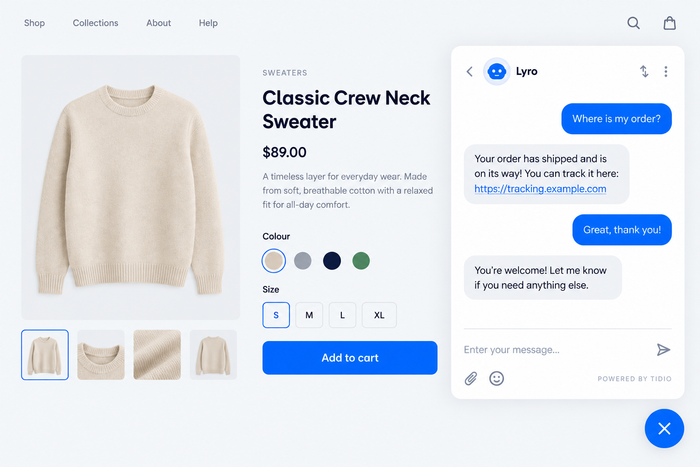
Tidio puts live chat, email tickets, and the Lyro AI agent in one inbox, so a handoff carries the full conversation. Lyro learns from your help center, FAQs, and website pages, and it can resolve up to 75% of support requests. Lyro Actions lets it update orders and qualify leads.
Tidio fits teams like these:
- Shopify stores, where agents see the shopper’s cart and order history inside the chat.
- Small and medium-sized businesses that want to close more tickets without growing the team.
- Busy inboxes where the same questions arrive all day and the AI can take them.
- Multi-channel teams that answer on chat, email, Messenger, Instagram, and WhatsApp from one screen.
Skip Tidio if you run a phone-first contact center; an enterprise company such as Ada or Zowie covers calls in more depth.
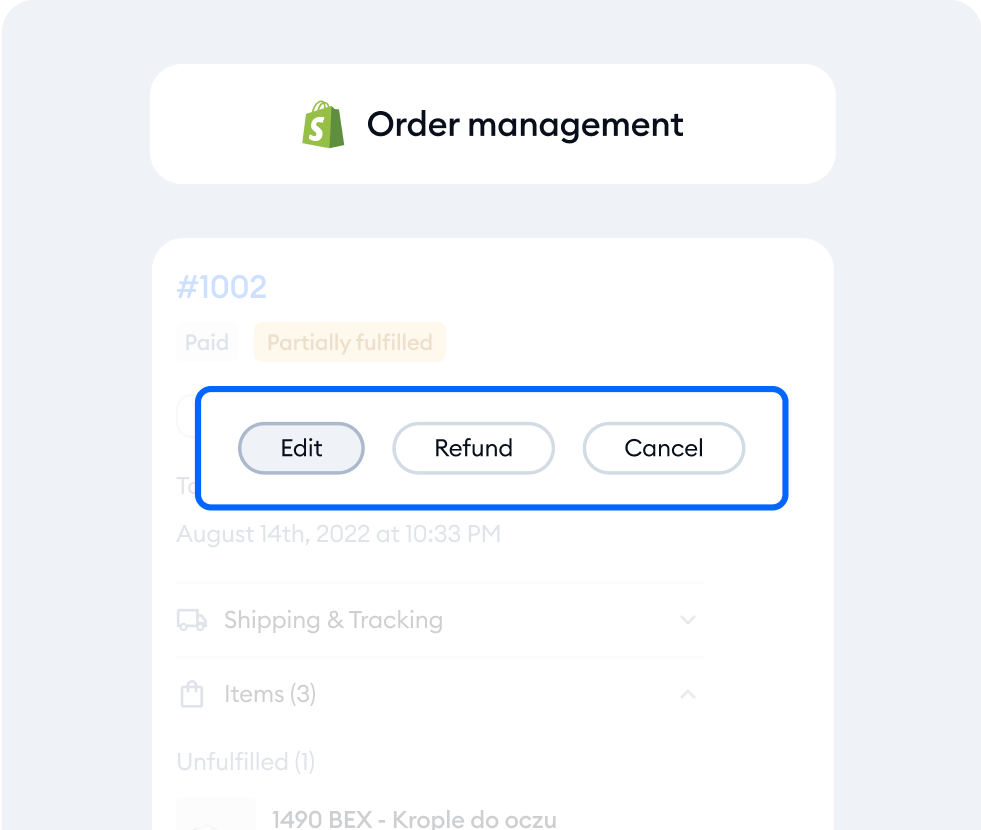
Key features:
- Lyro AI agent: replies in the customer’s language and follows escalation rules you set with Lyro Guidance.
- Shopify order panel: cancel, refund, or edit an order without leaving the conversation.
- Runs on other help desks: Lyro can sit on top of Zendesk, Intercom, or Salesforce.
- Analytics and Flows: reports on resolution and satisfaction, plus automations that greet visitors or recover carts.
Pros
- Customers never repeat themselves: the AI’s transcript travels with the chat to your agent.
- Lyro answers from your own knowledge base, with guardrails you control.
- A free plan and a 7-day trial let you test before you pay.
Cons
- Human conversations, Lyro, and Flows each have their own quota, so you pay only for what you use and watch three limits as volume grows.
- Advanced analytics and auto-assignment start on Growth, so Starter fits simpler setups.
- Larger deployments with departments or a guaranteed resolution rate run on Plus or Premium, where Tidio’s sales team shapes the quote with you.
Pricing: from Tidio’s pricing page, billed annually (monthly in brackets):
- Free: $0, 50 billable conversations a month, up to 10 seats.
- Starter: $24.17 a month ($29), 100 conversations.
- Growth: from $49.17 a month ($59) for 250 to 2,000 conversations, with advanced analytics.
- Plus: from $300 a month plus usage, with departments and custom limits.
- Premium: custom, from 3,000 Lyro conversations and a guaranteed 50% Lyro resolution rate.
- Lyro AI agent: from $32.50 a month ($39) for 50 Lyro conversations, meaning chats where Lyro sent at least one reply.
- 7-day free trial, no credit card.
Rating: G2 4.6/5
Add Lyro to your support and compare Tidio plans
2. Intercom
Best for: SaaS teams that want the AI agent to lead support
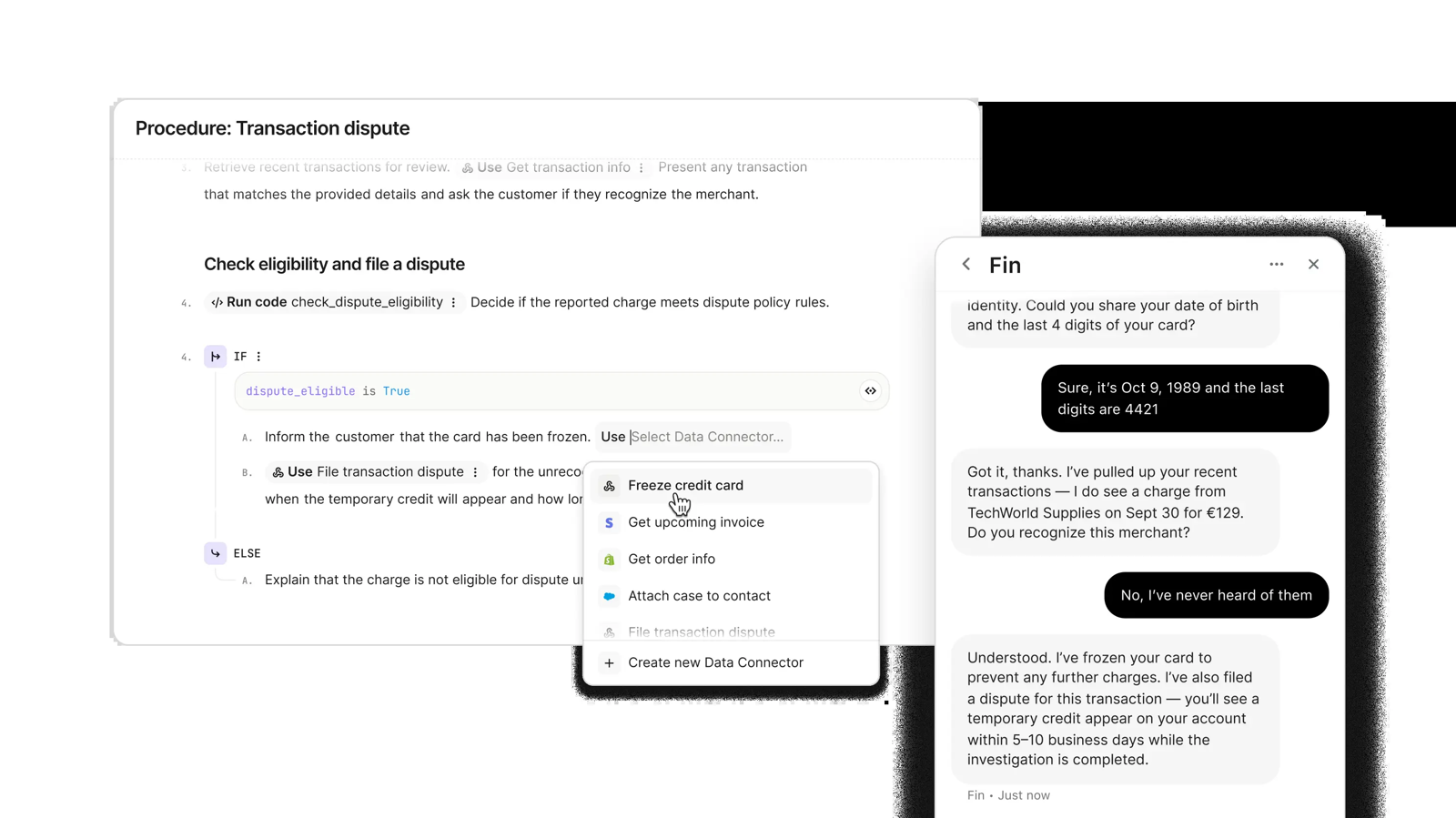
Intercom built its help desk around Fin, an AI agent that answers from your knowledge base, follows step-by-step Procedures, and acts in outside systems. Fin also runs on top of another help desk, such as Salesforce, with no Intercom seats. The cost to watch is that seats and outcomes are billed separately.
Key features:
- Fin AI Agent across chat, email, and other channels.
- Procedures that run multi-step workflows, including handoffs.
- Workflows builder from the Advanced plan.
Pros
- One charge per conversation, even when Fin answers several questions.
- You can test Fin on your current help desk without migrating.
Cons
- Seat fees and outcome fees both grow with the team.
- Copilot for human agents is a separate add-on.
Pricing (per seat a month, billed annually; monthly in brackets): Essential $29 ($39), Advanced $85 ($99), Expert $132 ($139). Fin costs $0.99 per outcome, counted when the customer confirms the fix, asks for no more help, or Fin completes a Procedure. Copilot is $29 per agent a month billed annually. 14-day free trial.
Rating: G2 4.5/5
Read more: Intercom alternatives · Intercom review
3. Zendesk
Best for: large teams that need deep ticketing on every channel
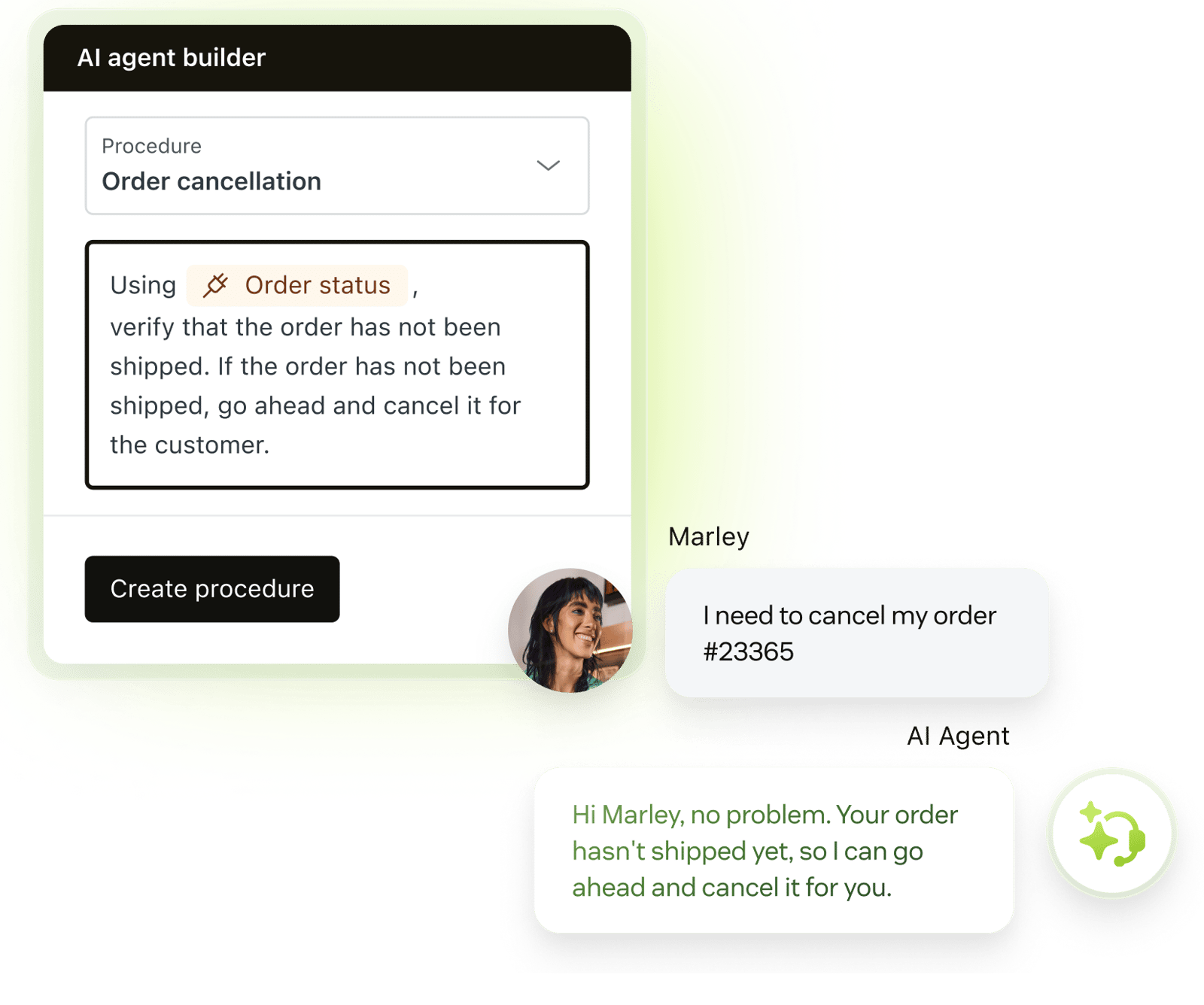
Zendesk includes AI agents in its plans and bills them per automated resolution, meaning a request solved with no human escalation. They work across messaging, email, and voice. The limit is the allowance: five resolutions per agent a month on the Team plans, so volume adds up fast.
Key features:
- AI agent builder that turns a written procedure into a working agent.
- Actions to read, write, and trigger tasks in outside systems.
- 80+ languages with reasoning controls.
Pros
- Deep ticketing, routing, and reporting for large teams.
- Some automated resolutions are included in every plan.
Cons
- Resolutions above the allowance add up at volume.
- Copilot is an add-on from Suite Professional.
Pricing (per agent a month, billed annually; monthly in brackets): Support Team $19 ($25), Suite Team $55 ($69), Suite Professional $115 ($149), Suite Enterprise through sales. Included: five resolutions per agent a month (10 on Suite Professional), then $1.50 each on a commitment or $2.00 pay-as-you-go. 14-day free trial.
Rating: G2 4.3/5
Read more: Zendesk alternatives · Zendesk review
4. Freshdesk
Best for: growing teams that want AI on a per-agent budget
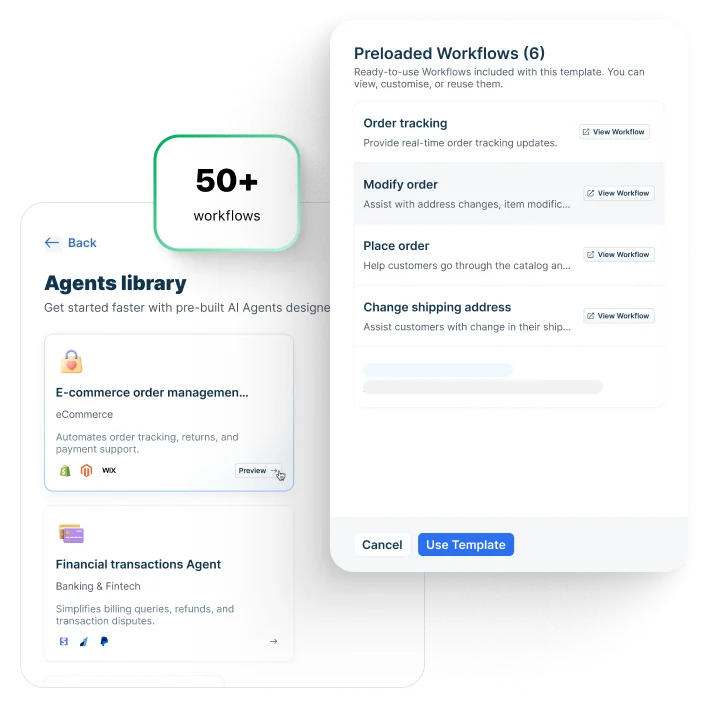
Freshdesk is a ticketing help desk with Freddy AI Agent for customers and Freddy AI Copilot for your team. It suits teams that have outgrown a shared inbox. The free plan is gone from the current pricing page, and AI sessions are sold in packs.
Key features:
- Freddy AI Agent for chat and email answers.
- Freddy AI Copilot with reply suggestions and summaries.
- Freddy AI Insights on the Enterprise plan.
Pros
- Low entry price per agent for a full help desk.
- Copilot can go to only the agents who need it.
Cons
- No free plan; only the 14-day trial is free.
- AI sessions and Copilot both add to the per-agent price.
Pricing (per agent a month, billed annually): Growth $19, Pro $55, Enterprise $89. Freddy AI Agent: first 500 sessions free once per account, then $49 per 100. Copilot: $29 per agent a month. 14-day free trial.
Rating: G2 4.4/5
Read more: Freshdesk alternatives · Freshdesk review
5. Gorgias
Best for: Shopify brands with thousands of tickets a month
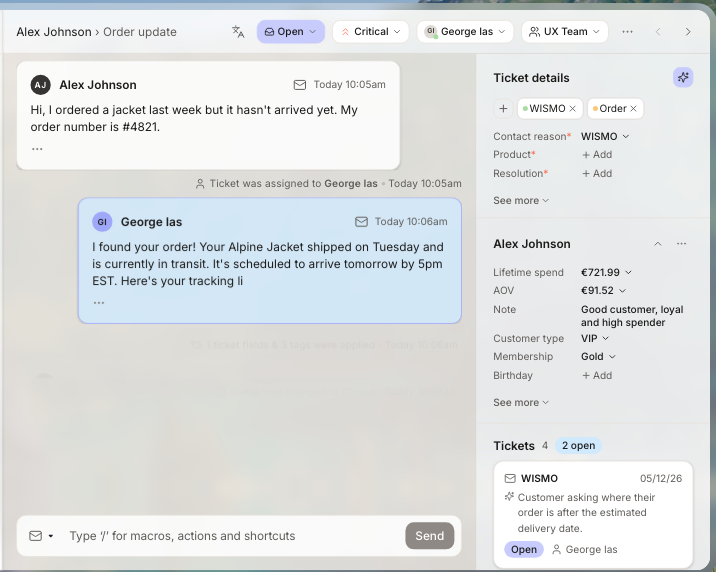
Gorgias is a help desk for online stores. Its AI Agent answers questions, recommends products, and handles returns, tracking, and cancellations through native Shopify, BigCommerce, Magento, and WooCommerce connections. Plans follow ticket volume rather than seats. Outside e-commerce it has little to offer.
Key features:
- AI Agent pre-trained on 18+ store verticals, with brand voice and guardrails.
- Order actions inside each ticket: cancel, refund, discount, track.
- Shopping Assistant for pre-sales questions.
Pros
- No per-agent fees; plans from Basic include 500 user seats.
- Connectors for Klaviyo, Yotpo, Recharge, and Smile.
Cons
- Each automated interaction is billed on top of the plan.
- AI actions such as cancellations aren’t on Starter.
Pricing (monthly; annual in brackets): Starter $10 for 50 tickets (monthly only), Basic $60 ($50) for 300, Pro $360 ($300) for 2,000, Advanced $900 ($750) for 5,000. The AI Agent costs $1.00 per automated interaction on Starter, $0.90 on Basic and Pro, and $0.85 on Advanced. Free trial, no credit card.
Rating: G2 4.6/5
Read more: Gorgias alternatives · Gorgias review
6. HubSpot
Best for: teams whose customer data already lives in HubSpot’s CRM
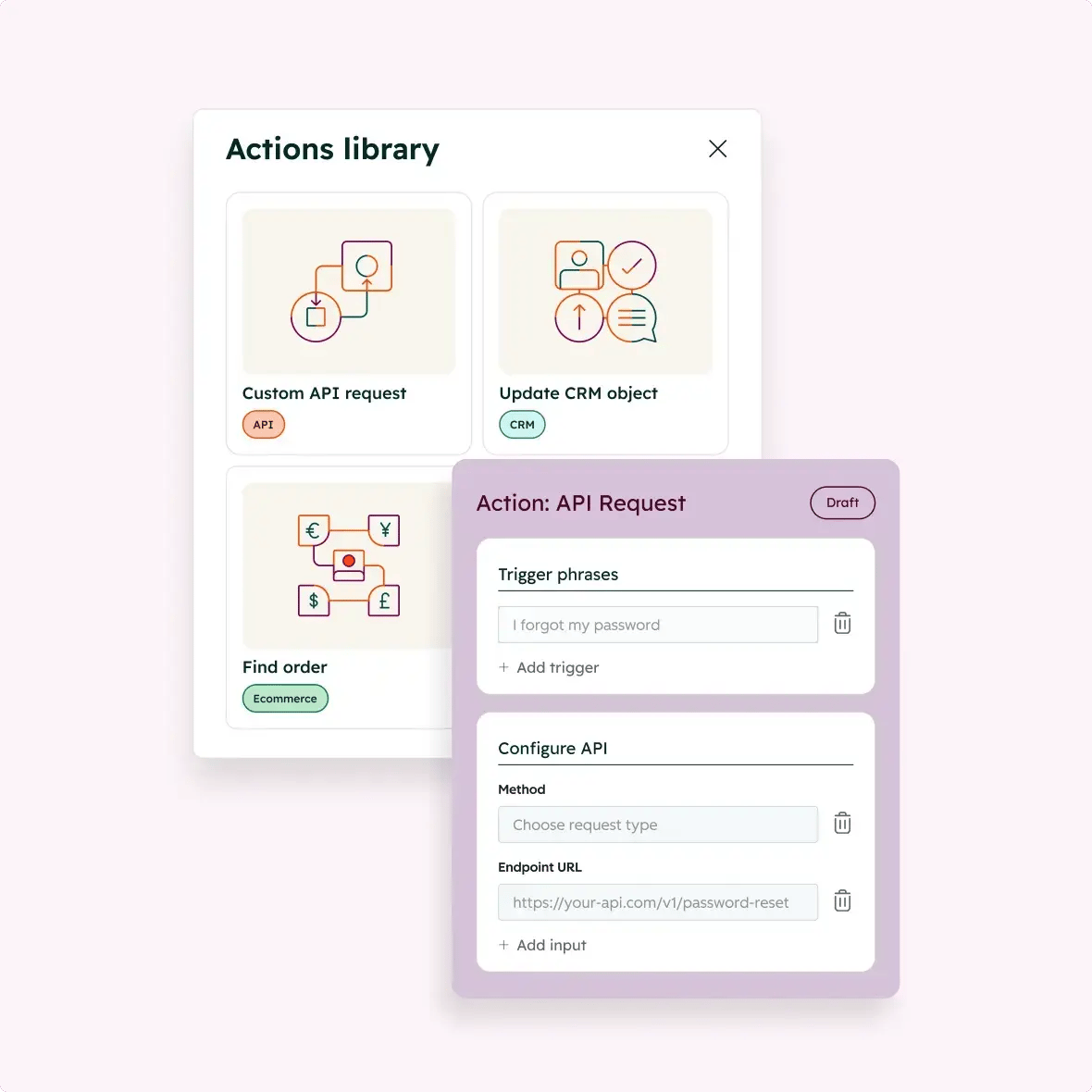
HubSpot’s Customer Agent replies in chat, email, forms, and calls with the customer’s CRM history in view, then escalates to your team. HubSpot says it resolves 65% or more of conversations. It needs Service Hub Professional or Enterprise, so the entry cost is the seat price, not the AI.
Key features:
- Customer Agent trained on your content in minutes.
- Help desk workspace tied to CRM contacts, deals, and tickets.
- HubSpot Credits with spend limits per feature.
Pros
- Answers draw on the same records as sales and marketing.
- Credit limits cap what the AI can spend.
Cons
- Not available on the free or Starter plans.
- Onboarding fees of $1,500 on Professional and $3,500 on Enterprise add to the first-year cost.
Pricing: free tools for up to two users; Starter from $7 a seat a month billed annually; Professional from $90 a seat billed annually ($100 monthly) plus $1,500 onboarding; Enterprise from $150 a seat plus $3,500 onboarding. Customer Agent costs $0.50 per messaging resolution and per voice minute, paid in HubSpot Credits (50 credits per resolved conversation); Professional includes 3,000 credits a month.
Rating: G2 4.4/5
Read more: HubSpot alternatives
7. Salesforce Agentforce
Best for: companies already running service on Salesforce
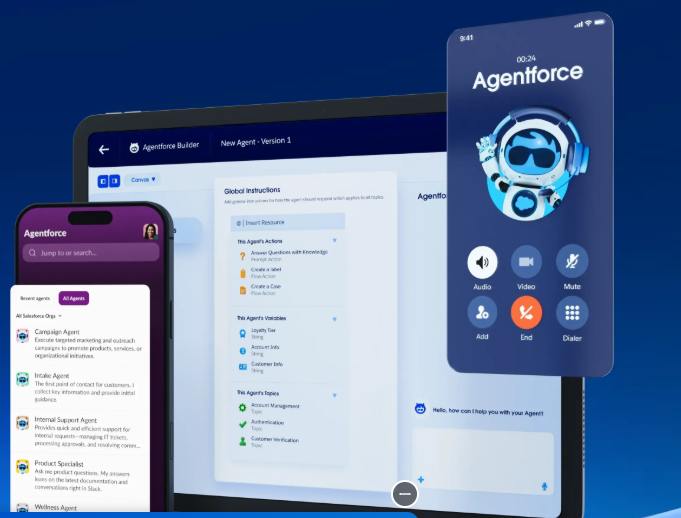
Agentforce puts AI agents inside Salesforce, where they read and update cases, accounts, and orders and trigger flows. If Service Cloud is your system of record, it’s the shortest path to an agent that acts on real customer data. The trade-off is forecasting: you pay per conversation or per action.
Key features:
- Customer-facing agents for service, plus Agentforce Voice.
- Actions on Salesforce records, prompts, and flows.
- Digital Wallet to track consumption in real time.
Pros
- Agents work on the same CRM data as your service team.
- Two consumption models to choose from.
Cons
- Best value only if you’re already on Salesforce.
- Per-action metering makes monthly cost harder to predict.
Pricing: $2 per conversation, or Flex Credits at $500 per 100,000 credits (a standard action uses 20, about $0.10; a voice action uses 30). Agentforce Max Editions from $550 per user a month. Contact sales.
Rating: G2 4.4/5 for Salesforce Service Cloud
Read more: Zendesk vs Salesforce
8. Ada
Best for: enterprise teams automating high contact volumes
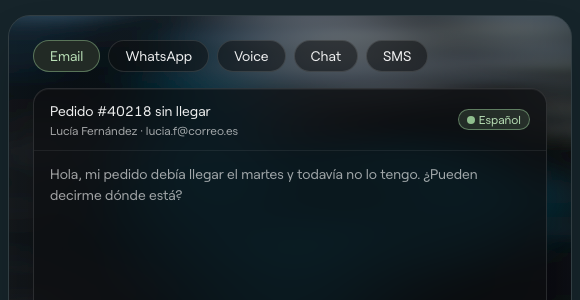
Ada runs AI agents for voice, messaging, and email at large companies. Playbooks turn standard operating procedures into automated workflows, and Ada Computer gives the agent tools to complete tasks in your systems. It sells through a demo sized by yearly contact volume, so it isn’t built for a five-person team.
Key features:
- Playbooks that automate complex procedures.
- Voice, messaging, and email agents on one platform.
- Testing and coaching to improve resolutions after launch.
Pros
- Handles multi-step jobs such as refunds or account changes.
- Industry playbooks for e-commerce, financial services, gaming, insurance, SaaS, and travel.
Cons
- No public pricing.
Pricing: custom, quoted after a demo based on annual contact volume.
Rating: G2 4.6/5
Read more: Lyro vs Ada
9. Zowie
Best for: regulated enterprises that need AI to follow exact rules
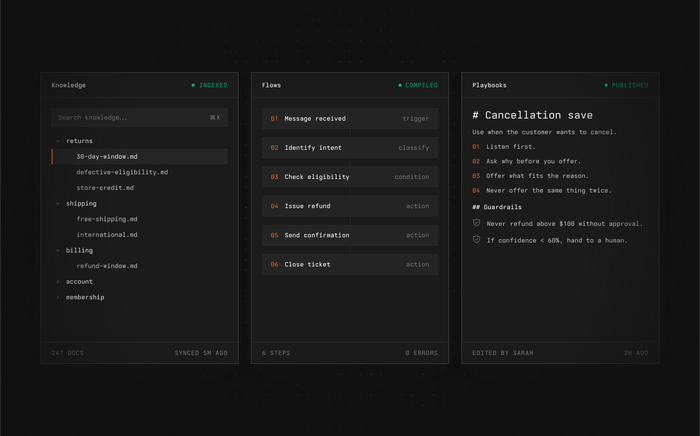
Zowie sells an AI agent platform to enterprises in banking, insurance, telecom, and commerce. Its pitch is a separate decision engine that runs your rules for refunds, claims, and identity checks, while the language model only talks to the customer. It works across voice, chat, and email, and you can choose the language model.
Key features:
- Decision engine that executes your policies instead of leaving the decision to the model.
- Agent Studio for flows, knowledge, and playbooks.
- Quality scoring and traces for each conversation.
Pros
- Refunds and claims follow your written policy.
- You can swap the language model or voice without rebuilding the agent.
Cons
- No public pricing; every deal starts with a demo.
- Built for enterprise projects, so a small team will find it heavy.
Pricing: custom, through sales.
Rating: G2 4.7/5
Read more: Lyro vs Zowie
10. Sierra
Best for: big consumer brands that want one AI agent on every channel
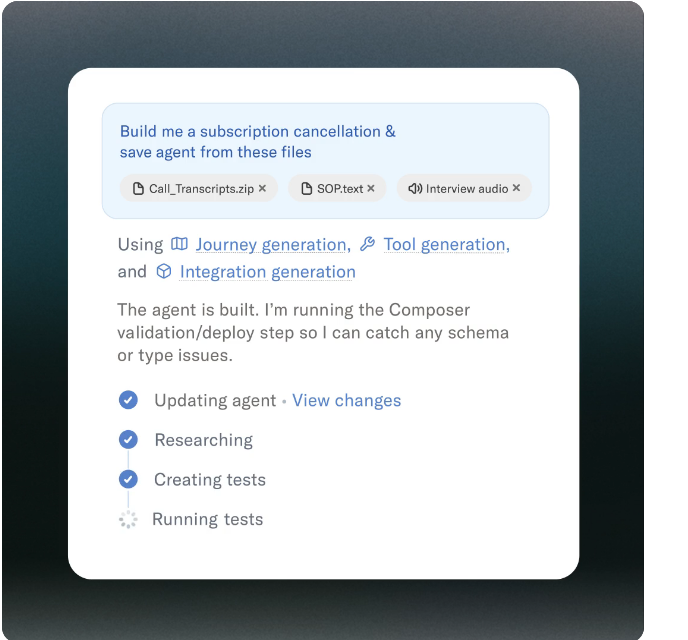
Sierra builds branded AI agents for large companies and deploys one agent across chat, SMS, WhatsApp, email, voice, and ChatGPT. Its Ghostwriter tool builds an agent from SOPs, transcripts, or a plain-English goal, with guardrails built in. Pricing is outcome-based; there’s no public price or self-serve plan.
Key features:
- Ghostwriter to build and update agents from your own documents.
- One agent across six channels, including voice and ChatGPT.
- Outcome-based pricing.
Pros
- Multilingual, multichannel agents built from your own documents.
- You pay for outcomes rather than seats.
Cons
- No self-serve plan or published price.
- No G2 listing we could validate.
Pricing: custom and outcome-based, through sales.
Rating: no G2 listing we could validate (October 2026).
How to choose an AI customer service company
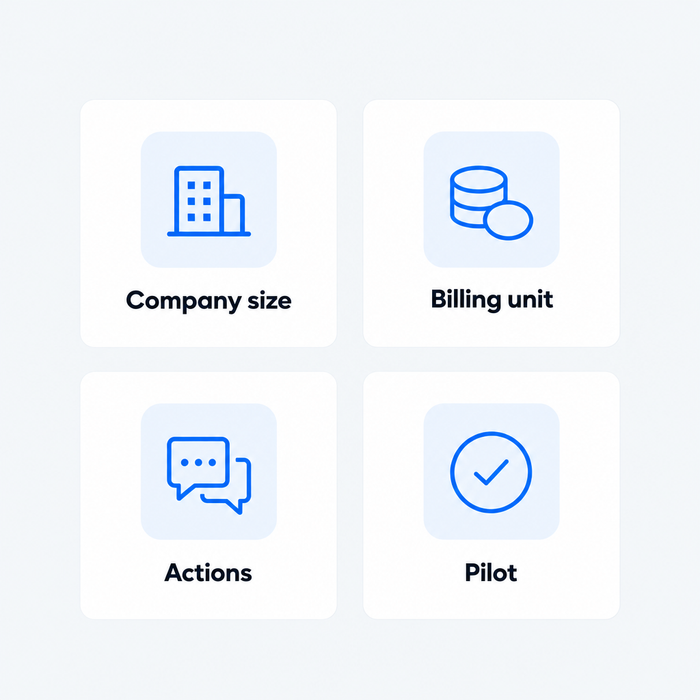
Four checks narrow the list before you book a demo.
Match the company to your size
Small teams do better with a self-serve plan and a public price. Enterprise AI companies such as Ada, Zowie, and Sierra start with a demo and a contract, which pays off only at high contact volume. Gartner predicts agentic AI will resolve 80% of common customer service issues without human intervention by 2029[1]. Pilot early.
Compare the billing unit
Seat pricing, per-resolution fees, and per-conversation fees grow differently. For 1,000 AI resolutions a month, $0.99 each is about $990, $1.50 is $1,500, and $2.00 is $2,000, before seats. Read what counts as one resolution before you sign. Our chatbot pricing guide shows how the models compare.
Check what the AI can do in your systems
Ask each company to run a refund, an address change, and a cancellation in your test account. An AI that only answers questions deflects tickets; one that acts closes them. Also write the cases it must never handle alone, such as legal threats and large refunds, and test that the chat reaches your team with the history attached. As the AI gets access to more systems, continuous attack surface management helps expand threat detection across your external network entry points.
Pilot it on your own tickets
Run the AI on your 50 most common questions for two weeks and count what it resolved without a person. Treat vendor resolution rates as claims until your own tickets confirm them.
Which AI customer service company should you pick?
- Small team or Shopify store: Tidio on Growth with Lyro added. Agents see the cart and order history in the chat, and Lyro handles the repeat questions.
- Shopify brand with thousands of tickets: Gorgias, if you want a help desk built around orders and accept paying per automated interaction.
- SaaS company that wants the AI first: Intercom, since Fin runs on your current help desk too.
- Already on Zendesk, Freshdesk, or HubSpot: that company’s own AI; you keep your tickets and workflows.
- Salesforce shop: Agentforce, once you can forecast conversations or actions.
- Large enterprise with a project team: Ada, Zowie, or Sierra, after a pilot on your own tickets. Choose Zowie when strict rules matter most.
Put Lyro on your store and see what it resolves
For more options, see our guides to the best AI agents for customer service, agentic customer service software, and AI customer support software.
Frequently asked questions
It depends on your size and stack. Tidio suits small teams and Shopify stores, Intercom suits SaaS teams, and Zendesk, Freshdesk, HubSpot, and Salesforce suit teams that already run those platforms. Ada, Zowie, and Sierra serve large enterprises.
Pick one with a public price that works inside the tool you use. Tidio’s Lyro starts at $32.50 a month billed annually for 50 AI conversations, and Intercom’s Fin charges $0.99 per outcome on top of its seat price.
Prices run from about $0.50 to $2.00 per resolution, plus seats or a platform plan. Enterprise companies such as Ada, Zowie, and Sierra quote after a demo.
Software runs the AI inside your own help desk, and you keep control of answers and data. Outsourcing hands the work to a vendor’s team and prices by contract, so you can’t test it with your own tickets first.
Ada, Zowie, Sierra, Salesforce Agentforce, and Zendesk target large teams. Expect custom pricing, a demo, and a pilot before rollout.
Yes. Intercom’s Fin and Tidio’s Lyro can run on top of other help desks such as Zendesk and Salesforce, so you can test the AI without migrating tickets.
Use live chat to support your customers in real-time