
Marketing has become harder to manage as teams juggle everything from content creation and caMarketing has become harder to manage as teams juggle everything from content creation and campaigns to analytics and customer communication. Tasks that used to take hours, like writing copy or responding to leads, now need to happen faster and across more channels. This is where AI marketing tools are starting to play a bigger role, helping teams keep up without adding more manual work. And this AI adoption is already well underway. In fact, recent data shows that over 92%[1] of companies plan to use AI over the next three years.
In this article, we’ll take a closer look at what marketing AI tools offer and explore some of the best platforms available today. You’ll see how these tools help teams create content, automate workflows, and improve campaign performance without slowing things down.
| AI marketing platform | Free plan? | Best for |
| Tidio (Lyro AI Agent) | ✅ | AI customer service agent and flow automations |
| HubSpot AI | ✅ | All-in-one marketing automation with AI-powered insights |
| Jasper AI | ❌ | AI content creation for marketing teams |
| Copy.ai | ❌ | Generating marketing copy and campaign ideas |
| Surfer SEO | ❌ | AI-powered SEO content optimization |
| Semrush AI tools | ❌ | SEO, content, and marketing analytics with AI support |
| Mailchimp AI | ✅ | Email marketing automation with AI recommendations |
| ActiveCampaign AI | ❌ | Advanced marketing automation and personalization |
| Hootsuite OwlyWriter AI | ❌ | AI-generated social media content and scheduling |
| Buffer AI Assistant | ✅ | Simple AI support for social media content creation |
| Canva AI (Magic Studio) | ✅ | AI-powered visual content and design creation |
| AdCreative.ai | ❌ | AI-generated ad creatives and campaign optimization |
| Phrasee | ❌ | AI-generated marketing copy for email and ads |
| Smartly.io | ❌ | AI-driven ad automation for large-scale campaigns |
| Seventh Sense | ❌ | Email send-time optimization with AI |
| Drift | ❌ | Conversational marketing and AI chat for lead capture |
| ManyChat | ✅ | AI chat marketing for social and messaging platforms |
| Klaviyo AI | ✅ | Ecommerce email and SMS marketing automation |
| Ocoya | ❌ | AI content generation and social media scheduling |
Tidio (Lyro AI Agent)
Ratings: 4.6/5 ⭐️
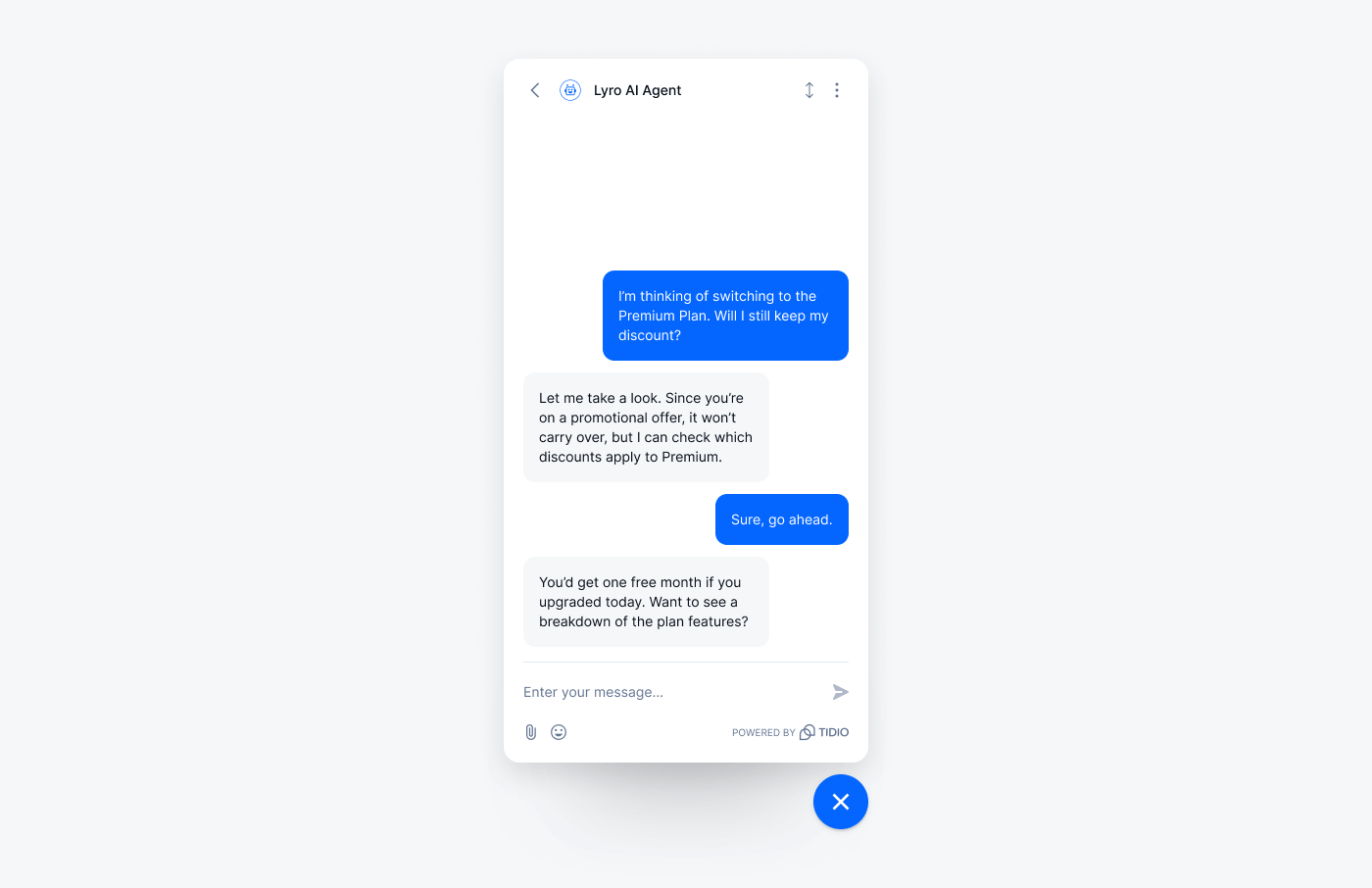
Tidio helps marketing teams stay in touch with website visitors without needing constant manual follow-up. It sits directly on your site and turns traffic into conversations, which makes it easier to capture interest at the moment someone is ready to engage. Lyro, the AI customer service agent behind it, responds to questions in real time using the information you provide. It learns from your website content and previous interactions, so replies feel relevant and consistent.
Main features:
- Lyro AI agent that responds to visitor questions and supports lead capture
- Live chat widget that lets you engage users while they browse your site
- Automation flows that trigger when users perform a specific action
Pricing:
- 7-day free trial available
- Free version available
- Starter ($24.17/mo)
- Growth (starts at $49.17/mo)
- Plus (starts at $749/mo)
- Premium (starts at $2999/mo)
Start engaging customers instantly
HubSpot AI
Ratings: 4.4/5 ⭐️
HubSpot brings AI into the middle of marketing work, so it shows up while you’re writing, planning, or reviewing results. It doesn’t feel like a separate tool you open when needed. Instead, it sits inside the platform and supports decisions as they happen, which makes day-to-day work feel more guided.
Everything connects back to the CRM tool, so activity from your site and campaigns feeds into one system. That context makes a difference. You can draft content with AI assistance, then adjust it based on how contacts are engaging. Insights are built into the same space, so teams can react quickly without stepping away from what they’re working on.
Main features:
- AI content tools that assist with writing and campaign creation
- Built-in CRM that keeps marketing data connected to contacts
- Automation features that support lead nurturing and campaign execution
Pricing:
- Free plan available
- Starter (from $9/month/ seat)
- Professional (from $792/month)
- Enterprise (from $3,600/month)
Jasper AI
Ratings: 4.7/5 ⭐️
Jasper feels built for marketers first. The product is centered on campaign execution, with AI woven into the writing process so teams can create on-brand content inside one workspace. Jasper’s main platform now emphasizes agents and content pipelines, which gives it a more structured feel than a basic AI writer.
There’s also a strong focus on brand control. Jasper lets teams work with brand voices, knowledge assets, and audiences, so content stays closer to company guidelines as output scales. On the higher-tier plan, it expands into advanced agents, a no-code app builder, and Jasper Grid for more systematic content execution.
Main features:
- AI workspace built for marketing content creation
- Brand voice and knowledge controls for more consistent output
- Marketing agents and content pipelines for structured execution
Pricing:
- Free trial available
- Pro ($59/month/seat, billed annually)
- Business (custom pricing)
Copy.ai
Ratings: N/A
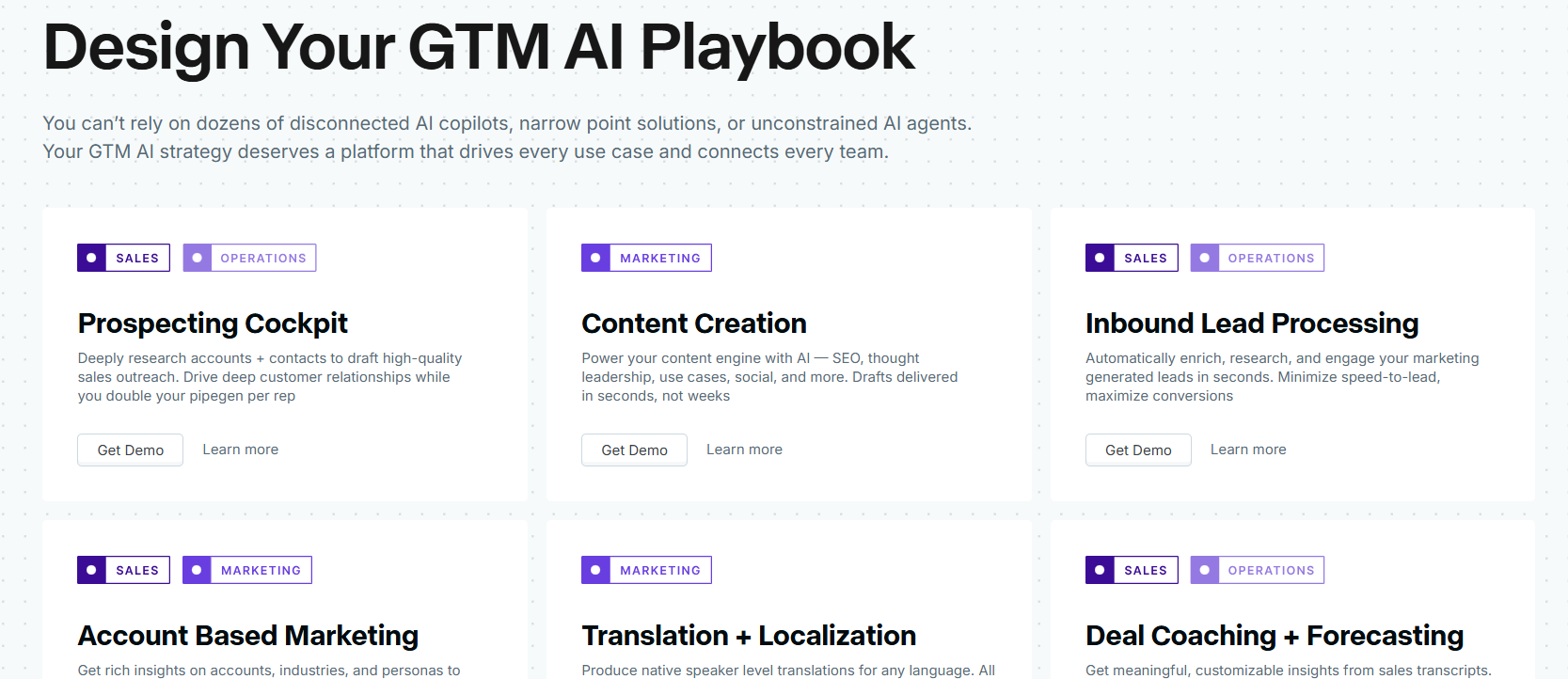
Copy.ai has shifted from a simple writing tool into something closer to a workflow engine for marketing and sales teams. It’s built around the idea of speeding up go-to-market work, so instead of generating one piece of content at a time, you can set up flows that handle repeated tasks across campaigns. Teams often use it to draft copy, then refine it inside the same workspace while keeping brand voice consistent. There’s also a strong focus on automation, which shows up in how content connects to outreach and internal processes, making it easier to move from idea to execution without restarting each time.
Main features:
- AI content generation with templates and workflows for marketing tasks
- Brand voice and knowledge storage for consistent messaging
- Marketing automation tools that connect content with sales and marketing processes
Pricing:
- Chat ($29/month)
- Enterprise (custom pricing)
Surfer SEO
Ratings: 4.8/5 ⭐️
Surfer is among the AI-driven marketing tools that care about organic traffic and want clearer direction while creating content. The platform centers on SEO workflows, so the writing process is shaped by search data from the start. It helps teams figure out what to cover, how deeply to cover it, and where existing pages need updates. That makes it useful for content planning as well as optimization. Surfer also includes tools like Content Editor, Topical Map, Content Audit, and AI-assisted optimization, which keeps research and execution close together inside one product.
Main features:
- Content Editor for SEO-guided writing
- Topical Map for planning content clusters
- Content Audit for finding pages that need improvement
Pricing:
- Discovery ($49/mont)
- Standard ($99/month)
- Pro ($182/month)
- Peace of Mind ($299/month)
- Enterprise ($999/month)
Semrush AI tools
Ratings: 4.5/5 ⭐️
Semrush builds its AI features into a larger marketing platform, so content, SEO, and performance tracking all stay connected. The tools focus on helping teams make better decisions before and during content creation. AI shows up in areas like the SEO Writing Assistant, which gives real-time recommendations while you write, and other features that support keyword research and content optimization based on live search data. This makes it easier to create content that aligns with what people are searching for, while still improving pages that are already published. Because everything is tied to analytics and competitive data, adjustments feel more informed and less experimental.
Main features:
- SEO Writing Assistant for real-time optimization suggestions
- AI-powered keyword research and content recommendations
- Content toolkit to create, optimize, and repurpose content
Pricing:
- Pro ($139/month)
- Guru ($249/month)
- Business ($499/month)
- Custom (enterprise pricing available)
Mailchimp AI
Ratings: 4.4/5 ⭐️
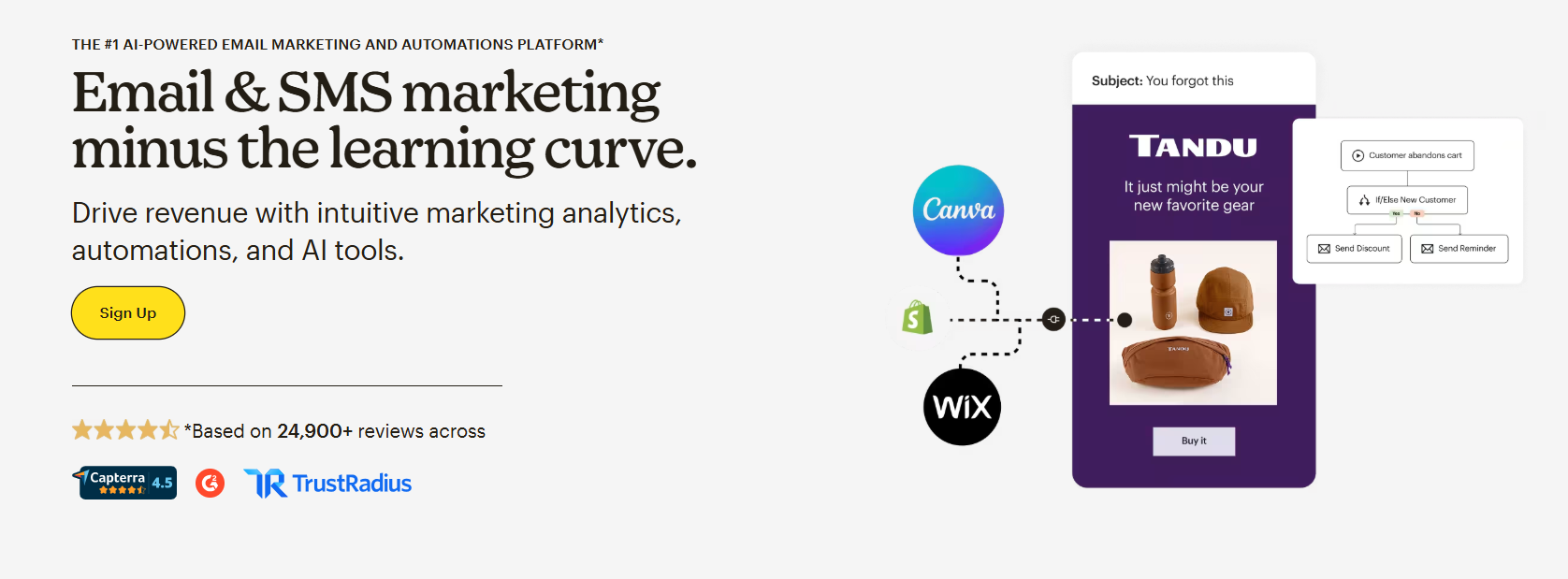
Mailchimp builds AI into its email marketing platform in a way that supports everyday campaign work. When creating emails, AI can help generate subject lines or suggest content based on your goals, which speeds up the process without changing how teams usually work. It also uses data from your audience to guide decisions around timing and segmentation, so campaigns feel more targeted as they go out. Over time, the platform adapts to engagement patterns, which helps improve results without requiring constant manual adjustments.
Main features:
- AI-powered email content suggestions and subject line generation
- Predictive segmentation that groups audiences based on behavior
- Send-time optimization that adjusts delivery for better engagement
Pricing:
- Free ($0/month)
- Essentials (starts at $13/month)
- Standard (starts at $20/month)
- Premium (starts at $350/month)
ActiveCampaign AI
Ratings: 4.5/5 ⭐️
ActiveCampaign focuses on helping teams build more personalized marketing journeys, with AI supporting how those journeys are created and optimized. The platform combines email marketing with automation, so campaigns can adapt based on how contacts behave over time. AI shows up in areas like predictive sending and content generation, helping teams decide when to reach out and what to say without relying only on manual setup. Because customer data, messaging, and automation live in the same system, it’s easier to keep communication consistent as contacts move through different stages.
Main features:
- AI-powered predictive sending that chooses the best time to contact users
- Content generation tools for emails and campaign messaging
- Automation builder that adjusts flows based on customer behavior
Pricing:
- Starter ($15/month)
- Plus ($49/month)
- Pro ($79/month)
- Enterprise ($145/month)
Hootsuite
Ratings: 4.3/5 ⭐️
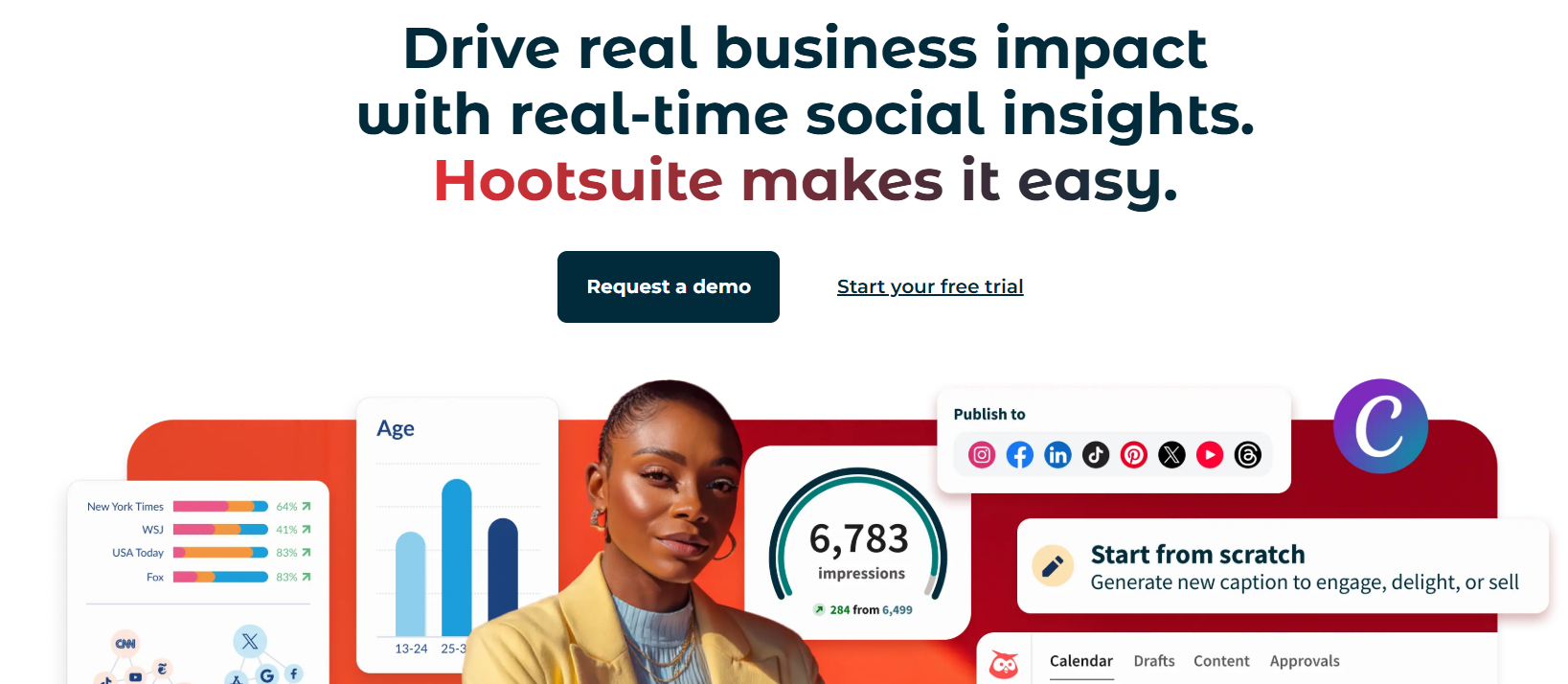
Hootsuite is built for teams that need to keep social media work organized across publishing, reporting, and planning. OwlyWriter AI fits into that flow by helping with the part that often slows things down most: deciding what to post and how to say it. Inside the platform, it can generate captions from a prompt, suggest fresh ideas, and rework content based on what has already performed well. That makes it easier to keep content moving without breaking focus or switching to a separate writing tool.
Main features:
- OwlyWriter AI for caption generation, post ideas, and content repurposing
- Social media scheduling and planning across multiple networks
- Analytics and listening tools for tracking performance and spotting trends
Pricing:
- Standard ($199/mo)
- Advanced ($399/mo)
- Enterprise (Custom)
Buffer AI Assistant
Ratings: 4.3/5 ⭐️
Buffer keeps social media work simple, and that carries over to how its AI assistant is built. You write directly inside the post editor, and the AI helps shape what you’re working on in the moment. It can suggest captions, rework phrasing, or help you get unstuck when you’re not sure how to start. Everything stays inside the same flow, so you can move from idea to scheduled post without switching tools or breaking focus.
Main features:
- AI Assistant that helps generate and refine social media posts
- Scheduling tools for planning and publishing across multiple platforms
- Analytics that show how posts perform over time
Pricing:
- Free ($0/month, up to 3 channels, 10 posts per channel)
- Essentials ($5/month per channel, billed annually)
- Team ($10/month per channel, billed annually)
Canva AI (Magic Studio)
Ratings: 4.7/5 ⭐️
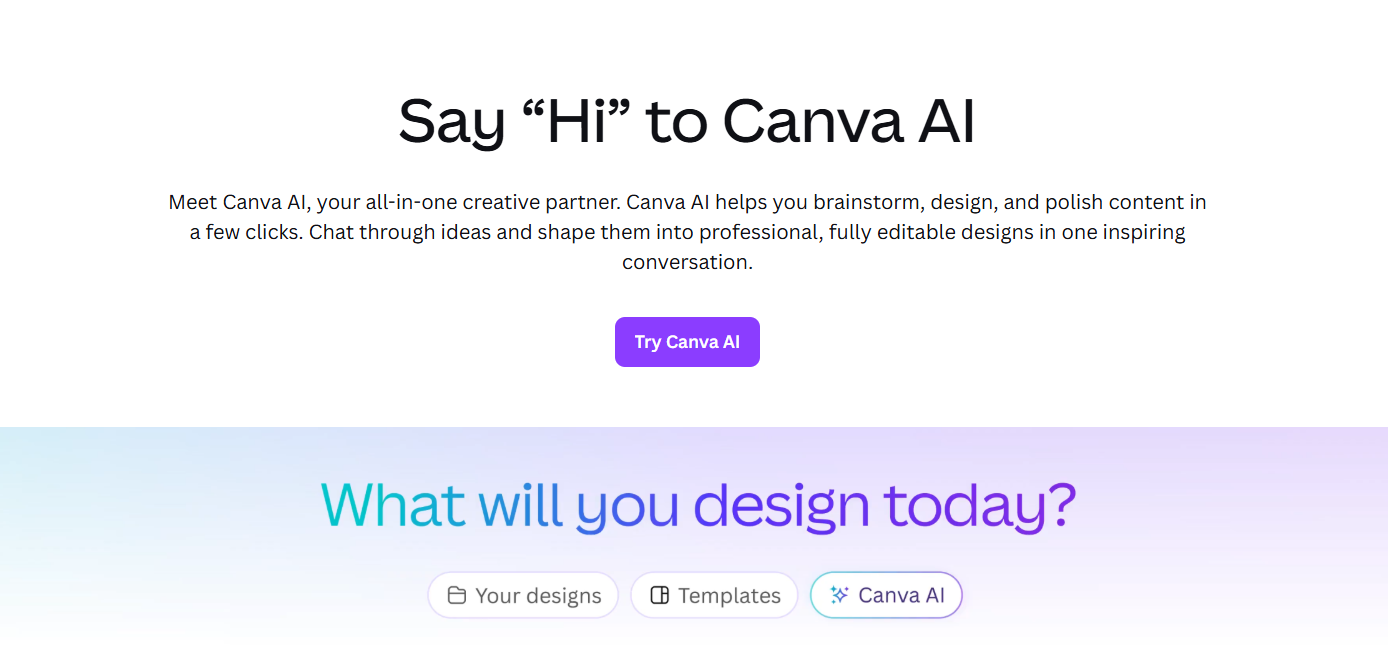
Canva has expanded beyond design into a full creative workspace, and its AI features are built around speeding up visual content production. Magic Studio sits inside the editor, so you can generate images, edit visuals, or adjust text without leaving the design flow. It’s especially useful for marketing teams that need to create assets quickly, whether that’s social posts, ads, or presentations. The experience feels very hands-on, since AI suggestions appear as you work, helping you refine designs instead of starting from scratch.
Main features:
- Magic Studio tools for generating images, editing visuals, and expanding designs
- Magic Write for creating and refining marketing copy inside designs
- Brand Kit for keeping visuals aligned with the company identity
Pricing:
- Free ($0/month)
- Pro ($15/month)
- Business ($20/month)
- Enterprise (custom pricing)
AdCreative.ai
Ratings: 4.3/5 ⭐️
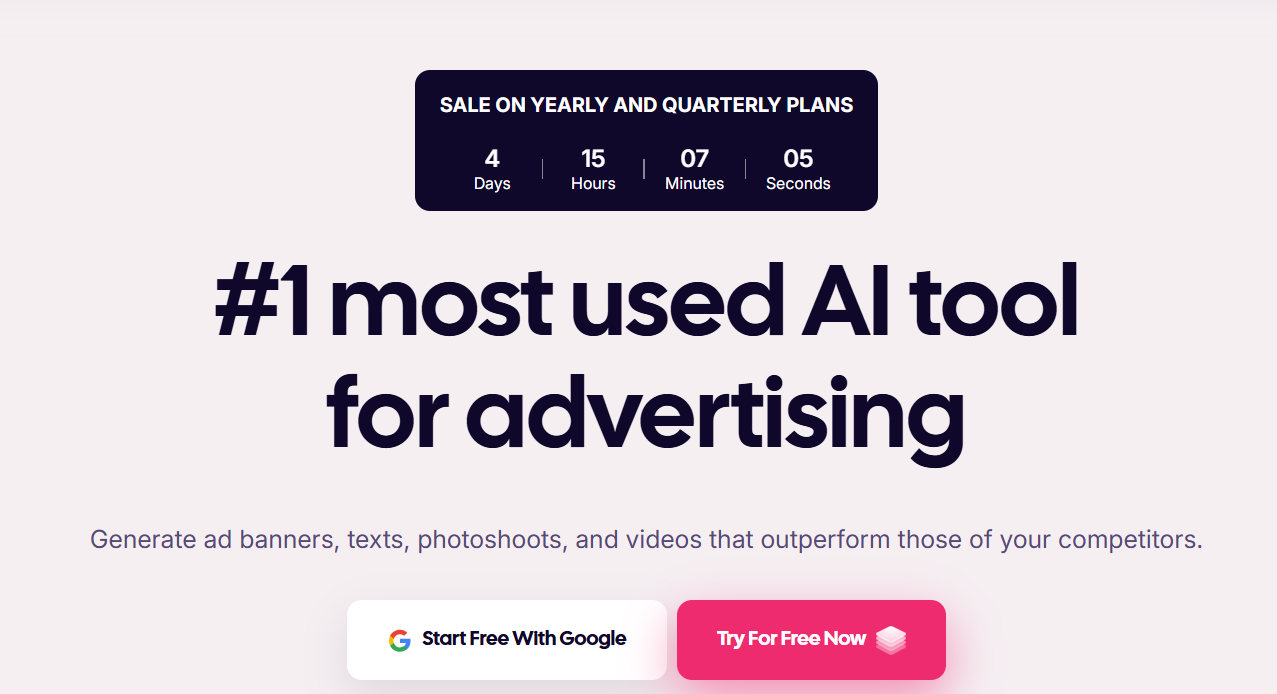
AdCreative.ai is focused on one thing: helping teams produce ad creatives faster while keeping performance in mind. Instead of designing everything manually, you input basic campaign details, and the platform generates visuals and copy tailored for ads. The process feels very direct, since you move from idea to usable creatives in a few steps. It also leans into performance data, so suggestions are shaped by what tends to work in paid campaigns, not just visual preferences.
Main features:
- AI-generated ad creatives designed for paid campaigns
- Text generation for ad copy based on campaign inputs
- Performance scoring that estimates how well creatives may perform
Pricing:
- Free trial available
- Starter ($39/month)
- Professional ($249/month)
- Ultimate ($999/month)
Phrasee
Ratings: N/A
Phrasee focuses on improving how marketing messages are written and how they perform over time. The platform is built around generating and refining language that matches a brand’s voice, while also predicting which versions are more likely to engage an audience. It doesn’t stop at content creation. Each message becomes part of an ongoing process where different variations are tested automatically, and results feed back into future outputs. Teams can then see what wording, tone, or structure drives better engagement, which helps them adjust messaging with more confidence.
Main features:
- AI-generated marketing messages that stay aligned with brand voice
- Predictive models that estimate which content will perform best
- Automated experimentation with continuous testing and optimization
Pricing:
- Custom pricing
Smartly.io
Ratings: 4.4/5 ⭐️
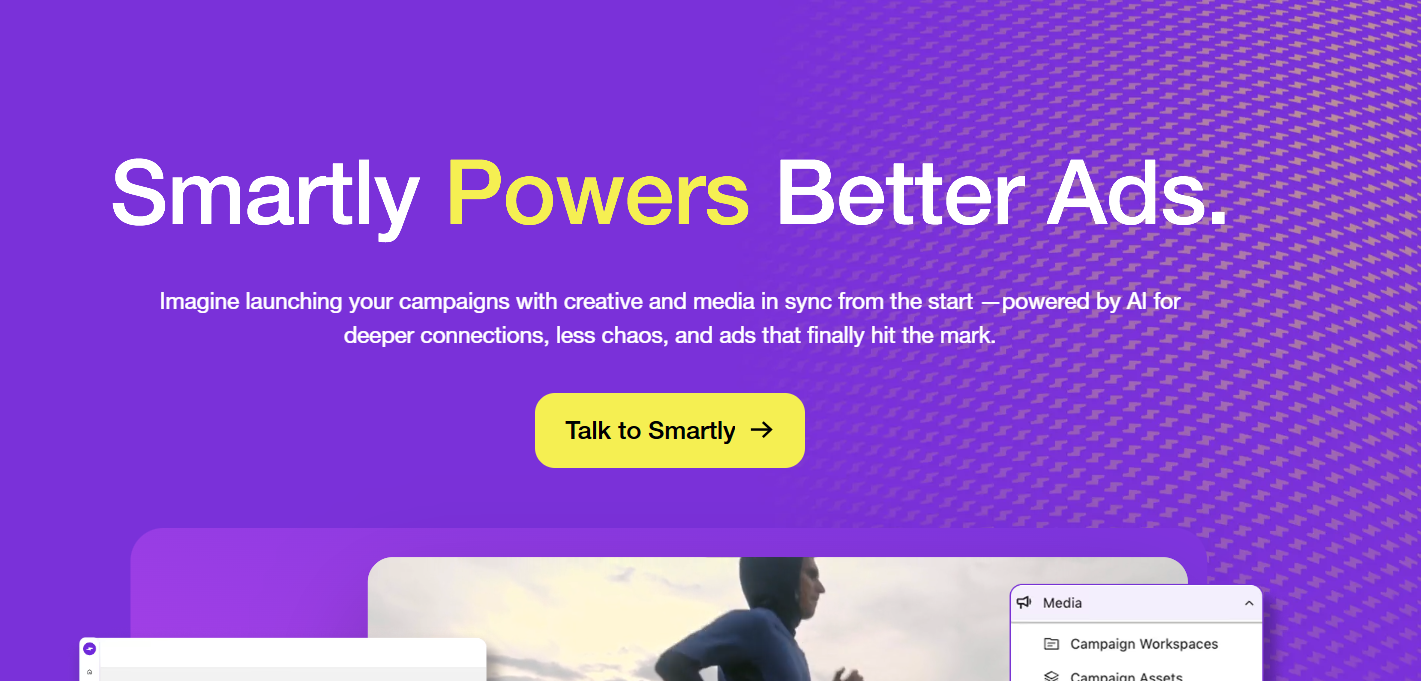
Smartly.io is built for teams running large-scale advertising campaigns who need tighter control over how creatives and performance come together. The platform connects creative production with media execution, so ads can be generated, adjusted, and launched without breaking the workflow. It’s often used by brands managing high volumes of campaigns, where manual updates would slow things down. AI plays a role in shaping creatives and optimizing delivery, which helps teams adapt campaigns based on performance without constantly rebuilding assets from scratch.
Main features:
- AI-driven creative production for generating and adapting ad assets
- Campaign automation that adjusts delivery based on performance
- Centralized platform for managing ads across multiple channels
Pricing:
- Custom pricing
Seventh Sense
Ratings: 4.8/5 ⭐️
Seventh Sense focuses on a single part of email marketing that can have a big impact: when messages are sent. The platform looks at how each contact interacts with emails and adjusts delivery timing accordingly. This means campaigns don’t go out all at once. They are distributed based on individual behavior, which helps emails arrive when people are more likely to engage. Over time, it adapts to changes in engagement patterns, so results stay consistent without constant manual tuning.
Main features:
- AI-driven send-time optimization based on individual engagement patterns
- Behavioral analysis that adjusts delivery for each contact
- Native integration with platforms like HubSpot and Marketo
Pricing:
- Business ($80/month, billed annually, includes 5,000 marketing contacts)
- Enterprise (custom pricing, starts at 150,000 contacts)
Drift (AI chat for marketing)
Ratings: 4.4/5 ⭐️
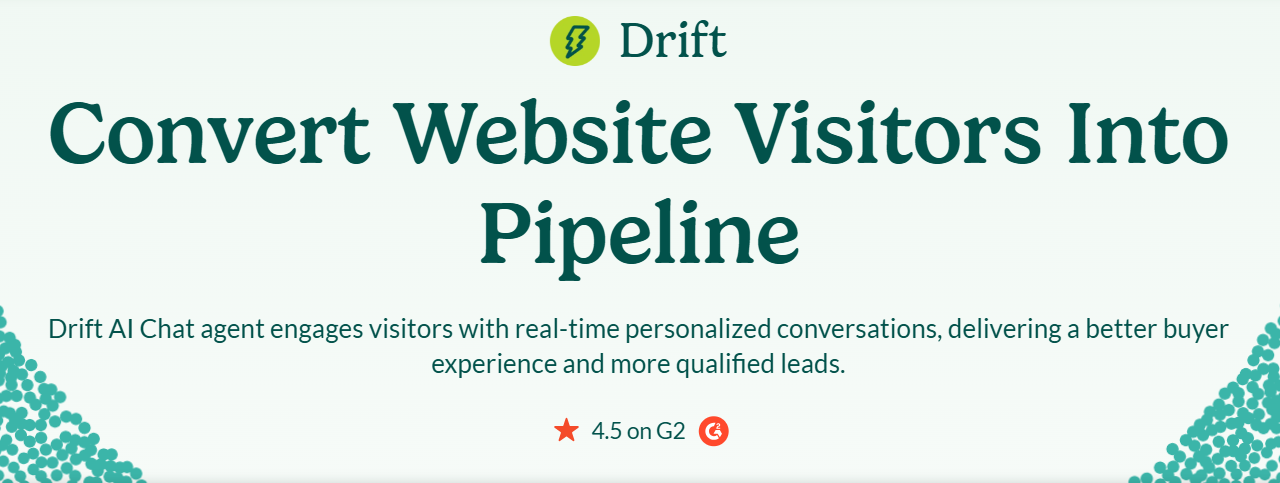
Drift is built around conversations happening in real time on your website. Instead of relying only on forms, it gives teams a way to engage visitors while they’re actively browsing, which can help move prospects forward without delays. Its AI capabilities support those interactions by qualifying leads, answering questions, and routing conversations to the right team when needed. The experience feels immediate, since everything happens in a chat interface that adapts to how visitors respond.
Main features:
- AI chatbot that engages visitors and qualifies leads in real time
- Live chat for connecting prospects with sales teams
- Routing tools that direct conversations based on intent
Pricing:
- Talk to sales
ManyChat

Ratings: 4.5/5 ⭐️
ManyChat is built around messaging as a marketing channel, especially for platforms like Instagram, Facebook Messenger, and WhatsApp. It helps businesses automate conversations that start from ads, comments, or direct messages, which makes it easier to respond quickly without handling everything manually. AI is used to guide those interactions, so replies feel more natural and can adapt based on what users ask or click. This creates a more continuous flow, where conversations can lead to product discovery, lead capture, or follow-ups without switching channels.
Main features:
- AI-powered chat automation for Instagram, Messenger, and WhatsApp
- Flow builder for creating automated conversation paths
- Tools for capturing leads and sending follow-up messages
Pricing:
- Free
- Essential ($14/month, billed annually)
- Pro ($29/month, billed annually)
- Business ($69/month, billed annually)
- Advanced ($139/month, billed annually)
Klaviyo AI

Ratings: 4.6/5 ⭐️
Klaviyo is built for ecommerce marketing, where customer data plays a central role in how campaigns are created and delivered. Its AI features are woven into that system, helping teams shape emails and SMS campaigns based on real customer behavior. As people browse, purchase, or drop off, Klaviyo uses that activity to adjust segmentation and recommend next steps. This makes campaigns feel more timely and relevant, since messaging evolves alongside each customer’s journey instead of staying fixed.
Main features:
- AI-driven segmentation based on customer behavior and purchase history
- Predictive analytics that estimate future actions like likelihood to buy
- Automated email and SMS flows that adapt to engagement patterns
Pricing:
- Free plan available
- Email plan ($45/month, scales with contacts)
- Mobile messages ($35/month)
- Reviews (from $25/month)
- Marketing Analytics ($100/month)
- Advanced Klaviyo Data Platform (CDP) ($500/month)
- Professional (starting from $500/month)
- Enterprise (starts at $1800/month)
Ocoya
Ratings: 4.6/5 ⭐️
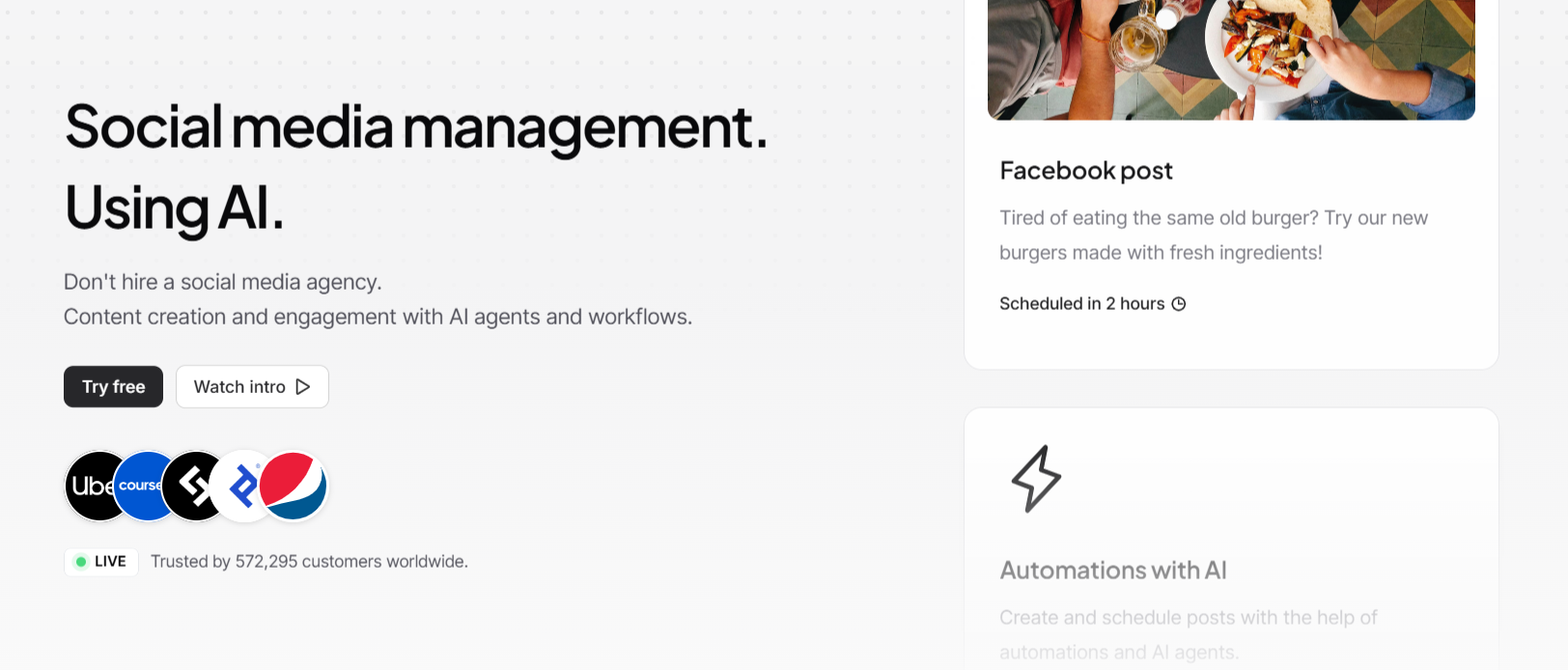
Ocoya brings content creation and social media scheduling into one workspace, with AI helping speed up how posts are produced. You can generate captions, adapt messaging for different platforms, and prepare visuals without switching between tools. The flow feels straightforward, since content moves from creation to scheduling in the same place. It also connects with ecommerce platforms, which makes it easier to turn product information into ready-to-publish posts.
Main features:
- AI-generated captions and content for social media
- Scheduling and publishing across multiple platforms
- Ecommerce integrations for turning products into social content
Pricing:
- Free trial available
- Bronze ($15/month)
- Silver ($39/month)
- Gold ($79/month)
- Diamond ($159/month)
- Enterprise (contact sales)
AI-powered marketing tools: key takeaway
Whether it’s generating content, improving targeting, or automating repetitive tasks, the best AI tools for marketing teams allow handling of more work without adding complexity. The real value comes from how everything connects, from data to execution, making it easier to keep campaigns relevant and responsive.
For teams that want to bring this approach closer to customer conversations, Tidio offers a practical starting point. Lyro connects marketing and support by turning customer interactions into actionable insights and real-time engagement. It helps capture leads, answer questions instantly, and keep conversations moving without delay, which makes it easier to support campaigns while improving the overall customer experience.
Capture leads and automate responses without delay
FAQ
Tidio is a customer engagement platform that helps businesses manage conversations across live chat, email, and messaging channels from one place. It combines communication tools with automation features, allowing teams to respond to customers in real time while keeping interactions organized and easy to track.
Yes, Tidio uses AI through its Lyro AI agent. Lyro can understand customer questions, provide answers based on your knowledge sources, and handle a large share of routine conversations automatically. It works alongside human agents, helping teams stay responsive without increasing workload.
The ROI of using Tidio comes from both efficiency and revenue impact. Thanks to Lyro AI Agent, businesses can automate 67% of repetitive inquiries, reduce response times, and handle more conversations without expanding their support team. At the same time, faster responses and better guidance can improve customer satisfaction and help convert more visitors into paying customers.