
ChatGPT customer service refers to using OpenAI’s language models within support workflows. Businesses can integrate GPT into help desks, chat systems, or internal tools to help agents respond faster and automate parts of the communication process.
Companies are using GPT models to assist support teams and handle repetitive tasks. In fact, research suggests tools like ChatGPT could increase customer service productivity by 30–45%, while one study found agents using generative AI resolved 14% more issues per hour and reduced handling time by 9%.[1]
Let’s take a look at how to use GPT for customer service and what to consider before implementing it.
Use conversational AI to enhance your customer service
What is ChatGPT and how does it work?
GPT stands for Generative Pre-trained Transformer. It’s a type of large language model trained on large amounts of text, so it can understand prompts and generate natural-sounding responses.
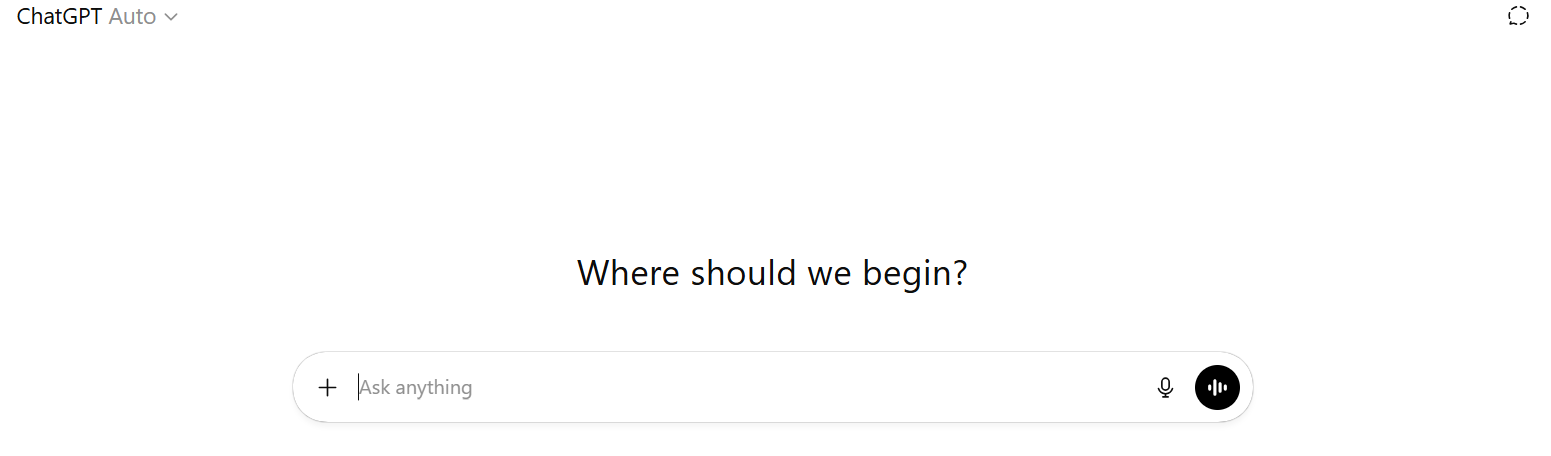
When someone asks a question in ChatGPT, the model predicts the most likely next words based on patterns it learned during training. This allows it to produce replies that sound conversational and context-aware.
In customer service environments, this ability makes GPT useful for tasks such as:
- drafting replies to customer inquiries
- summarizing conversations or support tickets
- rewriting messages in a clearer tone
- generating explanations or troubleshooting steps
It’s important to note that the model doesn’t actually know facts in the way a person does. Instead, it generates language based on patterns. Because of that, businesses usually combine GPT with structured knowledge sources and internal tools.
Can GPT be used for customer service?
Yes, but the way it is implemented matters.
Many companies start by using GPT internally to support agents. In this role, it works as a writing assistant that helps generate responses or summarize long conversations.
With API access, GPT models can also be integrated directly into chat systems, chatbots, and support platforms. In those cases, the system can generate responses in real time when customers ask questions.
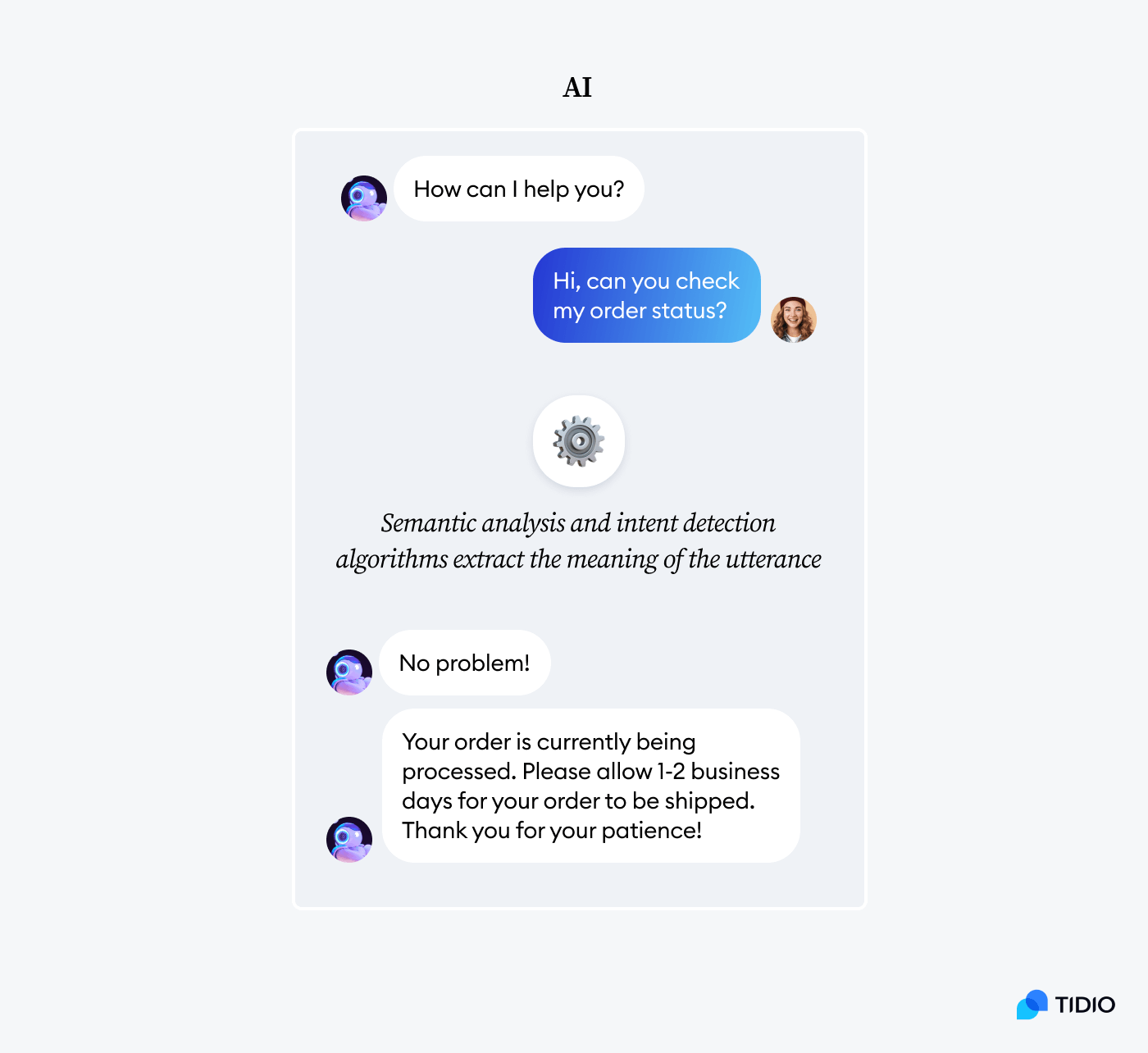
However, successful implementations usually include safeguards such as approved knowledge sources, monitoring, and escalation to human agents when needed.
When these elements are set in place, GPT can become a valuable addition to a customer support workflow.
How to use GPT for customer service
Companies are using GPT for customer service in several concrete ways to support their teams and improve response times. Let’s take a closer look at how it works in practice.
Drafting and improving customer replies
Writing thoughtful responses can take time, especially when agents handle dozens of conversations every day.
GPT can help draft replies based on short instructions or notes from the agent. A support representative might provide a quick outline of the situation, and the system expands it into a clear and professional response.
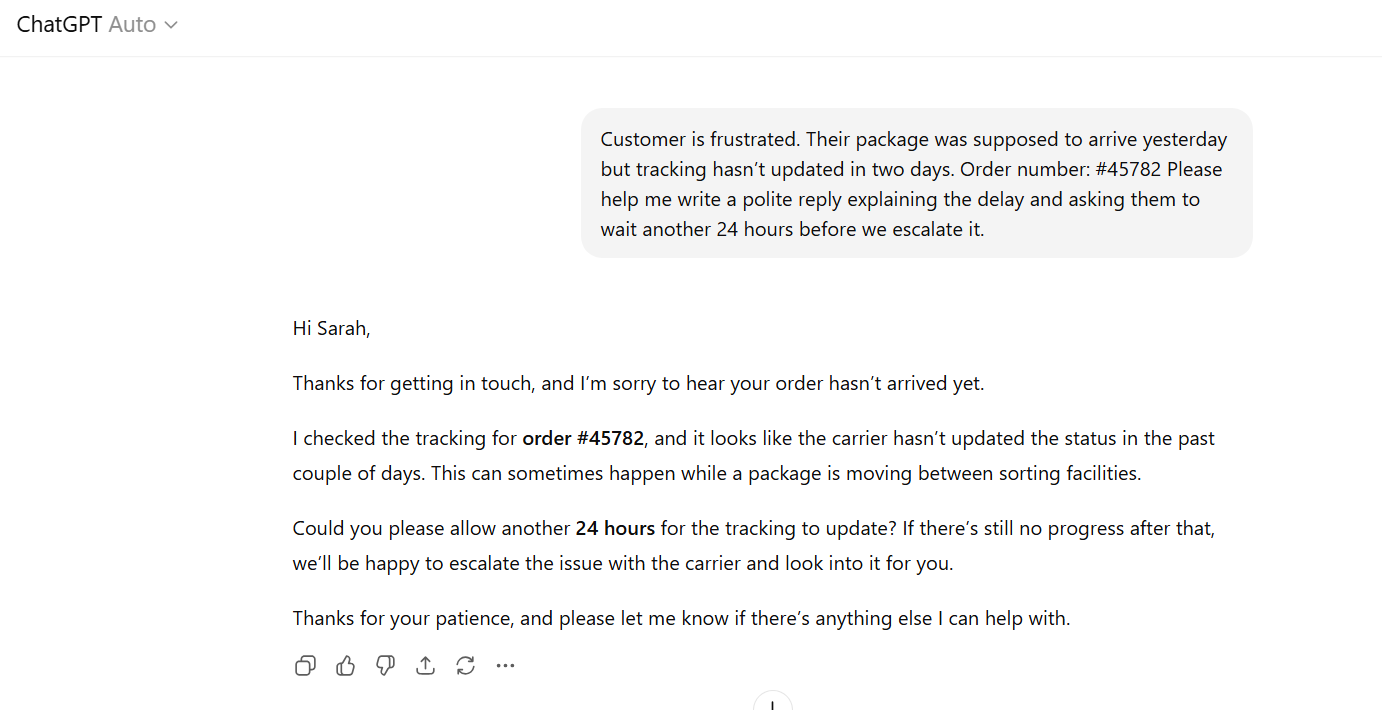
The model can also adjust tone or rewrite messages so they sound more natural. This helps agents respond faster while keeping communication consistent across the team.
Summarizing long conversations
Support conversations can quickly become lengthy, especially when customers provide detailed explanations of their issue. GPT models can summarize long message threads and highlight the key details of the problem. Instead of reading the entire conversation, an agent can review a short summary before responding.
Managers also use summaries when reviewing escalations or support quality. This saves time and makes it easier for agents to understand ongoing cases.
Supporting knowledge base creation
Customer support teams constantly update their help centers and documentation. GPT can assist by generating draft articles based on common support questions. It can also rewrite outdated documentation or suggest clearer explanations for complicated topics.
Human review is still required for AI knowledge base creation, but with GPT, the initial drafting process becomes much faster. Over time, this improves self-service resources and reduces the number of repetitive support requests.
Assisting multilingual customer support
Many companies serve customers in multiple countries, which creates language barriers for support teams. GPT models can translate these messages and help agents respond to customers in different languages. An agent can write the response in their preferred language, and the system translates it before sending it to the customer.
This allows companies to support global customers without the need to immediately expand their team. That being said, monitoring is still required for accuracy, especially when dealing with technical instructions or policy explanations.
Read more: Here are all the steps you need to take to build a multilingual chatbot.
Using GPT in live chat and chatbot systems
Some businesses integrate GPT models directly into their customer chat systems using APIs. In these setups, the system can answer questions in real time, explain product features, guide customers through troubleshooting steps, or help with account-related questions.
These systems work best when responses are grounded in company data, such as help center articles or product information.
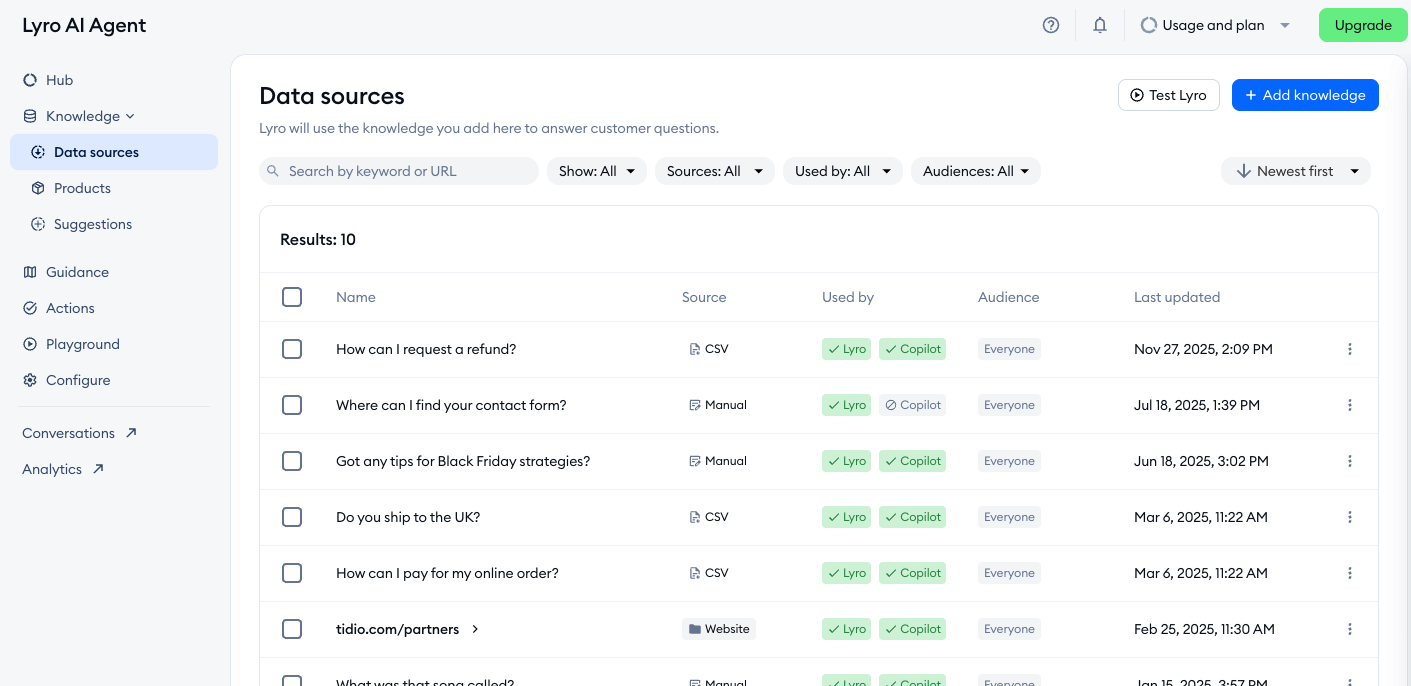
Many modern AI support tools combine generative AI with structured knowledge sources. Instead of relying only on general training data, the system uses company documentation to produce more accurate responses. This approach helps keep answers consistent and aligned with the brand.
Read more: Check out the list of best AI tools for work.
Limitations of ChatGPT in customer service
Tools like ChatGPT can significantly speed up customer support workflows, but they are not flawless. Like any AI system, they perform best when used together with structured data and human oversight.
Understanding the limitations helps businesses set realistic expectations and build safer implementations. Here are some of the most common limitations teams encounter when using ChatGPT for customer service:
| Limitation | Why it happens | Possible solution |
| Lack of real-time business data | ChatGPT does not automatically access internal systems such as order databases or CRMs | Integrate AI with customer support platforms and internal systems |
| Inconsistent or incorrect responses | Generative models may produce answers that sound correct but contain inaccurate information | Ground responses in verified knowledge bases and monitor outputs |
| Limited emotional understanding | AI can mimic empathy, but does not fully understand human emotions | Use AI for routine questions and escalate complex conversations to human agents |
| Privacy and data security concerns | Customer conversations may include sensitive data that must be protected | Implement data handling policies and choose tools with security safeguards |
| Lack of structured control | ChatGPT generates responses freely unless boundaries are defined | Use AI agents or support tools with guardrails and response guidelines |
Let’s explore these limitations in more detail.
Lack of access to real-time business data
ChatGPT generates responses based on patterns learned during training. On its own, it can’t check your internal systems, verify order status, or access customer account information.
For example, if a customer asks about the order delivery status, the model can’t provide an accurate answer without access to the company’s order management system.
Solution:
The most effective approach is connecting AI to customer support platforms that integrate with internal systems.
Modern support tools can link AI responses with:
- order tracking systems
- CRM platforms
- help center content
- internal databases
For example, an AI agent for customer service like Lyro can use information from a company’s knowledge base to answer questions accurately while maintaining a conversational experience.
Don’t be left behind, boost your customer service performance using AI
Read more: Learn how to build a solid knowledge base chatbot.
Inconsistent or incorrect responses
Generative models sometimes produce responses that sound convincing but contain incorrect information. This issue is often called AI hallucination.
For example, the model may generate a policy explanation that doesn’t match the company’s official documentation.
Solution:
Businesses reduce this risk by grounding AI responses in verified knowledge sources such as help center articles, product documentation, and company policies. Support teams also monitor conversations through analytics tools to identify incorrect answers and improve documentation over time.
Limited emotional intelligence
GPT models can generate polite language, but they do not fully understand emotions or complex situations. So, customers who are frustrated or dealing with sensitive issues may need empathy and judgment that automated systems cannot provide.
Solution:
AI works best when it handles routine inquiries while human agents manage sensitive conversations. Most support systems include escalation rules that transfer conversations to human agents when problems become complex or emotionally charged.
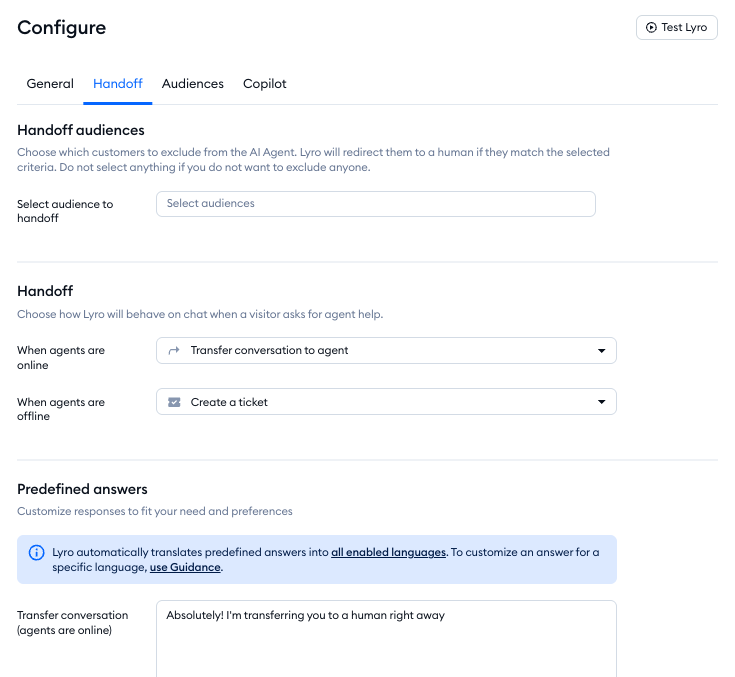
For example, Lyro AI is designed to understand customer intent and conversation context, which helps it respond accurately to common support questions. Teams can also define the assistant’s tone and communication style. But if a request becomes complex or requires direct assistance, Lyro can automatically hand the conversation over to a human agent so the issue can be handled appropriately.
Privacy and data security considerations
Customer support conversations often include personal information, account details, or payment questions. Sending this data to external systems without safeguards can create security and compliance risks.
Solution:
Businesses should follow proper data protection policies and ensure AI tools meet regulations such as GDPR. It’s also important to avoid sending unnecessary sensitive data to external systems and to choose platforms with strong security controls.
Many customer support solutions now include built-in AI features, which help companies manage conversations securely while still benefiting from automation.
Lack of structured control
When ChatGPT is used without clear rules, it generates responses freely. This can lead to inconsistent tone or answers that do not match company policies.
Solution:
Many companies use AI agents designed specifically for customer support. These tools allow teams to define knowledge sources and control tone and messaging. They also help you set escalation rules and monitor performance through analytics.
Tools like Tidio’s Lyro combine conversational AI with structured support data so businesses can maintain accuracy while still providing natural conversations.
Read more: Check out the list of top AI agents for customer service.
Will ChatGPT replace customer service agents?
Despite rapid advances in AI, it is unlikely that ChatGPT will completely replace human customer support agents. Generative AI can handle many repetitive tasks, such as answering common questions and summarizing conversations, allowing agents to focus on more complex problems that require judgment or empathy.
So, human agents will remain essential when customers need personalized assistance or creative problem-solving during difficult situations. Therefore, the most realistic future for customer service is a hybrid model where AI supports human teams instead of replacing them.
ChatGPT for customer service: final thoughts
When integrated thoughtfully, genAI tools like ChatGPT can help teams respond faster, reduce repetitive work, and scale support operations without sacrificing quality. It is especially effective for drafting responses and assisting agents with information.
At the same time, successful implementations rely on structured data, monitoring, and human oversight. AI performs best when it works alongside support teams rather than operating independently.
Businesses that combine generative AI with purpose-built support tools can create faster, more efficient service experiences while maintaining control over accuracy and brand communication.
Tidio’s Lyro AI agent builds on these capabilities by combining generative AI with your company’s knowledge base and support workflows. It can answer common customer questions automatically and assist agents during conversations. If needed, it can easily escalate complex issues to a human agent.
Use the best AI customer service software out there
FAQ
Tidio is a customer service platform that combines live chat, chatbots, and AI tools to help businesses communicate with customers across multiple channels. It allows companies to manage conversations from their website, email, and messaging platforms in one place while automating parts of their support process.
Yes, Tidio includes AI-powered features designed to automate customer service and assist support teams. Its AI agent, Lyro, can answer common customer questions, generate replies, and handle routine requests using information from a company’s knowledge base. If a request becomes too complex, the system can automatically transfer the conversation to a human agent.
The ROI of using Tidio typically comes from automation and faster support responses. By handling repetitive inquiries automatically, tools like Lyro can resolve a large portion of customer questions without human intervention, allowing teams to focus on more complex issues. This helps businesses reduce support workload, improve response times, and increase customer satisfaction, which can lead to higher conversions and lower operational costs.