
Gorgias is a helpdesk platform built specifically for ecommerce brands. It helps online stores manage customer service across email, live chat, social media, and more—all from one dashboard. The tool is best known for its deep Shopify integration, which lets agents pull up order details and issue refunds without leaving the platform.
Its biggest selling point?
Gorgias software blends automation and human support for high-volume ecommerce stores that care about speed and personalization.
But while it’s powerful, it’s not perfect for everyone. Some users report bugs, expensive pricing, and functionality limitations that make it less attractive for small businesses or non-ecommerce brands.
Let’s break down the pros, cons, features, pricing, and how it compares to alternatives.
Choose Tidio for smarter, AI-powered customer conversations
Pros and cons
Before diving into more in-depth analysis, let’s weigh in on Gorgias’ strengths and weaknesses. For example, the platform is loved by some ecommerce teams due to its multichannel support and revenue tracking, but some ecommerce experts might find it subpar for B2B support and lead gen.
Here’s a quick look at the core pros and cons as per various Gorgias reviews.
Pros
- Built for ecommerce: Gorgias is tightly integrated with ecommerce platforms; agents can refund, edit orders, and check shipping info directly from the helpdesk.
- Strong automation: macros, rules, and intent detection help teams save time. You can auto-close repetitive tickets or route VIP customers to human agents.
- Multichannel support: it handles email, live chat, social, SMS, and voice in one inbox.
- Good agent interface: the UI is clean, fast, and optimized for speed.
- Revenue tracking: Gorgias shows how much money your support team generates through conversions and upsells.
Gorgias platform uses automation not just for speed, but also to surface sales opportunities.
Cons:
- Pricing adds up fast: Gorgias charges per ticket volume, not per user. That can get expensive for high-volume stores.
- Steep learning curve: the automation tools are powerful, but not always intuitive for first-time users.
- Not ideal for SaaS or B2B: the platform lacks some features needed for complex B2B ticket workflows.
- Basic reporting: compared to competitors like Zendesk, Gorgias’ analytics are limited unless you pay for add-ons.
Gorgias pricing and value for money
As many as 74% of businesses[1] cite pricing transparency as a top factor when choosing customer support tools. Gorgias is upfront about its pricing tiers, but the ticket-based billing can be a shock if your volume spikes.
Gorgias’ pricing is based on the number of monthly tickets you handle. Here’s how it breaks down:
- Starter: $50/month: Up to 300 help desk tickets/month.
- Basic: $104/month: 300 tickets, 60 automated tickets.
- Pro: $140/month: 300 tickets, 90 automated tickets.
- Advanced 4: $185/month: 300 tickets, 150 automated tickets.
- Enterprise – Custom pricing: Custom ticket limits, premium onboarding, dedicated support.
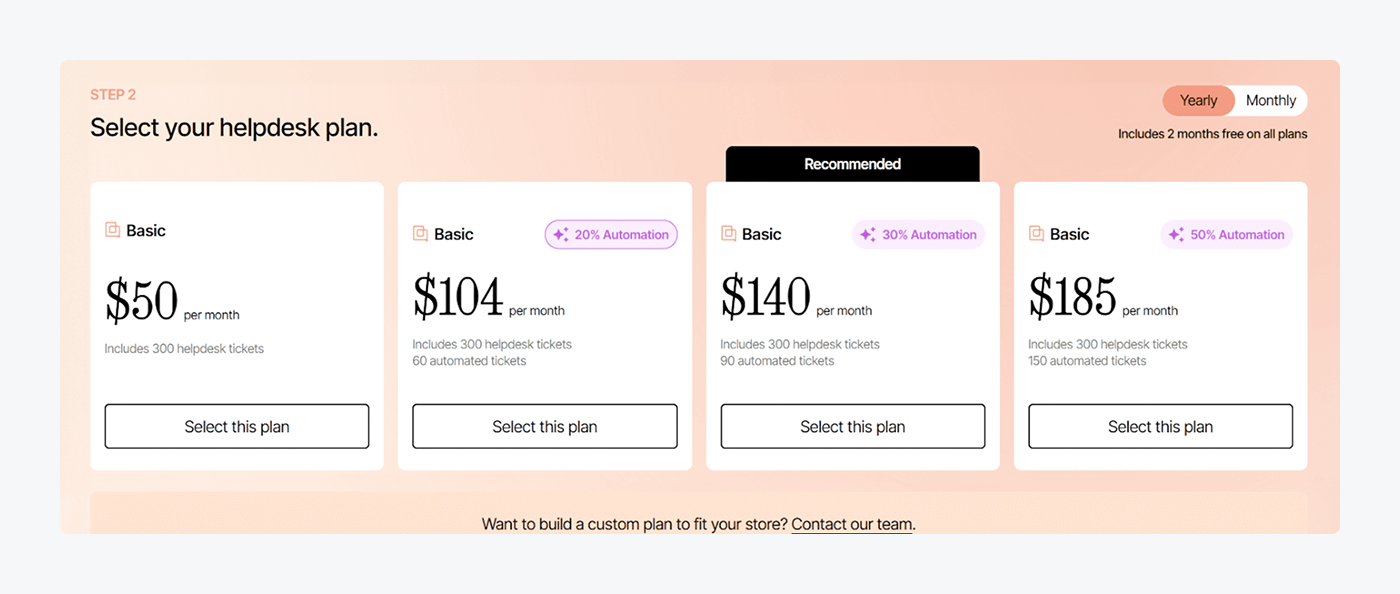
Gorgias platform also offers a 7-day free trial. In terms of value, it’s best suited for growing ecommerce brands making $1M+ in annual revenue.
Did you know…
For smaller stores, SMBs, or B2B teams, Tidio offers better value for the money, more flexibility, and a lifetime free plan. You can learn more about Tidio pricing plans below.
Pricing:
- 7-day free trial available
- Free version available
- Starter ($24.17/mo)
- Growth (starts at $49.17/mo)
- Plus (starts at $749/mo)
- Premium (starts at $2999/mo)
Key features and functionality
Gorgias is built with ecommerce at its core, and that focus is clear in its feature set. It offers all the essentials, including shared inbox, live chat, automation, and integrations, plus a few extras tailored to online stores.
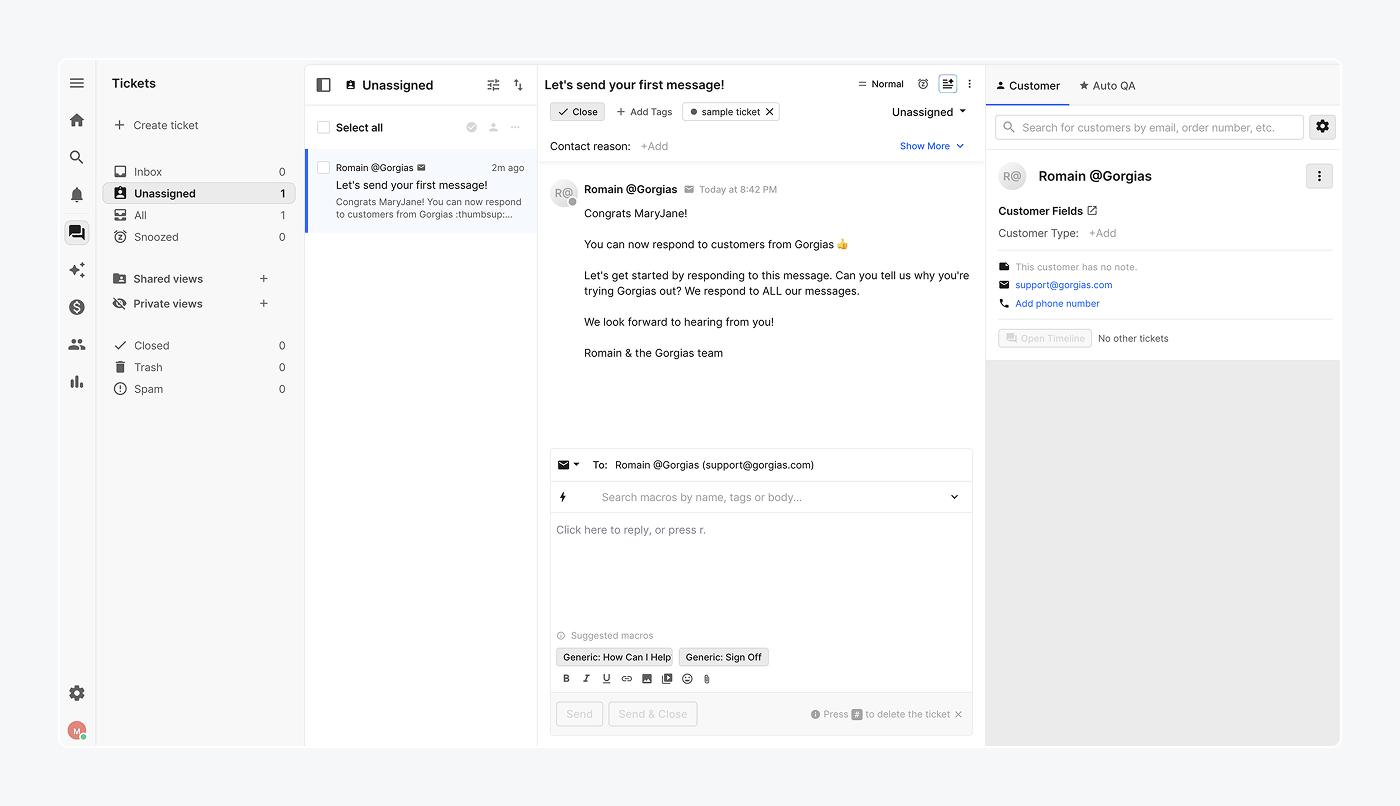
The real value lies in how Gorgias tools work together to help support teams move faster, personalize responses, and even drive revenue. Here’s a breakdown of how the key features hold up in practice.
Multichannel support
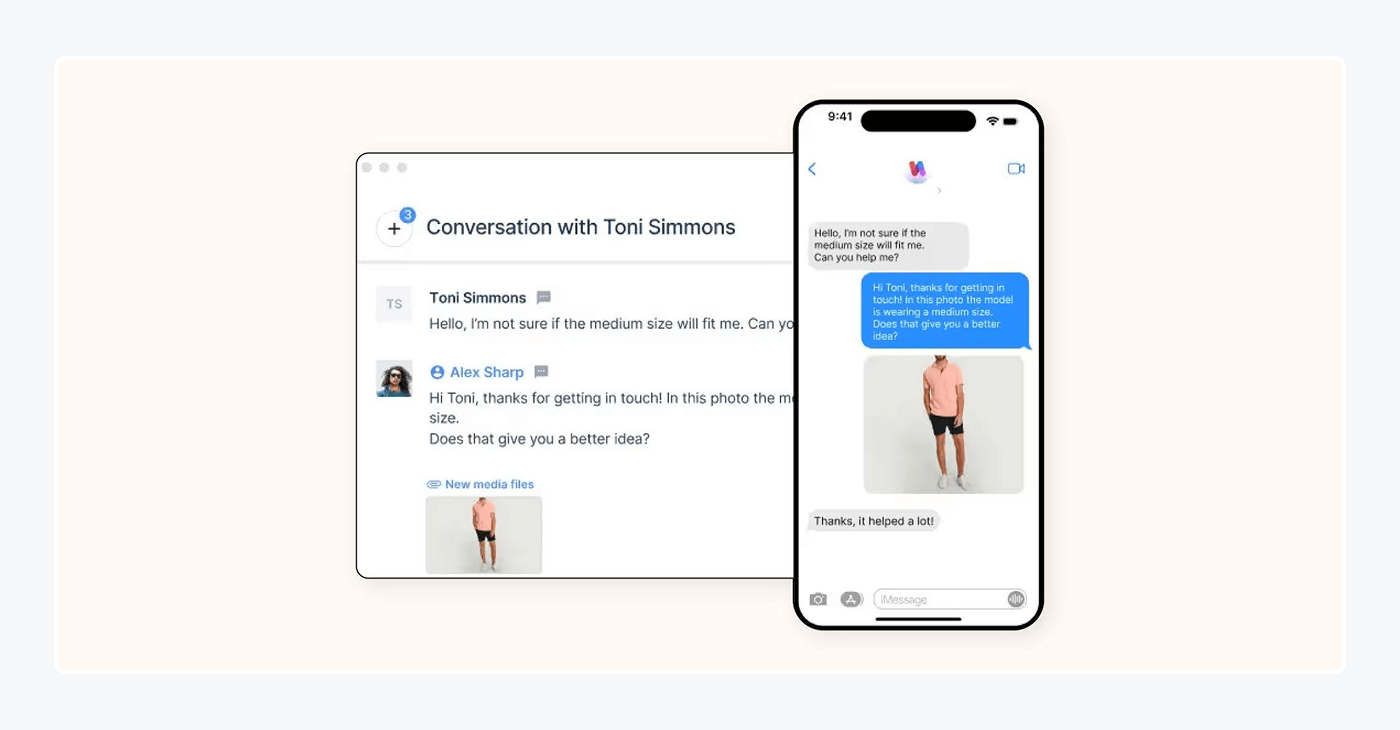
Gorgias connects with email, live chat, Facebook, Instagram, WhatsApp, and SMS. All conversations land in one shared inbox, while it’s also quite easy to filter by customer, channel, or intent.
The social integrations are a strong point. Agents can reply to comments on Facebook Ads or DMs on Instagram without switching tools, enabling user-friendly cross-channel support, great for ecommerce.
Did you know…
Tidio also supports multichannel chat, including Instagram and Messenger. And unlike Gorgias, it offers chatbot automation on all channels, not just email and chat.
Shopify and ecommerce integrations
The Shopify integration is what makes Gorgias software shine. You can view orders, cancel items, issue refunds, and make internal notes without leaving the help desk.
BigCommerce and Magento also get similar treatment, though not as deeply integrated.
For ecommerce brands, this saves hours each week. No more switching between your store backend and support tickets.
Automation and macros
You can create rules to auto-tag tickets, assign them to the right agents, and close repetitive queries. Macros allow canned replies with dynamic variables like customer name, order ID, or shipping status.
Gorgias also uses machine learning to detect intent, like “Where’s my order?”—and apply the right workflow.
By 2029, agentic AI will autonomously resolve 80%[1] of common customer service issues without human intervention. Gorgias chatbot and the overall platform are clearly moving in that direction with AI-driven tagging and ticket routing.
Tidio’s edge here? It offers no-code chatbot building out of the box. You can build lead-gen bots, answer FAQs, and route users, all without touching code. This is where Lyro AI agent comes into play, as it can resolve up to 67% issues, freeing up your team’s time to deal with more complex, revenue-driving tasks.
Did you know…
Tidio offers more flexible and user-friendly customer support automations than Gorgias, especially for teams without technical backgrounds. For example, Gecko Hospitality reached 90% customer service automation with Tidio.
Read more: Check out the full Gecko case study to see all the benefits they got via Tidio.
Revenue tracking
Unlike most helpdesk tools, Gorgias tracks how much revenue comes from support. If a customer makes a purchase after chatting with an agent, it shows in the analytics.
This helps teams justify headcount and prove ROI. It also highlights which agents drive the most sales and which support channels convert best. These insights can guide staffing decisions, promotions, and campaign targeting.
Reporting and analytics
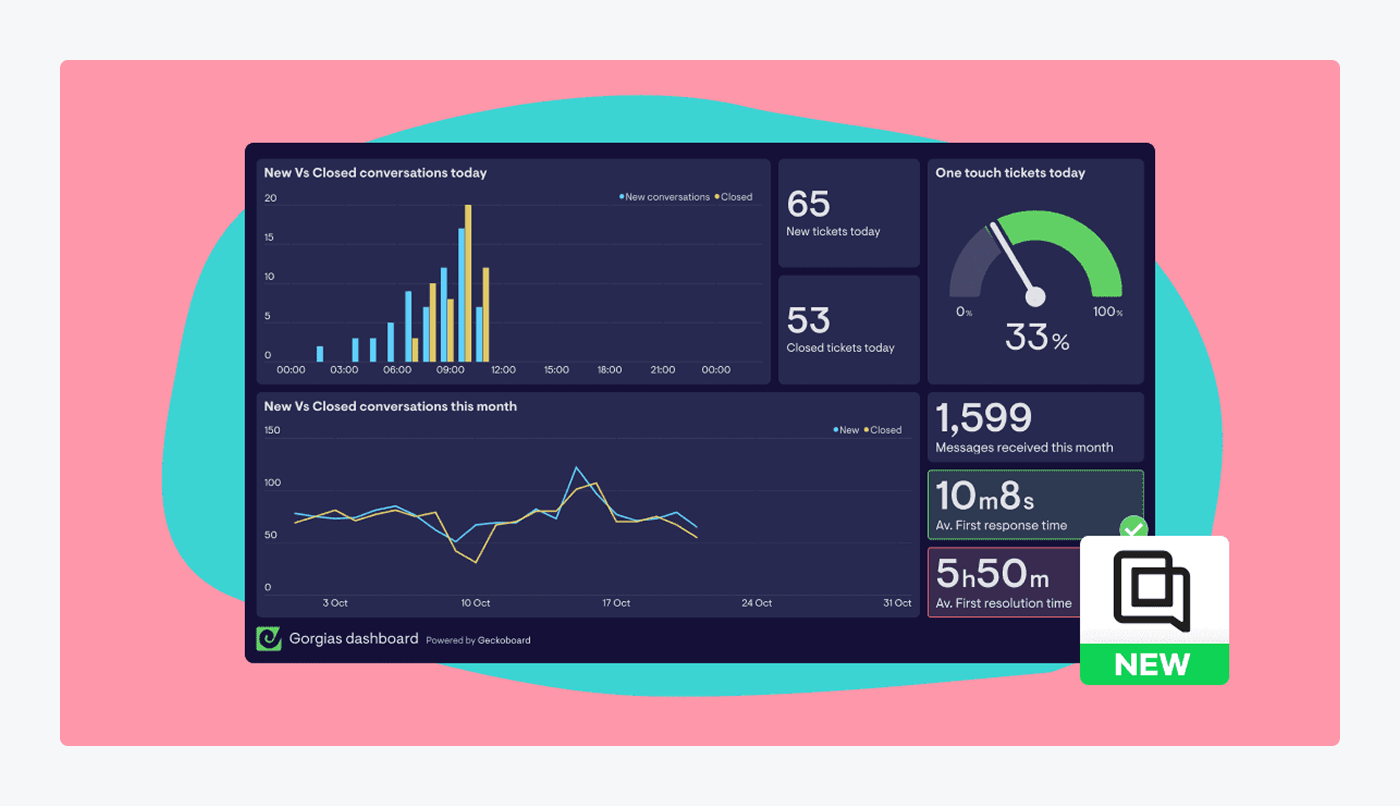
The dashboard shows ticket volume, resolution time, agent activity, and CSAT scores. However, deeper analytics, like SLA breach tracking or advanced funnel analysis, require higher-tier plans or third-party tools.
Did you know…
Tidio includes SLA reports within its help desk feature. These reports help users track how well their support team is meeting the defined SLAs for response times and other support metrics.
User experience and interface
The interface is laid out in a way that’s easy to follow. Channels are arranged in the sidebar view, while tickets open in tabs, making multitasking simple. Agents can quickly access macros, internal notes, and customer history from the side panel without breaking their flow. Many users say it’s faster and more intuitive than tools like Zendesk.
The mobile app is functional for on-the-go replies, but it’s limited for handling complex workflows. For day-to-day support tasks, the desktop interface is where Gorgias really shines.
Read more: Learn which Zendesk alternatives are worth checking out.
Setup and customization
Gorgias offers Shopify and BigCommerce users a one-click integration. The onboarding wizard walks you through basic setup, like channels, users, and rules. Most teams can go live in a relatively short time frame, which is especially valuable for fast-moving ecommerce brands that can’t afford long implementation cycles.
Moreover, Gorgias offers a variety of customization options. These include:
- Business hours & SLAs
- Workflow rules
- Branding for the chat widget
- Custom macros
- Language localization
However, some advanced settings, like intent rules, take trial and error to get right. That’s because Gorgias uses keyword-based and AI-driven logic to detect customer intent, like identifying refund requests or shipping delays, and trigger the right automation. But the system depends on how well you define those triggers.
For example, if your rules are too broad, they’ll misfire and apply to the wrong tickets. If they’re too narrow, important tickets won’t get routed correctly. You often need to test different keyword combinations, adjust confidence thresholds, and review false positives before the automations work reliably.
Did you know…
Tidio simplifies onboarding with pre-built chatbot templates and customized onboarding by our teams to help you configure your flows based on goals like reducing support volume or AI lead generation.
Integrations and compatibility
Gorgias integrates with:
- Shopify, BigCommerce, Magento
- Klaviyo, Postscript, Recharge
- Slack, Zapier, and 90+ other tools
It also supports a public API for custom workflows.
The integrations are heavily ecommerce-focused. If you’re using CRM tools like HubSpot or Pipedrive, expect limited native support.
Desktop and mobile apps are available, but Gorgias works best in a browser.
Performance and reliability
Gorgias delivers solid performance, with most users reporting fast ticket loading and minimal downtime, even when handling thousands of tickets. It runs on AWS infrastructure and auto-scales to keep up with traffic spikes.
While a few Shopify users have noted occasional syncing issues during flash sales or high-volume periods, these bugs are usually addressed quickly. Overall, Gorgias is reliable for ecommerce stores managing hundreds of tickets per day without slowdown.
Customer support and documentation
Support is available via live chat, email, and a help center. Chat hours cover most weekdays, with slower response on weekends.
- Response times: 5–10 minutes on paid plans
- Knowledge base: solid, with screenshots and walkthroughs
- Community forum: limited activity
- Onboarding: available on Advanced and Enterprise plans
User reviews mention support as fast, but sometimes inconsistent in quality.
Did you know...
Tidio offers 24/7 live chat support on all paid plans, which can be a lifesaver for global teams. Whether you’re troubleshooting an issue at midnight or onboarding a new agent in a different time zone, help is always available. This round-the-clock support means fewer delays, faster resolutions, and less downtime, especially critical for small teams that can’t afford to wait.
Alternatives and competitors
Although Gorgias nails certain features like multichannel support and deep ecommerce integrations, it might not fit your unique needs. If Gorgias isn’t a match, consider these:
Tidio
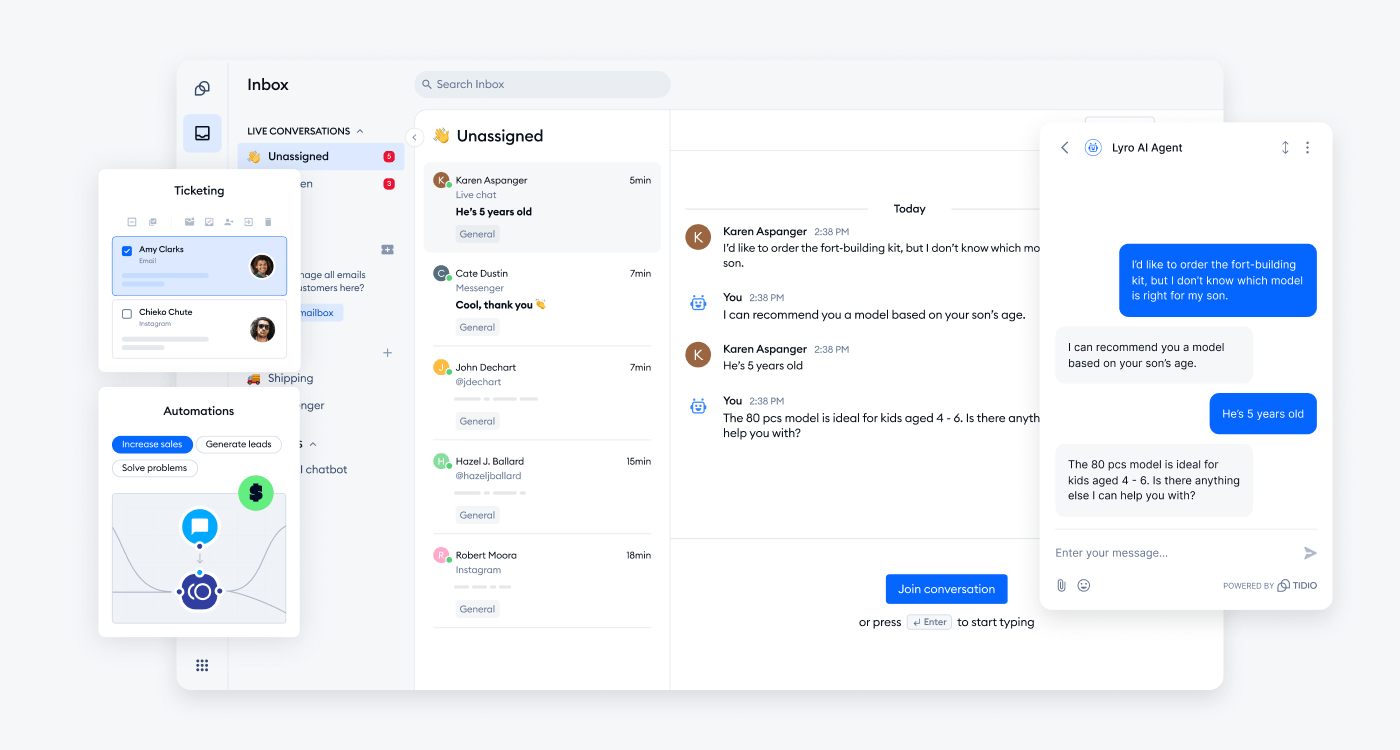
Tidio integrates live chat, AI-powered agents, and multichannel support into a single platform. Its Lyro AI chatbot can handle up to 67% of client requests, offering 24-hour service and decreasing the burden on support workers. Tidio is especially useful for ecommerce organizations looking to improve client interaction and automate support chores.
Zendesk
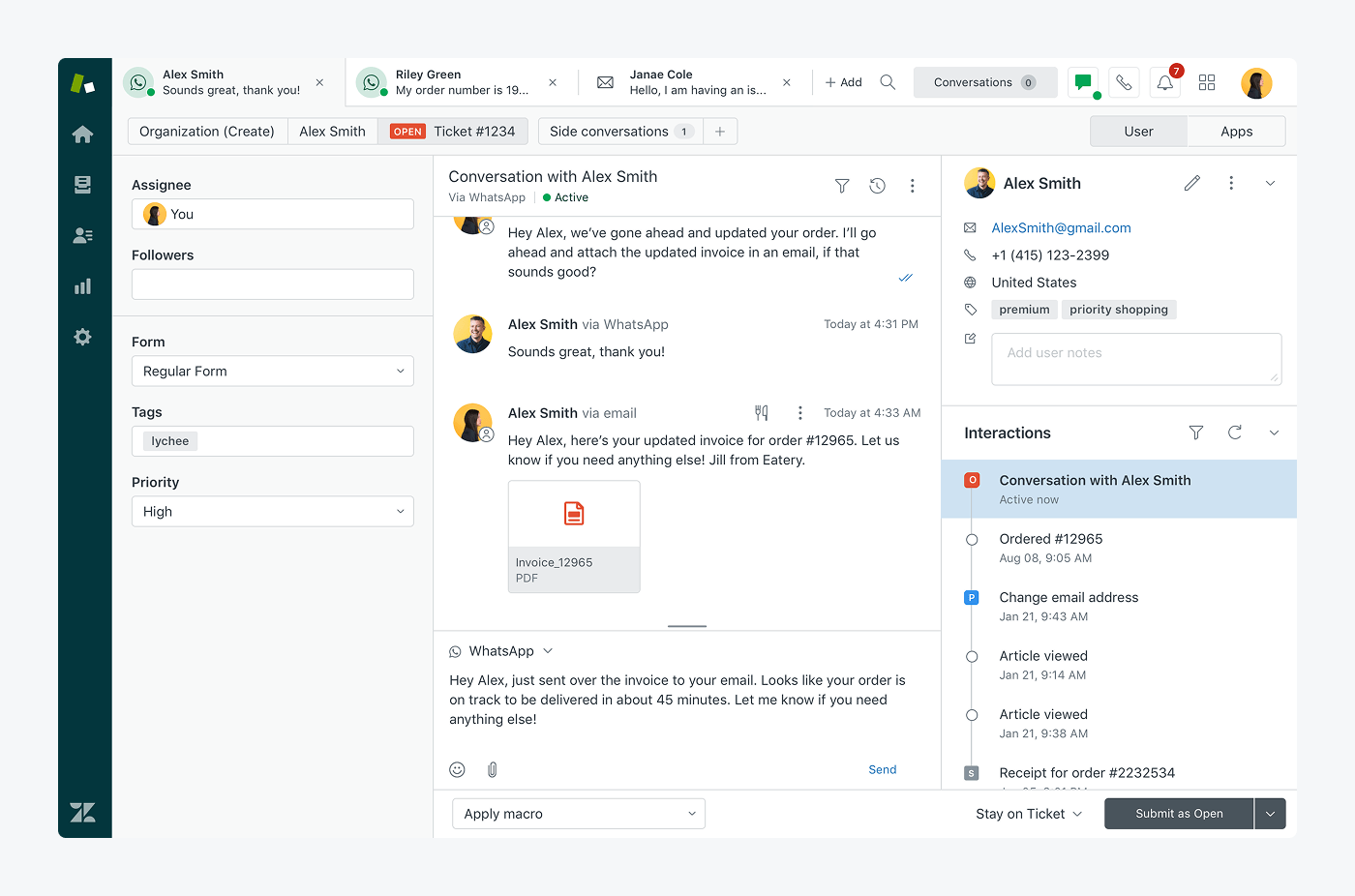
Zendesk offers a robust suite of customer support tools including ticketing systems, live chat, knowledge base, and analytics. Designed for scalability, it’s used by enterprises and fast-growing teams alike. With advanced routing, AI-powered bots, and over 1,000 integrations, Zendesk helps support teams streamline operations and improve response times across multiple channels.
Read more: Discover who wins in the Gorgias vs. Zendesk battle in our in-depth comparison article.
Help Scout
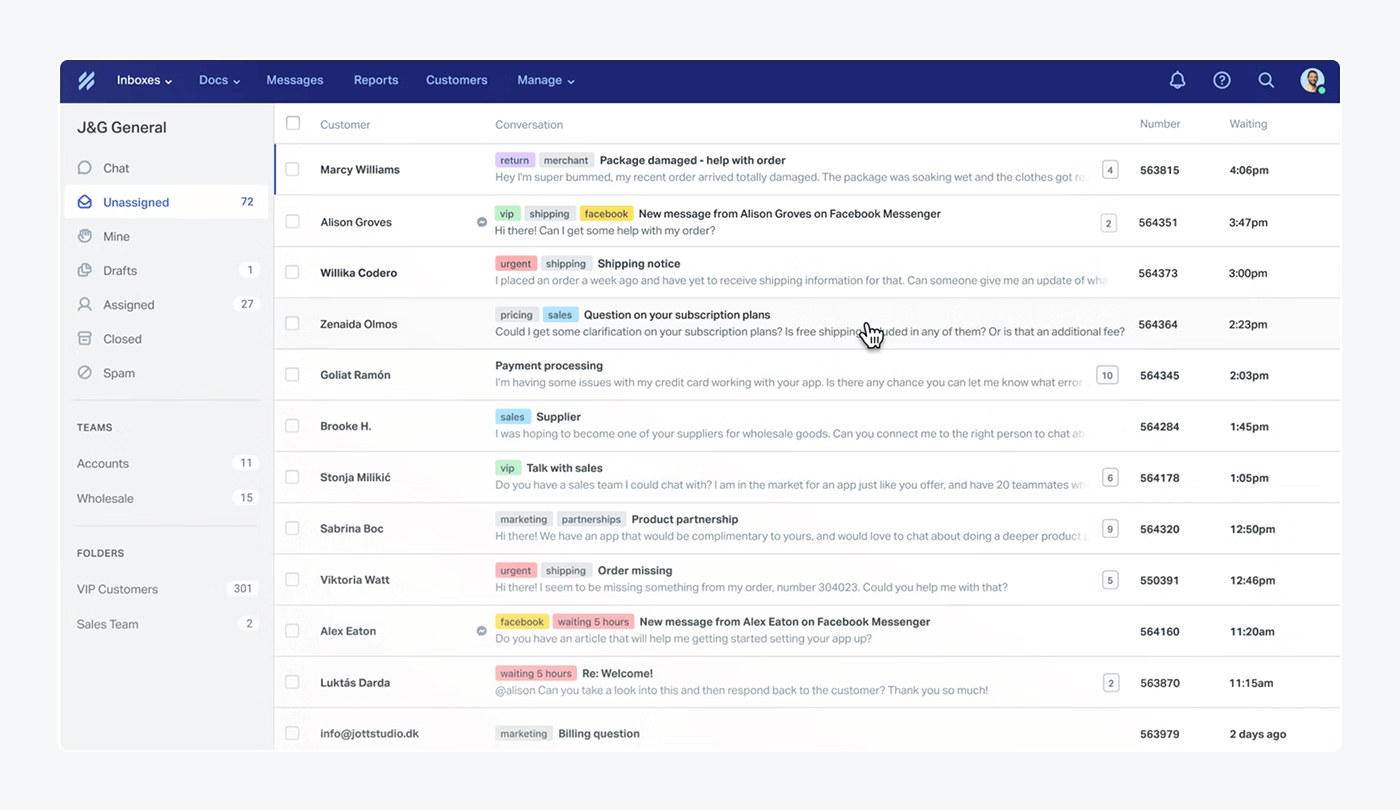
Help Scout combines email-based support with live chat, knowledge base, and automation features. It’s built for small to mid-sized teams that want to deliver personalized support at scale. With features like collision detection, workflows, and customer profiles, Help Scout is ideal for businesses that value simplicity without sacrificing functionality.
Read more: Check out our Help Scout vs. Zendesk comparison guide.
Final verdict and recommendation
Gorgias is a powerful, purpose-built helpdesk for fast-growing ecommerce businesses. Its deep Shopify integration, automation tools, and focus on support-driven revenue make it a top pick for ecommerce brands.
But it’s not for everyone. The pricing model gets expensive fast, and its features cater heavily to ecommerce. If you’re a SaaS or B2B company or want more flexible reporting, look elsewhere.
G2 Rating: 4.6/5 ⭐️
Gorgias is best for ecommerce stores doing 1,000+ tickets/month that want to automate repetitive support and drive more revenue.
For more dynamic and scalable support needs and better value for the price, we recommend Tidio as it offers the flexibility you’re likely looking for.
Go with Tidio to maximize your AI-powered customer support automations
FAQs
Tidio is a customer service platform that combines live chat, chat flow automations, and AI-powered support. It’s built for teams that want to respond instantly, automate repetitive questions, and stay available across channels like email, Messenger, Instagram, and more.
Tidio and Gorgias both offer multichannel support, automation, and ecommerce integrations, but they serve slightly different needs. Gorgias is built for high-volume ecommerce stores with deep Shopify features, while Tidio is more versatile and easier to set up for smaller teams. Tidio also includes AI chatbots and 24/7 support on all paid plans, making it a better value for businesses that want automation without a steep learning curve or high ticket volume.
No, Gorgias is not free. It only offers a free trial, but no free plan. Tidio, on the other hand, offers a lifetime free plan.
No, Gorgias is not a full CRM. It’s a helpdesk platform designed for managing customer support across multiple channels like email, chat, and social media. While it offers customer profiles, order history, and some automation features, it doesn’t have the sales pipeline, lead management, or marketing tools you’d find in a traditional CRM like HubSpot or Salesforce. However, it can integrate with many CRMs to give support teams more context during conversations.