
Key takeaways
- Best for small teams and online stores: Tidio. Chat, email tickets and the Lyro AI agent share one inbox, with up to 10 seats on Starter and Growth and a price set by conversations, not agents.
- Best ticket-first replacement: Freshdesk. For several SLA policies, price Pro at $55 per agent a month billed annually; Growth's $19 entry price doesn't list that feature.
- Lowest seat cost: Zoho Desk. Paid plans from $7 per user a month billed annually, and a free plan for 3 users.
- Best for internal IT: Jira Service Management. Incident, change and asset management, free for up to 3 agents.
- HappyFox's extra costs sit in the add-ons. HappyFox AI ($14 to $39 per agent a month) is mainly agent assistance, the chatbot is quoted per customer, and HappyFox Chat starts at $29 a month.
Tidio is our top HappyFox alternative for small support teams and online stores that want live chat, email ticketing and a customer-facing AI agent in one inbox. Tidio's Starter and Growth plans include up to 10 seats, with pricing based on conversation volume. On HappyFox Help Desk, adding a sixth agent takes you from $120 to $294 per month on annual billing, and AI and live chat support are sold as separate products. If your priority is keeping a ticket-first workflow with multiple SLA policies, shortlist Freshdesk Pro.
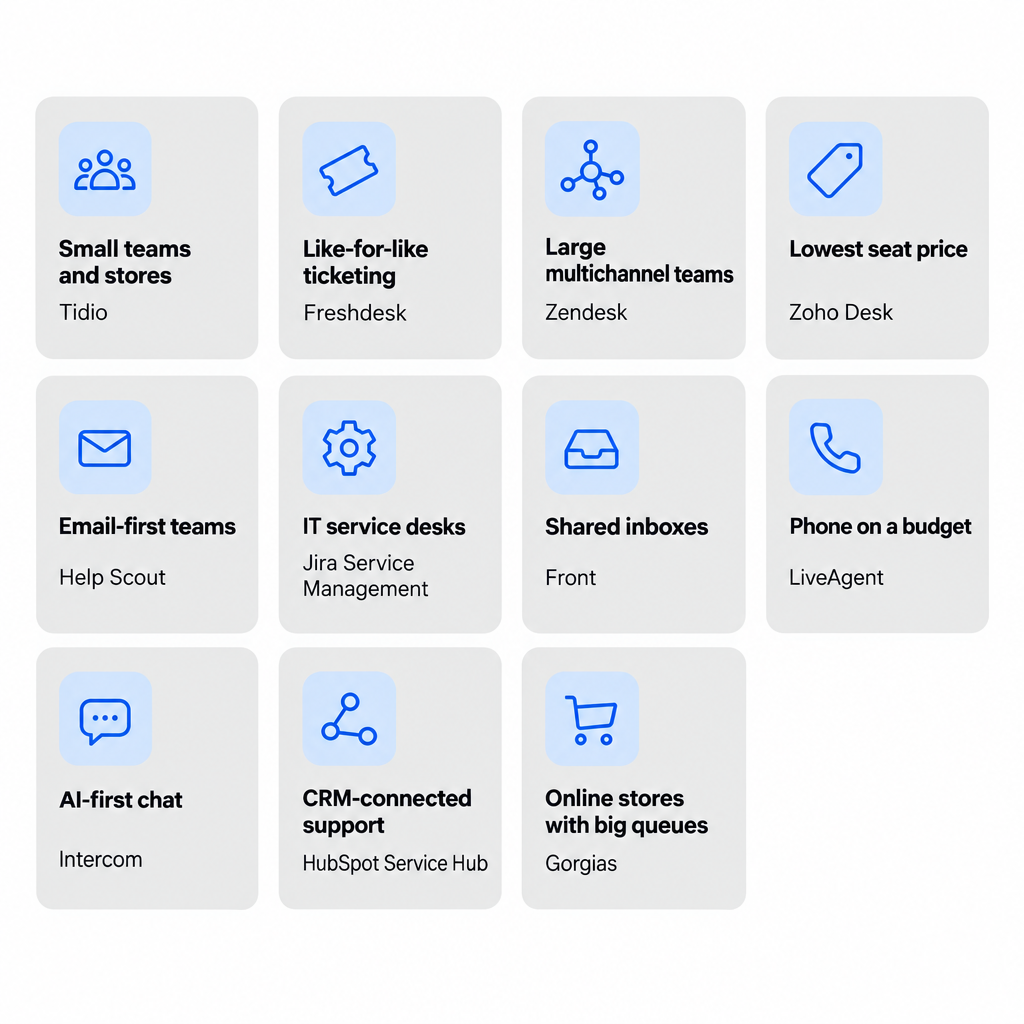
Below are 11 help desk and customer service tools sorted by job, with pricing, AI and features.
HappyFox alternatives at a glance
Entry plans, per agent or seat per month, billed annually unless the cell says otherwise.
| Tool | Best for | Starting price | Free plan / trial | G2 rating |
|---|---|---|---|---|
| Tidio | Small teams and stores: chat, tickets and AI in one inbox | $24/mo for 100 conversations, up to 10 seats, not per agent | Free plan · 7-day trial | 4.6 (2,169)[1] |
| Freshdesk | Ticket-first replacement | $19/agent; messaging plans (Omni) from $29 | 14-day trial | 4.4 (3,795)[2] |
| Zendesk | Large multichannel teams | $19/agent (email only); chat from $55 | 14-day trial | 4.3 (7,091)[3] |
| Zoho Desk | Lowest seat price | $7/user | Free for 3 users · trial | 4.4 (7,996)[4] |
| Help Scout | Email-first teams | $25/user | Free for 5 users and 25 contacts a month | 4.4 (431)[5] |
| Jira Service Management | IT and internal service desks | Standard about $21.50/agent, billed monthly; rate depends on team size | Free for 3 agents | 4.3 (986)[6] |
| Front | Shared email inboxes | $25/seat, up to 10 seats | Trial | 4.7 (2,514)[7] |
| LiveAgent | Phone on a budget | $15/agent | 30-day trial | 4.5 (1,537)[8] |
| Intercom | An AI-first chat desk | $29/seat, plus $0.99 per Fin outcome | 14-day trial | 4.5 (3,921)[9] |
| HubSpot Service Hub | Support tied to CRM records | Starter $20/seat list price | Free for 2 users | 4.4 (3,018)[10] |
| Gorgias | Stores with a big ticket queue | Starter $10/mo for 50 tickets (monthly only); Basic $50/mo for 300 tickets, not per agent | Trial | 4.6 (582)[11] |
For comparison, HappyFox Help Desk starts at $24 per agent a month billed annually ($29 monthly), has a 14-day trial and no free plan, and holds a 4.5 on G2 from 138 reviews.[12] Prices change often. Confirm each one with the vendor before you commit.
Why teams look for a HappyFox alternative
Most reasons to switch come down to pricing, not features: every plan includes unlimited tickets, SLA management, Smart Rules, a knowledge base and SSO. Our HappyFox review covers the product feature by feature.
The reasons to look elsewhere all show up on HappyFox's own pricing pages:
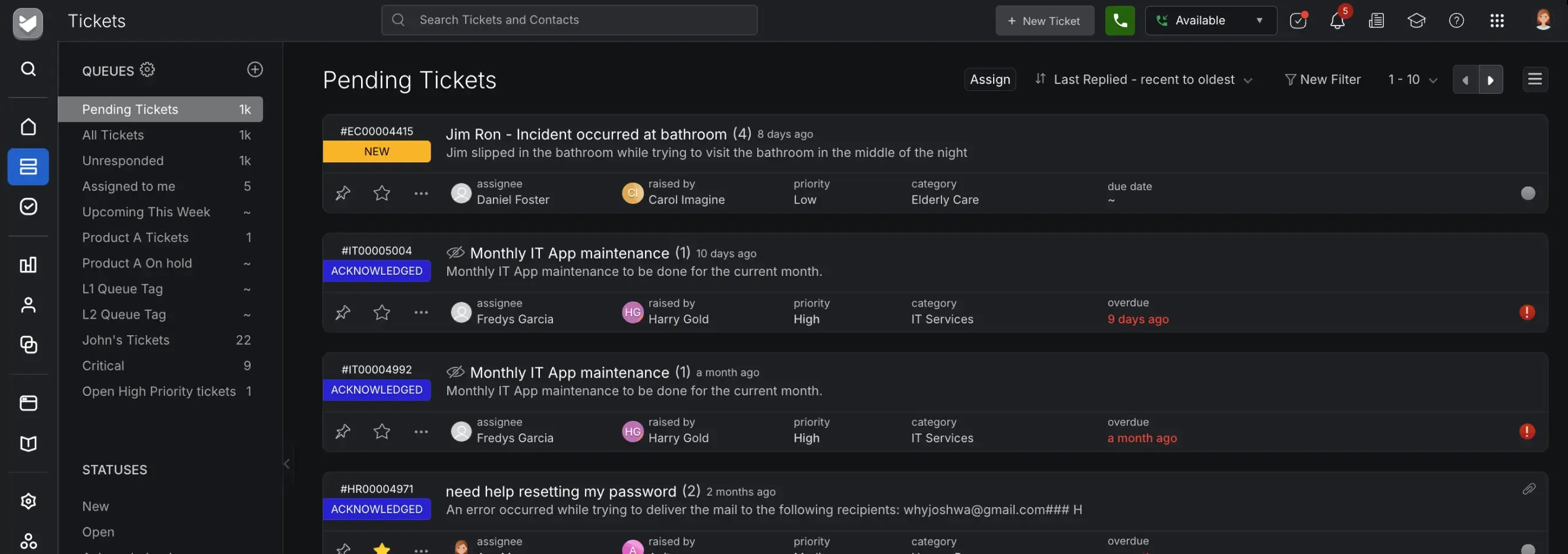
- The five-agent ceiling on Basic. A sixth agent moves the whole team from Basic ($24 per agent) to Team ($49), so six agents cost $294 a month instead of $144.
- AI is a separate bill per agent. HappyFox AI costs $14, $29 or $39 per agent a month on top of the help desk plan, and its entry tier is Agent Copilot for your team. The customer-facing chatbot is quoted separately.
- Live chat is a separate product. HappyFox Chat starts at $29 a month and connects to the help desk as an integration, so chat and tickets mean two products.
- The flat plans meter tickets. The unlimited-agent plans start at $1,999 a month billed annually, with a yearly ticket allowance (20,000 on Growth) and a charge for each ticket over it.
How we chose these alternatives
We started from the help desk tools AI assistants and review sites recommend most as HappyFox alternatives and kept those that do its core job: a shared queue with rules, SLAs or routing, and reporting. Each was checked on price model, AI cost, channels in the same plan, team fit and G2 rating. Prices come from vendor pricing pages; notes rely on public documentation and verified reviews. Tidio is first because it fits small teams and online stores best, and its entry lists its limits too.
The 11 best HappyFox alternatives in 2026
1. Tidio
Best for: small and mid-sized teams and online stores that want chat, email tickets and AI in one inbox, without per-agent pricing.
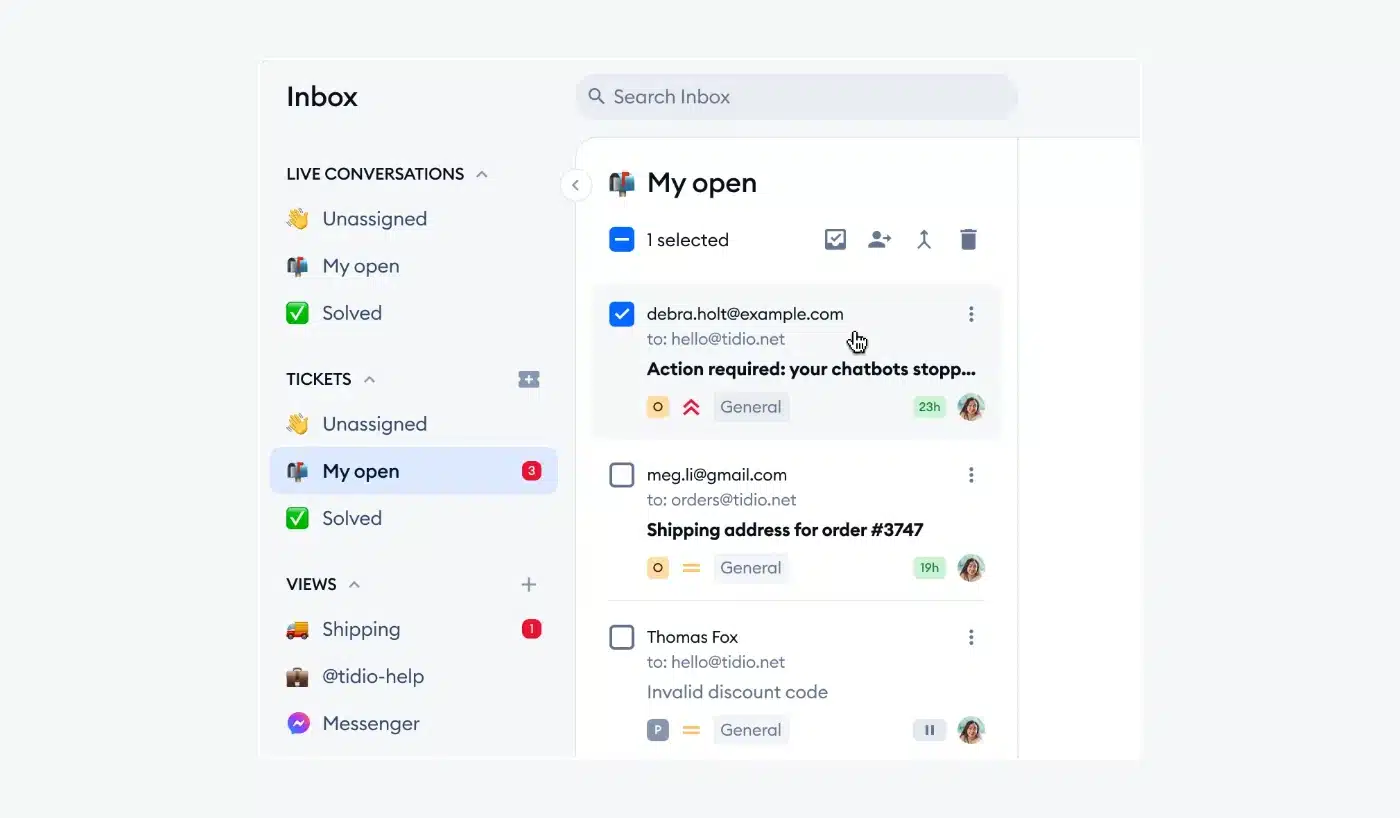
HappyFox starts from the ticket and sells chat and AI next to it. Tidio starts from the conversation. Website chat, Messenger, Instagram, WhatsApp and support email all land in the same inbox. Emails become tickets with a status (Open, Pending, Solved), a priority and an assignee. The Lyro AI agent answers first on chat and email, and it can resolve up to 75% of support requests before a person steps in.
Pricing follows conversations, not agents, with up to 10 seats on Starter and Growth. For online stores, Tidio's Shopify integration shows the shopper's cart next to the chat, and Growth adds order history and order edits in the inbox.
Pros
- AI and chat come in the same plan as tickets, so there are no per-agent add-ons to stack.
- Flat prices for up to 10 seats, plus a free plan and a 7-day trial with Lyro.
Cons
- Conversations are counted against one quota shared by Lyro and your team, with Flows on its own limit. On monthly billing the plan moves up a tier at 95% of its quota by default, and you can switch automatic upgrades off in your billing settings.
- Plus and Premium are set up with the sales team, so larger rollouts get a quote rather than a checkout page.
- Built for small and mid-sized teams, so an IT service desk or a very complex enterprise queue is a better match for a dedicated ITSM or enterprise tool.
Pricing:
- Free: 50 human conversations/month, 100 Flows visitors/month + 50 one-time Lyro AI conversations.
- Starter: Human only: from $24/month for 100 conversations. With Lyro AI: from $33/month for 50 conversations shared by AI and your team.
- Growth: from $41/month for 200 human conversations or $63/month for 100 AI + human conversations; scalable to 1,000/month.
- Plus: from $300/month + usage. Premium: custom pricing.
- Optional add-ons: Flows, Inbox AI, Help Center, Voice, and branding removal.
- 7-day free trial: Growth features with Lyro AI and 100 AI + human conversations, no card required; moves to Free unless you choose a paid plan.
Starting prices shown with annual billing.
See Tidio pricing for every tier.
Rating: G2 4.6/5 (2,169 reviews)
What a G2 reviewer says: "Creating tickets and setting them as pending, open, unsolved, or closed is easy, and tickets let me personalize emails." (5-star review of Tidio's ticketing)
Versus HappyFox: you gain live chat, messaging apps and an AI agent in the same plan as tickets, prices that don't grow per agent, and a free plan. You give up HappyFox's asset management, deeper SLA tooling and its unlimited-agent plans for very large teams.
Try Tidio free
2. Freshdesk
Best for: teams that want the closest match to HappyFox's ticketing, with public prices.
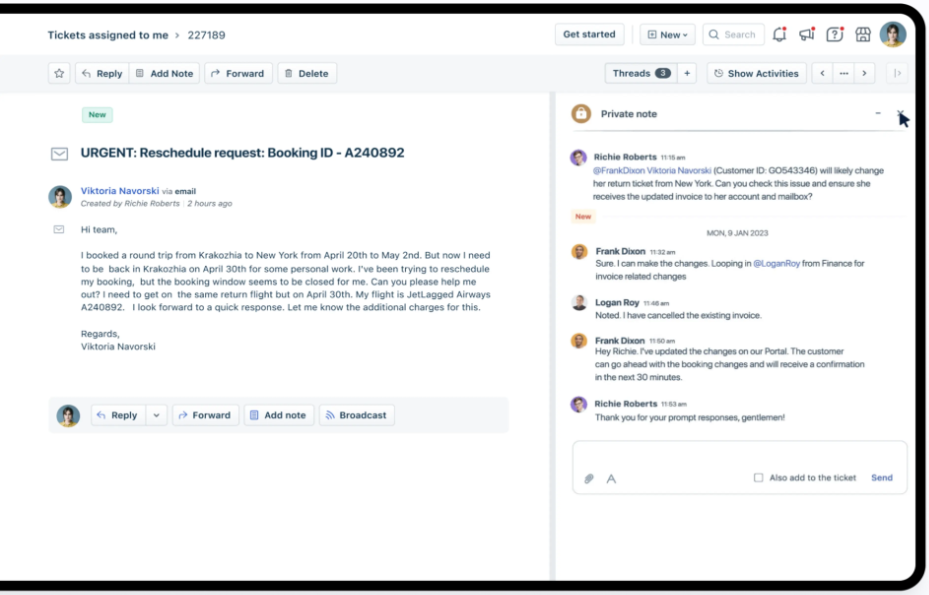
Freshdesk mirrors HappyFox's structure: tickets, automations, SLA policies, a portal and a knowledge base, at a lower entry price.
Pros
- Lower entry price than HappyFox for an email-led desk.
- Familiar ticket model, so a migration changes little for agents.
Cons
- Chat and messaging require the Omni plans, which cost more.
- AI sessions beyond the included 500 are billed in packs.
- Multiple SLA policies start on Pro ($55 per agent).
Pricing (per agent a month, billed annually): Growth $19 · Pro $55 · Enterprise $89. Omni plans $29 · $79 · $119. The first 500 Freddy AI Agent sessions are free, then $49 per 100. 14-day trial.
Rating: G2 4.4/5 (3,795 reviews)
Versus HappyFox: you gain a lower entry price and 500 free AI agent sessions. You give up the flat unlimited-agent option. See our Freshdesk alternatives and Freshdesk vs Zendesk.
3. Zendesk
Best for: larger teams that want phone in the same queue as chat and email.
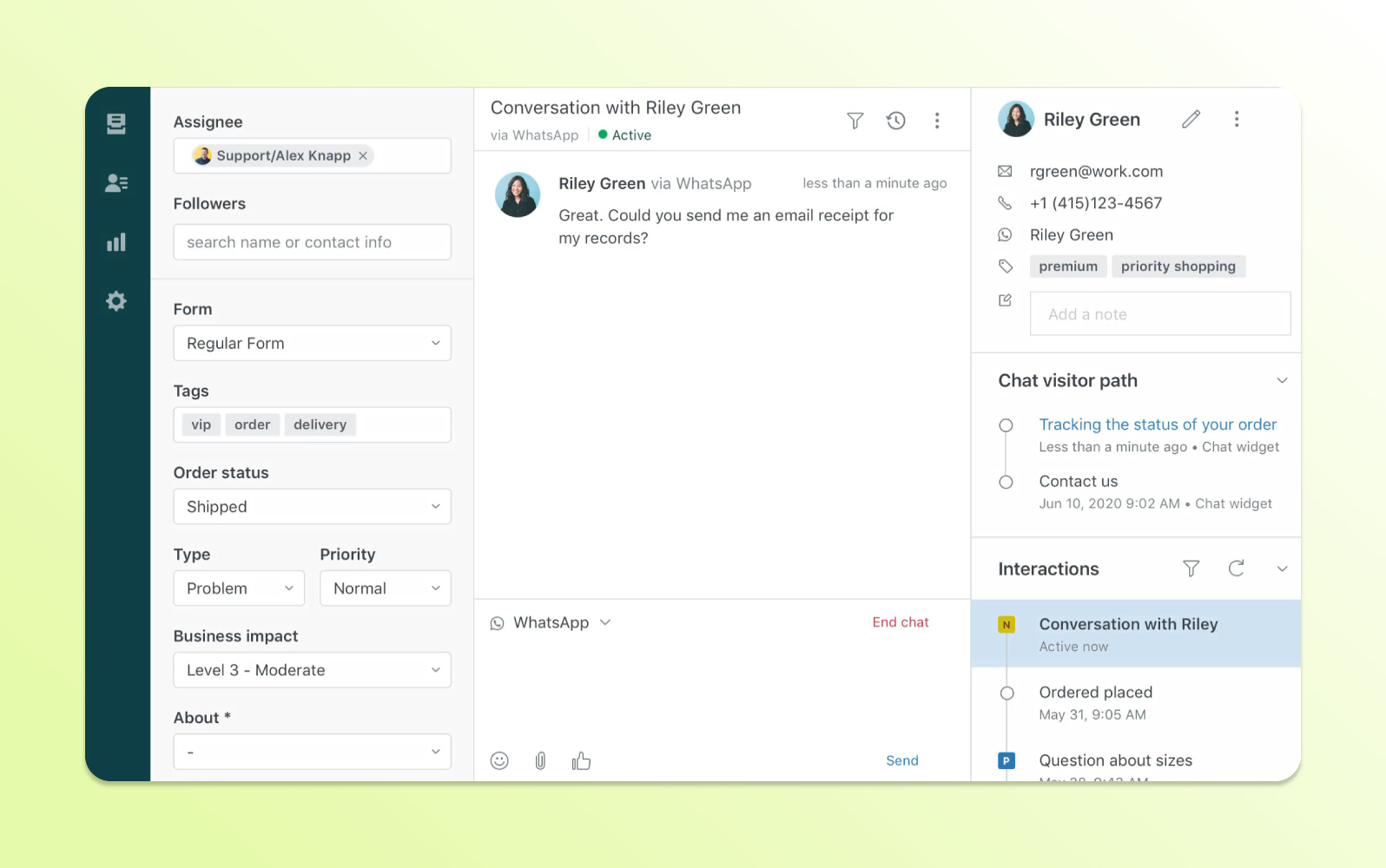
Zendesk is the usual enterprise pick. Suite plans put ticketing, messaging, chat, voice and a help center in one workspace, with routing by status, capacity, skill and priority.
Pros
- Scales to big, multi-brand support operations.
- One queue across every channel, phone included.
Cons
- The $19 Support Team plan covers email only; chat starts at Suite Team.
- AI resolutions above the allowance cost extra, which is hard to forecast in a busy month.
Pricing (per agent a month, billed annually; monthly in brackets): Support Team $19 ($25) · Suite Team $55 ($69) · Suite Professional $115 ($149) · Enterprise on request. Automated resolutions beyond the allowance cost $1.50 each committed or $2.00 pay-as-you-go. 14-day trial.
Rating: G2 4.3/5 (7,091 reviews)
Versus HappyFox: you gain voice, chat and email in one queue. You give up a lower price: chat starts at $55 per agent. See our Zendesk alternatives.
4. Zoho Desk
Best for: budget-conscious teams that want the lowest price per seat.
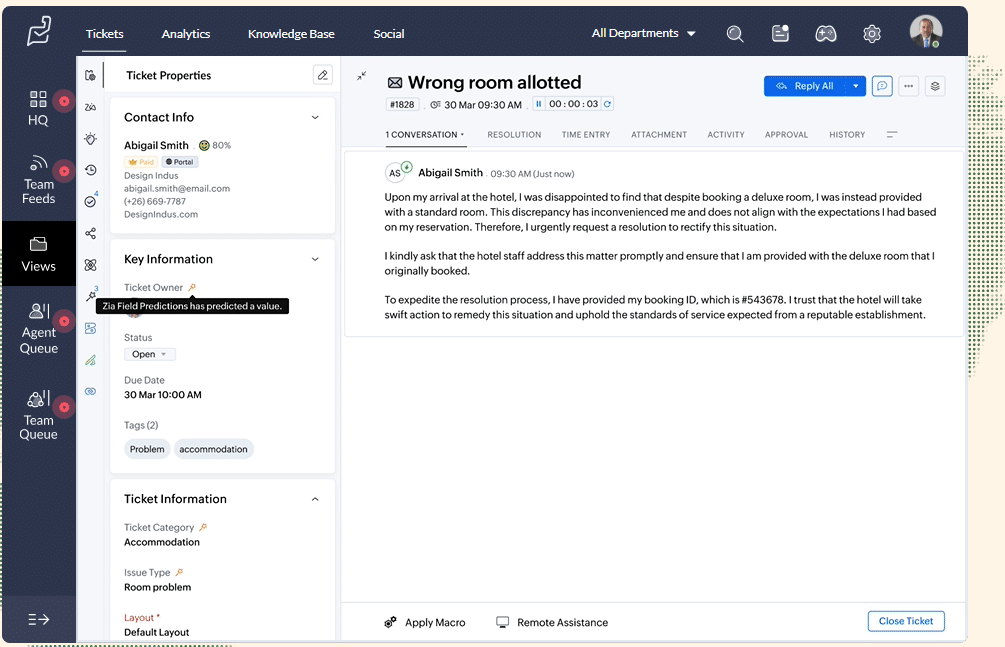
Zoho Desk is the budget pick. Zia, Zoho's AI, adds reply suggestions on higher tiers.
Pros
- The lowest per-seat price in this list, with a free tier.
- Strong fit for companies already on Zoho.
Cons
- The cheapest plans leave out many automations and channels.
- Many settings to configure, so plan time for the first setup.
Pricing (per user a month, billed annually; monthly in brackets): Free (3 users) · Express $7 ($9) · Standard $14 ($20) · Professional $23 ($35) · Enterprise $40 ($50).
Rating: G2 4.4/5 (7,996 reviews)
Versus HappyFox: you gain a much lower seat price and a free plan. You give up some polish, and the best automations sit on upper tiers. See our Zoho Desk alternatives.
5. Help Scout
Best for: small, email-first teams that want a help desk that feels like a shared inbox.
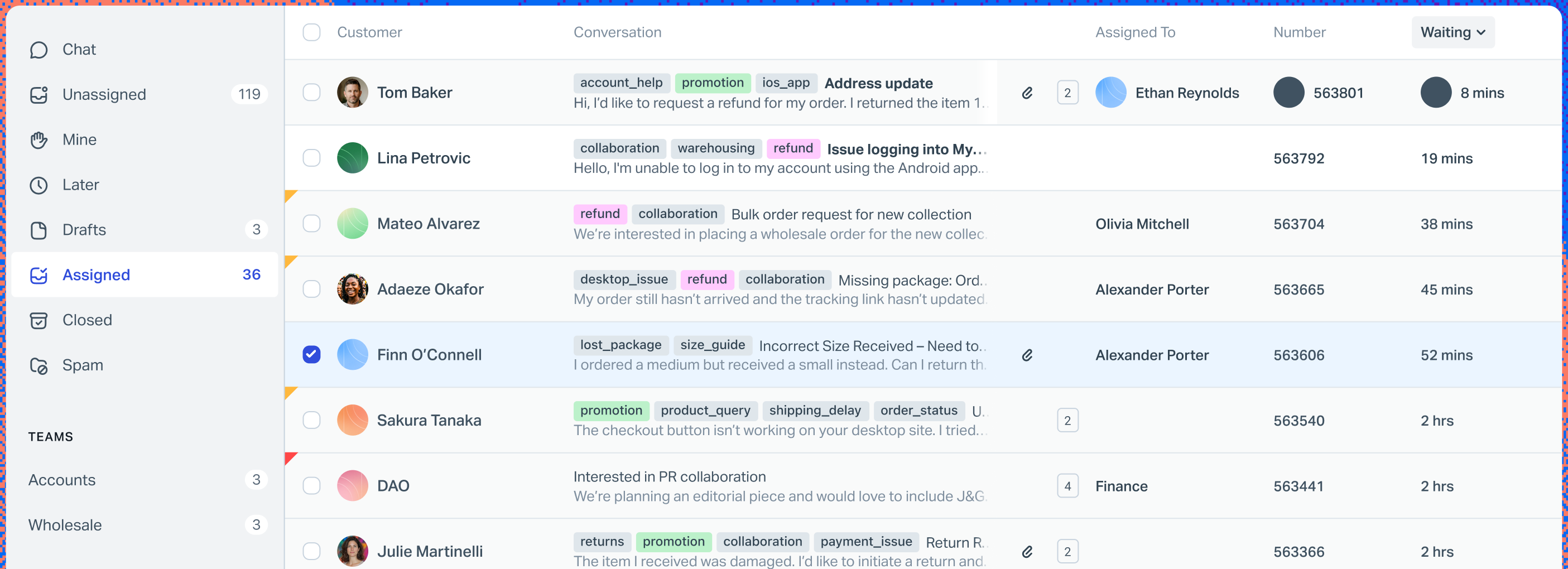
Help Scout hides the ticket machinery: customers get normal-looking emails, agents get a shared inbox, a Docs knowledge base and the Beacon widget. Its AI agent is charged per resolution, not per agent.
Pros
- Easy for new agents to learn.
- Free plan for up to 5 users and 25 contacts a month.
Cons
- Fewer SLA and rule options than HappyFox.
- Chat is lighter than in chat-first tools.
Pricing (per user a month, billed annually; monthly in brackets): Free (5 users, 25 contacts a month, 1 inbox) · Standard $25 ($30) · Plus $45 ($54) · Pro $75 ($90). The Envoy AI agent costs $0.75 per resolution.
Rating: G2 4.4/5 (431 reviews)
Versus HappyFox: you gain a simpler inbox and pay-per-use AI. You give up the depth of HappyFox's rules and SLAs. See our Help Scout alternatives.
6. Jira Service Management
Best for: IT, HR and internal service desks, especially teams already on Jira.
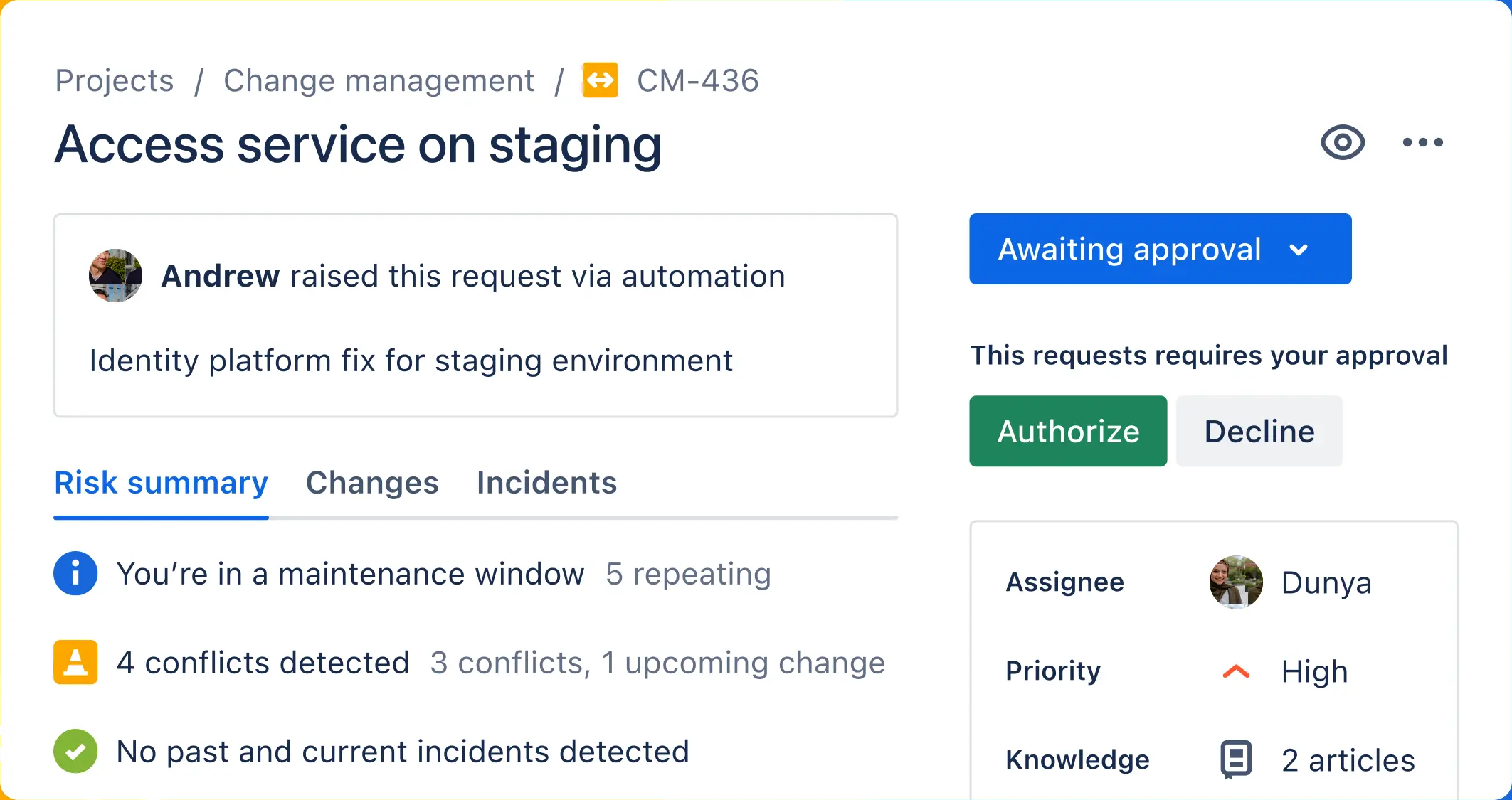
Atlassian built Jira Service Management around ITSM: incident, problem and change management, approvals and an asset database, with requests linked to Jira issues.
Pros
- Built for ITSM workflows that general help desks only approximate.
- Fits teams that already plan their work in Jira.
Cons
- Setup and admin take time, and the vocabulary is IT-specific.
- Not designed for live chat with website visitors or online shoppers.
Pricing (per agent a month, billed monthly, at the 75-agent rate the pricing page shows by default; the rate changes with team size): Free for up to 3 agents · Standard $21.50 · Premium $55.28 · Enterprise through sales. Annual billing saves up to 17%. Rovo AI credits are included, and the customer service AI agent costs $1 per resolution.
Rating: G2 4.3/5 (986 reviews)
Versus HappyFox: you gain ITSM processes and a direct line to engineering. You give up a simple setup for external customers.
7. Front
Best for: teams that run support out of shared email inboxes and want to work on them together.
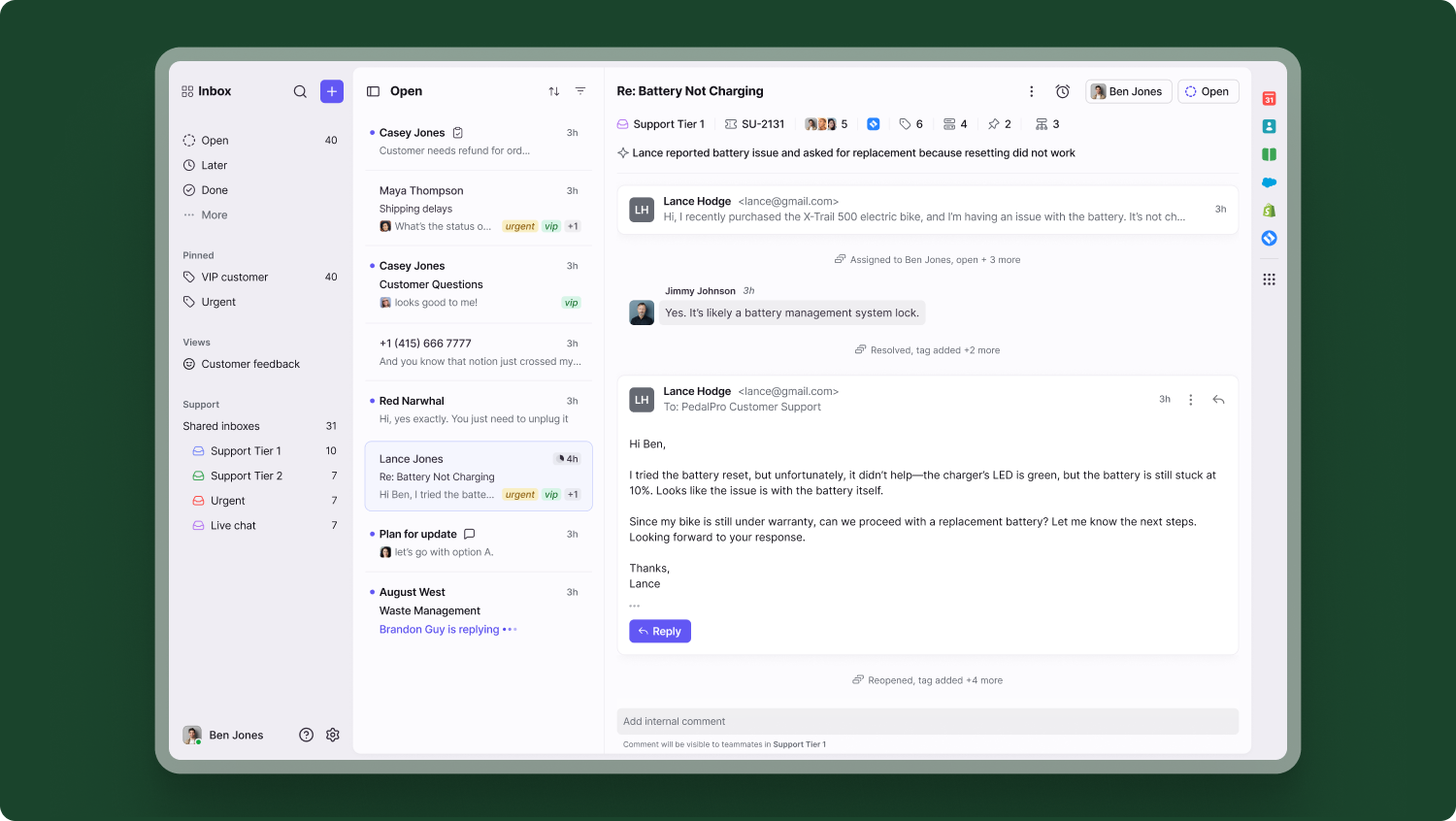
Front treats the shared inbox as the workspace. Teammates assign, comment and draft replies together, which suits account-based support.
Pros
- The highest G2 score in this list.
- Collaboration features that feel natural to email-heavy teams.
Cons
- Starter is capped at 10 seats and one channel type.
- AI costs extra on top of seats.
Pricing (per seat a month, billed annually): Starter $25 (up to 10 seats) · Professional $65 (up to 50 seats) · Enterprise $105. Copilot costs $20 per seat a month, and the Autopilot AI agent from $0.39 per conversation.
Rating: G2 4.7/5 (2,514 reviews)
Versus HappyFox: you gain a collaborative inbox that reads as personal email. You give up ticket-centric SLAs on the entry plan. See our Front alternatives.
8. LiveAgent
Best for: small teams that need phone, chat and email at a low price.
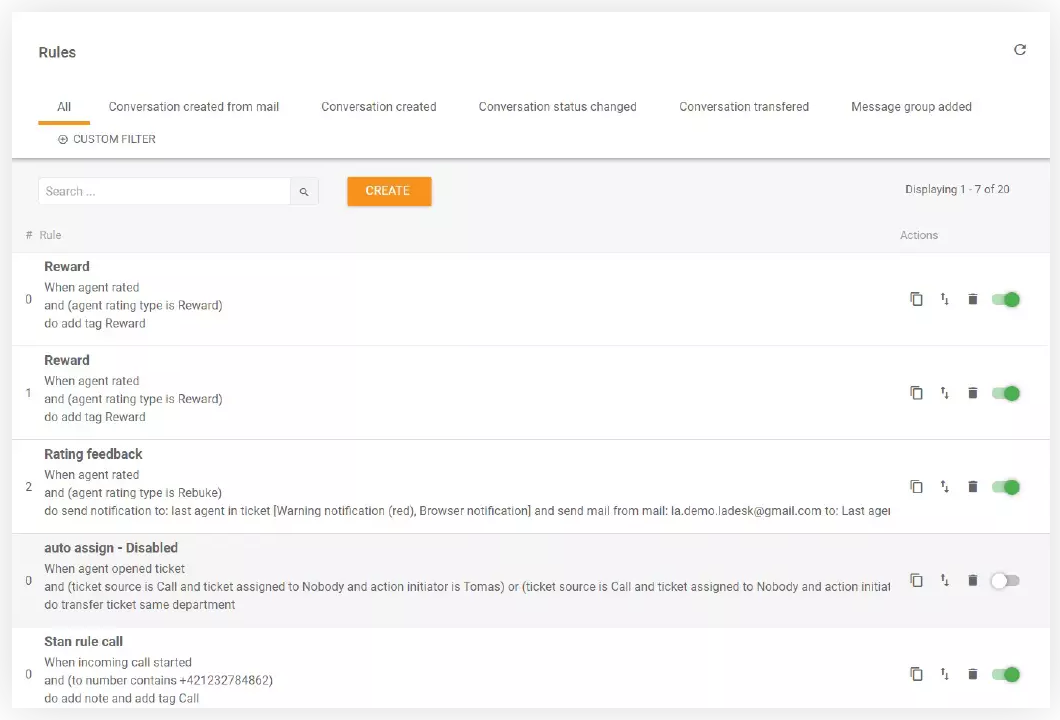
LiveAgent bundles what HappyFox sells separately: ticketing, email and live chat on every plan, the call center from Team.
Pros
- Chat and email in every plan, phone from the second tier.
- A 30-day free trial, longer than most.
Cons
- Many features in one screen, so expect a short learning curve for new agents.
- AI features are basic compared with AI-first tools.
Pricing (per agent a month, billed annually; monthly in brackets): Starter $15 ($19, up to 5 agents) · Team $29 ($35, up to 15 agents) · Business $49 ($59) · Enterprise as a flat fee for 80 agents. LiveAgent often runs promotional prices below these. 30-day trial.
Rating: G2 4.5/5 (1,537 reviews)
Versus HappyFox: you gain chat and phone in one subscription at a lower seat price. You give up cleaner ticket views.
9. Intercom
Best for: product and SaaS teams that want an AI agent to answer first and humans to step in second.
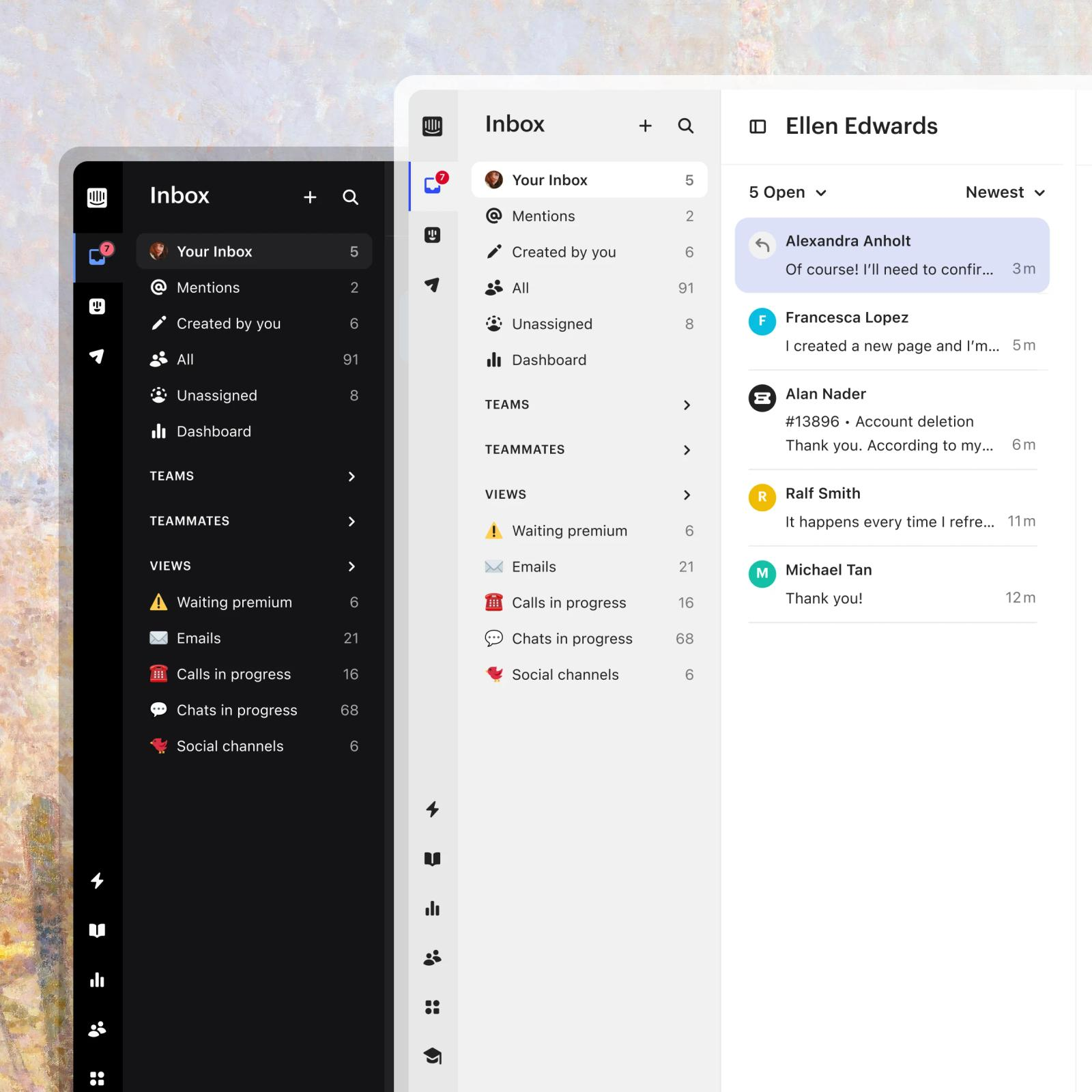
Intercom is built around its AI agent, Fin, which answers first across chat and email and hands off to a person.
Pros
- Fin answers across chat and email before a person steps in.
- Strong in-product messaging for SaaS.
Cons
- Two meters: per seat and per Fin outcome.
- Costs climb quickly for large teams.
Pricing (per seat a month, billed annually; monthly in brackets): Essential $29 ($39) · Advanced $85 ($99) · Expert $132 ($139). New customers currently see a lower promotional Essential price. Fin costs $0.99 per outcome. 14-day trial.
Rating: G2 4.5/5 (3,921 reviews)
Versus HappyFox: you gain an AI agent that answers first. You give up predictable pricing. See our Intercom alternatives.
10. HubSpot Service Hub
Best for: companies whose customer records already live in HubSpot.
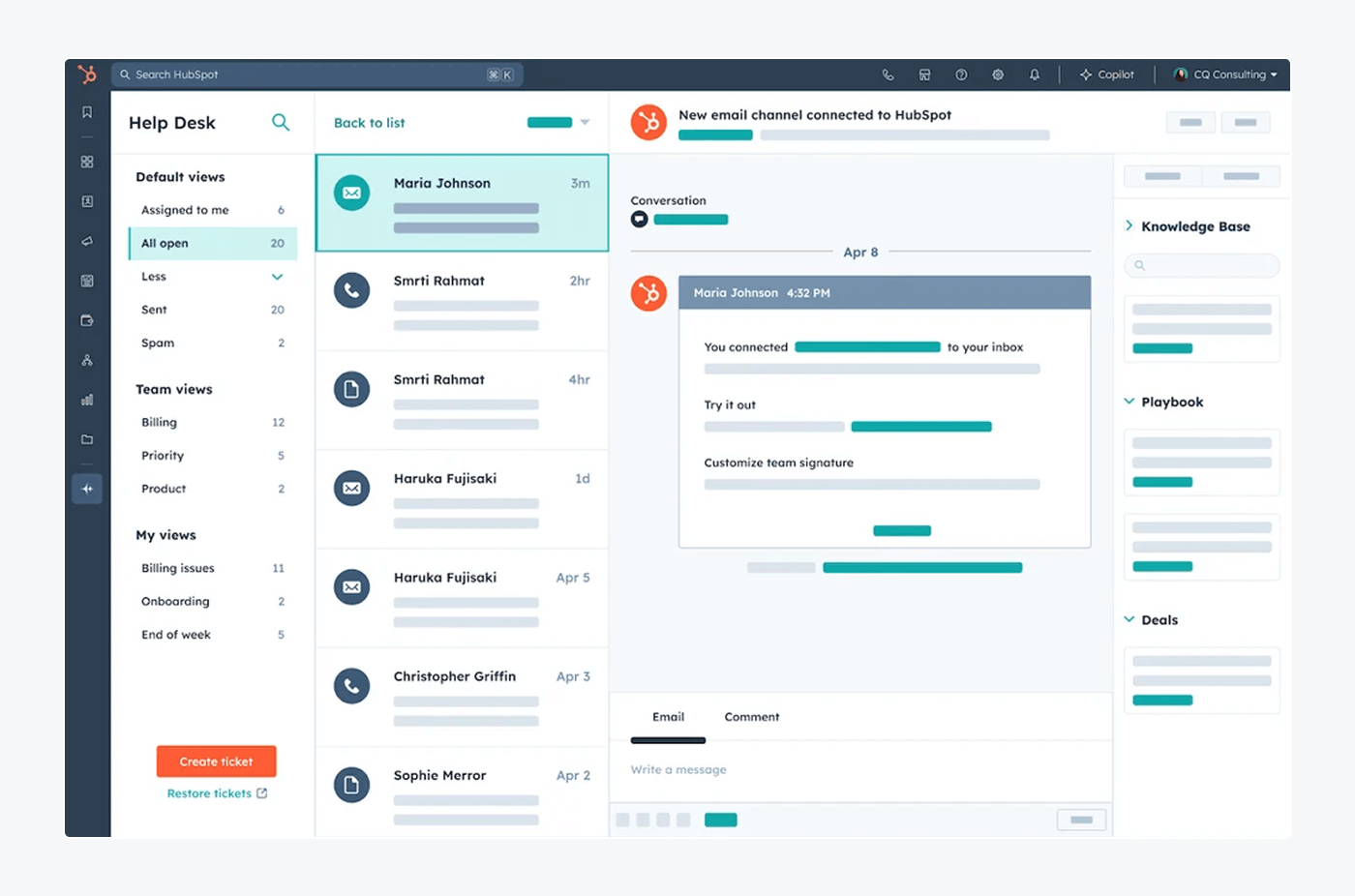
Service Hub puts tickets on the contact records sales and marketing already use, so agents see deals and emails beside each ticket.
Pros
- One customer record across support, sales and marketing.
- Free plan for 2 users.
Cons
- Prices rise steeply from Starter to Professional.
- The case for it is weaker if you don't use HubSpot CRM.
Pricing (per seat a month): Free (2 users) · Starter $20 list price · Professional $100 list price · Enterprise from $150. HubSpot shows lower promotional prices for new customers ($7 and $90), and Professional adds a one-time onboarding fee. The Breeze customer agent runs on HubSpot Credits, with an allowance included per tier.
Rating: G2 4.4/5 (3,018 reviews)
Versus HappyFox: you gain support tied to CRM data. You give up deeper SLA and rule options. See our HubSpot alternatives.
11. Gorgias
Best for: online stores with a large ticket queue across email, chat and social.
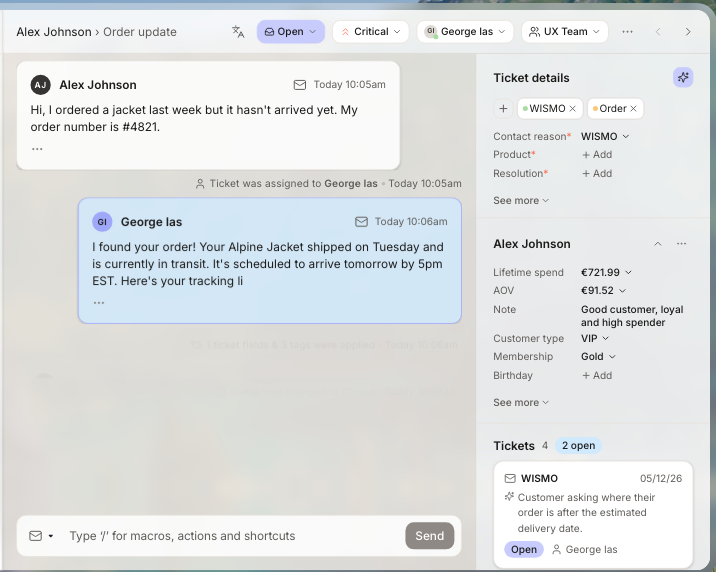
Gorgias was made for e-commerce. Each ticket shows the customer's Shopify, BigCommerce, Magento or WooCommerce orders, and agents act on them in place.
Pros
- Strong order context for store support.
- Priced by tickets, not per agent.
Cons
- Built only for online stores.
- Ticket-based pricing gets costly at high volume, and each AI Agent interaction also counts as a ticket.
- Seat counts depend on the plan, so confirm them for your team size.
Pricing (help desk; annual, monthly in brackets): Starter $10 a month for 50 tickets (monthly only) · Basic $50 ($60) for 300 tickets · Pro $300 ($360) for 2,000 · Advanced $750 ($900) for 5,000. The AI Agent adds $0.90 per automated interaction on annual plans ($1.00 monthly). Trial available.
Rating: G2 4.6/5 (582 reviews)
Versus HappyFox: you gain store data in every ticket and a price set by ticket volume. You give up a general-purpose help desk. See our Gorgias alternatives.
What the same setup costs on each tool
Every row prices the same setup: email tickets and live chat in one plan, per month billed annually. The last column shows how each bills an AI agent that answers customers.
| Tool | Plan for chat + email | 5 agents | 10 agents | Customer-facing AI agent |
|---|---|---|---|---|
| HappyFox | Basic (5 agents max), then Team, + HappyFox Chat from $29 | $149+ | $519+ | Chatbot quoted per customer |
| Tidio | Growth with Lyro AI (100 conversations), up to 10 seats | $63 | $63 | Lyro included in the conversation quota |
| Zoho Desk | Standard | $70 | $140 | Zia on higher tiers |
| LiveAgent | Starter (5 agents max), then Team | $75 | $290 | Basic AI features |
| HubSpot Service Hub | Starter, list price | $100 | $200 | Breeze agent on HubSpot Credits |
| Help Scout | Standard | $125 | $250 | Envoy, $0.75 per resolution |
| Front | Starter | $125 | $250 | Autopilot from $0.39 per conversation |
| Freshdesk | Omni Growth | $145 | $290 | 500 sessions once, then $49 per 100 |
| Intercom | Essential | $145 | $290 | Fin, $0.99 per outcome |
| Zendesk | Suite Team | $275 | $550 | $1.50 to $2.00 per resolution over the allowance |
Tidio's row assumes 100 conversations a month shared by Lyro and your team (Growth scales to 1,000). Gorgias is left out of the totals: it prices by tickets (Basic $50 a month for 300) and says seat counts depend on the plan, so confirm seats with Gorgias for a five- or ten-person team. Jira Service Management is priced by team size.
Tidio vs HappyFox
| Tidio | HappyFox | |
|---|---|---|
| Built around | Conversations across chat, email and social | Email tickets |
| Price model | Per conversation, up to 10 seats on self-serve plans | Per agent, or flat fee with a ticket allowance |
| Entry price | Free plan; Starter from $24/mo | Basic $24/agent/mo, up to 5 agents |
| Shopify | Cart preview in the inbox; order history and order actions on Growth | Integration |
| SLA management | Ticket priorities and workflows | SLA policies on every plan, live SLA timer from Pro |
| Asset management | Not its focus | Included from Pro |
| Very large teams | Plus and Premium through sales | Unlimited-agent flat plans |
Lyro vs HappyFox's customer-facing AI
| Lyro (Tidio) | HappyFox | |
|---|---|---|
| Who it answers | Customers, before a person steps in | HappyFox AI: mainly your agents (Agent Copilot); customers through the separate Chatbot or Autopilot |
| Channels | Live chat, email, Messenger, Instagram, WhatsApp | Chatbot channels not listed on its pricing page |
| How it's billed | Inside the With Lyro AI plan's conversation quota | HappyFox AI $14 to $39 per agent a month; Chatbot quoted per customer on annual billing; Autopilot from 2 cents per successful action |
| Handoff | Passes the conversation to your team in the same inbox | Through the help desk integration |
Lyro can resolve up to 75% of support requests and answers in 51 languages. With HappyFox, AI that talks to customers is a separate purchase from the per-agent AI tiers, so price both before you compare.
Choose HappyFox for a large email-led team that needs strict SLAs, asset tracking or unlimited agents. Choose Tidio for a small or mid-sized team or store that wants one plan whose price doesn't grow with each hire.
Compare Tidio plans
How to switch from HappyFox
- Check your contract dates. Note the renewal date and notice period.
- Export your data. Export tickets to CSV or Excel and export the knowledge base.
- List your Smart Rules and SLAs. Rebuild only the ones you still use.
- Import the knowledge base first. It feeds the new tool's AI agent.
- Run both in parallel. Move one channel for a week or two and test how the AI agent hands off to a person.
- Move email last. Switch forwarding and update links to the old portal.
Shortlist by what you need to keep
Price the plan that includes the feature you can't lose, not the entry plan.
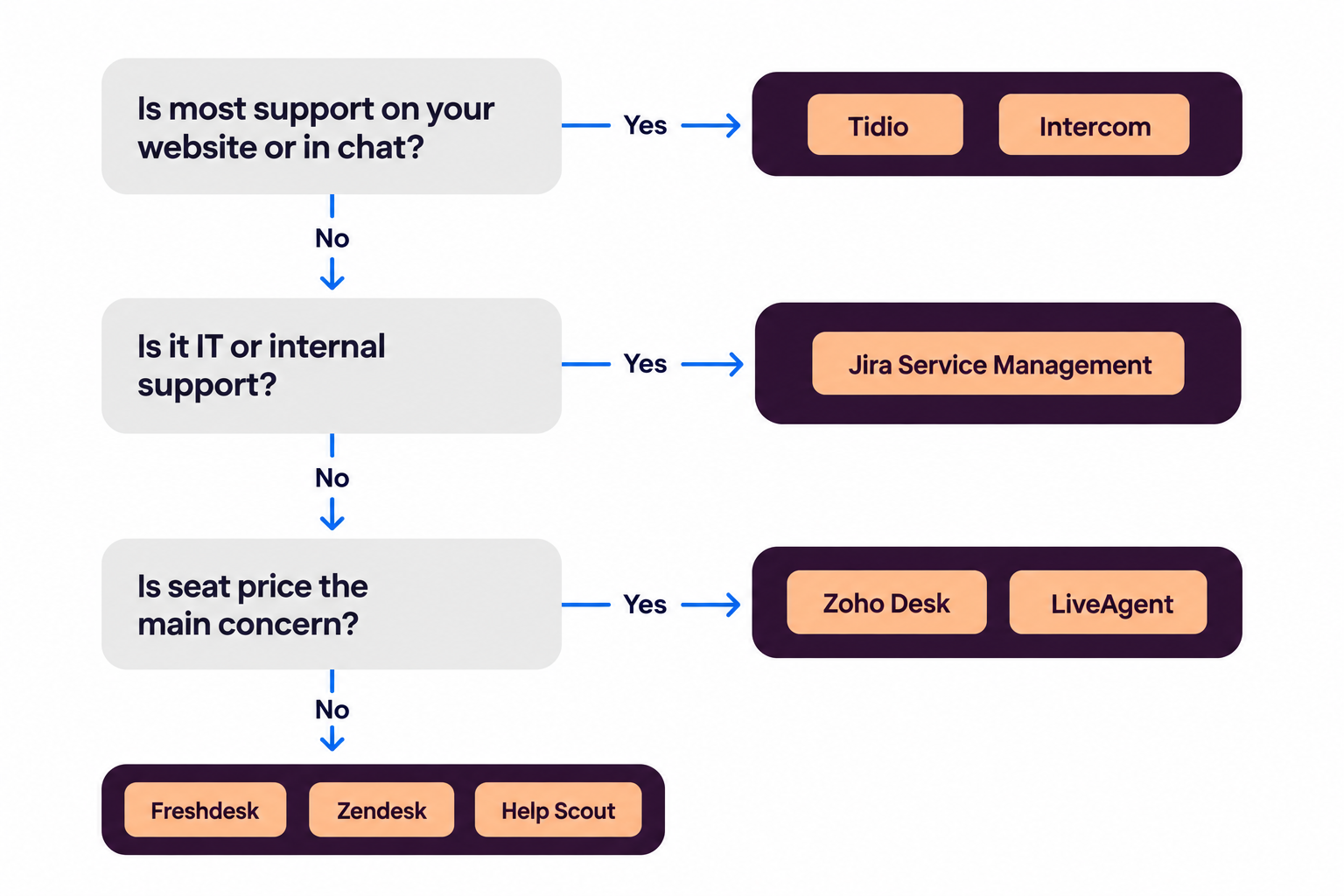
- Chat, email tickets and an AI agent in one inbox. Tidio. Growth with Lyro AI is $63 a month for 100 conversations with up to 10 seats.
- Several SLA policies. Price Freshdesk Pro at $55 per agent a month, because Growth's $19 entry price doesn't list multiple SLA policies.
- Phone support. LiveAgent adds the call center from its second tier, Team, at $29 per agent. Zendesk puts voice in the same queue as chat and email on its Suite plans, from $55 per agent.
- Asset management. Jira Service Management, with an asset database and change management for IT. On HappyFox, assets start on Pro.
- E-commerce order actions. Tidio or Gorgias, decided by two things:
- The order workflow. Gorgias shows orders from Shopify, BigCommerce, Magento or WooCommerce on every ticket. Tidio's Growth plan adds order history, cancellations, refunds, order edits and shipping address changes in the inbox for Shopify stores.
- The billing unit. Tidio bills per conversation, with Lyro's replies inside the same quota and up to 10 seats. Gorgias bills per ticket, adds $0.90 per AI Agent interaction on annual plans, and counts that interaction as a ticket too. A small team with busy chat goes further on Tidio; a large team on one ticket queue fits Gorgias.
- The lowest seat price. Zoho Desk from $7 per user, or LiveAgent from $15 per agent.
- A personal-feeling shared inbox. Help Scout or Front, both $25 per user on their entry plans.
- Support tied to CRM records. HubSpot Service Hub.
Bottom line
For small teams and online stores that want live chat, email tickets and an AI agent in one inbox, Tidio is the first HappyFox alternative to try. Freshdesk is the ticket-first replacement (Pro for several SLA policies), Zoho Desk keeps seat costs lowest, and Jira Service Management suits internal IT. A large email-led team with strict SLAs may have no reason to leave HappyFox.
Try Tidio free
Related guides
- HappyFox review
- Freshdesk alternatives
- Zoho Desk alternatives
- Zendesk alternatives
- Kayako alternatives
- Help desk software for small business
Prices change often, so confirm them on each vendor's site before you buy.
Frequently asked questions
Tidio for small teams and online stores, Freshdesk for a ticket-first replacement, Zoho Desk for the lowest seat cost, and Jira Service Management for internal IT.
For five or fewer agents on email tickets, HappyFox Basic at $24 per agent is fair. The price jumps at the sixth agent and with chat and AI added. Zoho Desk (from $7 per user), LiveAgent ($15 per agent) and Tidio ($24 a month, not per agent) cost less, and Help Scout is free for 5 users and 25 contacts a month.
The prices are public, but the help desk plan leaves out a lot. HappyFox AI is $14 to $39 per agent a month, HappyFox Chat starts at $29 a month, the Chatbot is quoted per customer, and the unlimited-agent plans charge for tickets over the yearly allowance.
Yes, but not in the HappyFox AI tiers, whose entry plan is Agent Copilot for your team. Customer-facing AI comes through the Chatbot (custom quote) or Autopilot (priced per successful action). Tidio's Lyro answers customers on chat, email and social inside the With Lyro AI plans.
It depends on the price model. HappyFox's flat plans charge for each ticket over the yearly allowance. Tidio counts conversations: on monthly billing the plan moves up a tier at 95% of its quota, after a warning at 80%, and you can switch that off in billing settings. At 100% neither your team nor Lyro can reply until the quota renews or you raise it.
Freshdesk Pro, with multiple SLA policies at $55 per agent a month, or Zendesk for larger teams.
Tidio for a small team with busy chat: cart preview, and order history and order actions on Growth, priced per conversation. Gorgias for a large team on one ticket queue, priced per ticket.
Mostly cost: the five-agent cap on Basic, AI priced per agent, live chat sold separately, and per-ticket charges on unlimited-agent plans.
Use live chat to support your customers in real-time