Key takeaways:
- A chatbot API is how your app talks to a conversational engine: send a message, get a structured reply, and build on top of that loop.
- There are two paths: managed platforms like Tidio, HubSpot, and Intercom launch fast, while raw LLM APIs like OpenAI and Rasa trade speed for flexibility.
- The right pick depends on your channels, workflow complexity, compliance needs, and budget.
- Most vendors offer a free tier or trial, so test before you commit.
A chatbot API is a programmatic interface that connects your app to a conversational engine over HTTPS: you send a user message and context, the API routes it through a language model or rule engine, and a structured reply comes back. That single loop is how products like Tidio’s Lyro, OpenAI’s GPT, and IBM watsonx Assistant get embedded in websites, apps, and CRMs without anyone rewriting the conversation logic.
The hard part isn’t whether an API works—it’s which one fits your stack, your team’s engineering capacity, and your budget. This guide compares the 10 best chatbot APIs in 2026, the free tiers worth testing, and how to dodge the pricing traps that hit teams in their first month.
Build your AI chatbot in minutes
Chatbot API Comparison at a Glance
| API | Free tier | Best for | SDKs / Languages | Auth | Starts at |
|---|---|---|---|---|---|
| Tidio (Lyro) | Yes | SMBs wanting a no-code AI agent with developer hooks | JS widget, REST, webhooks | API key | Free |
| OpenAI | $5 trial credit | Custom GPT-powered chatbots | Python, Node, Go, .NET, Java | Bearer token | ~$0.40 / 1M input tokens (GPT-4.1-mini) |
| Intercom (Fin) | No | Enterprise CS with deep CRM | REST, JS, Ruby, Python | OAuth 2.0 | $29/seat/mo + $0.99/resolution |
| HubSpot | Yes | Marketing-led teams already on HubSpot CRM | REST, Node, PHP, Ruby, Python | OAuth 2.0 / private app | Free |
| Wati | Trial | WhatsApp-first commerce | REST, webhooks | API key | $59/mo (Growth, annual) |
| Ada | No | Enterprise multilingual support | REST, JS SDK | OAuth 2.0 | Custom (~$30K+/yr) |
| ManyChat | Yes (25 contacts) | Instagram / Messenger / WhatsApp marketing | REST | API key | Free |
| IBM watsonx Assistant | Lite plan | Regulated industries needing on-prem options | Node, Python, Java, Swift, .NET | IAM / API key | Free (Lite: 1K MAU / 10K msgs) |
| Google Dialogflow CX | $600 trial credit | Voice + multi-channel enterprise flows | Node, Python, Java, Go, REST | Service account (Google Cloud) | ~$20 / 100 chat sessions |
| Rasa Pro | OSS core free | Self-hosted, code-first teams | Python | Token / self-managed | Free (OSS); Pro custom |
Pricing and feature details change frequently. Verify with each vendor before committing.
How Does a Chatbot API Work?
Every chatbot API follows the same five-step shape, whether you’re calling a managed platform or a raw LLM.
- Authentication. You authenticate with an API key, OAuth token, or signed request.
- Request. You send a user message, conversation history, and usually a system prompt or context.
- Processing. The provider routes the message through its model or rule engine.
- Response. You receive a structured reply: text, suggested actions, or tool / function calls.
- Webhooks (optional). Incoming events like a new message, a handoff request, or a CSAT score get pushed to a URL you specify.
Most modern APIs also support streaming responses, so the answer appears word by word, and tool use, so the bot can fetch data from your systems, place orders, or book appointments.
Build vs. Buy: Which Path Fits Your Situation?
Two paths lead to a working chatbot. The right one depends on how much custom logic you need and how much engineering capacity you can spare.
| Scenario | Buy a platform API | Build with an LLM API |
|---|---|---|
| Need a working widget this week | Yes | No |
| Limited engineering capacity | Yes | No |
| Want CRM, analytics, and inbox built in | Yes | Build it |
| Custom workflows, retrieval, multi-agent flows | Some platforms | Yes |
| Strict compliance or data residency | Depends | Yes (full control) |
| Predictable monthly cost | Yes (subscription) | No (token-based) |
| Long-tail, novel questions | Limited | Strong |
Rule of thumb: if you can describe the bot’s job in a few sentences and you’d rather not own the UI, buy a platform. If the bot has to reason over your own data, call your own tools, or behave in ways that don’t fit a templated flow, build with an LLM API.
10 Best Chatbot APIs in 2026
1. Tidio (Lyro)
Best for: SMBs and e-commerce stores that want a working AI agent without writing much code.
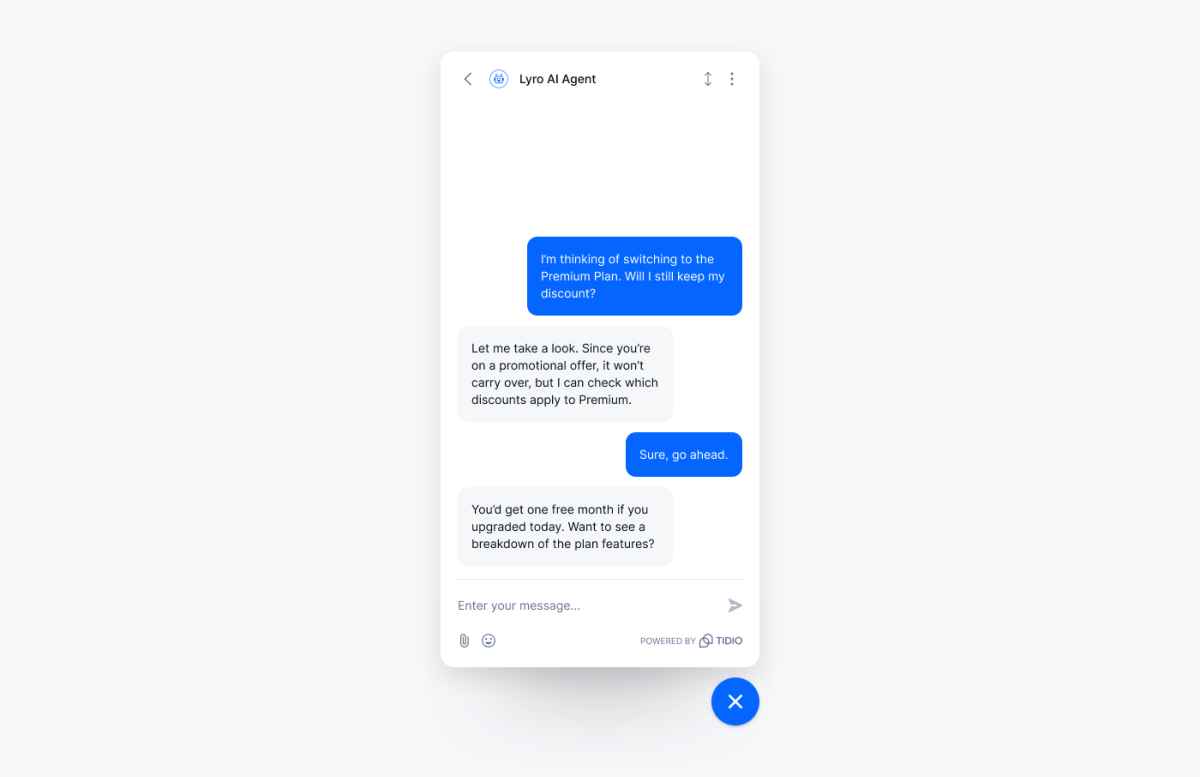
Tidio combines a live chat widget, a flow builder, and Lyro, an AI agent that handles support conversations end-to-end. The OpenAPI exposes contacts, conversations, operators, and ticketing, plus webhooks for inbound events on the Plus plan and above. Lyro averages a 67% resolution rate across Tidio customers and reaches up to 70% on routine inquiries. The basic setup takes about ten minutes once your help center content or website URLs are ready.
Pros
- Fast to install: drop-in script, Shopify app, WordPress plugin, Wix integration
- Free plan covers the core widget plus a one-time pool of 50 Lyro AI conversations to test the agent
- Lyro handles the long tail without flow authoring
- Multi-channel from one inbox: web, Messenger, Instagram, WhatsApp, email
- Webhooks for new conversations, AI escalation, and lead capture
Cons
- Advanced customization sits behind paid tiers
Pricing (monthly):
- 7-day free trial available
- Free version (50 Lyro conversations one-time, 50 billable conversations/month)
- Starter—$29/mo (or $24.17/mo billed annually)
- Growth—from $59/mo (or $49.17/mo billed annually)
- Plus—from $749/mo
- Premium—contact for pricing
- Lyro AI add-on—from $39/mo for 50 conversations
Read more: Check out the full Tidio chatbot API documentation. Also, learn how Tidio API works and what the available APIs are.
2. OpenAI
Best for: Teams building a custom chatbot from scratch with GPT models.
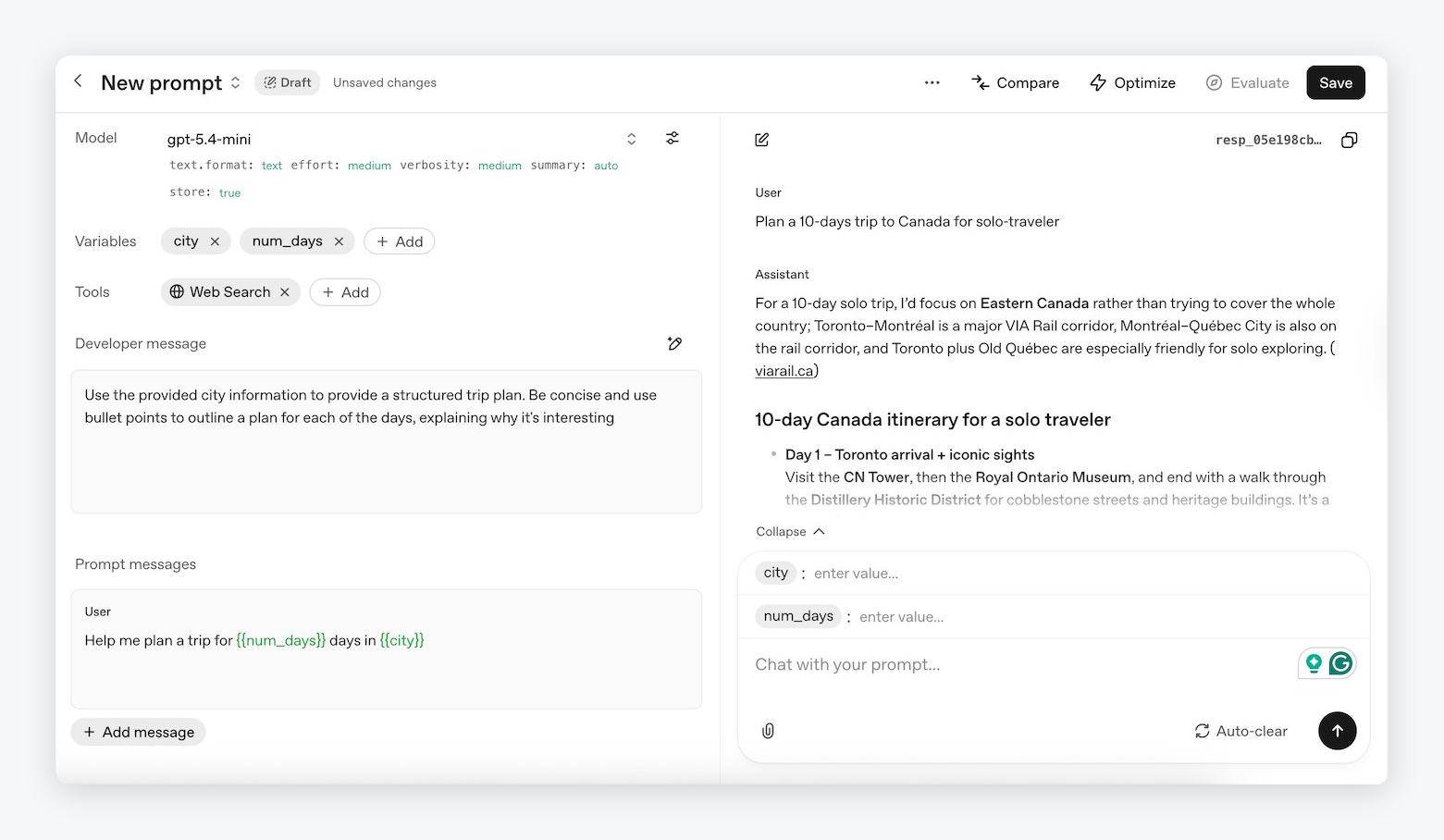
OpenAI’s API exposes the same models that power ChatGPT: GPT-4.1 and GPT-4.1-mini, GPT-4o, the o-series reasoning models, and the newer GPT-5 family. For agent-style apps that need conversation state, retrieval, and tool use, OpenAI recommends the Responses API together with the Conversations API. The older Chat Completions API is still fully supported for simple request/response use; the Assistants API has been deprecated, so anything new should skip it.
Pros
- Largest tutorial and tooling ecosystem of any LLM provider
- Responses API handles state, retrieval, and tool calls in a single object model
- Realtime API for voice and phone agents
- Broad SDK coverage across Python, Node, Go, .NET, and Java
- Frequent price cuts on the smaller models
Cons
- No chat widget, no inbox, no human handoff: every layer above the model is yours to build
- Frequent product changes can break integrations; pin SDK versions
- Rate-limit ceilings depend on account tier and recent usage
Pricing (May 2026, per 1M tokens, input/output):
- Free $5 trial credit on signup
- GPT-5.5 (flagship)—$5 / $30
- GPT-5.4—$2.50 / $15
- GPT-4.1—$2 / $8
- GPT-4.1-mini—$0.40 / $1.60
- GPT-4.1-nano / GPT-5.4-nano—$0.10–$0.20 / $0.40–$1.25
- Batch API—50% discount on async workloads
3. Intercom (Fin)
Best for: Mid-market and enterprise support teams already running a ticketing workflow.
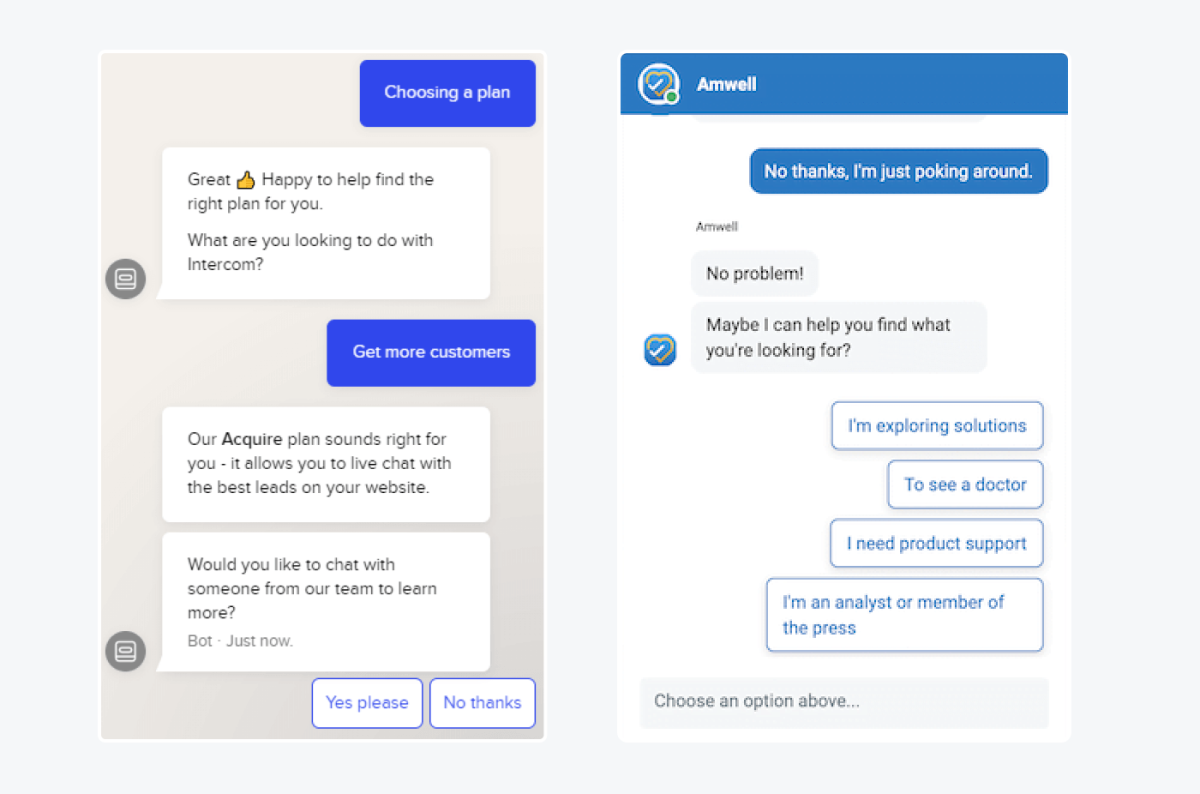
Fin is Intercom’s AI agent layered on top of its support platform. The API covers contacts, conversations, tickets, and bot administration. If your CS team already lives inside Intercom, Fin slots into existing macros, SLAs, and routing rules with no rebuild.
Pros
- Established support-ops tooling: SLAs, macros, workflows, snooze, side conversations
- Detailed reporting on resolution rate and human-deflection
- Webhook system with retry semantics documented end-to-end
Cons
- Pricing climbs quickly at scale; Fin bills per resolution on top of seat fees
- Heavier than most SMBs need or can justify
Pricing (annual billing):
- Essential—$29/seat/mo
- Advanced—$85/seat/mo
- Expert—from $132/seat/mo
- Fin AI Agent—$0.99 per resolution on every plan (50-resolution monthly minimum)
- Copilot—$29/seat/mo for unlimited usage
4. HubSpot
Best for: Teams already invested in HubSpot CRM.
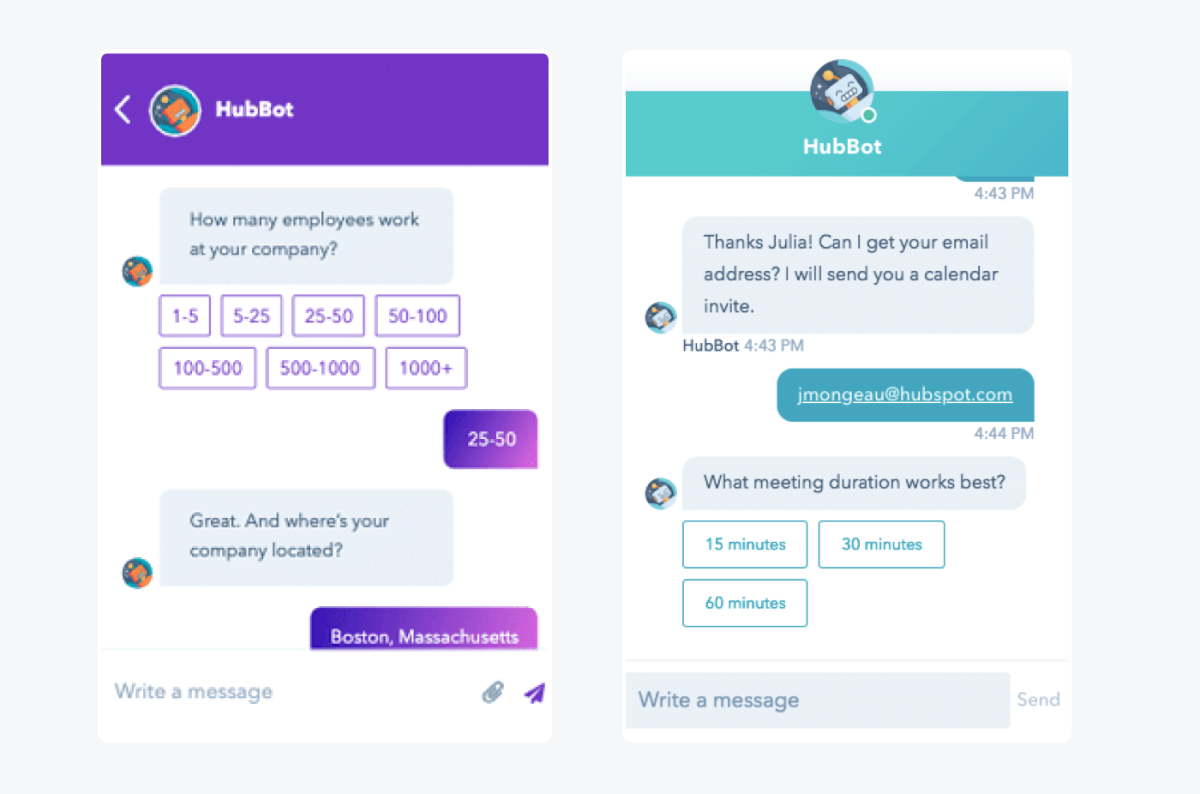
The Conversations API lets you send and receive messages, manage threads, and trigger workflows from chat events. Pair Chatflows with HubSpot’s native AI features or a connected LLM for open-ended answers. The value compounds if you already use HubSpot for contacts, deals, and email.
Pros
- Free tier with API access included
- Two-way contact sync, workflow triggers, native deal updates
- Routing, qualification, and CRM updates included by default
Cons
- Bot logic is rules-based by default; LLM answers require AI add-ons or a connected provider
- Best value only if you’re already a HubSpot customer
Pricing (Service Hub, per seat, annual billing):
- Free—up to 2 users, rules-based Chatflows, Conversations API, shared inbox
- Starter—$15/seat/mo
- Professional—$90/seat/mo + $1,500 onboarding
- Enterprise—$130/seat/mo + $3,500 onboarding
- AI features billed in credits: 500 (Starter) / 3,000 (Pro) / 5,000 (Enterprise) included
5. Wati
Best for: WhatsApp-first commerce and support.
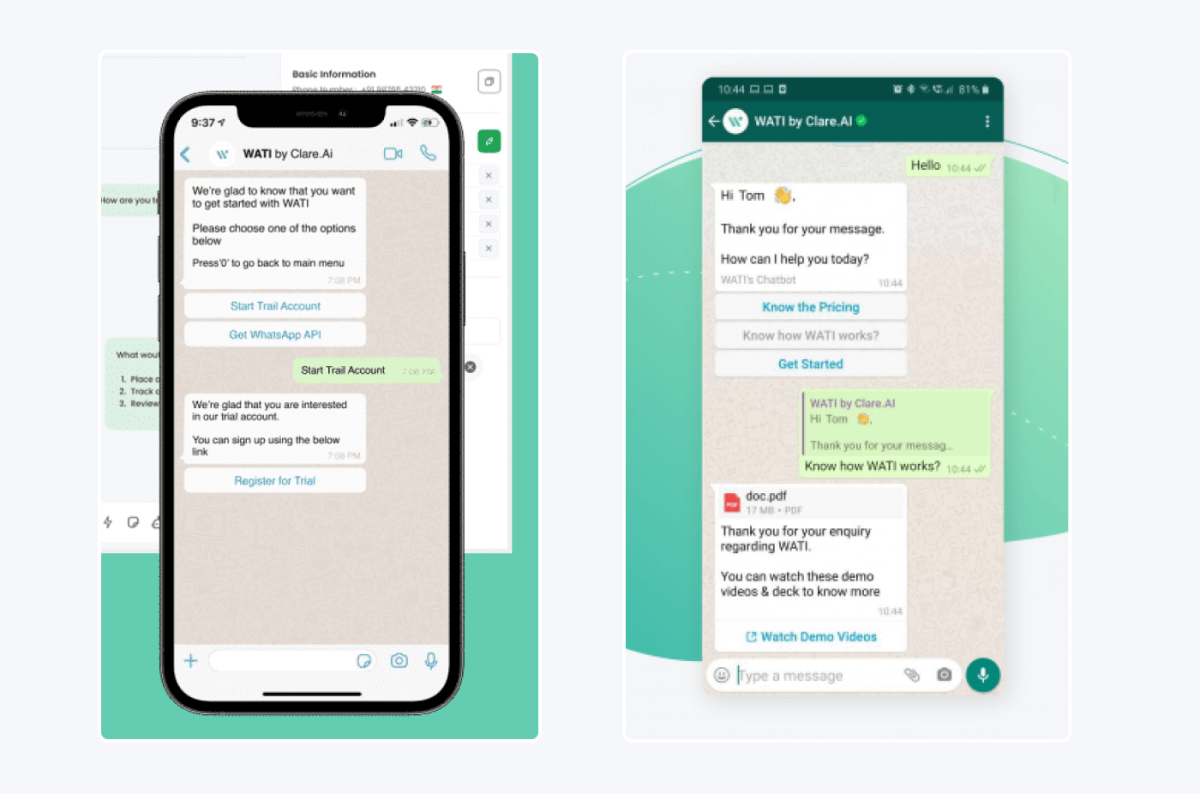
Wati wraps the WhatsApp Business API in a friendlier developer surface. The REST API covers messaging, templates, contacts, and webhooks.
Pros
- Built for WhatsApp Business: templates, opt-in flows, broadcasts
- Quick setup for high-volume messaging on WhatsApp
Cons
- WhatsApp only, with no web widget or unified omnichannel inbox
Pricing (annual billing):
- 7-day free trial
- Growth—$59/mo (5 users, basic chatbot)
- Pro—$119/mo (advanced automations, Shopify integration)
- Business—$279/mo (multi-number, IP whitelisting, Salesforce)
- Plus WhatsApp conversation fees passed through from Meta
6. Ada
Best for: Enterprise self-service automation across many languages and channels.
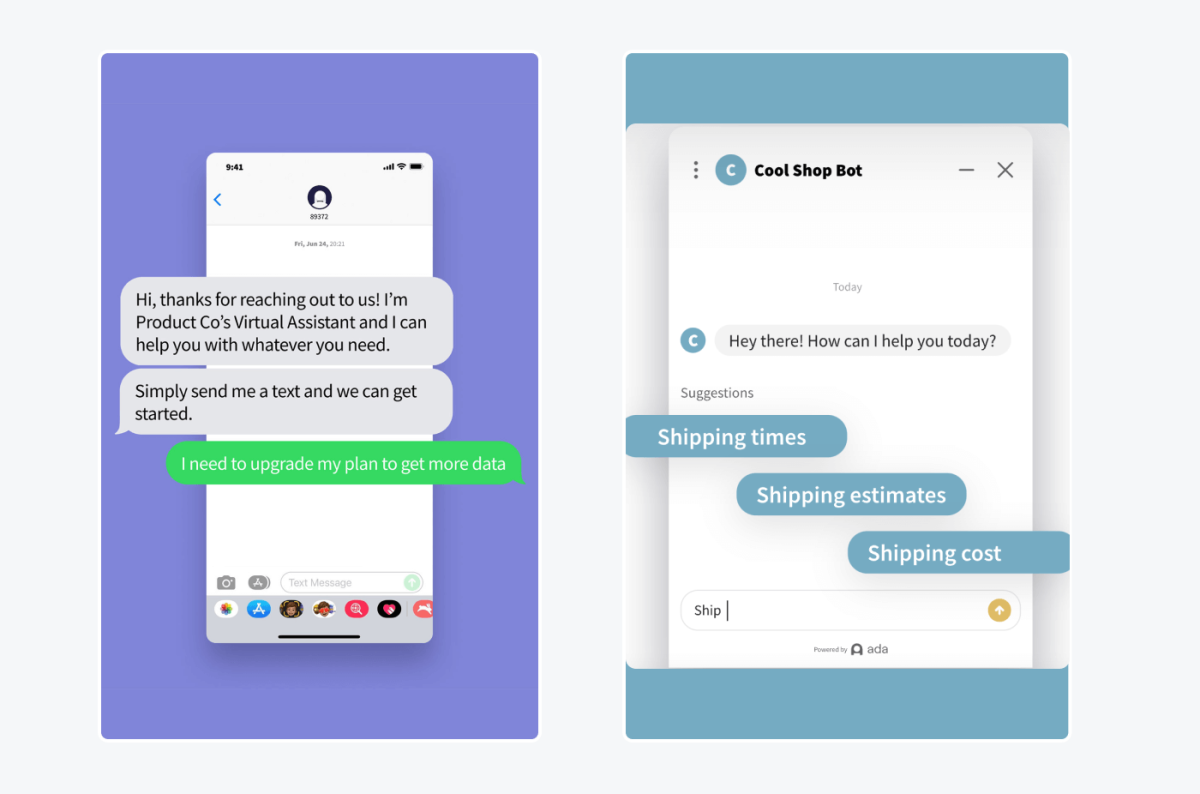
Ada is a no-code AI agent platform with a developer-grade API for conversations, intents, and analytics. Generative and scripted flows sit behind the guardrails that enterprises expect.
Pros
- Generative and scripted flows with policy guardrails
- Multilingual support across 50+ languages
- Enterprise features: SOC 2, SSO, audit logs
Cons
- Sales-led pricing starting around $30K/year
- Longer time to value than SMB-focused tools (typically 8–16 weeks to deploy)
Pricing (sales-led, no public list):
- Annual contracts typically start around $30,000/year
- Mid-tier deployments: $30,000–$60,000/year platform + implementation
- High-volume enterprise: $150,000–$300,000+/year
- Per-conversation pricing: $1–$3.50 per interaction depending on tier
7. ManyChat
Best for: Instagram, Messenger, and WhatsApp marketing automation.
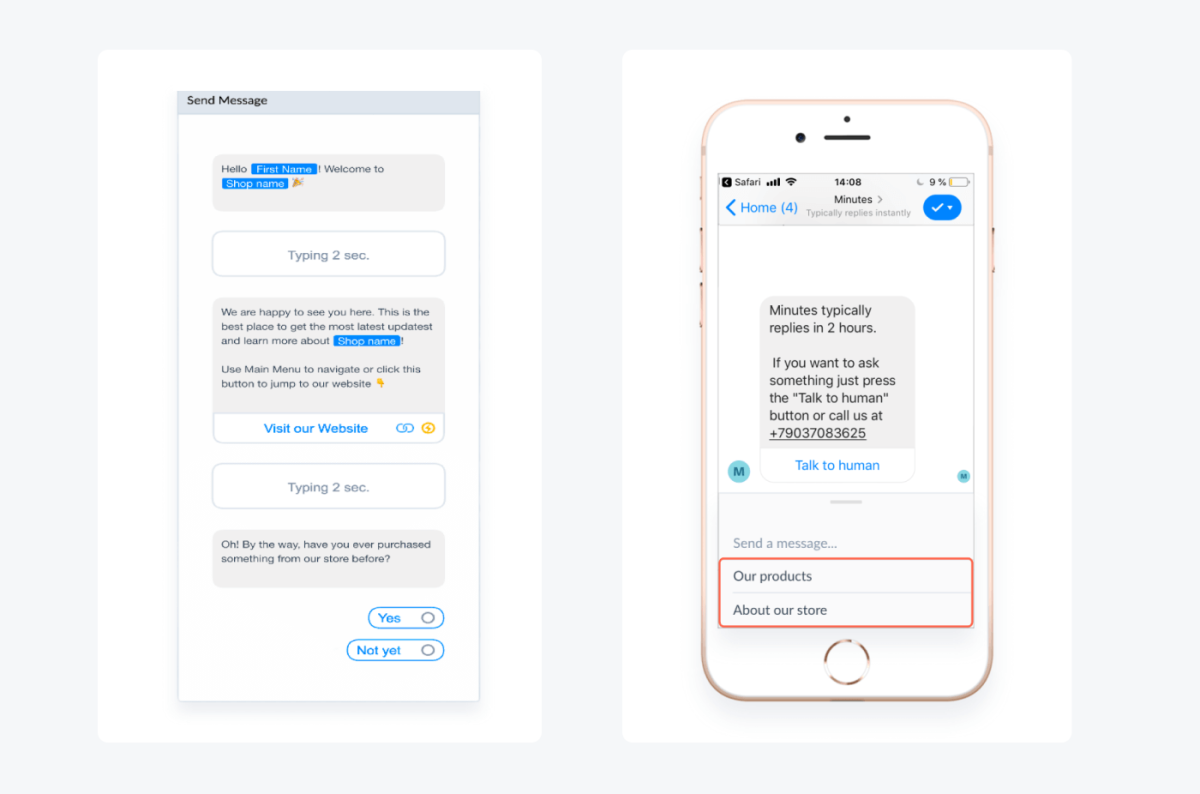
ManyChat focuses on social-first messaging flows: opt-ins, broadcasts, comment automations, and quick replies. Marketers can ship campaigns without engineering involvement. As of March 2026, the free tier shrank from 1,000 contacts to 25 active contacts per month.
Pros
- Free tier exists (25 active contacts), useful for testing the platform
- Deep Instagram and Messenger integrations, including comment triggers
Cons
- Free plan is a sandbox after the 2026 pricing change; paid plans start at $14/mo
- AI features are a paid add-on; not included in any base plan
- Limited for complex support workflows
Pricing (May 2026):
- Free—25 active contacts, 2 channels (Instagram + Messenger)
- Essential—$14/mo (250 contacts)
- Pro—$29/mo (2,500 contacts, AI features available)
- Business—$69/mo (7,500 contacts, advanced AI, 5 user seats)
- Advanced—$139/mo (25,000 contacts)
- WhatsApp and SMS billed separately at Meta/Twilio pass-through rates
8. IBM watsonx Assistant
Best for: Regulated industries that need on-prem or hybrid deployment.
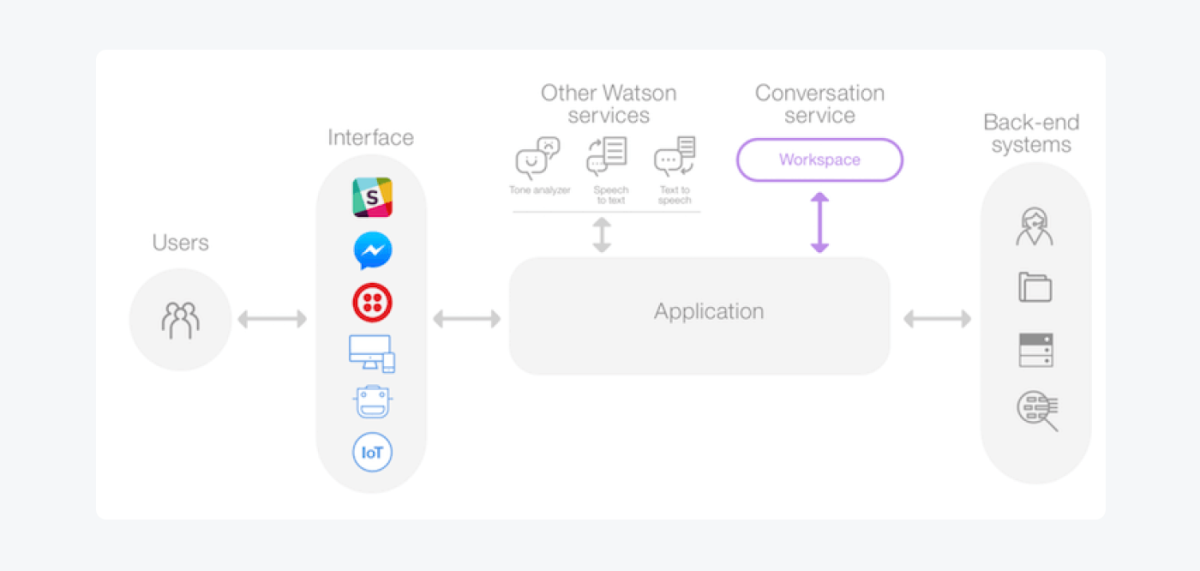
watsonx Assistant offers solid NLU, enterprise governance, and the option to deploy on IBM Cloud, AWS, or on-prem. Compliance teams in healthcare, finance, and government land here.
Pros
- Lite plan is free up to 1,000 monthly active users and 10,000 messages/month
- Solid NLU and intent recognition
- On-prem option for compliance-heavy industries
- Broad SDK coverage
Cons
- Steeper learning curve than SMB tools
- UI is built for enterprise admins, not solo developers
Pricing:
- Lite—free (1,000 MAU + 10,000 messages/month, no credit card)
- Plus—from $140/mo (1,000 MAU included)
- Additional messages on Plus—$0.0014 per message
- Enterprise—custom pricing with SOC 2, HIPAA, FedRAMP, on-prem options
9. Google Dialogflow CX
Best for: Voice and multi-channel enterprise flows on Google Cloud.
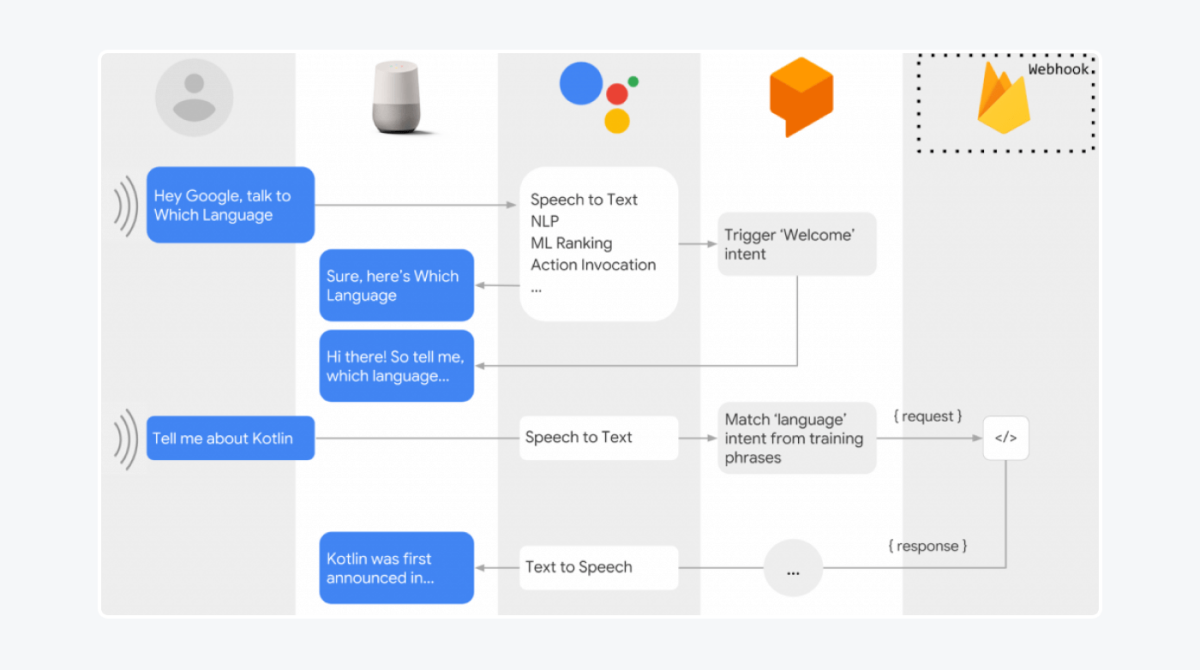
Dialogflow CX (now formally called Conversational Agents) is Google’s visual conversational AI builder for complex flows, with native voice support and direct Vertex AI integration. State-machine conversations are its native model. New customers get a $600 trial credit (valid 12 months), plus a separate $1,000 credit for the Generative AI features.
Pros
- Native voice and IVR capabilities
- Visual flow editor for state-machine conversations
- Integrates with Vertex AI and Gemini
Cons
- Two surfaces (Dialogflow ES vs. CX) can confuse newcomers
- Per-request / per-session pricing requires capacity planning upfront
Pricing:
- $600 trial credit for new customers, valid 12 months
- $1,000 in additional credits for Generative AI features
- CX deterministic flows—$20 per 100 chat sessions
- CX voice sessions—$45 per 100 voice sessions
- CX with Generative AI—$0.012 per request (text)
- ES (legacy)—$0.002 per text request
10. Rasa Pro
Best for: Code-first teams that want full control and self-hosting.
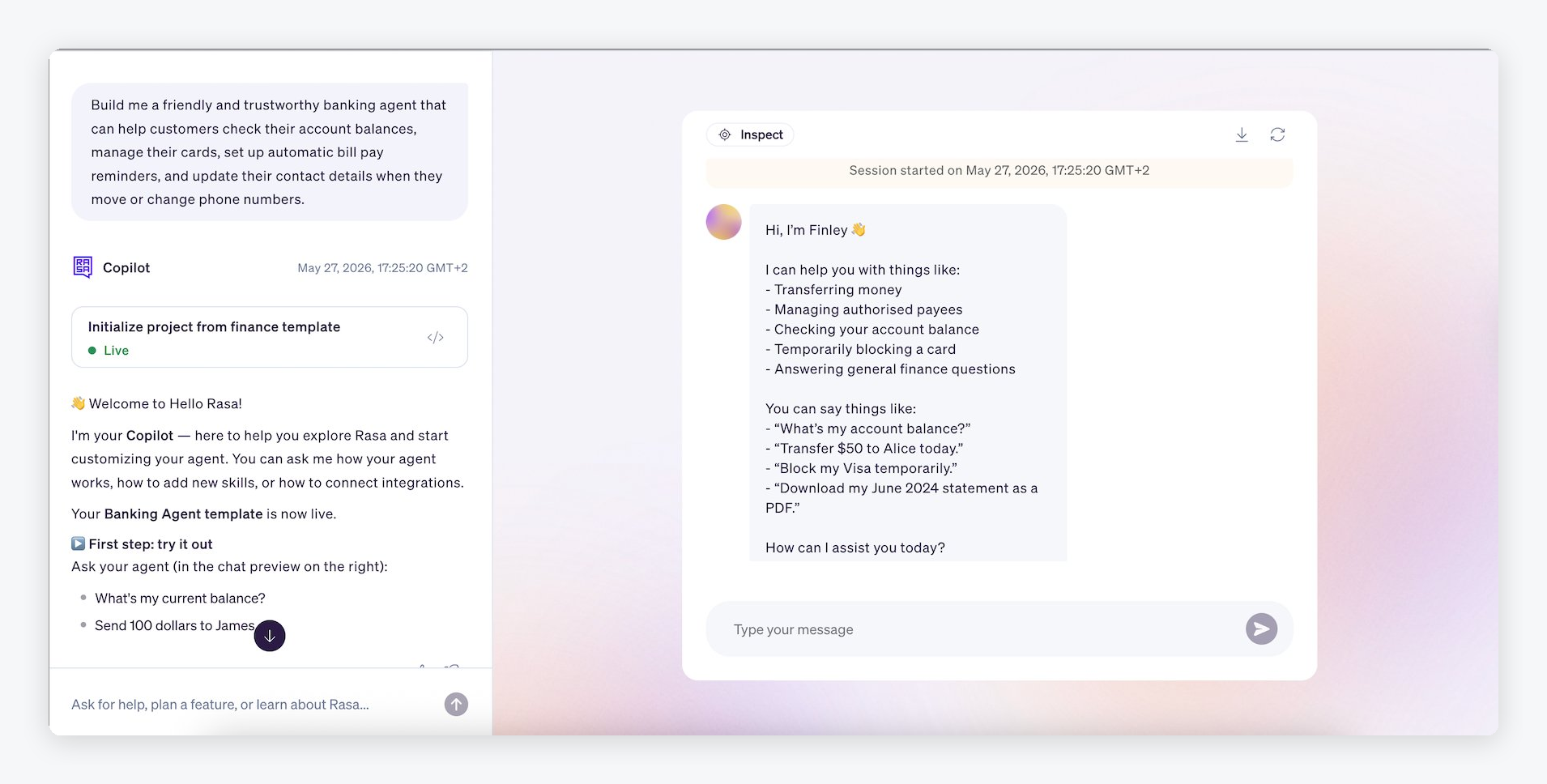
Rasa is one of the most-used open-source conversational AI frameworks. The OSS core is free; Rasa Pro adds enterprise features, observability, and a commercial license. Teams with Python engineers and a strict data-residency story land here.
Pros
- Self-host for full data ownership and compliance
- Python-first, with room to customize at every layer
- Bring-your-own-LLM for hybrid generative plus scripted flows
Cons
- Requires Python engineering capacity
- No managed widget or inbox included
Pricing:
- Rasa Open Source—free, self-hosted (Apache 2.0 license)
- Rasa Pro—commercial license with CALM, analytics, and observability; sales-led
- Rasa Platform—Pro plus Rasa Studio (no-code UI); enterprise-only
- Plus your own infrastructure, LLM, and engineering costs
Read more: Learn what a chatbot is and how to create a chatbot for your website. Also, discover the essential chatbot benefits and some top real-life bot use cases.
Try an AI agent for free
Free Chatbot APIs Worth Trying in 2026
“Free” means different things across vendors. Here’s what each free tier actually gives you.
- Tidio. Free plan includes the JavaScript widget, REST API access, and a one-time pool of 50 Lyro AI conversations to test the AI agent. Best for small sites that want a working live chat with a Lyro trial run.
- HubSpot. Free CRM tier includes the Conversations API, the rule-based chatbot builder (Chatflows), and a shared inbox. AI-powered answers require Professional or Enterprise.
- ManyChat. Free plan covers Instagram and Facebook Messenger with up to 25 active contacts per month (down from 1,000 in March 2026). Best for testing the platform; paid plans start at $14/mo.
- IBM watsonx Assistant (Lite). Free for up to 1,000 monthly active users and 10,000 messages per month, no credit card. Best for prototyping enterprise-grade NLU.
- Hugging Face Inference Providers. Free tier with rate limits; hosts thousands of open-source LLMs. Best for experimenting with open models (Llama, Mistral, Qwen) without GPU rental.
- Cohere. Free Trial API key with 1,000 calls per month across all models. Trial keys aren’t allowed for production use.
- Google Gemini API. Free tier on Gemini 3 Flash, 3.1 Flash-Lite, and 2.5 Flash via AI Studio, with daily request quotas. Best for multimodal chatbots.
- Rasa Open Source. Fully free, self-hosted. Best for teams with Python engineers who want full data ownership.
If you want a free API with zero engineering investment, start with Tidio or HubSpot. If you want a free API to experiment with raw LLMs, start with Hugging Face, Gemini, or Cohere.
How to Choose the Right Chatbot API
Five questions narrow the field quickly. The first two matter more than the rest.
- Who will build and maintain the bot? If a marketer or support ops lead owns the project, choose a managed platform: Tidio, HubSpot, or ManyChat. If an engineering team owns it, OpenAI, Rasa, or watsonx give you the room to customize.
- What’s the channel mix? Web-only deployments fit Tidio, Intercom, or HubSpot. WhatsApp-heavy traffic points to Wati or Tidio. Voice and phone require Dialogflow CX or OpenAI’s Realtime API.
- How custom is the workflow? Off-the-shelf support fits a platform. Custom data lookups, transactions, or domain reasoning need an LLM API.
- What are the compliance constraints? Verify HIPAA, GDPR, and SOC 2 coverage with each vendor. For strict residency, prefer self-hosted Rasa or watsonx on-prem. Don’t forget LLM-specific risks either—ensuring prompt injection prevention and API security is just as vital as regulatory compliance.
- What’s the cost shape? A predictable monthly bill means a platform subscription. Pay-as-you-go means LLM tokens; set budgets and caps in your first week.
Measuring Chatbot Effectiveness
A chatbot is worth what it saves or earns. Four numbers tell you whether yours is working.
- Containment rate. Share of conversations resolved without a human. Lyro, for example, automates up to 70% of common customer questions, with a 67% average across Tidio customers.
- CSAT after bot resolution. A high containment rate is meaningless if satisfaction craters.
- Time to first response and time to resolution. Both should drop versus your pre-bot baseline.
- Conversion lift (for sales bots). Compare conversion on sessions that engaged the bot vs. sessions that didn’t, segmented by traffic source.
Set caps on tokens and message volume during your first month. It’s cheap insurance against runaway prompts and abuse.
FAQs
A chatbot API is a programmatic interface that lets developers send messages to a chatbot engine and receive replies, usually over HTTPS using JSON. It’s how a chatbot gets embedded in a website, mobile app, or CRM without rebuilding the conversational logic from scratch.
Tidio, HubSpot, ManyChat, and IBM watsonx Assistant (Lite) all offer permanently free tiers that include API access, though each comes with limits: Tidio gives a one-time 50 Lyro AI conversations, ManyChat caps at 25 active contacts per month, watsonx Lite covers 1,000 monthly active users and 10,000 messages, and HubSpot’s free chatbots are rule-based unless you pay for AI add-ons. OpenAI offers a one-time $5 trial credit. Rasa is free and open-source if you can self-host.
ChatGPT is the consumer chat product. The OpenAI API is the developer interface to the same underlying models (GPT-4.1, GPT-4o, o-series). Use the API when you want to build your own chatbot.
Two paths. Build from scratch using a model API like OpenAI, Anthropic, or Cohere: most flexible, longest time to value. Or use a managed platform like Tidio that exposes its chatbot via API: fastest to launch, with channels, analytics, and human handoff included. Most SMBs should start with the second option and move to the first only if they have engineering capacity and a specific need.
Any language that can make an HTTPS request: Python, JavaScript / Node, Go, Ruby, Java, PHP, .NET, and Swift are all officially supported by at least one of the APIs in this guide. Python and Node have the deepest SDK coverage across vendors.
Modern LLM-backed chatbots like Tidio Lyro, Ada, and anything built on OpenAI, Gemini, or watsonx handle dozens of languages by default. Rule-based platforms require translated flows per language.
Tidio and Wati are the most direct paths. Pick Wati if WhatsApp is your only channel; pick Tidio if you also need a website widget and a unified inbox.