
Key takeaways
- Best for small and mid-sized e-commerce and support teams: Tidio, with a free plan, paid plans from $24.17 a month on annual billing, and the Lyro AI agent.
- Best for AI-first support teams: Intercom, which charges seats plus $0.99 for each Fin outcome.
- Best for visual flow building: Landbot, with a free plan and paid plans from $36 a month on annual billing.
- Best for social DMs: ManyChat and Chatfuel, built around Instagram, Messenger and WhatsApp.
- Free options exist. Tidio, HubSpot, Landbot, Botpress, ManyChat, Freshchat and Crisp all have a free plan with limits.
ChatBot.com, made by Text (the company behind LiveChat), is an AI chatbot builder with a website chat widget, an inbox and a Shopify connection. Its prices are public and its plans are easy to read. Teams still look elsewhere once per-user pricing and a monthly cap on AI resolutions start to shape the bill. This page compares 10 chatbot tools that can do the same job: put an AI agent or chatbot on your website, answer customers, and hand over to a person. We used each vendor's pricing page and its G2 profile, not hands-on trials of every tool. Tidio is listed first because the list is ordered for small and mid-sized teams, especially online stores. It gets the same template and the same real limits as the other nine.
ChatBot.com alternatives at a glance
Short on time? Here is each tool and what it does best:
- Tidio: live chat, tickets and the Lyro AI agent for online stores and small teams.
- Intercom: an AI agent and inbox for support teams that pay per outcome.
- HubSpot: free chat if your team already runs on HubSpot's CRM.
- Landbot: a visual, no-code builder for conversational flows.
- Botpress: a builder for teams that want to configure AI agents in depth.
- Chatbase: an AI agent trained on your own content, priced by message credits.
- ManyChat: Instagram and Messenger automation for social-first brands.
- Chatfuel: WhatsApp, Instagram and Facebook bots with AI credits.
- Freshchat: a free chat inbox for up to 10 agents.
- Crisp: flat workspace pricing for small teams.
| Tool | Best for | Starting price | Free plan | AI agent | G2 rating |
|---|---|---|---|---|---|
| Tidio | Small and mid-sized e-commerce and support teams | $24.17/mo, annual | Yes, 50 billable conversations | Lyro | 4.6 (2,076) |
| Intercom | AI-first customer support | $29/seat/mo, annual, plus $0.99 per Fin outcome | Trial only | Fin | 4.5 (3,930) |
| HubSpot | Teams on the HubSpot CRM | Free for 2 users; Starter from $7/seat/mo | Yes | Customer Agent (credits) | 4.4 (3,018) |
| Landbot | Visual conversational flows | $36/mo, annual ($45 monthly) | Yes, 100 chats | AI chats included from Starter | 4.7 (334) |
| Botpress | In-depth AI agent setup | $150/mo, annual | Yes, 100 conversations | Included | 4.5 (513) |
| Chatbase | An AI agent trained on your content | $32/mo, yearly ($40 monthly) | 7-day trial | Message credits | 4.8 (46) |
| ManyChat | Social DM automation | $14/mo, annual ($17 monthly) | Yes, 25 contacts | AI add-ons | 4.5 (165) |
| Chatfuel | WhatsApp, Instagram and Facebook bots | $18/mo, yearly ($20 monthly) | Free trial | AI credits | 4.4 (45) |
| Freshchat | A free chat inbox for many agents | $19/agent/mo, annual | Yes, up to 10 agents | Freddy, $49 per 100 sessions | 4.4 (504) |
| Crisp | Small teams on a flat price | $45/workspace/mo | Yes, 2 seats | AI credits included | 4.5 (204) |
HubSpot's rating is for Service Hub. Prices change often, so confirm each one with the vendor before you commit.
How we evaluated these alternatives
ChatBot.com's core job is a website chatbot with an AI agent, a human handover and a few sales and support integrations. We kept tools that still do that job and left out frameworks you code from scratch, form builders and tools that are being retired. Five criteria set the order:
- Fit for the job: support, e-commerce, social DMs or flow building.
- AI agent: what answers on its own, and how the vendor meters it.
- Price on the public page: the unit (seat, workspace, conversation or contact) and the billing basis.
- Free plan or trial: how far you get before you pay.
- Reviews: the G2 score, which shows how users rate the product.
Why teams look for a ChatBot.com alternative
ChatBot.com does several things well. Its AI Agent replies in 48 languages, its plans include a ticketing inbox and workflow automation, and it sells through Shopify. It has 4.5 out of 5 on G2. If you are one or two agents on the Essential plan, $19 per user per month on annual billing is a low entry price. Teams usually move for these reasons:
- Pricing is per user. Essential is $19 per user per month on annual billing ($25 monthly), and Growth is $79 ($99 monthly). Every extra agent adds the full price.
- AI resolutions are capped. Essential includes 10 AI resolutions a month and Growth includes 200, per its pricing page. A resolution is a customer question the AI solved on its own.
- Extra resolutions cost extra. A package of 50 more resolutions is $49.50, which works out to about $0.99 each.
- The step up is large. Going from Essential to Growth moves the user price from $19 to $79, and the plan gives you more AI resolutions, agents and workflow rules at once.
- There is no free plan. The pricing page offers a free 14-day trial, so you cannot keep a free tier running while you grow.
The 10 best ChatBot.com alternatives in 2026
1. Tidio: best for small and mid-sized e-commerce and support teams
Tidio puts website chat, tickets, email and the Lyro AI agent in one inbox. It replaces ChatBot.com when your visitors mostly ask support and buying questions and you do not want a seat-based bill. Flows handle structured jobs such as lead capture and cart reminders, and Lyro answers open questions from your help content.
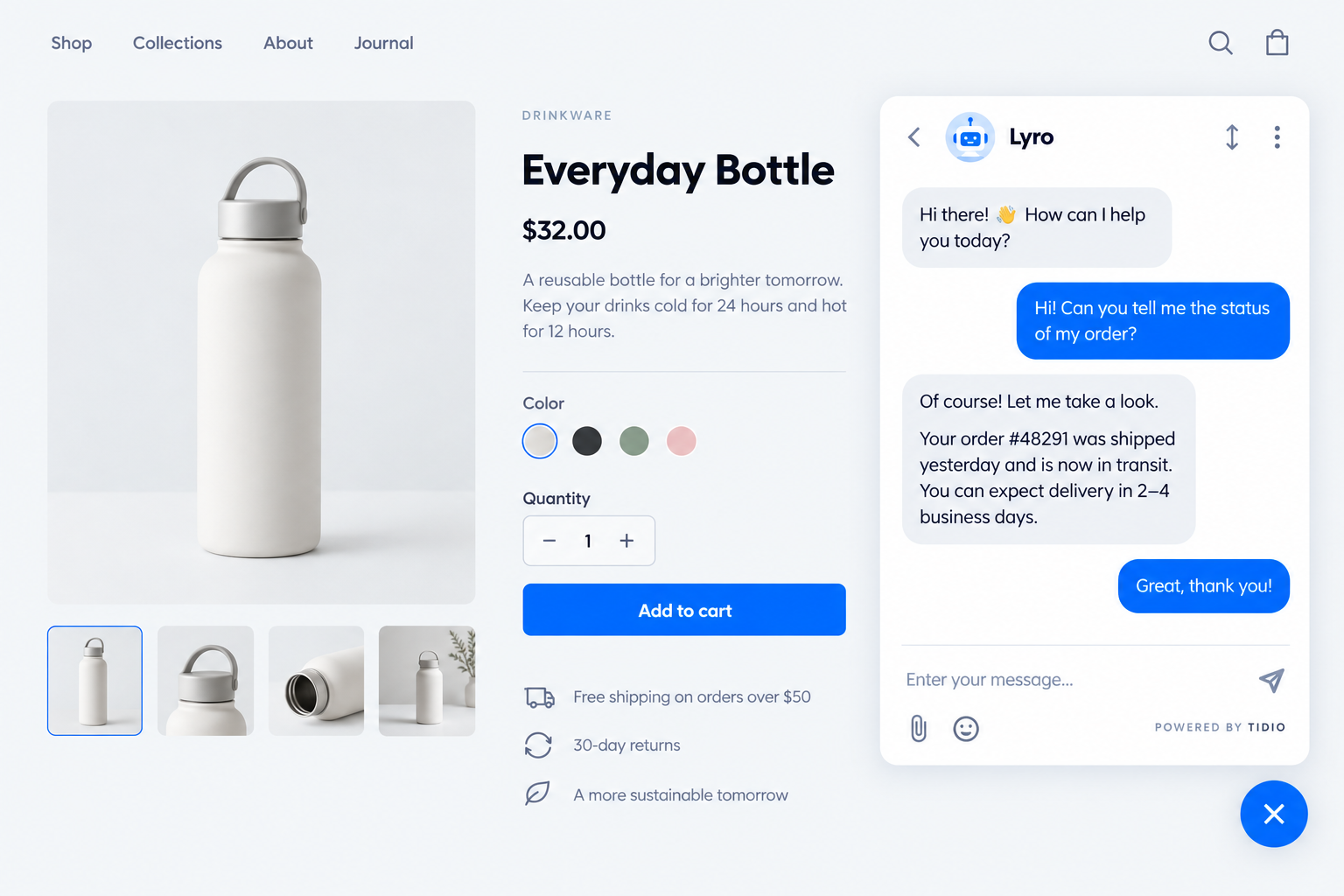
Tidio fits these teams:
- Shopify stores that want cart preview and order history next to the chat.
- Small and mid-sized teams that rely on automation and AI instead of hiring for every spike in questions.
- Teams with many repeat questions, since Lyro can resolve up to 75% of support requests.
- Companies in retail, SaaS and services whose website visitors expect fast replies.
- Teams that handle chat, email, Messenger, Instagram and WhatsApp in a single inbox.
Key features:
- Lyro AI agent: answers from your knowledge base and hands the chat to a person when it cannot help.
- Flows: a visual builder for lead capture, product suggestions and follow-ups.
- Help Desk: tickets, live chat and email in one shared inbox.
- Integrations: HubSpot and other tools, plus Shopify, WordPress and WooCommerce.
Pros
- A free plan covers 50 billable conversations and up to 10 seats, and a 7-day trial unlocks every feature.
- Chat, tickets and AI share one inbox, so nobody repeats information between tools.
- You pay per conversation, not per seat, on the plans with up to 10 agents.
Cons
- Conversations, Lyro and Flows are priced separately, so you only pay for what you use, but there are a few quotas to watch.
- Plus starts at $300 a month plus usage, and Premium is quoted by the sales team.
- Tidio is built for small and mid-sized teams, so complex enterprise queues may suit a larger suite better.
Pricing: from Tidio's pricing page, billed annually with monthly in brackets: Free $0; Starter $24.17/mo ($29); Growth from $49.17/mo ($59); Plus from $300/mo plus usage; Premium on request. Lyro starts at $32.50/mo ($39) for 50 Lyro conversations, and every account gets its first 50 free.
Rating: G2 4.6/5 (2,076 reviews).
Versus ChatBot.com: you gain a free plan, seat-free pricing and Shopify tools in the inbox. You give up ChatBot.com's cheaper single-agent entry price.
Try Tidio free
2. Intercom: best for AI-first customer support
Intercom suits support teams that want a messenger, a shared inbox and an AI agent in one product. Its Fin AI agent covers service and sales conversations, and the bill has two parts: seats and usage.
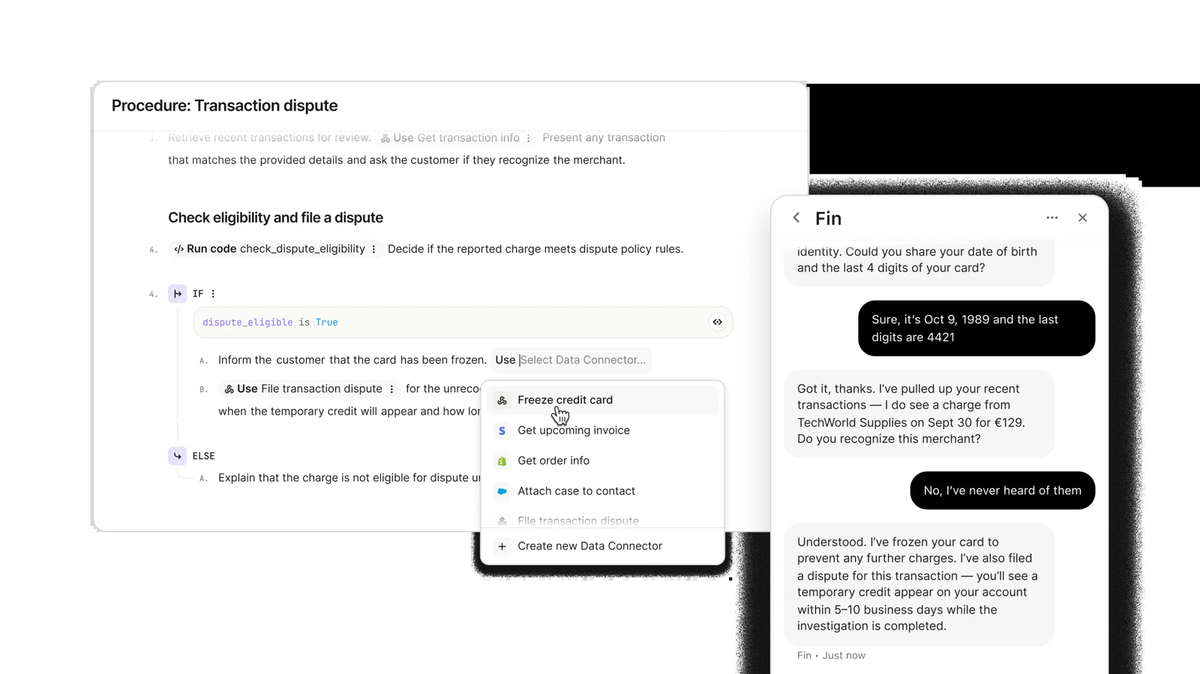
Key features:
- Fin AI agent that answers from your help content.
- Messenger live chat with a shared inbox and ticketing.
- Workflow builder and round-robin assignment on higher plans.
- Copilot, an optional add-on that assists agents.
Pros
- You pay for Fin only when it resolves a conversation.
- It has the largest review base here and a mature ticketing inbox.
- Workflow and multi-inbox tools help as the team grows.
Cons
- The bill has two parts, seats plus outcomes, so it moves with volume.
- Copilot is an extra $29 per agent per month on annual billing.
- It is aimed at support teams, so a simple lead-capture bot may be more than you need.
Pricing: per Intercom's pricing page, helpdesk seats start at $29 per seat per month billed annually, and Fin costs $0.99 per outcome.
Rating: G2 4.5/5 (3,930 reviews).
Versus ChatBot.com: you gain a deeper inbox and outcome-based AI pricing. You give up ChatBot.com's lower entry price per user.
3. HubSpot: best for teams on the HubSpot CRM
HubSpot makes sense when your marketing and sales teams already live in its CRM. Chat conversations attach to contact records, so everyone sees the history.
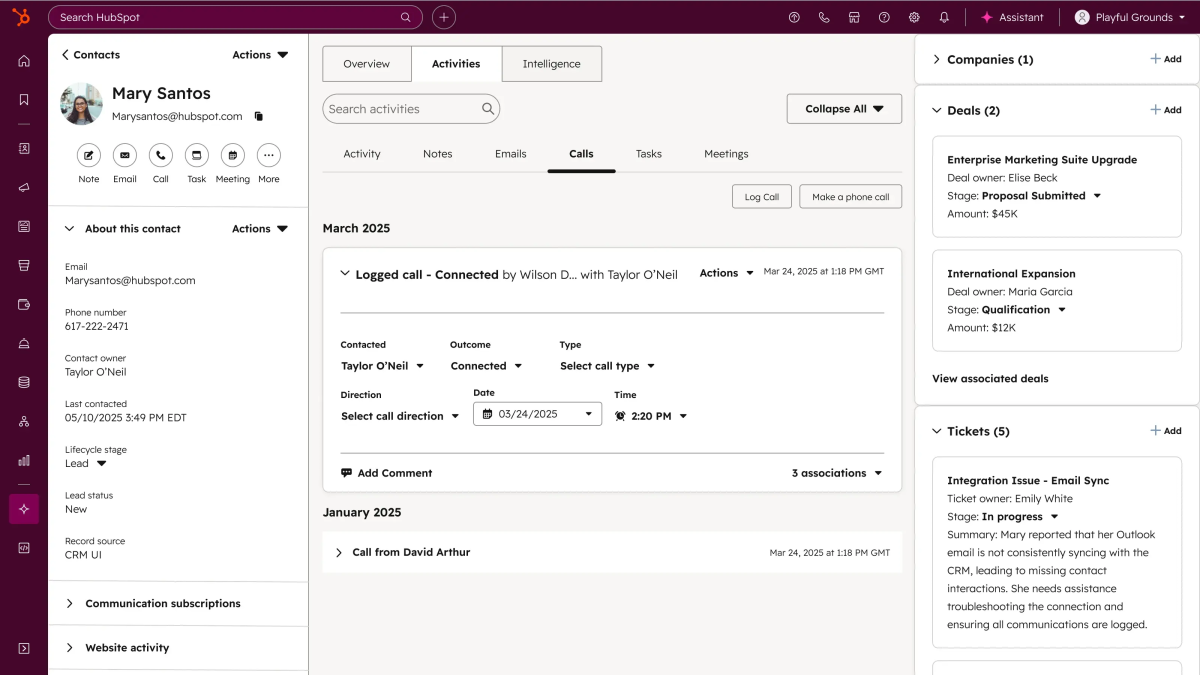
Key features:
- Free live chat and a shared inbox with the free tools.
- Customer Agent, an AI agent that uses HubSpot Credits.
- Ticketing and a chatbot builder on paid Service Hub plans.
- Native sync with HubSpot contacts and deals.
Pros
- The free plan covers up to 2 users.
- Contact history lives in one CRM.
- Paid plans start low per seat.
Cons
- Customer Agent runs on credits, which is another meter to plan for.
- Features sit across several hubs, so a chat-only team pays for a platform.
- The price per seat rises sharply on Professional.
Pricing: per HubSpot's pricing page, free tools for up to 2 users, and Service Hub Starter from $7 per seat per month.
Rating: G2 4.4/5 (3,018 reviews) for Service Hub.
Versus ChatBot.com: you gain a CRM and a free tier. You give up a chatbot-first product.
4. Landbot: best for visual conversational flows
Landbot is a no-code builder where you draw a conversation as blocks. Teams use it for lead capture, qualification and WhatsApp bots, and paid plans include AI chats.
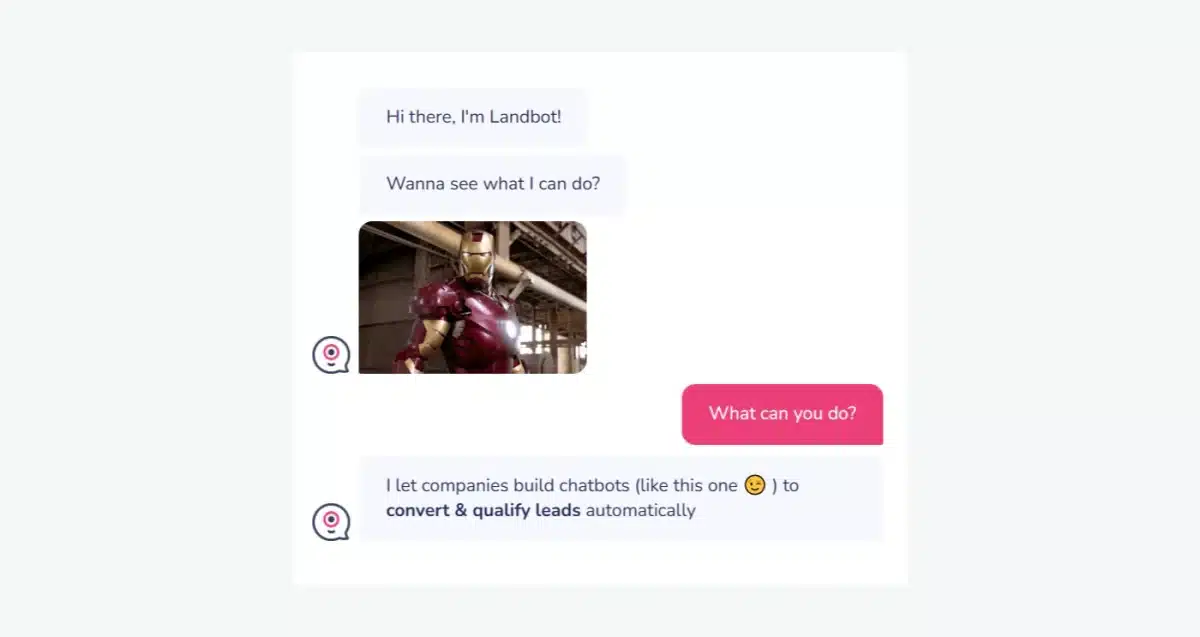
Key features:
- Drag-and-drop builder with templates.
- AI chats included on paid plans.
- Integrations such as Mailchimp and Segment.
- WhatsApp with your own number from the Professional plan.
Pros
- A free plan covers 100 chats a month.
- The visual canvas is easy to read and edit.
- It holds a 4.7 on G2 from a sizeable review base.
Cons
- The Free plan includes no AI chats.
- Landbot branding stays until the Professional plan.
- Extra chats cost $0.05 each beyond your allowance.
Pricing: per Landbot's pricing page, Free is $0 for 100 chats a month; Starter is $36 a month billed annually ($45 monthly) with 500 chats and 100 AI chats; Professional is $88 billed annually ($110 monthly) with 2,500 chats.
Rating: G2 4.7/5 (334 reviews).
Versus ChatBot.com: you gain a free plan and a flow canvas. You give up a built-in ticketing inbox. See our Landbot review for more.
5. Botpress: best for in-depth AI agent setup
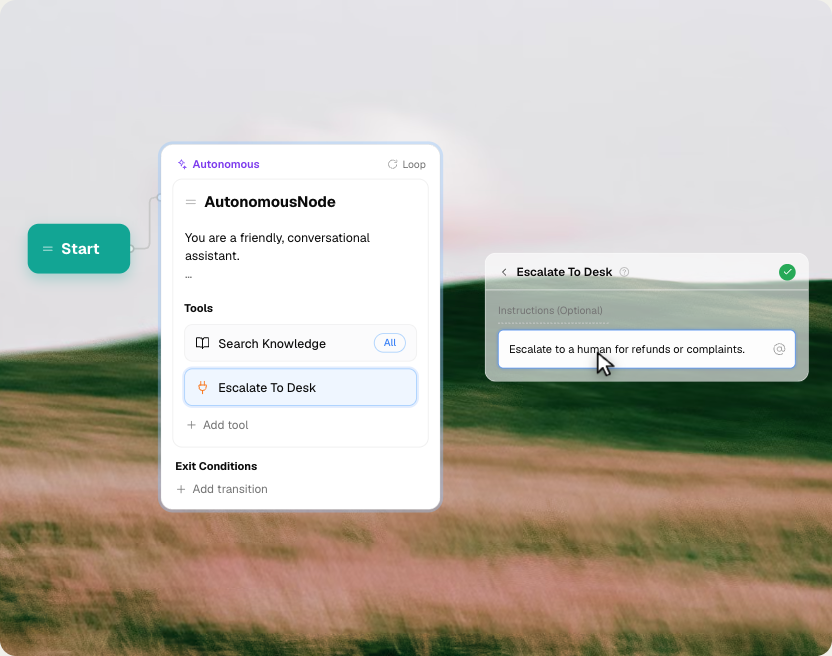
Botpress is a builder for teams that want to configure how an AI agent thinks, acts and hands off. It prices by conversation, not by seat, and includes unlimited AI agents.
Key features:
- Studio workflow editor for AI agents.
- Unlimited AI agents on every plan.
- AI usage covered: every conversation includes $0.10 of AI spend.
- Help Center and a resolution SLA on the Free plan.
Pros
- Free plan with 100 conversations a month and 3 seats.
- Seat-free pricing.
- Room to build custom behavior.
Cons
- Plus starts at $150 a month on annual billing, a big step from Free.
- More setup time than a template-based tool.
- Extra conversations come in packs of 100 for $65.
Pricing: per Botpress's pricing page, Free is $0 for 100 conversations a month; Plus is $150 a month billed annually with 250 conversations.
Rating: G2 4.5/5 (513 reviews).
Versus ChatBot.com: you gain depth and seat-free pricing. You give up a gentle start.
6. Chatbase: best for an AI agent trained on your content
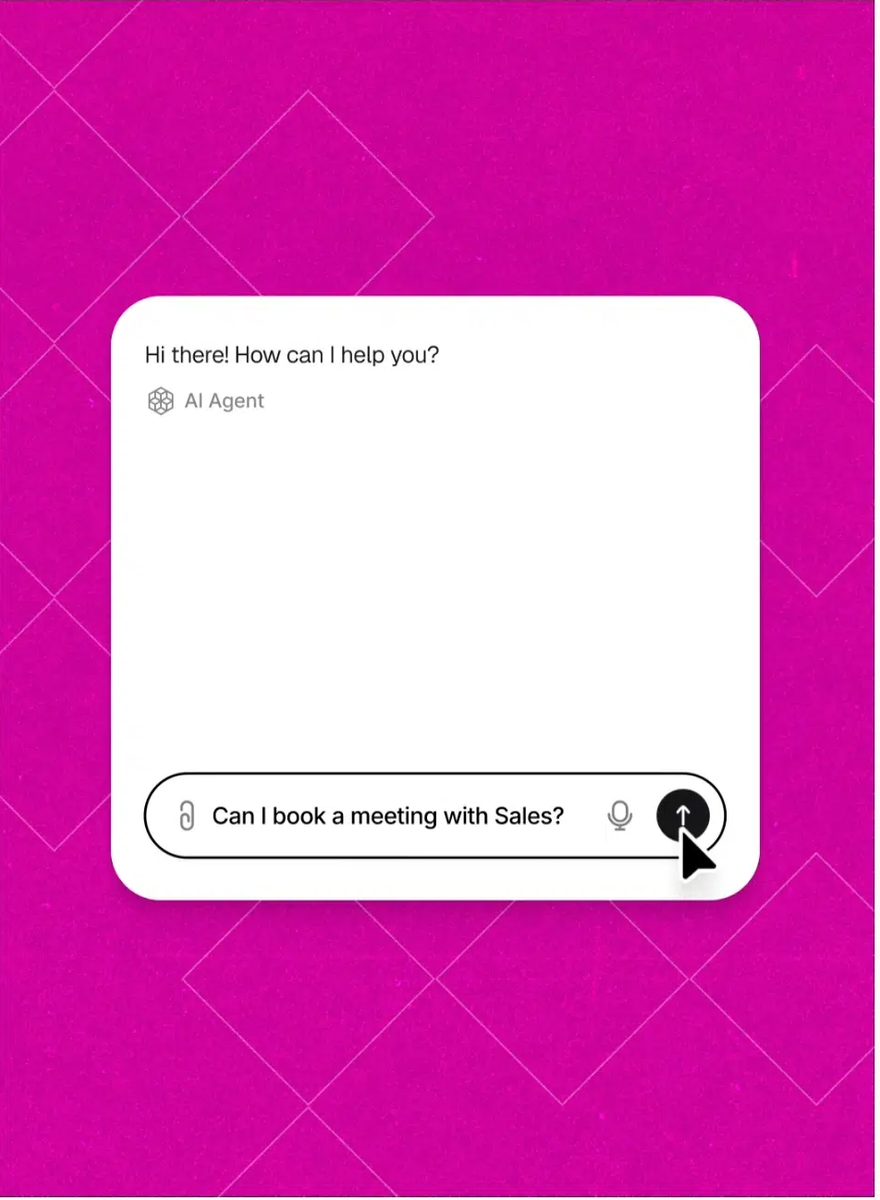
Chatbase builds an AI agent from your documents, website pages and tickets, and you embed it on your site. It is closer to a pure AI agent than a flow builder.
Key features:
- Agent trained on files, URLs and help content.
- Advanced models on every plan.
- Helpdesk inbox and voice API on Basic and above.
- Message credits as the usage meter.
Pros
- Setup is quick: add content, test, embed.
- Plans stay small and flat.
- 7-day trial.
Cons
- Usage is metered in message credits, 700 a month on Hobby.
- Hobby includes 2 members; seats rise with each plan.
- It has few reviews on G2 so far.
Pricing: per Chatbase's pricing page, Hobby is $32 a month billed yearly ($40 monthly) for 700 message credits; Basic is $120 yearly ($150) for 4,000; Business is $400 yearly ($500) for 15,000.
Rating: G2 4.8/5 (46 reviews).
Versus ChatBot.com: you gain a quick content-trained agent. You give up flows and a mature inbox.
7. ManyChat: best for Instagram and Messenger automation
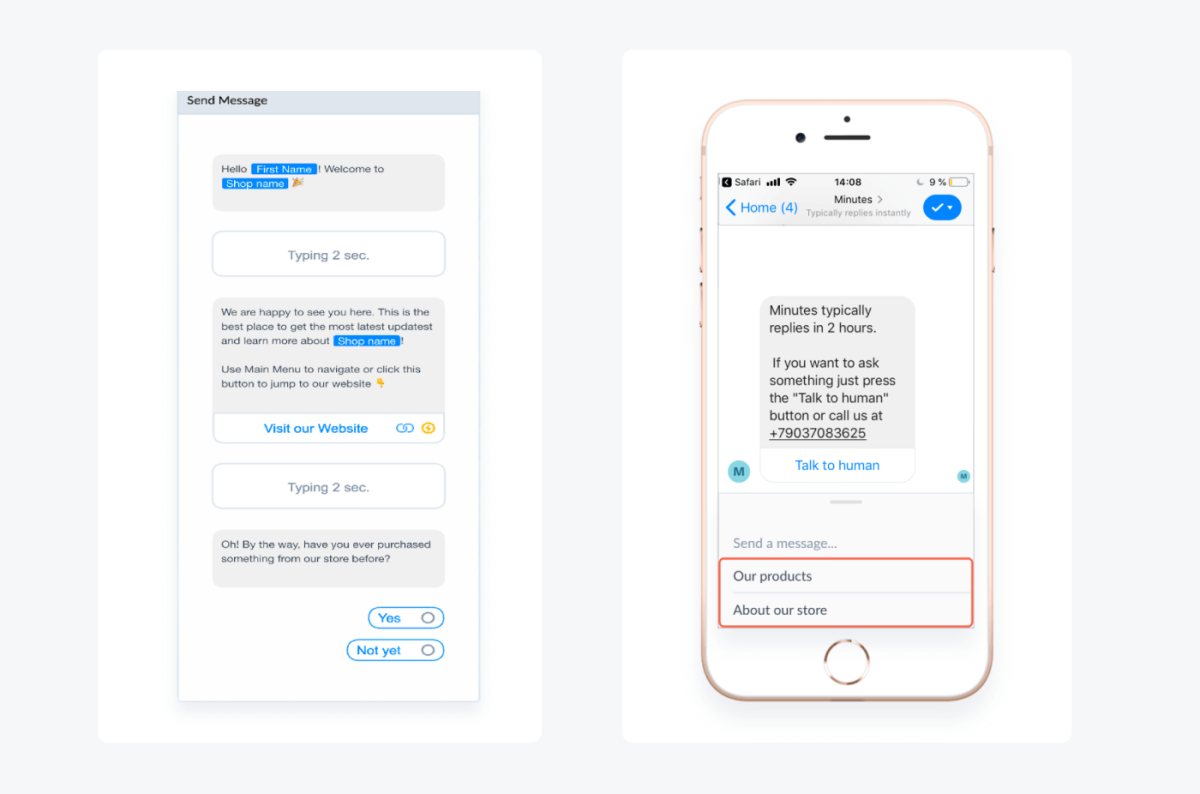
ManyChat is built around social channels. It replies to comments, welcomes new followers and moves the conversation into DMs.
Key features:
- Automation builder with 60+ templates.
- Instagram, TikTok, Facebook Messenger, Telegram and WhatsApp channels.
- Basic inbox for replies.
- Comment-to-DM automations.
Pros
- Free plan for 25 active contacts.
- Strong templates for social growth.
- Low entry price.
Cons
- Price follows active contacts, so it rises with your audience.
- The Free plan shows "Powered by Manychat".
- It centers on social DMs, not a website support desk.
Pricing: per ManyChat's pricing page, Free is $0 for 25 active contacts; Essential is $14 a month billed annually ($17 monthly).
Rating: G2 4.5/5 (165 reviews).
Versus ChatBot.com: you gain social-first automation. You give up a website-first inbox. See our ManyChat alternatives for more.
8. Chatfuel: best for WhatsApp, Instagram and Facebook bots
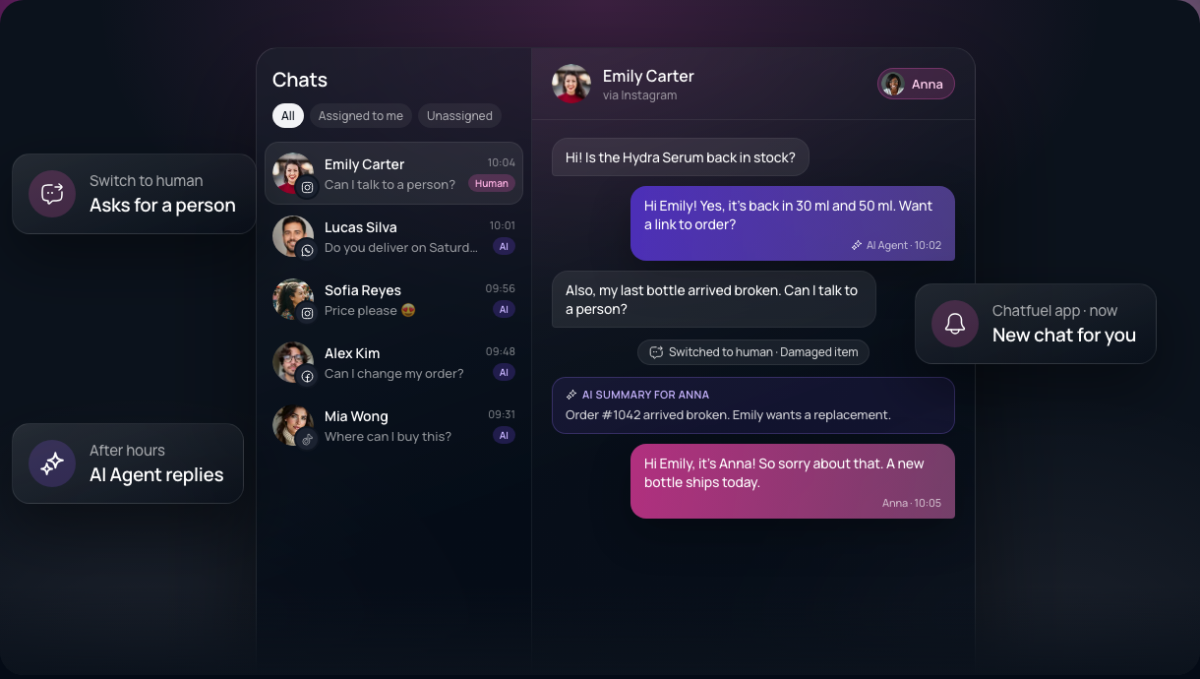
Chatfuel focuses on messaging apps. Its Business plan covers auto-replies to comments, selling in chat, lead qualification and bulk WhatsApp campaigns.
Key features:
- Auto-replies to Reels and post comments.
- Sell products and services in chat.
- Qualify and score leads from ads.
- Bulk WhatsApp campaigns and meeting booking.
Pros
- Built for WhatsApp and Instagram.
- Entry price is low.
- Free trial.
Cons
- Plans include limited AI credits ($20 a month on Business S).
- It has a small G2 review base.
- It is less suited to a website help desk.
Pricing: per Chatfuel's pricing page, Business S is US$18 a month billed yearly (US$20 monthly), with US$20 of AI credits a month.
Rating: G2 4.4/5 (45 reviews).
Versus ChatBot.com: you gain messaging-app depth. You give up a website chat focus. See our Chatfuel review.
9. Freshchat: best for a free chat inbox for many agents
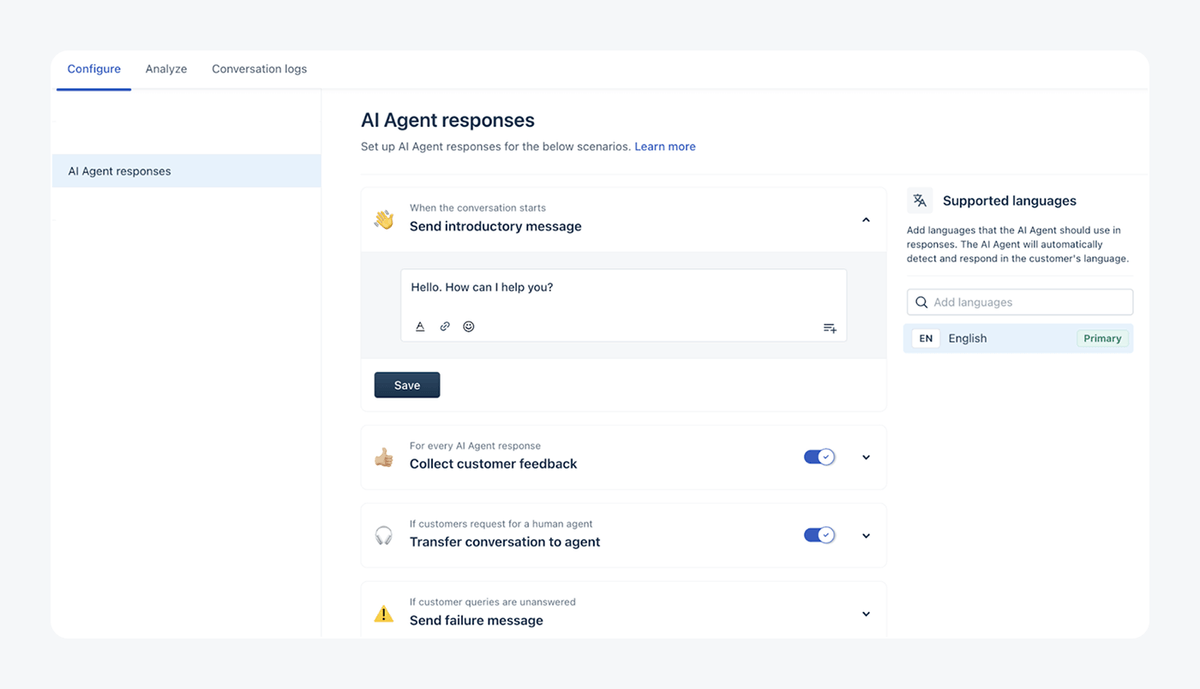
Freshchat is Freshworks' messaging product. Its free plan covers up to 10 agents with a chat widget, a shared inbox and email.
Key features:
- Chat widget for web and mobile apps.
- Shared inbox with roles and permissions.
- Freddy AI Agent on Growth and above.
- Social messengers and text messaging on paid plans.
Pros
- Free plan for up to 10 agents.
- Paid plans start at $19 per agent.
- Part of the wider Freshworks suite.
Cons
- Freddy AI Agent costs $49 per 100 sessions.
- Pricing is per agent.
- Copilot is a separate add-on.
Pricing: per Freshworks' pricing page, Free is $0 for up to 10 agents; Growth is $19 per agent per month billed annually.
Rating: G2 4.4/5 (504 reviews).
Versus ChatBot.com: you gain a free team inbox. You give up a chatbot-first product. See our Freshchat review.
10. Crisp: best for small teams on a flat workspace price
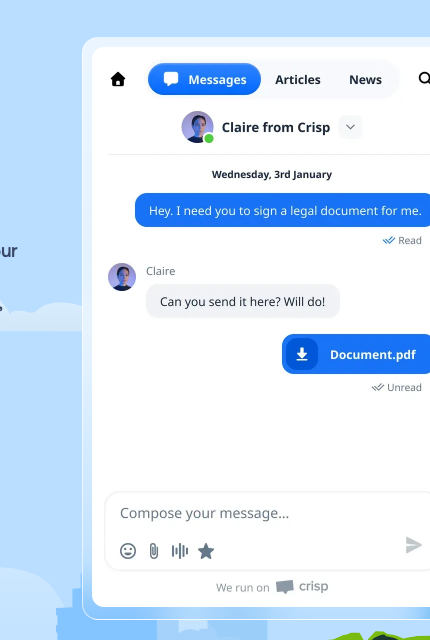
Crisp charges per workspace, not per agent. Small teams get a shared inbox, a chat widget and a knowledge base for one monthly price.
Key features:
- Website chat widget and shared inbox.
- Knowledge base and chatbot.
- E-commerce integrations including Shopify, WooCommerce and Prestashop.
- AI credits included on paid plans.
Pros
- Free plan with 2 seats.
- Flat price per workspace.
- Paid plans include 4 seats on Mini.
Cons
- Mini includes about 90 automated conversations.
- Mini starts at $45 a month, higher than some per-seat entry prices.
- The AI agent is capped by plan.
Pricing: per Crisp's pricing page, Free is $0 for 2 seats; Mini is $45 per workspace per month; Essentials is $95.
Rating: G2 4.5/5 (204 reviews).
Versus ChatBot.com: you gain a flat price for up to four seats. You give up a built-in AI sales skill. See our Crisp review.
Tidio vs ChatBot.com: side-by-side
ChatBot.com and Tidio overlap on website chat, AI agents and a ticketing inbox. This table shows where each one is stronger.
| Tidio | ChatBot.com | |
|---|---|---|
| Built for | Small and mid-sized e-commerce and support teams | Support and sales chat with an AI agent |
| Pricing unit | Conversations, with up to 10 seats on self-serve plans | Per user |
| Entry price for one agent | $24.17/mo, annual | Stronger: $19/user/mo, annual |
| Free plan | Yes, 50 billable conversations | Free 14-day trial only |
| AI agent | Lyro, which can resolve up to 75% of support requests | AI Agent with 10 or 200 resolutions a month, extra 50 for $49.50 |
| Language coverage | See Tidio's pricing page for Lyro languages | Stronger: AI Agent in 48 languages |
| E-commerce | Shopify cart preview and order history | Live Shopify catalog and an AI sales skill |
| Channels | Live chat, email, Messenger, Instagram, WhatsApp | Website chat, Messenger, WhatsApp, SMS |
| Ticketing and inbox | Help Desk with tickets, chat and email | Inbox and ticketing system |
| G2 rating | 4.6 (2,076 reviews) | 4.5 (25 reviews) |
Need a free start or a seat-free bill? Start with Tidio's plans. If you are one or two agents who want a low per-user price and 48 languages, ChatBot.com stays a fair choice.
Compare Tidio plans for your team
How to switch from ChatBot.com
- Export what you can. Download conversation history, saved replies and the knowledge sources your AI Agent uses.
- List what the bot does today. Write down every skill, workflow rule and handover trigger.
- Rebuild the knowledge base. Upload the same help articles or URLs to the new tool so answers match.
- Rebuild your top flows. Start with the five questions customers ask most.
- Run both in parallel. Put the new widget on a few pages and compare resolved chats for a week.
- Check your contract dates. Switch after your billing period ends so you do not pay twice.
- Remove the old script. Delete the ChatBot.com code from your site so two widgets never show.
How to choose a ChatBot.com alternative
Match the tool to your bottleneck:
- You run an online store or a small support team. Choose Tidio.
- You want AI-first support and pay per outcome. Choose Intercom.
- Marketing and sales already use HubSpot. Choose HubSpot.
- You want to draw your own conversation flows. Choose Landbot.
- You want to configure AI agents in depth. Choose Botpress.
- You want an agent trained on your own content. Choose Chatbase.
- Your customers talk to you in Instagram DMs. Choose ManyChat.
- You sell over WhatsApp. Choose Chatfuel.
- You need a free inbox for a bigger team. Choose Freshchat.
- You have three or four agents and want one flat price. Choose Crisp.
Bottom line
ChatBot.com is a fair choice for one or two agents who want an AI agent, a ticketing inbox and a low per-user price. Look elsewhere when the per-user bill, the monthly cap on AI resolutions or the lack of a free plan starts to matter. If you run a store or a small support team, Tidio gives you chat, tickets and the Lyro AI agent from $24.17 a month, and a free plan to test first. If your customers live in Instagram or WhatsApp, look at ManyChat or Chatfuel first.
Try Tidio for your website
Related guides
- Best chatbot platforms
- Chatbot pricing
- Intercom alternatives
- LiveChat alternatives
- ManyChat alternatives
Frequently asked questions
ChatBot.com is an AI chatbot and AI agent product from Text, the company that also makes LiveChat. You add a chat widget to your website, train an AI agent on your help content, and hand conversations to a person when needed. Plans are priced per user.
For a small business or an online store, Tidio fits best because of its free plan, Lyro AI agent and conversation-based pricing. Crisp suits teams of three or four, and Freshchat gives up to 10 agents a free inbox.
Yes. Tidio, HubSpot, Landbot, Botpress, ManyChat, Freshchat and Crisp all have free plans with limits. ChatBot.com itself offers a free 14-day trial rather than a free plan.
Essential is $19 per user per month on annual billing ($25 monthly), and Growth is $79 ($99 monthly). Essential includes 10 AI resolutions a month and Growth includes 200. Extra packs of 50 resolutions cost $49.50.
Yes. Tidio's Help Desk puts tickets, live chat and email in one shared inbox, with assignment and analytics on higher plans. Complex enterprise queues may suit a larger suite better.
Lyro starts at $32.50 a month on annual billing ($39 monthly) for 50 Lyro conversations, and every account gets its first 50 free. Lyro can resolve up to 75% of support requests.
Yes, but plan to rebuild rather than copy. Flows and skills are specific to each product, so export your history and knowledge sources, then recreate your top flows in the new tool and run both for a week.
Yes. Tidio connects to Shopify and shows cart contents and order history in the inbox, and Lyro can answer order and product questions. Check the Growth plan for native Shopify actions.
Use live chat to support your customers in real-time