
Key takeaways
- Best for small and midsize SaaS teams: Tidio, with live chat, email, tickets, and the Lyro AI agent in one inbox, and a Jira integration that turns chats into issues.
- Best for AI-first SaaS support: Intercom, from $29 per seat a month, with the Fin AI agent billed at $0.99 per outcome.
- Best value per seat: Zoho Desk and Freshdesk. Zoho Desk is free for three users and Freshdesk starts at $19 per agent.
- Best for engineering-heavy teams: Jira Service Management, free for up to three agents.
- Price your busiest month, not an average one. Seats, AI resolutions, and add-ons all move the bill.
A SaaS support queue is not a retail one. Your customers are logged in, they pay by the month, and a stuck ticket can become a cancellation. Many of those tickets are bugs that need an engineer, so the help desk has to do more than answer email. We compared nine SaaS help desk tools that teams shortlist most often and checked every pricing page and G2 profile. For each one you get who it suits and where it stops, plus the full price with add-ons.
What is a SaaS help desk?
A SaaS help desk is ticketing and support software that the vendor hosts and you use in a browser for a monthly subscription. It gathers email, chat, and social messages into one shared inbox, turns each request into a ticket, and tracks it until it’s solved. Teams use it as a SaaS ticketing system for customer questions, and many tools add a knowledge base, automation, and AI.
The difference that matters is customer support versus internal IT support: Jira Service Management is an IT tool first, and the rest are built for customers. For the wider market, see our guide to help desk software, and for the ticket side the help desk ticketing system roundup.
The best SaaS help desk software at a glance
The best SaaS help desk for you depends on your team size and how technical your tickets are. Our top picks: Tidio for small and midsize teams that want chat, tickets, and AI in one inbox; Intercom for AI-first support with per-outcome pricing; and Zoho Desk for the lowest price per seat.
| Tool | Best for | Starting price | Free plan / trial | AI pricing | G2 rating |
|---|---|---|---|---|---|
| Tidio | Small and midsize teams that want chat, tickets, and AI | $24.17/mo billed annually ($29 monthly) | Free plan · 7-day trial | Lyro from $32.50/mo for 50 AI conversations | 4.6 (1,962) |
| Zendesk | Omnichannel support at scale | $19/agent/mo billed annually ($25 monthly) | 14-day trial | $1.50 to $2.00 per automated resolution | 4.3 (7,082) |
| Freshdesk | Email-first teams on a per-agent budget | $19/agent/mo billed annually | 14-day trial | 500 AI sessions free once, then $49 per 100 | 4.4 (3,773) |
| Intercom | AI-first support with a built-in Messenger | $29/seat/mo billed annually | 14-day trial | $0.99 per Fin outcome | 4.5 (3,913) |
| Help Scout | Email-style support for growing teams | $25/user/mo billed annually | Free for 5 users | $0.75 per AI resolution | 4.4 (431) |
| Zoho Desk | Lowest cost per seat, Zoho users | $7/user/mo billed annually ($9 monthly) | Free for 3 users · 15-day trial | AI agents from Express; Zia from Professional | 4.4 (7,954) |
| HubSpot Service Hub | Teams whose customer data lives in HubSpot | $7/seat/mo billed annually (Starter) | Free tools for 2 users | Customer Agent in HubSpot Credits, Professional and up | 4.4 (3,017) |
| HappyFox | Teams that want unlimited agents on higher plans | $24/agent/mo | 14-day trial, no card | HappyFox AI from $14/agent/mo | 4.5 (138) |
| Jira Service Management | Teams that escalate tickets to engineering in Jira | Free for 3 agents; Standard from $20/agent/mo | Free plan · 14-day trial | Virtual agent on Premium and up | 4.3 (986) |
How we chose these help desks
We started from the 18 help desks we reviewed for our help desk software research and added the SaaS-specific names that the top-ranking SaaS roundups and AI answers return most often. We kept nine with a clear best fit, public pricing, and a customer-facing queue at their core. The 2025 version of this list included Jitbit and Kayako; we dropped them for a thinner SaaS fit. Salesforce Service Cloud and ServiceNow sit in our enterprise help desk list, and self-hosted tools such as osTicket in our open-source help desk guide.
We judged every tool on the same six criteria:
- Channels. Email, live chat, social, messaging apps, and phone in one inbox.
- Ticketing and workflow. Assignment, priorities, SLAs, and automation rules.
- AI. Whether AI drafts replies or resolves tickets on its own, and how it’s billed.
- Integrations. CRM, billing, and engineering tools such as Jira.
- Total cost. Seat prices, usage fees, add-ons, and onboarding.
- User sentiment. G2 rating, review count, and the complaints that repeat.
The list is ordered for small and midsize support teams, so Tidio comes first. We read pricing pages and product docs, then the reviews. We didn’t run a paid pilot of every tool, so vendor claims about AI resolution rates are labeled as claims, and we didn’t audit any vendor’s uptime or security reports.
The 9 best SaaS help desk software in 2026
1. Tidio
Best for: small and midsize SaaS teams that want live chat, tickets, and AI in one inbox.
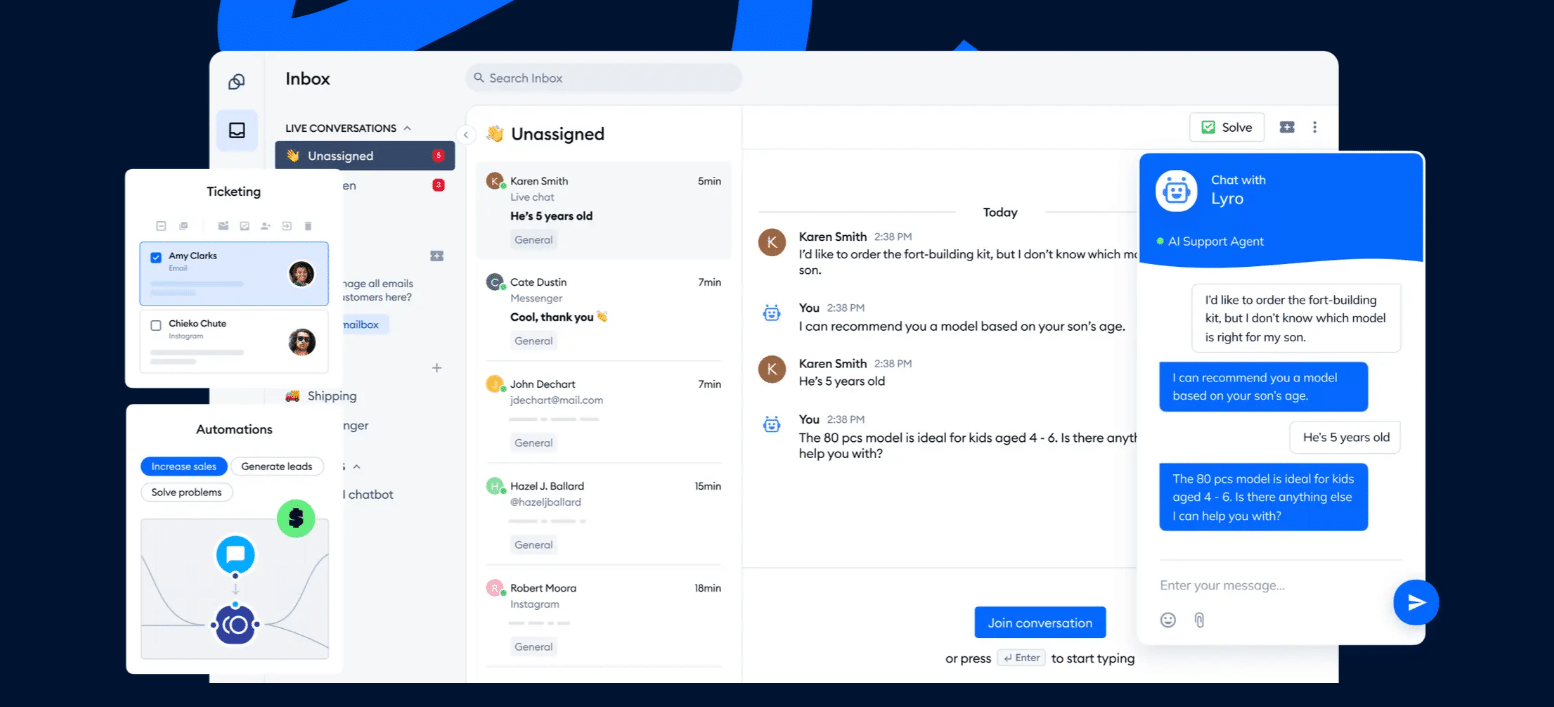
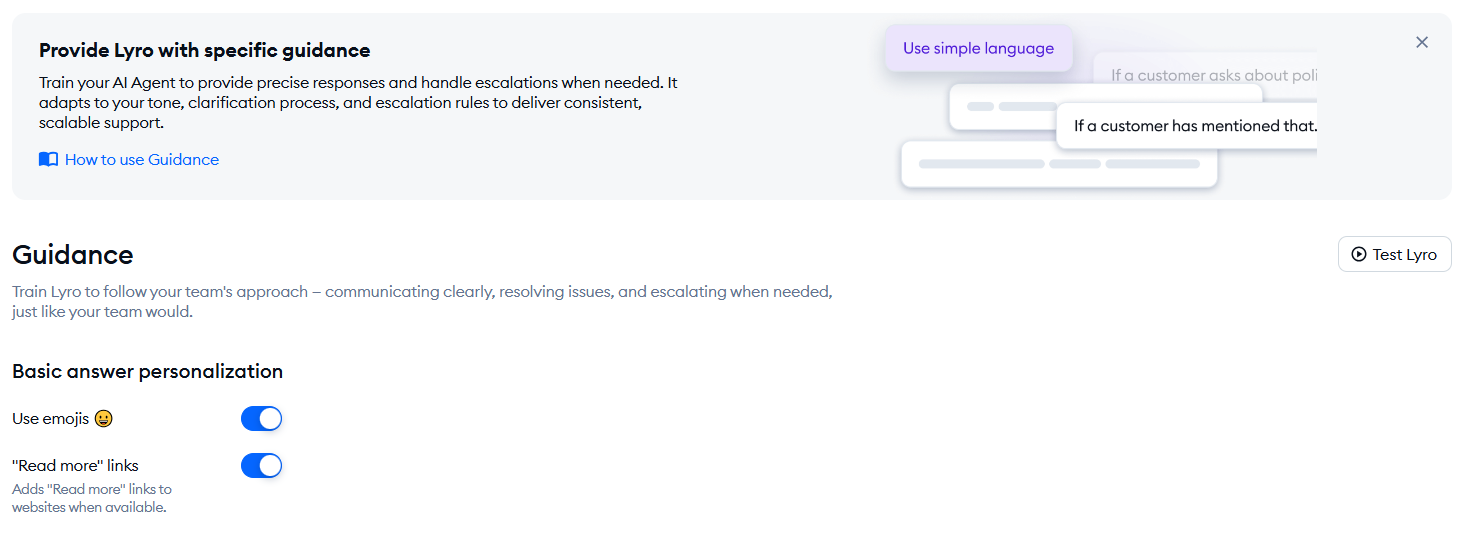
Tidio is a help desk built around the conversations customers start on your website. Live chat, email, Messenger, Instagram, WhatsApp, and tickets land in one inbox, and every plan, the free one included, has ticketing and the email inbox. The Lyro AI agent answers from your help center and policies, runs actions, and hands the rest to a person under rules you set. Tidio says Lyro solves up to 75% of customer questions automatically.
For a SaaS team, the useful part is the handoff to product work. The Jira integration turns a chat into a Jira issue with the customer’s messages attached and lets you track its status without leaving Tidio, and the HubSpot integration syncs contacts and saves chat transcripts to the contact record. Growth adds macros, automatic assignment, satisfaction surveys, and advanced analytics; Plus adds departments, ticketing automations, and multiple brands in one dashboard.
Tidio focuses on customer-facing support. If you need an ITIL service desk with asset management, look at an IT-specific tool such as Jira Service Management.
Tidio fits these teams best:
- E-commerce businesses, especially Shopify stores, thanks to native features such as live cart preview and order history in the inbox.
- Small and medium-sized businesses that want to streamline support without large teams, through automation and AI.
- Businesses with high support volume that want to automate repetitive questions and reduce ticket load.
- Companies across industries (retail, SaaS, services) that talk to website visitors and want faster responses and higher conversion.
- Teams that manage live chat, email, Messenger, Instagram, and WhatsApp in one place.
Key features:
- Lyro AI agent: answers from your knowledge base, runs actions, and escalates under your handoff rules.
- Ticketing: turn chats and emails into tickets with priority, tags, and notes; Plus automates assignment and prioritization.
- Omnichannel inbox: live chat, email, Messenger, Instagram, and WhatsApp in one view, plus live video calls.
- Jira and HubSpot integrations: create issues from chats and sync contacts and transcripts.
Pros
- Help desk, live chat, and AI agent in one tool, with no separate AI vendor to manage.
- Free, Starter, and Growth are priced by conversations, not seats, and include 10 seats.
- A real free plan and a 7-day trial let you test with live traffic.
- Chat-to-Jira issues keep bug reports out of copy-and-paste.
Cons
- Lyro is priced separately from the help desk plan, so you only pay for the AI you use, but there are a few quotas to keep an eye on.
- Macros, automatic assignment, and advanced analytics come with Growth, so the cheaper plans suit smaller teams best.
- SSO and Lyro as a managed service come with Premium, where larger teams get a quote from Tidio’s sales team.
Pricing: from Tidio’s pricing page, billed annually (monthly in brackets):
- Free: $0, 50 billable conversations, 10 seats.
- Starter: $24.17/mo ($29), 100 billable conversations.
- Growth: from $49.17/mo ($59), up to 2,000 billable conversations.
- Plus: from $300/mo plus usage, departments, ticketing automations, multiple brands.
- Premium: contact sales; SSO, a guaranteed 50% Lyro resolution rate, pay-per-resolution billing.
- Lyro AI agent: first 50 conversations free, then from $32.50/mo ($39) for 50 conversations. 7-day free trial.
Rating: G2 4.6/5 (1,962 reviews)
See how Tidio fits your SaaS support team
2. Zendesk
Best for: growing and large SaaS support teams that need omnichannel ticketing on one platform.
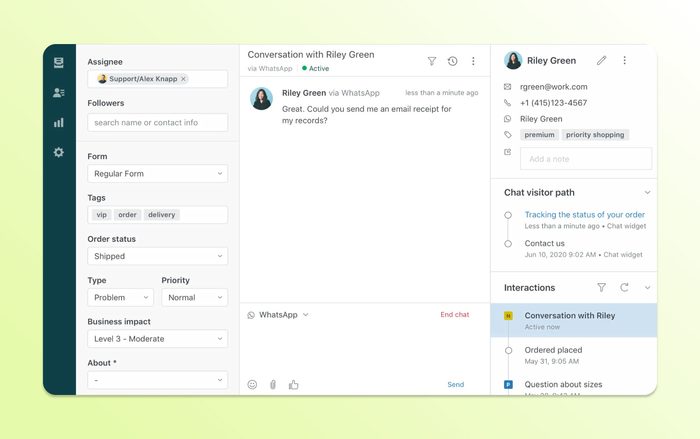
Zendesk is the help desk most teams benchmark against. Email, messaging, voice, social, a help center, and AI agents sit on one platform, with routing and SLAs that hold up under heavy volume.
Cost sets the ceiling: most teams need a Suite plan, plus AI and Copilot fees on top.
Key features:
- AI agents: in every plan, billed per automated resolution.
- Omnichannel routing: one queue for email, chat, voice, and social.
- Copilot: reply suggestions and summaries, an add-on on Professional and up.
Pros
- Mature and proven at high ticket volume.
- A large app marketplace around the core product.
Cons
- AI resolutions and Copilot add usage and seat fees to the plan price.
- The entry plan covers email only.
Pricing: per agent per month, billed annually (monthly in brackets): Support Team $19 ($25); Suite Team $55 ($69); Suite Professional $115 ($149); Suite Enterprise by quote. Automated resolutions $1.50 each committed, $2.00 pay-as-you-go. Copilot $50 per agent. 14-day trial.
Rating: G2 4.3/5 (7,082 reviews)
Read more: Zendesk alternatives
3. Freshdesk
Best for: email-first support teams that want a full ticketing suite on a per-agent budget.
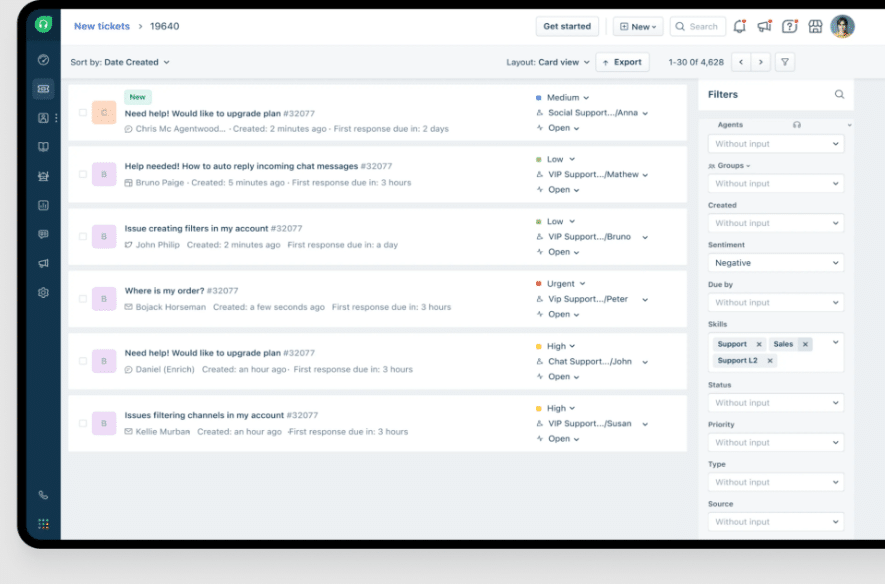
Freshdesk gives you a mature ticketing core at one of the lowest per-agent prices among the big names. Ticketing, a shared inbox, and a knowledge base come with Growth, and the Freddy AI agent answers on chat and email. For internal IT, Freshworks sells a separate product, Freshservice.
Watch the add-ons: AI sessions are billed in packs, and Copilot costs extra per agent.
Key features:
- Freddy AI agent: chat and email answers, billed by session.
- SLA management and automations: multiple SLA policies and routing on higher plans.
- Freddy Copilot: agent assist add-on on Pro and Enterprise.
Pros
- Low entry price for a full help desk.
- Clear upgrade path from Growth to Enterprise.
Cons
- No free plan; the trial is the only free way in.
- The 500 free AI sessions are a one-time allowance per account.
Pricing: per agent per month, billed annually: Growth $19, Pro $55, Enterprise $89 (annual billing saves 20%). Freddy AI agent: 500 sessions free once, then $49 per 100. Copilot $29 per agent. 14-day trial.
Rating: G2 4.4/5 (3,773 reviews)
Read more: Freshdesk alternatives
4. Intercom
Best for: SaaS teams that want an AI-first help desk with a built-in Messenger.
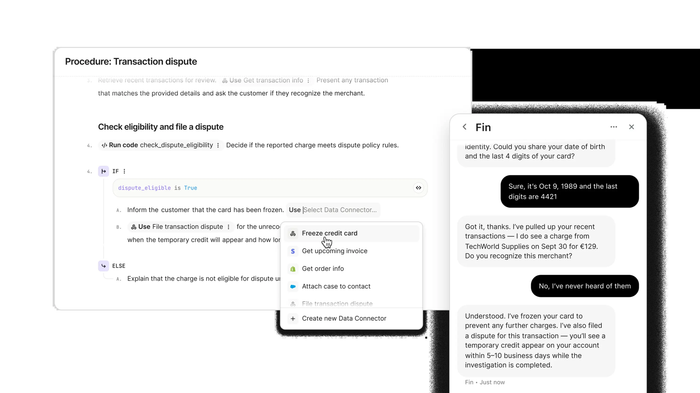
Intercom builds its help desk around Fin, its AI agent. Fin takes the first reply and people pick up the rest, with a Messenger, a shared inbox with ticketing, and a public help center on the same plan. Intercom lists technology companies and startups among the teams it builds for, and AI answers often name it for SaaS teams.
Key features:
- Fin AI agent: answers and procedures, billed per outcome.
- Messenger: chat and AI replies on your site.
- Inbox and tickets: a shared inbox with ticketing and a help center.
Pros
- Strong AI agent that is the centerpiece of every plan.
- Messenger, inbox, tickets, and help center come together on the entry plan.
Cons
- Seat prices plus per-outcome AI make costs hard to forecast in busy months.
- No free plan; the 14-day trial is the only free way in.
Pricing: per seat per month, billed annually: Essential $29, Advanced $85, Expert $132. Fin $0.99 per outcome. 14-day trial.
Rating: G2 4.5/5 (3,913 reviews)
Read more: Intercom alternatives
5. Help Scout
Best for: growing SaaS teams that want email-style support that feels personal.
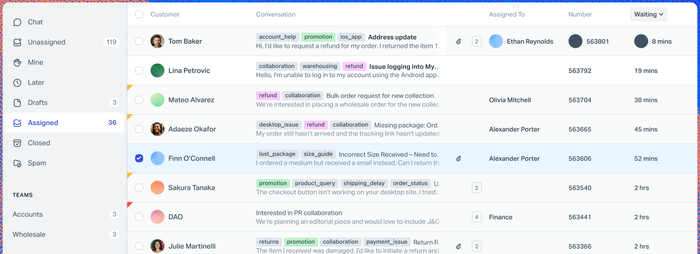
Help Scout looks like email to your customers and works like a help desk for your team. Conversations arrive in shared inboxes, with tags, saved replies, and a knowledge base. Standard adds live chat, SMS, WhatsApp, Instagram, and Messenger, so it’s no longer email only.
It’s lighter than Zendesk by design, and SSO needs Pro with a 10-user minimum.
Key features:
- Shared inbox: assign and tag conversations across several inboxes.
- AI Answers: an AI agent billed per resolution, with a 3-month free trial.
- Docs: a knowledge base that also feeds the AI.
Pros
- Free plan for up to 5 users.
- Simple to learn for teams moving off a shared Gmail inbox.
Cons
- Contacts are capped at 100 a month on the free plan.
- Advanced workflows and key integrations need Plus.
Pricing: per user per month, billed annually: Free (5 users, 1 inbox); Standard $25; Plus $45; Pro $75 (10-user minimum). AI Answers $0.75 per resolution. Annual billing saves 16%.
Rating: G2 4.4/5 (431 reviews)
Read more: Help Scout alternatives
6. Zoho Desk
Best for: cost-conscious teams, especially ones already on Zoho apps.
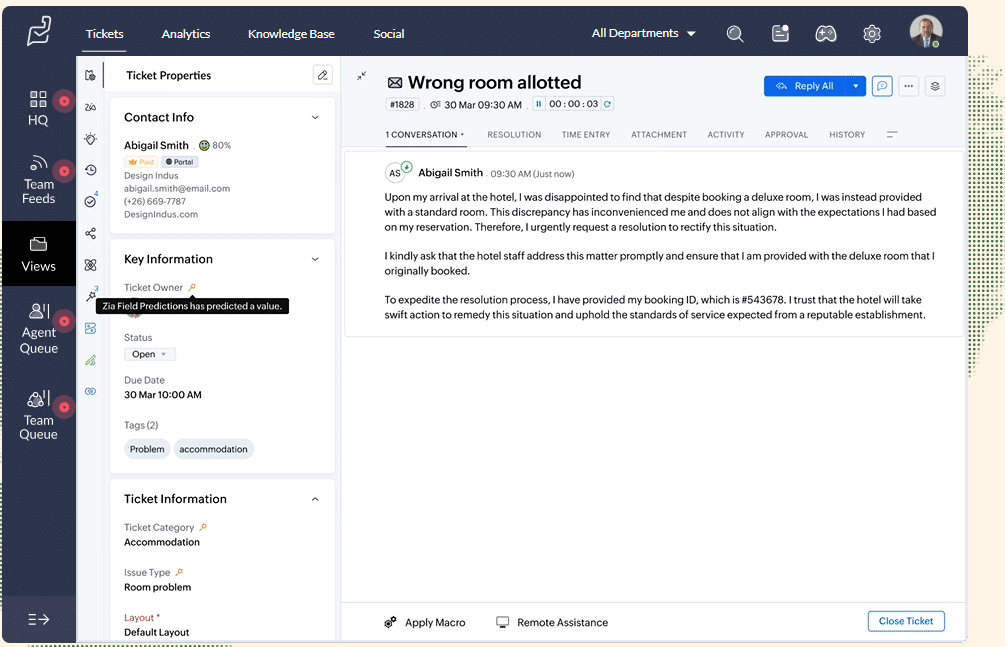
Zoho Desk is the cheapest paid help desk here, and its free plan covers three users. Express already includes AI agents, with a monthly allowance of free tokens, and workflows. It ties neatly into Zoho CRM and the rest of the Zoho suite.
Key features:
- AI agents: build your own, with up to 30M free tokens a month from Express.
- Multi-level escalations and workflows: rule-based routing on every paid plan.
- Zoho ecosystem: native links to Zoho CRM, Analytics, and SalesIQ.
Pros
- Free plan and the lowest paid entry price on this list.
- Strong value if you already run Zoho.
Cons
- Key features, including telephony and Zia, start at Professional.
- Website live chat for anonymous visitors needs the Enterprise plan.
Pricing: per user per month, billed annually (monthly in brackets): Free for 3 users; Express $7 ($9), up to 5 users; Standard $14 ($20); Professional $23 ($35); Enterprise $40 ($50). 15-day trial.
Rating: G2 4.4/5 (7,954 reviews)
Read more: Zoho Desk alternatives
7. HubSpot Service Hub
Best for: SaaS teams whose customer data already lives in HubSpot’s CRM.
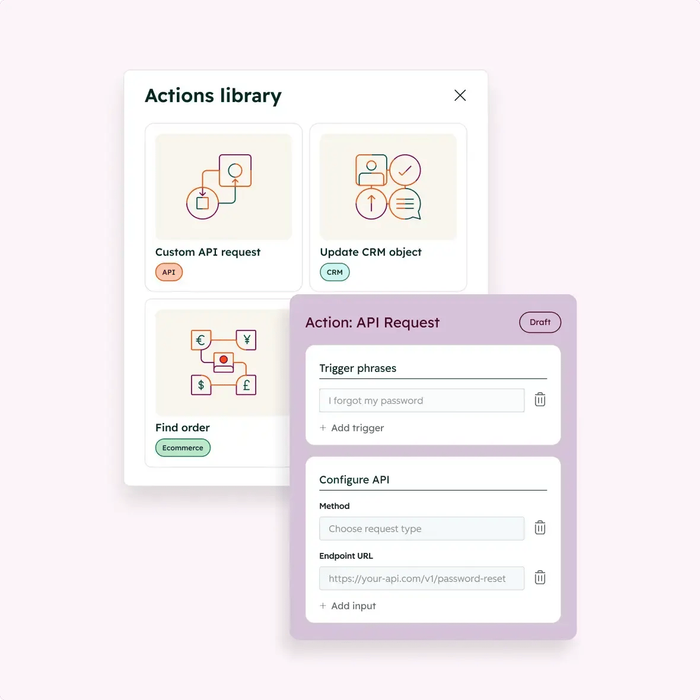
Service Hub puts tickets on the same CRM records as your sales and marketing teams. The Customer Agent answers across chat and email, and HubSpot says it resolves 65% or more of conversations automatically.
The catch is the plan ladder. The AI agent needs Professional or Enterprise, and both carry a one-time onboarding fee.
Key features:
- Help desk workspace: tickets and inbox tied to CRM contacts and deals.
- Customer Agent: AI answers and actions, paid in HubSpot Credits.
- HubSpot Credits: set spend limits per AI feature.
Pros
- One customer record across sales, marketing, and service.
- Free tools to start for up to two users.
Cons
- No AI agent on the free or Starter plans.
- Professional and Enterprise require paid onboarding.
Pricing: free tools for two users; Starter from $7 per seat a month billed annually; Professional from $90 per seat billed annually ($100 monthly) plus $1,500 onboarding; Enterprise from $150 per seat plus $3,500 onboarding. Checked 30 September 2026.
Rating: G2 4.4/5 (3,017 reviews)
Read more: HubSpot alternatives
8. HappyFox
Best for: teams that expect to grow past a handful of agents and want a flat, unlimited-agent plan.
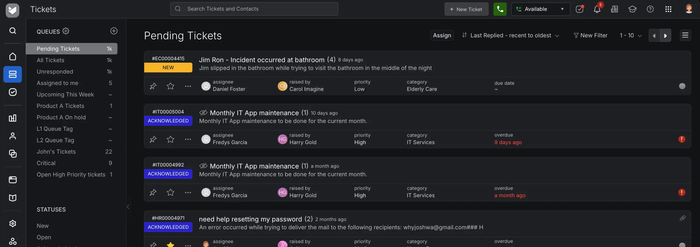
HappyFox is a ticketing-first help desk with queues, categories, and per-ticket priorities and due dates. It starts at $24 per agent a month, and its pricing page says the Basic plan caps you at five agents while higher plans include unlimited agents. Above roughly 20 to 25 agents, HappyFox suggests a flat annual fee with a yearly ticket allowance.
The catch is that web messaging, AI, workflows, and BI are separate products with their own pricing.
Key features:
- Ticket queues: custom queues, priorities, categories, and due dates in one view.
- HappyFox AI: an add-on from $14 per agent a month; its Chatbot costs $0.33 per resolution.
- Unlimited-agent plans: a flat annual fee with a ticket allowance, for larger teams.
Pros
- Unlimited agents on higher plans keep headcount from driving the bill.
- A 14-day trial on every plan, with no credit card.
Cons
- Messaging, AI, and workflows are priced as separate products.
- A smaller review base on G2 than the bigger names (138 reviews).
Pricing: Help Desk from $24 per agent a month, 20% less on annual billing; Basic is limited to 5 agents, and higher plans include unlimited agents. HappyFox AI from $14 per agent a month; Chatbot $0.33 per resolution; Autopilot from 2 cents per successful action. 14-day free trial, no credit card.
Rating: G2 4.5/5 (138 reviews)
9. Jira Service Management
Best for: SaaS teams whose support escalates to engineers who already work in Jira.
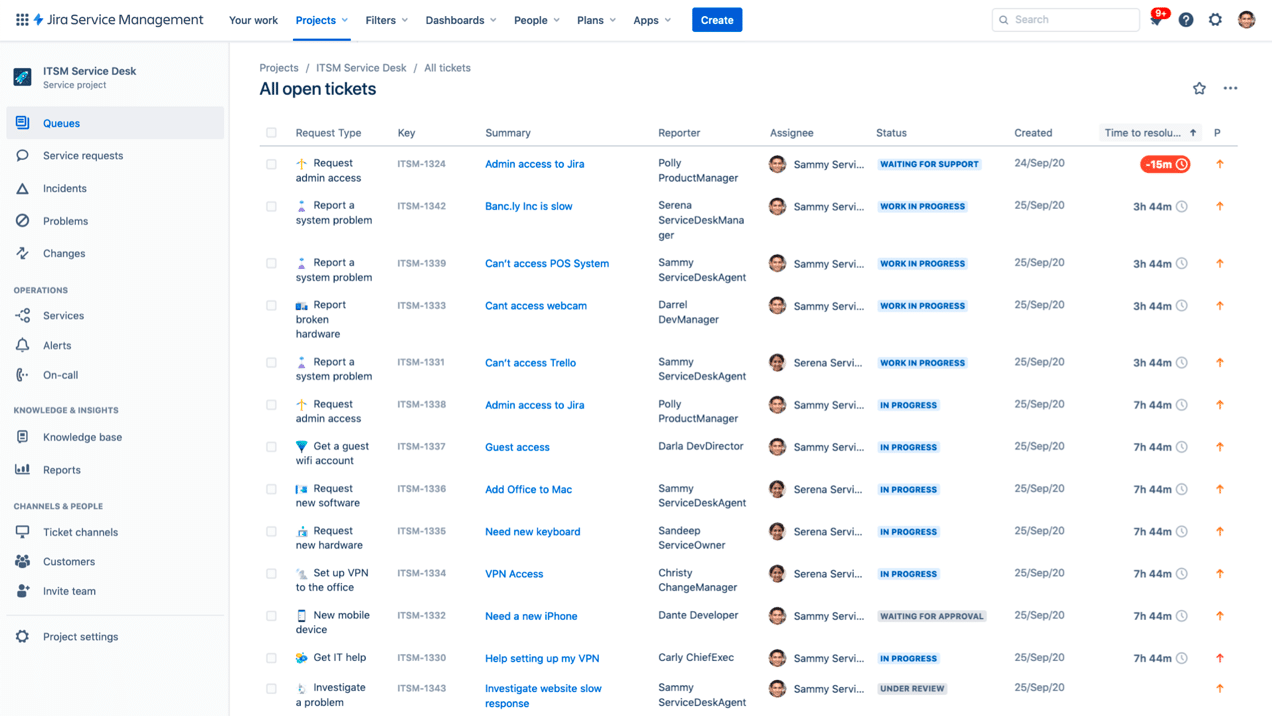
Jira Service Management is Atlassian’s service desk. Requests and incidents link straight to the Jira issues your developers work in, which suits a SaaS company where support hands bugs to engineering every day. It’s free for up to three agents.
It’s an IT tool first, heavier than most customer-facing teams need.
Key features:
- ITSM workflows: incident, problem, change, and request management.
- Jira link: escalate tickets to engineering without copy and paste.
- Rovo AI agents: on Standard and up.
Pros
- Free plan for small teams.
- Native link to Jira Software.
Cons
- Heavier setup than a customer service help desk.
- The virtual service agent needs Premium.
Pricing: Free for 3 agents; Standard from $20 per agent a month; Premium from $51.42 per agent; Enterprise by quote (annual). Per-agent prices vary with team size. 14-day trial.
Rating: G2 4.3/5 (986 reviews)
What SaaS customer support needs from a help desk
SaaS customer support needs a help desk that shows who the customer is, hands bugs to engineers, and answers common questions without a person. Those three jobs separate a good SaaS help desk from a generic one.
Account context next to every ticket
Agents answer faster when the plan and past tickets sit beside the message. Check whether the tool syncs with your CRM or billing system. HubSpot and Zoho Desk do this natively with their own CRMs, and Tidio syncs contacts and chat transcripts to HubSpot.
A clean handoff to engineering
Many SaaS tickets are bugs. Look for a native link to your issue tracker so an agent can create an issue from the ticket and see its status. Jira Service Management does this natively, and Tidio’s Jira integration creates issues from chat conversations.
Self-service and AI for repeat questions
Setup and billing questions repeat. A knowledge base plus an AI agent can answer them first, as long as the tool lets you set handoff rules. See our guide to customer self-service.
Reporting that shows where customers get stuck
Track first response time and CSAT, and tag tickets by topic. Our guide to help desk metrics explains which numbers matter.
How SaaS help desk pricing works
SaaS help desk vendors charge on three meters, and most combine two. Your real cost depends on which grows fastest: headcount, ticket volume, or AI usage.
| Pricing model | You pay for | Tools on this list | Watch out for |
|---|---|---|---|
| Per agent (seat) | Each person who answers tickets | Zendesk, Freshdesk, Intercom, Help Scout, Zoho Desk, HubSpot, HappyFox, Jira SM | Seat creep as the team grows; light users |
| Per conversation | Volume handled, not people | Tidio | Quota limits and overage in busy months |
| Per AI resolution or outcome | Each conversation the AI handles | Zendesk, Intercom, Help Scout, Freshdesk, HappyFox | Bills that move with traffic, not headcount |
Model a busy month, not an average one, with seats, AI resolutions, onboarding, and add-ons included.
How to choose a SaaS help desk
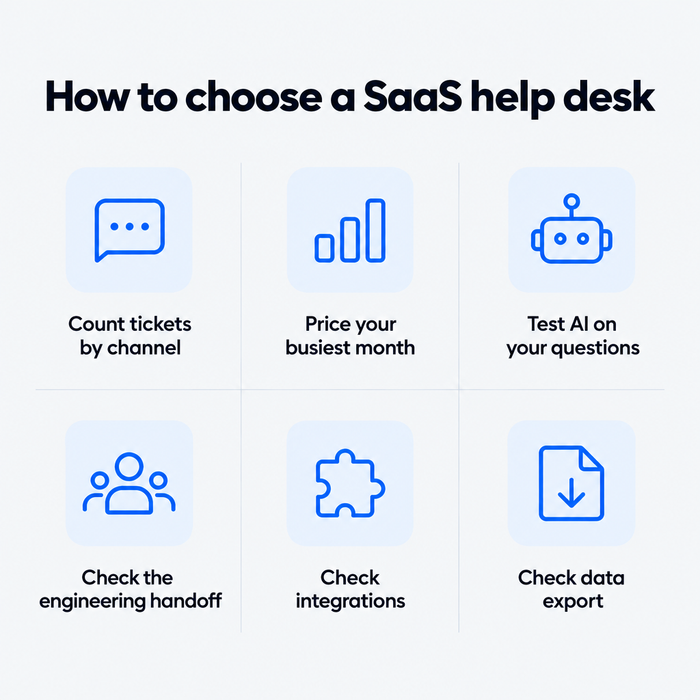
Start from your tickets, not the feature list. These five steps catch most bad fits before you sign.
1. Count your tickets by channel and topic
Tag a month of conversations to find your top 20 questions and the share that need an engineer.
2. Price your busiest month
Add seats, tickets, and AI for a peak month, such as a release week.
3. Test the AI on your own questions
Run your top 20 questions through a trial and count how many the AI answers correctly alone.
4. Check the engineering handoff
Create a test issue from a ticket in your tracker, and confirm the status flows back to the agent.
5. Check integrations and migration
Connect your CRM or billing tool and import old tickets in the trial. If that takes days, add it to the cost.
Which SaaS help desk should you pick?
- If you’re a small or midsize SaaS team that wants chat, email, and AI in one inbox: pick Tidio on the Growth plan with Lyro, or Plus when you need departments and ticketing automations.
- If you also sell on Shopify: pick Tidio on Growth. Agents see carts and order history in the inbox, and Lyro answers order-status questions. Gorgias is the specialist if you run a large dedicated store team.
- If AI-first support with a built-in Messenger matters most: Intercom, with budget set aside for Fin outcomes.
- If you handle high volume across every channel: Zendesk Suite, with budget set aside for AI resolutions.
- If price per seat matters most: Zoho Desk, or Freshdesk if you don’t need a free plan.
- If your customer data lives in HubSpot: Service Hub Professional.
- If your tickets mostly become Jira issues: Jira Service Management.
Get Tidio's help desk with Lyro AI for your SaaS team
Frequently asked questions
For a small team, the best SaaS help desk covers your channels without per-seat creep. Tidio includes 10 seats on its Free, Starter, and Growth plans, Zoho Desk is free for three users, and Help Scout is free for five. See our full list of help desk software for small business.
Yes. Tidio, Zoho Desk, Help Scout, HubSpot, and Jira Service Management all have free plans, with limits on users, contacts, or conversations. Freshdesk, Intercom, Zendesk, and HappyFox offer trials only.
Most SaaS help desks cost $7 to $150 per seat a month on annual billing for the plans listed here, before AI. Usage-priced AI usually adds $0.75 to $2.00 per resolution. Tidio prices by conversations instead of seats.
A SaaS ticketing system is the hosted part of a help desk that logs, assigns, and tracks customer requests. A help desk adds channels, automation, a knowledge base, and reporting around the tickets. Every tool on this list includes ticketing.
A help desk handles customer questions and incidents. A service desk, such as Jira Service Management, covers wider IT service management: changes, assets, and approvals. If your team supports customers, start with a help desk.
AI can answer repeat questions such as setup and billing, if it’s trained on your docs and has clear handoff rules. Test it on your own top 20 questions before you rely on it, and watch how it’s billed. See our guide to the AI ticketing system.
Use live chat to support your customers in real-time