Key takeaways
- Best for most small businesses and online stores: Tidio. Live chat, an AI agent, and Shopify order tools in one app, from a free plan to Growth with Lyro.
- Best chat-only tool for a dedicated team: LiveChat, from $19 a seat a month, billed annually.
- Best free option: tawk.to, the only app here with unlimited agents and chats at no cost.
- Five of the 10 apps have a free plan: Tidio, tawk.to, Crisp, HubSpot, and Zoho SalesIQ.
- List price is never total cost. Most apps charge per seat, per conversation, or per AI resolution, and many combine them.
A visitor has a question about shipping, can’t find the answer, and leaves. The wrong chat app makes that worse: a widget nobody answers, an AI add-on that doubles the bill, or seat fees that grow faster than your team. We compared 19 web chat apps on their pricing pages, help docs, and G2 reviews, and kept the 10 that suit a small or mid-sized business or an online store. Each entry covers what the app does best and where it stops, with every plan price and the team it fits. Tidio is our product. It gets the same template and scrutiny as every rival.
What is web chat software?
Web chat software puts a chat window on your website so visitors can message your team in real time, without downloading anything. The widget runs in the visitor’s browser, and your agents answer from a web, desktop, or mobile app. Most web chat apps now add an AI agent that answers routine questions and hands the rest to a person. For the basics, see our guide to what live chat is and how it works.
The best live chat apps at a glance
| App | Best for | Starting price (paid) | Free plan / trial | G2 rating |
|---|---|---|---|---|
| Tidio | SMBs and online stores, especially Shopify | $24.17/mo, billed annually | Free plan · 7-day trial | 4.6 (1,962) |
| LiveChat | Dedicated chat teams that want a polished widget | $19/seat/mo, billed annually | No free plan · 14-day trial | 4.5 (813) |
| tawk.to | Unlimited free chat on a zero budget | Free; branding removal $29/mo | Free plan | 4.5 (203) |
| Crisp | Small teams that want flat workspace pricing | $45/mo per workspace | Free plan (2 seats) · 14-day trial | 4.5 (204) |
| HubSpot | Free chat tied to a CRM | $7/seat/mo, billed annually | Free plan (2 users) | 4.4 (3,017) |
| Zoho SalesIQ | Visitor tracking on a tight budget | $7/operator/mo, billed annually | Free plan (3 operators) · 15-day trial | 4.4 (256) |
| Intercom | SaaS teams putting AI first | $29/seat/mo, billed annually, + $0.99 per Fin outcome | No free plan · 14-day trial | 4.5 (3,913) |
| Zendesk | Large support teams across many channels | $55/agent/mo, billed annually | No free plan · 14-day trial | 4.3 (7,082) |
| Gorgias | Shopify stores that run support as a help desk | $40/mo (50 tickets) | No free plan | 4.6 (582) |
| LiveAgent | Chat, email, and phone support in one desk | $15/agent/mo, billed annually | No free plan · 30-day trial | 4.5 (1,537) |
How we chose these apps
We started with 19 web chat apps from today’s top search results, AI assistants’ answers, and the previous edition of this article. We cut apps that are winding down (Clari + Salesloft announced a gradual wind-down of Drift in March 2026) and team-messaging tools. We scored the remaining 10 on the same criteria:
- Setup: how fast you get a working widget on Shopify, WordPress, or custom HTML, with no code.
- Agent features: visitor list, typing preview, saved replies, routing, and a mobile app.
- AI and human handoff: whether the AI answers from your content and passes chats to a person cleanly.
- Channels: whether email, WhatsApp, Instagram, and Messenger share the website chat inbox.
- Predictable pricing: free-plan limits, billing basis, and AI fees on top.
- Reviews: G2 rating, review count, and recurring complaints.
The list is ordered by fit for small and mid-sized businesses and online stores, not by rating, which is why Tidio is first. We did not measure AI resolution rates ourselves; where a vendor publishes one, we quote it as its claim.
The 10 best live chat apps for websites in 2026
1. Tidio
Best for: SMBs and online stores that want live chat and AI in one app
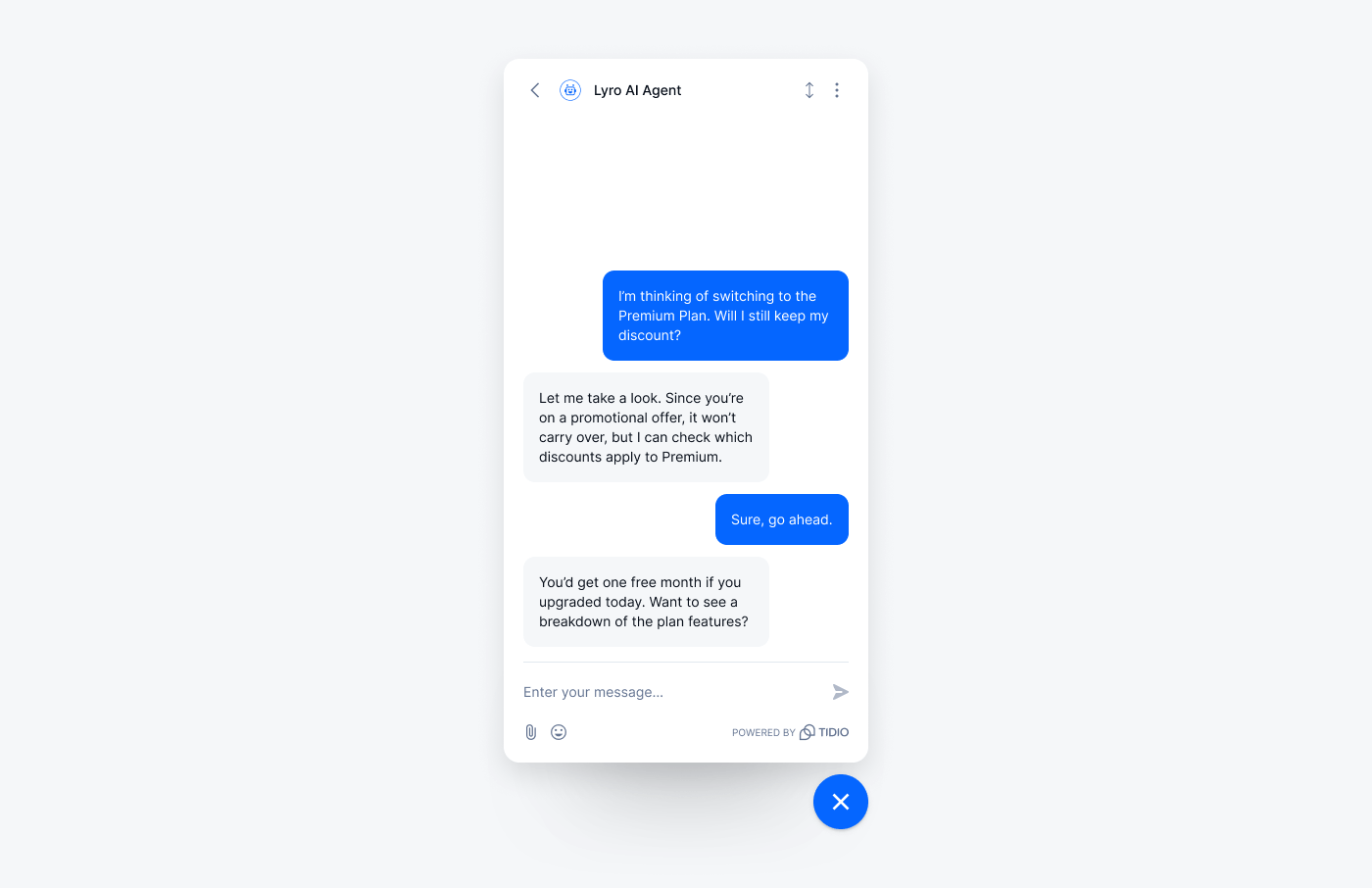
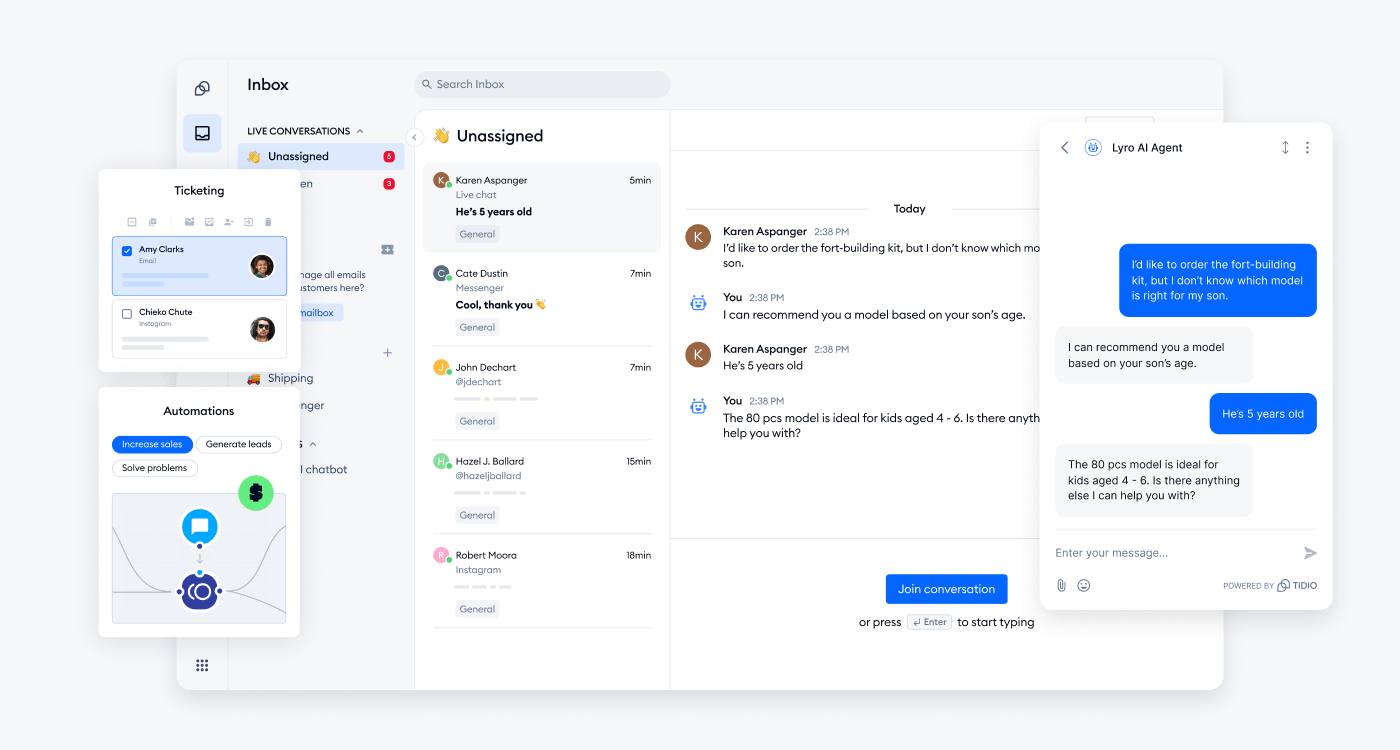
Tidio combines a website chat widget, a shared inbox for chat, email, and social messages, an AI agent called Lyro and no-code automations called Flows.
What it does better than most of this list is e-commerce context. On Shopify, agents see a shopper’s cart and order history next to the chat, and can cancel an order, issue a refund, or change a shipping address without leaving the inbox. Tidio says Lyro can solve up to 67% of customer problems automatically, and it hands the rest to your team with the conversation attached.
Tidio fits these teams best:
- E-commerce businesses, especially Shopify stores, thanks to native features such as live cart preview and order history in the inbox.
- Small and medium-sized businesses that want to streamline support without a large team, through automation and AI.
- Businesses with high support volume that want to automate repetitive questions and reduce ticket load.
- Companies across industries (retail, SaaS, services) that talk to website visitors and want faster replies and more conversions.
- Teams that manage several channels: live chat, email, Messenger, Instagram, and WhatsApp in one inbox.
Key features:
- Live visitors list: see who is on your site and which pages they viewed, then start the chat yourself.
- Live typing preview: read a visitor’s message before they send it (Growth plan).
- Lyro AI agent: answers from your FAQ and website content in many languages, and checks order status on Shopify.
- Flows: no-code automations that greet visitors, recover carts, and collect leads when nobody is online.
- One inbox for every channel: website chat, email tickets, WhatsApp, Instagram, and Messenger, on web, desktop, and mobile.
Pros
- Free plan with 10 seats and 50 conversations a month, enough to test on a live site.
- Shopify actions (refunds, order edits, address changes) work straight from the chat.
- AI, human chat, and tickets share one inbox, so handoffs keep their context.
- Installs from a Shopify, WordPress, or other platform plugin without code.
Cons
- Pricing grows with usage: billable conversations, Lyro, and Flows are priced separately, so you only pay for what you use, but there are a few quotas to keep an eye on as you grow.
- Some agent features, such as live typing preview, viewed pages history, and macros, come with Growth, so Starter suits simpler setups.
Pricing: Tidio’s pricing page lists four plans plus two add-ons (billed annually; monthly in brackets):
- Free: $0, 50 billable conversations a month, 10 seats, 50 Lyro conversations once.
- Starter: $24.17 a month ($29), 100 conversations, live visitors list, operating hours, basic analytics.
- Growth: from $49.17 a month ($59), 250 to 2,000 conversations, live typing preview, macros, automatic assignment.
- Plus: from $300 a month plus usage, with departments, custom seats, OpenAPI, and a dedicated success manager.
- Premium: custom pricing, from 3,000 Lyro conversations, a guaranteed 50% Lyro resolution rate, SSO, and compliance.
- Lyro AI agent: from $32.50 a month ($39) for 50 AI conversations. Flows: from $24.17 a month ($29).
- 7-day free trial of premium features.
Rating: G2 4.6/5 (1,962 reviews)
Compare Tidio plans and add Lyro when you need it
2. LiveChat
Best for: dedicated chat teams that want a polished, fast widget
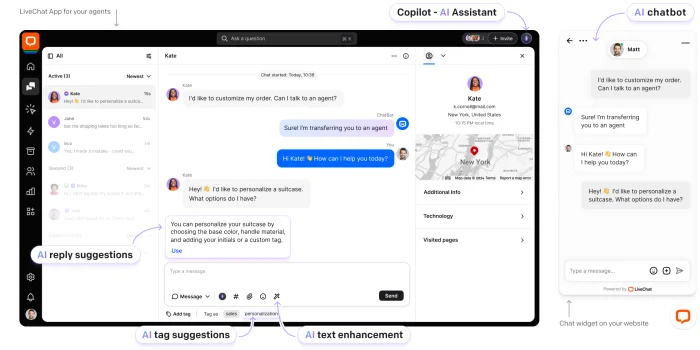
LiveChat is a chat-first tool with one of the most refined agent apps on the market, built for teams whose main job is answering website chats. Its widget is highly customizable and its integration catalog is wide. Cost and scope are the limits: pricing is per seat, AI answers come from a separate product (Text’s AI agent, formerly ChatBot), and email ticketing is lighter than in a full help desk.
Key features:
- Message sneak peek and canned responses: see what a visitor is typing, and reuse saved answers.
- Routing and agent groups to split sales and support chats.
- Rich messages: product cards, carousels, and buttons inside the chat.
Pros
- G2 reviewers repeatedly praise its ease of use and straightforward setup.
- Large catalog of integrations with CRMs, help desks, and store platforms.
Cons
- No free plan, and per-seat pricing adds up as the team grows.
- Starter keeps only 60 days of chat history, and AI automation is a separate subscription.
Pricing (per seat, billed annually; monthly in brackets; from LiveChat’s pricing page):
- Starter $19 ($25): basic customization, 60-day history, track up to 100 visitors.
- Team $49 ($59) · Business $79 ($89) · Enterprise: custom. 14-day free trial, no card required.
Rating: G2 4.5/5 (813 reviews)
Read more: LiveChat review · LiveChat alternatives
3. tawk.to
Best for: unlimited free chat on a zero budget
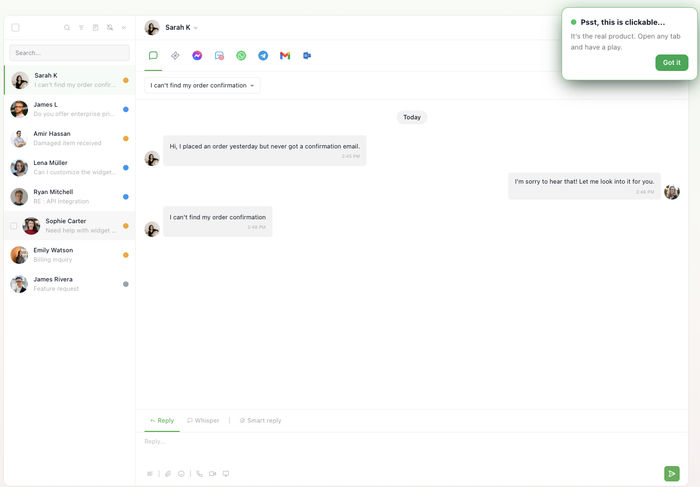
tawk.to gives you live chat, a ticketing inbox, and a knowledge base for free, with no cap on agents, chat volume, or concurrent chats. It earns from optional paid extras, so the core never expires, which makes it the best choice for new sites and side projects, nonprofits included. You’ll pay once you want automation or a cleaner look, since branding removal and the AI assistant cost extra.
Key features:
- Unlimited agents and chats on the free plan, with visitor monitoring.
- Hired agents: tawk.to staff can answer chats for you, billed per hour.
- Apps for macOS, Windows, iOS, and Android.
Pros
- Free forever with no seat or chat limits.
- Covers chat, tickets, and a knowledge base in one account.
Cons
- Branding removal and AI cost extra.
- Some G2 reviewers find the design and widget options basic next to newer tools.
Pricing (from tawk.to’s pricing page): free for unlimited agents and chats; branding removal $29 a month; AI Assist from $29 a month; hired chat agents from $1 an hour.
Rating: G2 4.5/5 (203 reviews)
Read more: tawk.to review · tawk.to alternatives
4. Crisp
Best for: small teams that want flat pricing per workspace
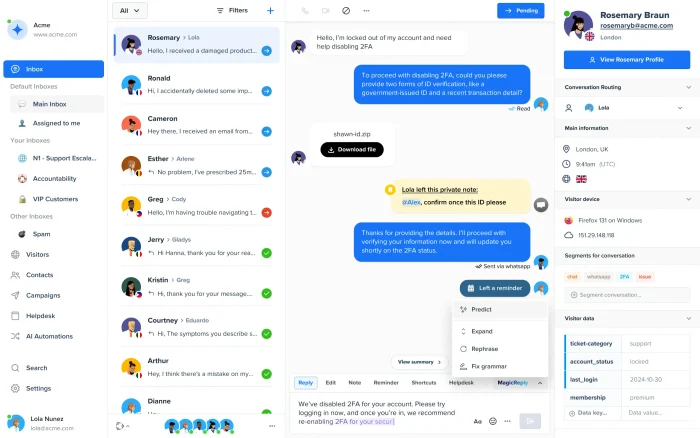
Crisp bundles a chat widget, a shared inbox, a knowledge base, and an AI agent, priced per workspace rather than per agent, so a team of four pays the same as a team of one on Mini. AI and scale cost more: the free plan has no AI, and moving from 4 to 10 seats means jumping from $45 to $95 a month.
Key features:
- Shared inbox: chat and email from Mini; Messenger, Instagram, and WhatsApp from Essentials.
- AI agent that answers from your knowledge base on paid plans.
- Co-browsing (MagicBrowse) and audio and video calls from Essentials.
Pros
- Flat workspace pricing is easy to budget for small teams.
- Free plan includes two seats and a working widget.
Cons
- No AI on the free plan.
- Seat bundles are fixed, so a team of five pays for the 10-seat plan or buys extra agents.
Pricing (per workspace, per month; from Crisp’s pricing page): Free, 2 seats, no AI · Mini $45 (4 seats) · Essentials $95 (10 seats) · Plus $295 (20 seats). Extra agent $10. 14-day free trial, no card.
Rating: G2 4.5/5 (204 reviews)
Read more: Crisp review
5. HubSpot
Best for: free website chat tied to a CRM
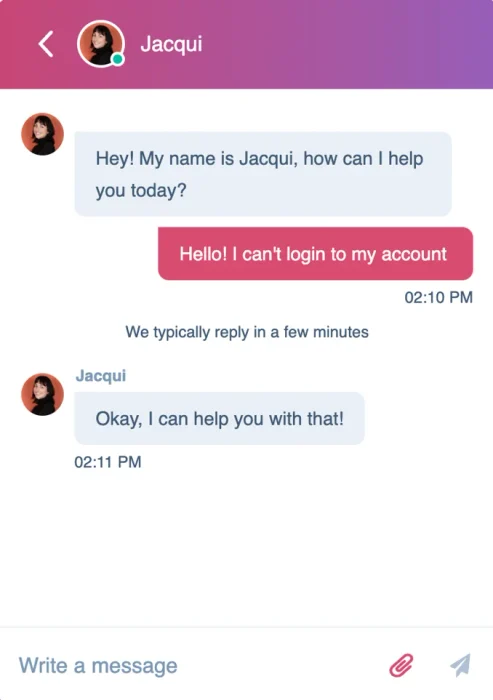
HubSpot’s live chat is part of its free CRM tools, so every chat creates or updates a contact record. That makes it the natural pick if you already run sales or marketing in HubSpot. The catch is the upgrade path: the free tools cover two users and carry HubSpot branding, and the full help desk and AI customer agent sit in Service Hub Professional, from $90 a seat plus a one-time $1,500 onboarding fee.
Key features:
- Chat into the CRM: conversations attach to contact, company, and deal records.
- Free chatbot builder that qualifies leads, books meetings, and saves answers to the CRM.
- Customer agent (AI) on Service Hub Professional and Enterprise.
Pros
- Free chat and CRM for up to two users.
- Sales and marketing context inside every chat.
Cons
- Branding stays on the free plan.
- Help desk and AI features sit on expensive tiers with onboarding fees.
Pricing (from HubSpot’s Service Hub pricing page):
- Free for up to 2 users · Starter from $7 a seat a month, billed annually.
- Professional from $90 a seat a month billed annually ($100 billed monthly on an annual commitment), plus $1,500 onboarding · Enterprise from $150 a seat a month, plus $3,500 onboarding.
Rating: G2 4.4/5 for Service Hub (3,017 reviews)
Read more: HubSpot alternatives
6. Zoho SalesIQ
Best for: visitor tracking and chat on a tight budget
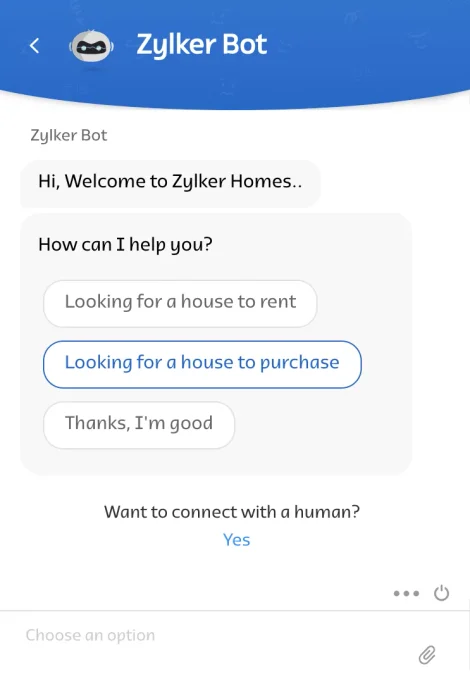
Zoho SalesIQ shows who is on your site and scores them as leads, so operators can start the chat first. Paid plans start at $7 an operator a month, the lowest per-seat price on this list, and it connects to Zoho CRM and Desk. Extras add up, though: branding removal, extra chatbots, and extra visitor sessions are priced separately.
Key features:
- Visitor tracking with lead scoring and page history.
- Zobot chatbot builder: one bot on Basic, five on Professional, more as add-ons.
- Mobile apps for operators.
Pros
- Lowest per-operator price among paid plans here.
- Free plan for three operators.
Cons
- Branding removal and extra chatbots are paid add-ons.
- Visitor sessions are capped per plan, so busy sites buy extra session packs.
Pricing (per operator, billed annually; monthly in brackets; from Zoho’s pricing page): Free, 3 operators and 100 sessions · Basic $7 ($10) · Professional $12.75 ($17) · Enterprise $20 ($25). Add-ons: branding removal $16, extra chatbot $8, extra sessions from $8. 15-day free trial, no card.
Rating: G2 4.4/5 (256 reviews)
7. Intercom
Best for: SaaS teams that want an AI agent first and people second
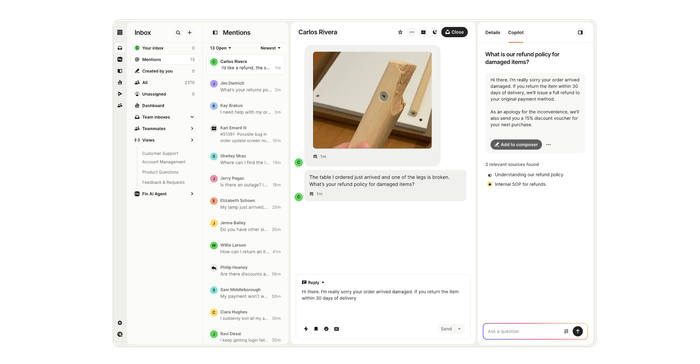
Intercom is a customer service platform built around Fin, its AI agent, with a help desk and a Messenger widget around it. It suits software companies that want AI to answer most questions in their app. Cost is the trade-off: seats start at $29, and every Fin resolution costs $0.99 on top, so costs rise with success.
Key features:
- Fin AI agent that answers from your help center and hands over to a person.
- Help desk with tickets, SLAs, and reporting.
- Proactive Support Plus add-on ($99 a month, 500 messages) for product tours and in-app messages.
Pros
- Mature AI agent and help desk in one product.
- Strong in-app messaging for SaaS.
Cons
- Per-seat price plus $0.99 per AI outcome makes the bill hard to forecast.
- More than a small business website needs.
Pricing (per seat, billed annually; from Intercom’s pricing page): Essential $29 (some visitors see a $19 test price) · Advanced $85 · Expert $132. Fin AI agent $0.99 per outcome. 14-day free trial.
Rating: G2 4.5/5 (3,913 reviews)
Read more: Tidio vs Intercom · Intercom alternatives
8. Zendesk
Best for: large support teams working across many channels
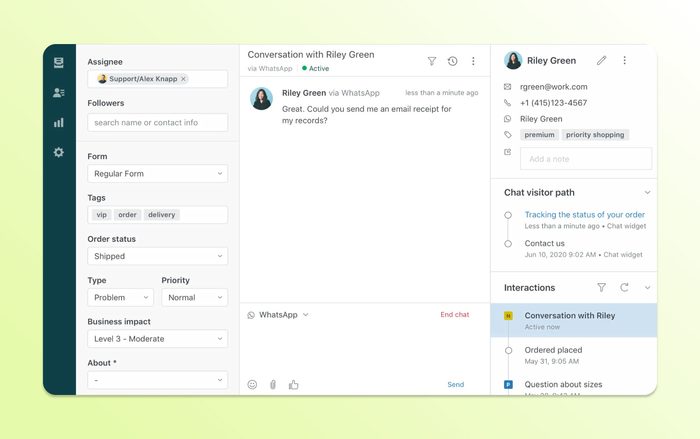
Zendesk is a full customer service suite: tickets, messaging, a help center, voice, and AI agents in one workspace. Large teams pick it for routing, SLAs, and reporting. For a smaller business, cost and setup get in the way: messaging and live chat start on Suite Team at $55 an agent, AI resolutions past the included five per agent cost $1.50 to $2.00 each, and configuration takes real admin time.
Key features:
- Agent Workspace for chat, email, voice, and social tickets.
- AI agents and automated resolutions.
- Advanced routing, SLAs, and analytics on higher plans.
Pros
- Scales to large, multi-team support operations.
- Deep reporting and workflow rules.
Cons
- Expensive per agent for small teams.
- Setup and admin need dedicated time.
Pricing (per agent, billed annually; monthly in brackets; from Zendesk’s pricing page): Suite Team $55 ($69) · Suite Professional $115 ($149) · Suite Enterprise through sales. Suite Team includes five automated resolutions per agent a month, then $1.50 each committed or $2.00 pay as you go. 14-day free trial.
Rating: G2 4.3/5 (7,082 reviews)
Read more: Tidio vs Zendesk · LiveChat vs Zendesk
9. Gorgias
Best for: Shopify stores that run support as a ticket-based help desk

Gorgias is a help desk built for e-commerce, with chat, email, and social tickets next to Shopify order data, and agents can edit orders and issue refunds from the ticket. Its pricing model is the drawback: plans are priced by ticket volume, and the AI agent is billed for each conversation it resolves without a person, so busy months cost more.
Key features:
- Shopify order actions inside tickets.
- AI agent for order status and returns (billed per resolved conversation).
- Chat, email, social, and SMS in one inbox (SMS is a paid add-on).
Pros
- Deep Shopify integration.
- Good automation for order-related tickets.
Cons
- Ticket-based pricing and AI resolutions rise with volume.
- Less suited to non-e-commerce websites.
Pricing (from Gorgias’s pricing page; annual in brackets where offered): Starter $40 a month (50 tickets) · Basic $90 ($77) for 300 tickets · Pro $550 ($471) for 2,000 · Advanced $1,430 ($1,227) for 5,000. AI agent $1.00 per resolved conversation on monthly billing, $0.90 on annual billing.
Rating: G2 4.6/5 (582 reviews)
Read more: Tidio vs Gorgias · Gorgias alternatives
10. LiveAgent
Best for: teams that want chat, email, and phone support in one desk
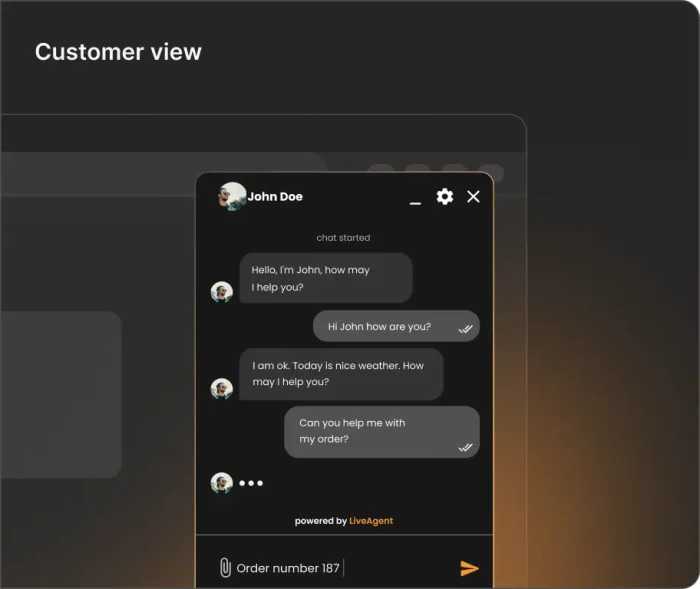
LiveAgent is a help desk with live chat, email ticketing, a call center, and social channels in one inbox, for teams that answer the phone as well as the chat widget. Its strength is breadth at a moderate per-agent price, with the longest trial here (30 days). Polish is where it falls behind: its pricing page lists no free plan, and G2 reviewers repeatedly flag an outdated or unintuitive interface.
Key features:
- Universal inbox for chat, email, calls, and social messages.
- Call center and IVR from the Medium plan.
- AI agents on every plan, with full setup included from Medium.
Pros
- Chat, tickets, and phone support in one tool.
- 30-day free trial with no card.
Cons
- No free plan.
- Instagram and WhatsApp are included only on Large; smaller plans pay for them as add-ons.
Pricing (per agent, billed annually; monthly in brackets; from LiveAgent’s pricing page): Small $15 ($19) · Medium $29 ($35) · Large $49 ($59) · Enterprise $69 ($85). 30-day free trial, no card.
Rating: G2 4.5/5 (1,537 reviews)
Read more: LiveAgent review · LiveAgent vs Zendesk
Which web chat apps are free?
Five of the 10 apps have a free plan that doesn’t expire. Each limits something different, so pick the one whose limit you’d hit last.
| App | Free plan includes | What’s paid only |
|---|---|---|
| Tidio | 10 seats, 50 conversations a month, 50 Lyro AI conversations once, 100 Flows visitors | More conversations, ongoing AI, typing preview, and macros |
| tawk.to | Unlimited agents and chats, tickets, knowledge base | Branding removal ($29/mo), AI Assist (from $29/mo) |
| Crisp | 2 seats, chat widget and inbox | AI agent, more seats, integrations |
| HubSpot | Up to 2 users, chat and CRM | Branding removal, help desk, AI customer agent |
| Zoho SalesIQ | 3 operators, 100 visitor sessions | More operators, more sessions, branding removal |
Use a free plan to learn your real chat volume, then compare the paid plan you’d need. For more options, see our roundup of free live chat software.
How to choose a live chat app for your website
Test the shortlist on your own site. These checks separate the apps that fit from the ones that only demo well.
Check it installs on your platform
Look for a native plugin for your site builder (Shopify, WordPress, Wix, Squarespace) rather than a pasted script; a plugin also passes store data into the chat. Our guide on how to add chat to a website walks through each platform.
Check the agent features your team will use daily
A visitor list, typing preview, saved replies, and routing decide how fast your team answers. During the trial, answer a real chat from the mobile app too.
Test the AI on your own questions
Load your FAQ, ask the AI your 20 most common questions, and count the right answers. When it can’t answer, the chat should reach a person with the history attached.
Put every channel in one inbox
Email, WhatsApp, Instagram, and Messenger messages should land next to website chat; two inboxes mean slower replies. Our look at the best chat widgets covers the widget side.
Work out the real price
List price is never total cost. Many chat apps combine these billing models:
- Per seat: a fixed fee for each agent (LiveChat, Zendesk, Intercom, LiveAgent, Zoho SalesIQ).
- Per conversation or ticket: a fee tied to volume (Tidio, Gorgias).
- Per AI resolution: a fee each time the AI closes a chat (Intercom Fin, Zendesk automated resolutions, Gorgias AI).
Price a typical month with your real team size and volume. Our breakdown of chatbot pricing covers the AI side.
Which live chat app should you pick?
- If you run a Shopify store → Tidio Growth with Lyro. Cart preview, order history, and order edits sit inside the chat, and Lyro answers order-status questions around the clock. For a large team handling mostly post-purchase tickets, Gorgias is the specialist alternative.
- If you’re a small or mid-sized business that wants AI without a big team → Tidio Growth with Lyro. One inbox for chat, email, and social, with AI handling routine questions. Teams that need departments move to Tidio Plus.
- If chat is your team’s main job and you want the most polished agent app → LiveChat.
- If you need a working widget and have no budget → tawk.to, and plan for a paid tool once chat volume grows.
- If your sales and marketing live in HubSpot → HubSpot’s free chat.
- If you’re a SaaS company that wants AI to handle most questions in your app → Intercom.
- If you run a large support team across email, phone, and chat → Zendesk, or LiveAgent if phone support matters most and budget is tighter.
See which Tidio plan fits your chat volume
Frequently asked questions
For most small and mid-sized businesses and online stores, Tidio is the best fit, because it combines a website chat widget, an AI agent, and Shopify order tools in one app. LiveChat suits dedicated chat teams, tawk.to suits a zero budget, and Zendesk or Intercom suit large support or SaaS teams.
Yes. tawk.to is free with unlimited agents, and Tidio, Crisp, HubSpot, and Zoho SalesIQ have free plans with limits on seats, conversations, or sessions. Free plans usually keep the vendor’s branding and leave out AI or advanced routing.
Paid plans on this list start at $7 to $55 per agent a month, billed annually, or at a flat monthly fee tied to conversation or ticket volume. AI agents often cost extra, as a monthly quota or per resolution.
Yes. Most apps here offer a plugin for Shopify and WordPress, and all of them give you a snippet you paste once into your site’s settings. You can usually change the widget’s colors and greeting without code.
Look for native Shopify actions inside the chat: cart preview, order history, refunds, and order edits. Tidio and Gorgias both offer them; Tidio adds an AI agent that answers order-status questions and fits stores that want chat and automation in one plan. See our guide to Shopify live chat apps.